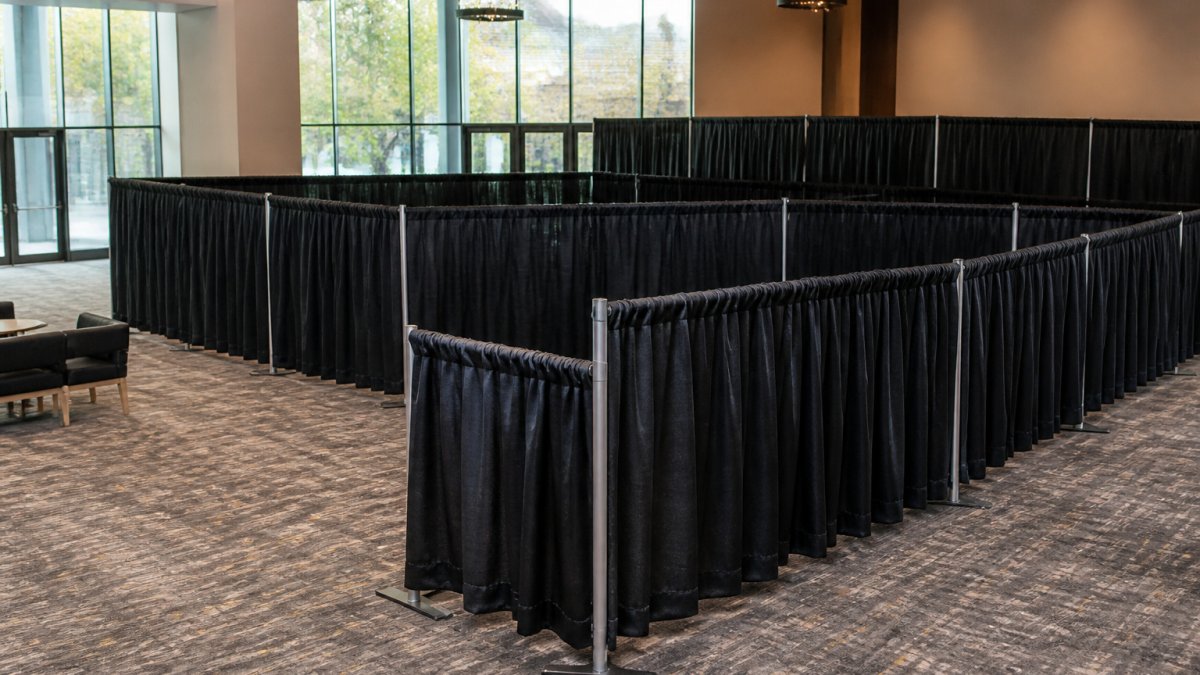
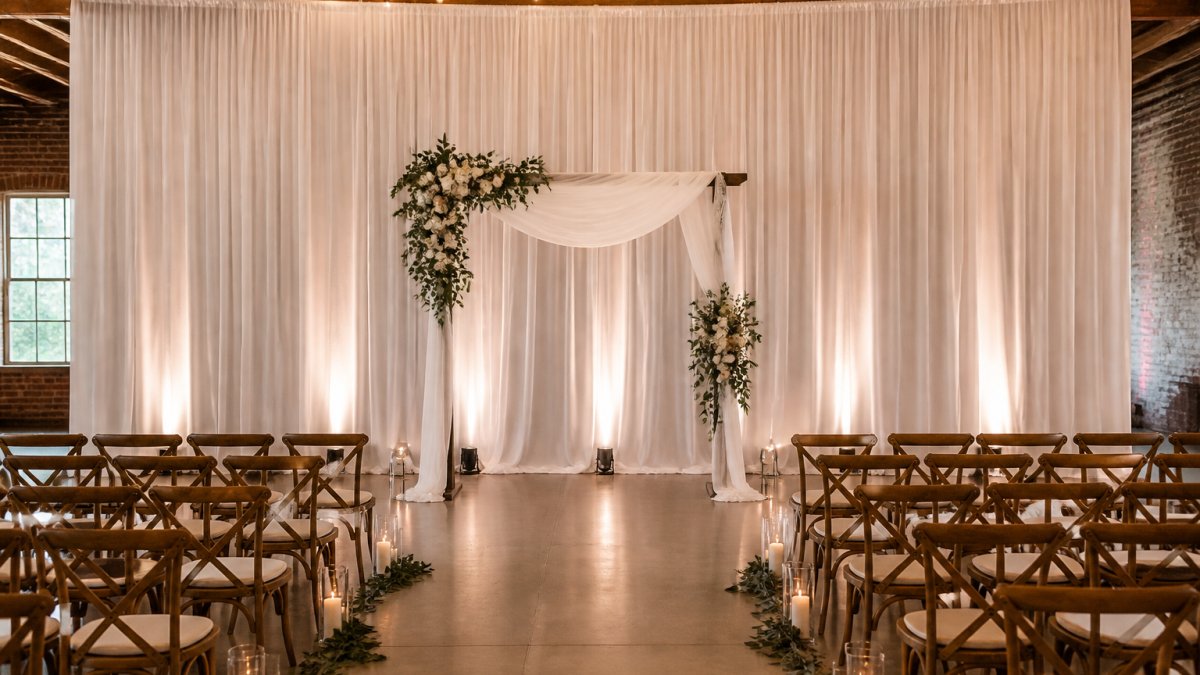
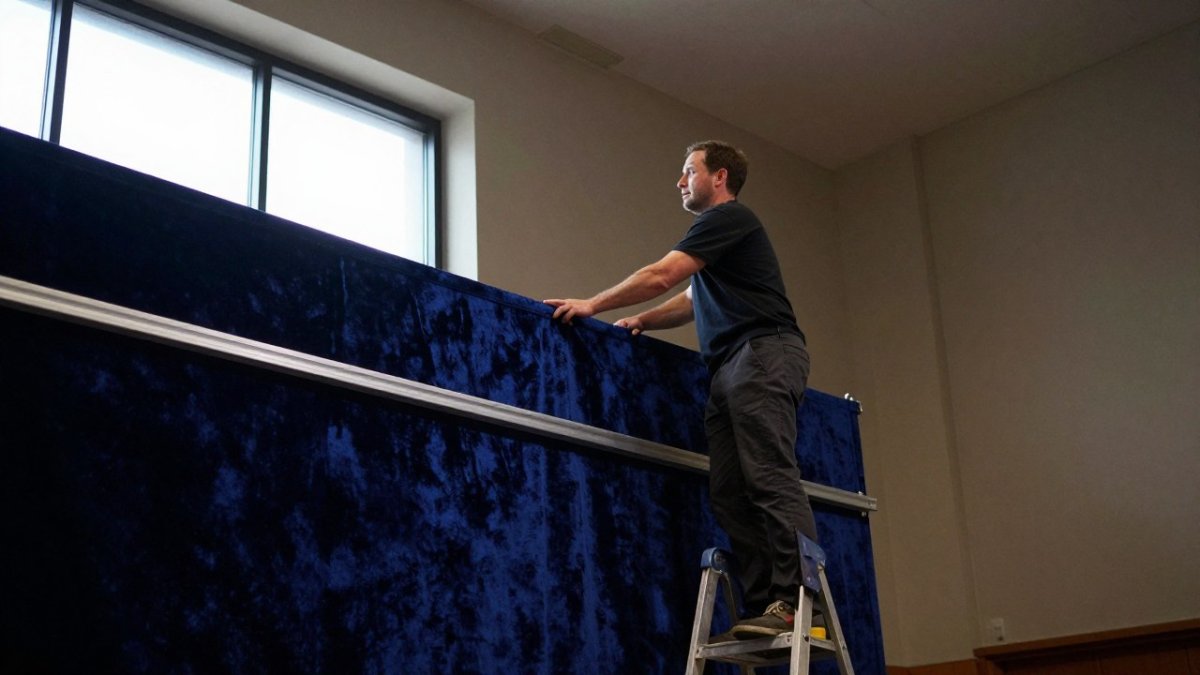
 comparison
What Are the Best Blackout Drapes for Stage Lighting?
Last Updated: November 12, 2026
Quick Summary
The best blackout drapes for stage lighting are heavy, matte velour panels in 10, 15, or 23 oz weights, sealed at the sides, top, and floor to stop light leaks. Specify weight, flame certificate, light-blocking performance, coverage, and load, and confirm your track or pipe can carry the total fabric weight.
- Blackout blocks light through the weave; room darkening only reduces it, and the two are not interchangeable.
- Matte velour absorbs stage light, while fabric with sheen bounces it back at the audience and camera.
- Overlap side panels by at least 12 inches and pin or clip the overlap to close light gaps.
- NFPA 701 is the textile flame test commonly cited for drapery; NFPA 255 reports surface burning characteristics.
- Event Drape Rental supplies drapes from 12 to 30 feet tall in over 100 colors and six fabric materials.
Table of Contents
- What Separates Stage Blackout Drapes From Home Curtains
- Theater-Grade Blackout Curtains: What the Label Should Prove
- Blackout Curtain Fabric: Weight, Weave, and Matte Finish
- Blackout Drapes for Uplighting: Color and Fabric Interaction
- Sealing Light Leaks at the Sides, Top, and Floor
- Fire Safety, Flame Retardancy, and Rigging Load
- Request a Quote for Stage Blackout Drapes
- Frequently Asked Questions
What Separates Stage Blackout Drapes From Home Curtains
The best blackout drapes for stage lighting are not curtains. They are light-control instruments, and judging them by the standards of a bedroom window treatment is the fastest way to ruin a cue. At Event Drape Rental, we supply performance drapery for corporate galas, trade show booths, and converted warehouses.
Home curtains are built to soften a window. Stage blackout drapes are built to eliminate a light source entirely, hold that elimination through a two-hour program, and survive being struck and re-hung a dozen times a year. A home panel hangs on a decorative rod and never moves. A stage drape hangs from a track or pipe, gets weighted at the hem, overlaps its neighbor, and is expected to read as a solid black wall from the back row.
That difference shows up in four places: fabric weight and weave, lining and layered construction, coverage and fullness, and mounting hardware. Miss any one and you get light leakage at the seams, glow through the fabric, or a drape that sags under its own weight by intermission.
Below, we break down what actually matters when you specify drapes for a lit stage, including the specifications most buying guides skip. For a broader look at why event drapery behaves differently from residential curtains, our team covers the fundamentals in blackout drapes for events and their key benefits.
Theater-Grade Blackout Curtains: What the Label Should Prove
"Theater-grade" is a marketing term, not a standard. No single certifying body defines it. The label that matters is the one listing a flame-retardancy test method and a fabric weight.
Blackout describes a fabric's ability to block light transmission through the weave. Room darkening describes partial reduction. The two are not interchangeable, and a listing that uses them as synonyms is telling you something about its rigor.
When you evaluate theater-grade blackout curtains, ask for three things in writing:
- The fabric weight in ounces per square yard
- The flame-retardancy standard the material was tested to
- The light-blocking performance, stated as a percentage or as a test result
A drape that cannot document those three numbers is a decorative panel with a confident name. Treat any unverified blackout claim with caution.
Blackout Curtain Fabric: Weight, Weave, and Matte Finish
Blackout curtain fabric fails on stage for one reason: it is too light. A lightweight polyester panel blocks light well enough in a bedroom, but hang it in front of a bright wash and the weave glows. Density is what stops transmission, and density comes from weight.
Heavier fabrics also hang better. A 10 oz velour drapes with visible body and holds a pleat. A 23 oz velour reads as a wall. Between those, the choice depends on how much light you are fighting and how much structure your pipe or track can carry.
The weave matters as much as the weight. A tight, dense weave blocks more light per ounce than a loose one. Matte finishes matter too, and this is the point most guides miss: a fabric with sheen will bounce stage light back at the audience and the camera. Matte velour absorbs it.
We stock heavy velour in 10, 15, and 23 oz weights across a range of colors, and you can browse the heavy velour weight and color options to compare how each reads before you commit.
Fabric weight is the first spec to check, and the article gives these reference points.
| Fabric | Weight | How it reads on stage |
|---|---|---|
| Lightweight polyester | Light | Weave glows in front of a bright wash |
| Velour | 10 oz | Drapes with visible body and holds a pleat |
| Velour | 15 oz | Middle option between body and wall |
| Velour | 23 oz | Reads as a wall |
Velour fabric weights and how each reads on stage
Blackout Drapes for Uplighting: Color and Fabric Interaction
Uplighting changes everything about how a drape reads. A black panel lit from the floor with a saturated gel does not stay black. It picks up the gel, throws it back, and can read as a completely different color from the audience.
That is not a flaw. It is the effect most designers are paying for. The trick is predicting it.
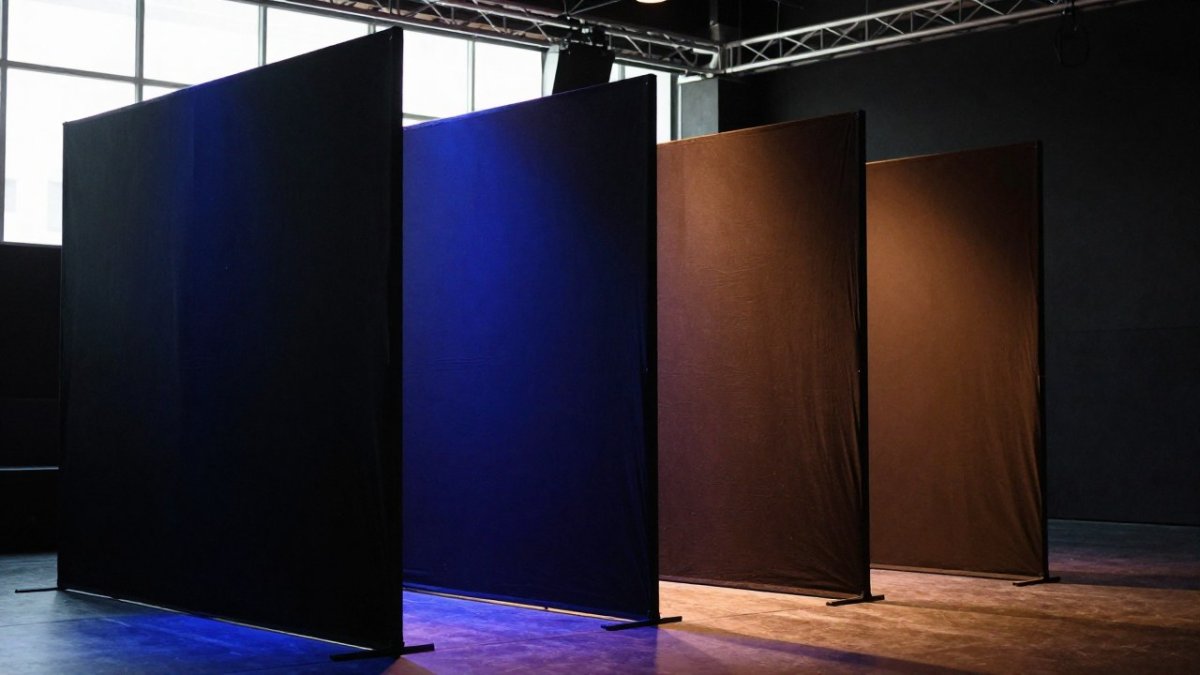
Three variables control the result:
- Base color. Black absorbs most wavelengths and gives the cleanest color separation. Deep navy, burgundy, and forest read richer under warm gels but muddy under cool ones.
- Sheen. Matte fabric returns a soft, even wash. A fabric with sheen produces hot spots where the beam hits and dead zones between fixtures.
- Fixture spacing and angle. Tight spacing gives an even gradient. Wide spacing gives visible scallops.
Blackout drapes for uplighting work best when the fabric is matte and the base color is chosen for the gel palette, not for the daylight swatch. If you want to see how specific sheens and colors behave, you can view the drape colors and material sheen options side by side.
Sealing Light Leaks at the Sides, Top, and Floor
A blackout drape that does not seal is a blackout drape that leaks. Light finds every gap, and the audience sees the spill before it sees the performance.
Start with a spill test you can run in the venue. With the room otherwise dark, bring up the fixtures you expect to use, washes, profiles, uplights, and any projection, one at a time, and walk the audience sightlines.
Side gaps are the worst offender. Two panels hung edge to edge will separate under any air movement, so overlap them by at least 12 inches and pin or clip the overlap. A simple overlap is not a seal; the panels need to be held together along the overlap so air and light cannot pass.
Top gaps appear when the track sits below the ceiling. A valance or a return to the ceiling closes them, and the valance should overlap the top of the drape rather than sit flush above it. Floor gaps are the easiest to fix and the easiest to forget: a drape that stops short of the deck lets a wash spill underneath and light the front row.
Seams and overlaps deserve their own check. A seam that is sewn with a light-colored thread or a loose stitch can read as a dotted line under a bright wash. Overlaps that are not clipped can open by an inch or more once the drape is under load.
Fullness matters here too. A flat panel stretched tight shows every wrinkle and every gap.
Watch out: a drape that tests clean in a dark room can still leak once stage haze or atmospheric effects are running, because haze makes a light beam visible where it would otherwise pass unnoticed. Run the spill test with haze if the show uses it.
Fire Safety, Flame Retardancy, and Rigging Load
Flame retardancy is not optional for performance drapery, and it is the specification most often taken on faith. Venues and fire marshals ask for documentation, and a verbal assurance will not clear an inspection. The gap in most buying guides is that they name a standard and stop; what actually matters is knowing which standard applies to your fabric, what the certificate must say, and how treatment interacts with repeated handling.
The two standards you will encounter most often are NFPA 701, Standard Methods of Fire Tests for Flame Propagation of Textiles and Films, and NFPA 255, Standard Method of Test of Surface Burning Characteristics of Building Materials. They test different things. NFPA 701 is a small-scale ignition and flame-spread test intended for textiles and films, and it is the one commonly cited for drapery and scenic fabric. Our team explains the distinction in detail in the NFPA 701 versus NFPA 255 certification breakdown.
When you review a certificate, check four things:
- The fabric identity. The certificate should name the specific fabric, weight, and color, because treatment and dye lots can affect performance.
- The test method and edition. "Passed NFPA 701" without an edition year is incomplete; methods have been revised over time.
- The testing laboratory. A report from a recognized independent lab carries more weight than an in-house statement.
- The treatment type. Inherently flame-retardant fabrics hold their performance through cleaning and handling; topically treated fabrics can lose effectiveness over time and may require re-treatment. Ask which one you are buying.
Rigging load is the other half of the safety equation, and it is where working stages get into trouble. Drape weight adds up fast across a wide span. A 23 oz velour at full width is a substantial load, and a track or pipe rated for a light decorative panel may not carry it. Before you hang anything overhead, confirm the load rating of your mounting hardware against the total fabric weight, including hardware, weights at the hem, and any valance.
Frequent operation adds a second safety dimension. Draw systems, carriers, and support spacing wear under repeated opening and closing, and a drape that is safe on day one can become a hazard if a carrier fails mid-show. Inspect tracks, carriers, and attachment points on a schedule, and replace worn hardware before it becomes a load problem.
Request a Quote for Stage Blackout Drapes
Specifying stage drapery comes down to five numbers: weight, flame certificate, light-blocking performance, coverage, and load. Get those right and the drape disappears into the design, which is exactly what it should do.
Event Drape Rental supplies drapes from 12 to 30 feet tall in over 100 colors and six fabric materials, with DIY or professional installation options. Pricing depends on quantity, dates, and delivery, so the fastest path is to send us your specs. Request a quote for stage blackout drapes for current availability and pricing.
The gap between a stage that reads clean and one that glows at the seams is almost always specification, not budget. Send us your stage dimensions, your lighting plan, and your fire documentation requirements, and we will match fabric weight and height to the space. Get started with Event Drape Rental and specify drapes that hold blackout through the full program.
Frequently Asked Questions
Which type of curtains block out the most light?
Total blackout comes from construction, not one fabric alone. Look for a dense, tightly woven face cloth with a separate blackout lining, hung with overlap at the center and returns at the sides. A single-layer panel rated at 95 to 99% still leaks through the weave and around the edges. Two layers plus edge sealing is what gets a stage to true blackout for projection and camera work.
What are theater-grade blackout curtains?
The term describes drapes built for performance spaces rather than bedrooms: heavier fabric, matte finish to cut glare, sewn-in linings, and documented flame retardancy. Reputable suppliers provide test documentation for the fabric, usually to NFPA 701. Ask for the report before you book. A retail panel labeled theater-grade without paperwork is a marketing claim, not a specification.
How do you prevent light from leaking around stage drapes?
Plan the edges before you hang anything. Overlap center panels by at least 12 inches, add side returns that wrap toward the wall, and mask the top with a valance or ceiling treatment. Floor-length drapes should touch the deck or use a small puddle. Gaps at the top and sides cause more visible spill than the fabric itself on most stages.
Can blackout drapes also reduce sound in a theater?
Heavy drapes absorb some mid and high frequencies and cut slap echo in hard-surfaced rooms, which helps speech clarity. They do not replace acoustic panels for low-frequency control. If noise reduction matters, choose a heavier fabric weight and full, gathered fullness rather than flat panels, and treat the drapes as one part of the room's acoustic plan.