 comparison
Is Pipe and Drape Worth the Investment for Small Weddings?
Last Updated: October 25, 2026
Quick Summary
For most small weddings, pipe and drape is worth the investment only when you drape two or three high-impact areas instead of the whole room. A targeted installation changes how a space photographs and feels, while a full-room treatment often costs more than the guest count justifies.
- Draping pays off most behind the ceremony, over an eyesore, or as a zone divider.
- Skip full-room draping when the venue has strong architecture or a low ceiling.
- A single ceremony backdrop is typically 8 to 12 feet wide and 8 to 12 feet tall.
- Standard drape panels range from 12 to 30 feet, and anything over 20 feet needs a two-person crew.
- Book your rental four to six weeks out and confirm venue rules before requesting a quote.
Table of Contents
- Is Pipe and Drape Worth the Investment for Small Weddings?
- When Draping Earns Its Place in a Small Venue
- When It Does Not
- Pipe and Drape Rental Cost: What Drives the Price
- Event Draping Cost per Square Foot: Why No Single Number Exists
- DIY Pipe and Drape for Weddings vs. Professional Installation
- Wedding Draping Ideas That Fit a Small Guest Count
- Venue Rules, Measurements, and Installation Logistics
- Request a Quote for Your Small Wedding Draping
- Frequently Asked Questions
Is Pipe and Drape Worth the Investment for Small Weddings?
For most small weddings, pipe and drape is worth the investment only when you drape two or three high-impact areas instead of the whole room. A targeted installation changes how a space photographs and feels, while a full-room treatment often costs more than the guest count justifies. This guide from Event Drape Rental breaks down where draping earns its keep, where it does not, and how to decide for your venue.
Start with the math on scale. A small wedding has fewer guests, which means less floor to fill and more freedom to concentrate your decor budget. The WeddingWire community forums show couples regularly debating full-room coverage versus minimal draping, and the consensus leans toward selective use.
Below, we walk through the decision framework we use with couples and planners, the cost drivers behind a quote, and the alternatives that deliver a similar look for less.
When Draping Earns Its Place in a Small Venue
Draping pays off when the fabric solves a specific visual problem. A pipe and drape setup is a freestanding system of uprights, crossbars, and fabric panels that creates a defined backdrop or wall without drilling into the venue.
Three situations justify the spend:
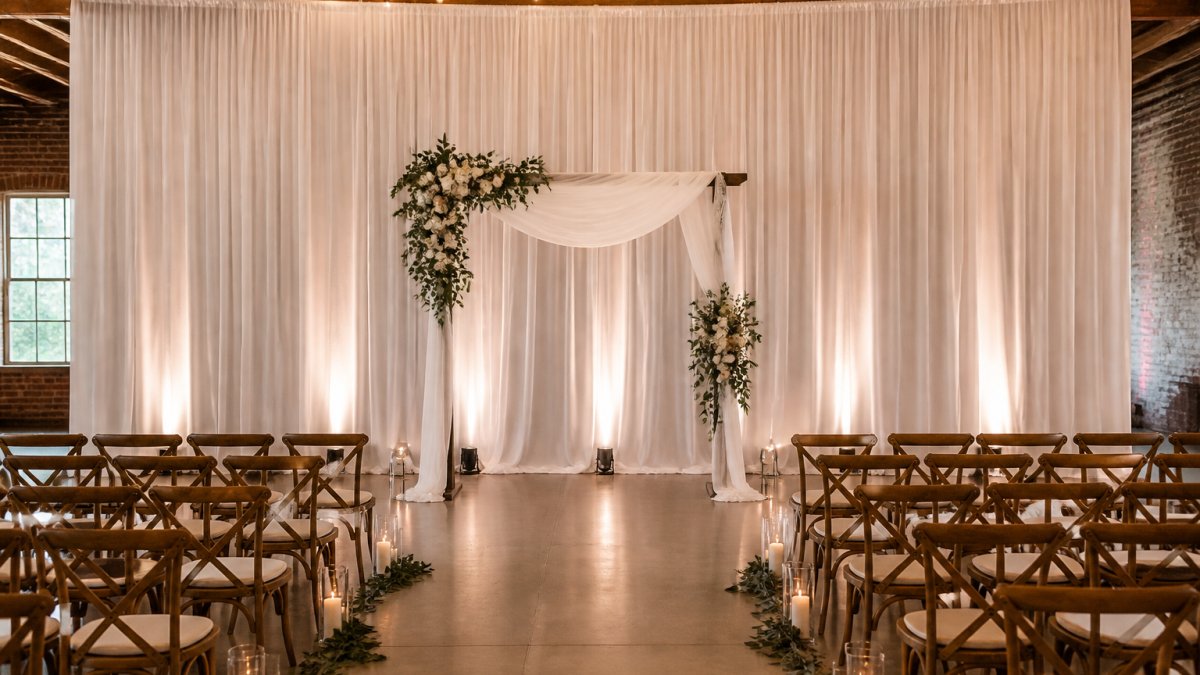
- The ceremony focal point. An arch or backdrop behind the couple is the most photographed square footage of the day. Draping here delivers the highest visual return per dollar.
- Hiding an eyesore. Exposed pipes, a service door, or an ugly wall behind the head table disappears behind a clean fabric panel.
- Defining a zone. A draped divider separates the ceremony from the reception in a single-room venue, so guests read the space as intentional rather than cramped.
What most guides miss is that a small wedding rarely needs ceiling treatment. Floor-to-ceiling fabric in a room with a low ceiling can make the space feel tighter, not grander.
When It Does Not
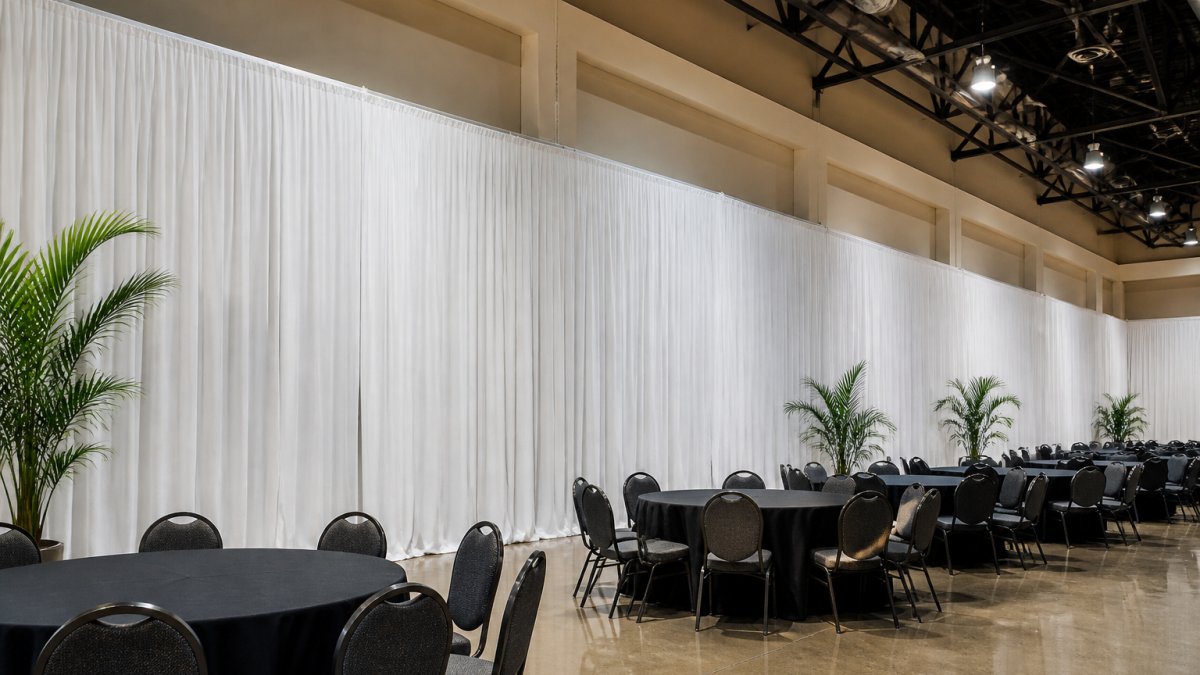
Full-room draping is rarely worth it for a small guest count. Covering every wall and the ceiling consumes the largest share of a decor budget while delivering the least incremental impact, because most guests only notice the areas they face.
Skip the investment when:
- The venue already has strong architecture, like exposed brick, timber beams, or large windows with a view.
- Your budget is tight enough that draping would compete with food, photography, or music.
- The room is small and low-ceilinged, where heavy fabric can crowd the space.
A common mistake is treating draping as all-or-nothing. A targeted installation in the two areas guests actually look at beats a full-room treatment almost every time.
Pipe and Drape Rental Cost: What Drives the Price
There is no flat rate for pipe and drape rental cost, because a quote reflects the scope of your install rather than a single product. Pricing depends on quantity, dates, delivery distance, and whether you choose DIY or professional setup.
Start with the three numbers that set the floor of any quote: linear feet of drape, drape height, and whether labor is included. A single ceremony backdrop is typically 8 to 12 feet wide and 8 to 12 feet tall. A draped head-table wall runs 12 to 20 feet wide. A room divider that separates ceremony from reception usually needs 20 to 30 feet of coverage.
Those ranges move for five reasons:
- Coverage area. More linear feet of fabric and more uprights mean a higher total. This is the single biggest driver.
- Drape height. Taller drapes require heavier hardware and more fabric, and standard panels range from 12 to 30 feet. Anything over 20 feet usually needs a two-person crew and weighted bases.
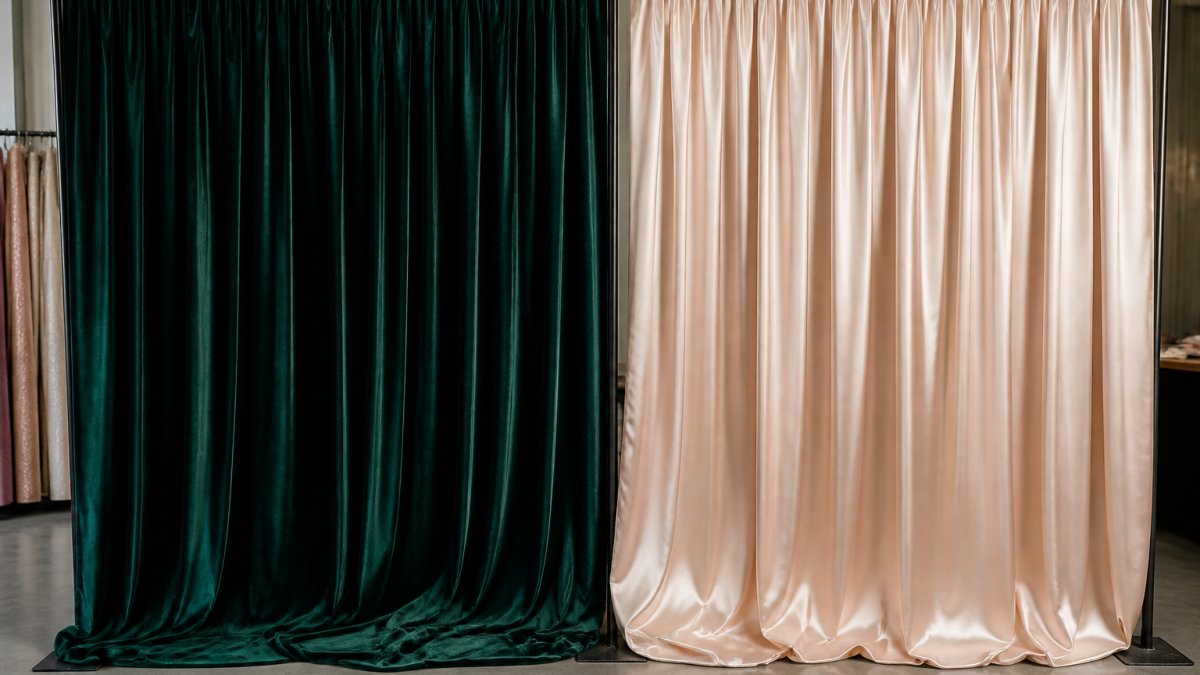
- Fabric type. Sheer voile, opaque polyester, and specialty materials carry different price points and durability.
Rental duration matters less than couples expect. Most wedding rentals are priced for a one-day or weekend window, and extending to a multi-day window often adds a modest percentage rather than doubling the price.
For a clearer picture of how these factors translate into a quote, see our pipe and drape rental pricing guide.
Event Draping Cost per Square Foot: Why No Single Number Exists
Event draping cost per square foot varies because fabric, height, labor, and delivery all move independently. A sheer voile wall costs differently than an opaque panel of the same size, and a 12-foot drape costs less to install than a 30-foot one.
The honest answer is that per-square-foot pricing is a starting estimate, not a final number. If you want to work through the math for your own venue, our guide on calculating event draping cost per square foot walks through it step by step.
DIY Pipe and Drape for Weddings vs. Professional Installation
DIY pipe and drape for weddings can save money on a simple backdrop, but it shifts the labor and risk onto you. Rental vendors deliver the drapes and hardware, and you handle setup.
| Factor | DIY Rental | Professional Installation |
|---|---|---|
| Upfront cost | Lower, no labor charge | Higher, includes labor |
| Setup time | You supply the hours | Handled by the crew |
| Risk of a sloppy result | Higher without experience | Lower |
| Best for | One simple backdrop | Multi-area or tall installs |
| Strike and teardown | On you | Included |
A common mistake is underestimating setup time on tall drapes. If you are leaning DIY, our tips for professional-looking DIY event drapery cover the details that separate a clean result from a wrinkled one.
Wedding Draping Ideas That Fit a Small Guest Count
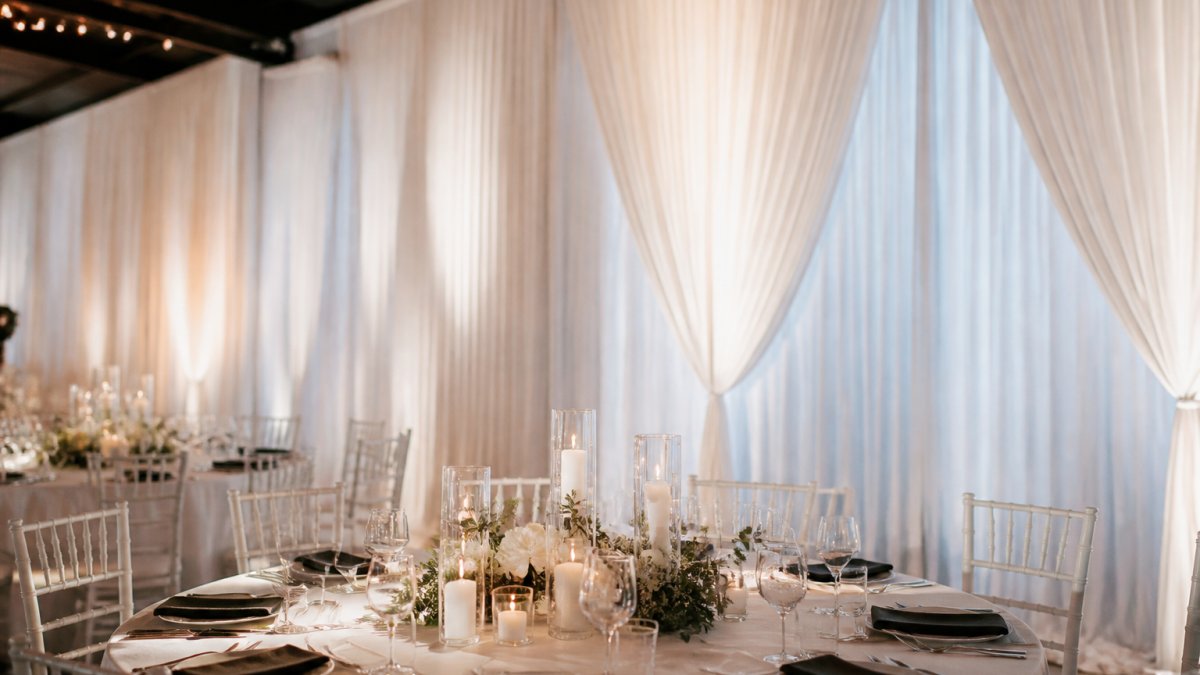
Small weddings reward restraint. The best wedding draping ideas use one or two strong gestures rather than covering every surface.
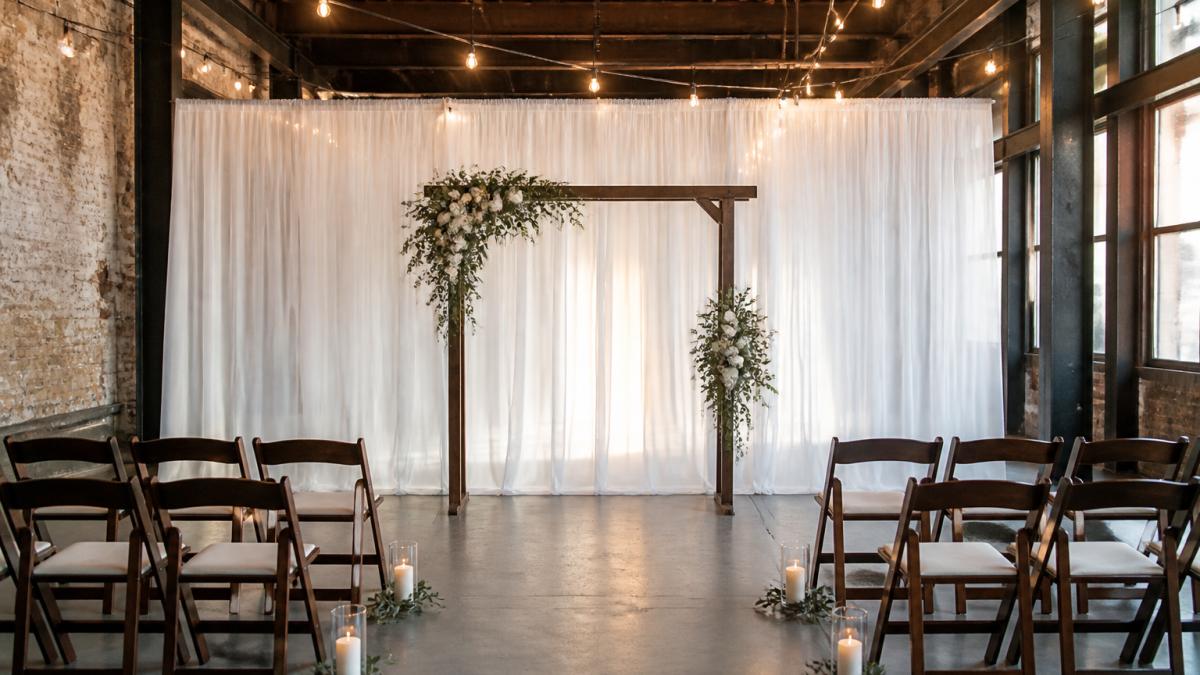
Consider these approaches:
- Sheer voile ceremony backdrop. Light, airy, and photogenic, and it softens a hard wall behind the couple.
- Draped head-table wall. Frames the reception's focal point without touching the rest of the room.
- Fabric photo booth corner. A draped panel doubles as a backdrop guests actually use.
For more styles that suit a compact venue, browse our top pipe and drape styles for weddings.
Venue Rules, Measurements, and Installation Logistics
Measure before you commit, and confirm what the venue allows.
The five questions to ask the venue first:
- What is the clear ceiling height in the exact spot you want to drape? Measure to the lowest obstruction, not the highest point.
- Where can equipment enter, and is there a freight elevator, ramp, or stair carry? A 30-foot upright does not fit in every doorway or elevator.
- Are weighted bases allowed, and are there restrictions on where they can sit? Some venues prohibit weights on certain flooring or near exits.
- What are the setup and strike windows? Access time often decides whether a professional crew is required.
- Does the venue require flame-retardant fabric, and do they ask for documentation? Many venues require flame-retardant materials for indoor draping, so confirm the standard before booking.
How to measure for a quote. Measure the exact width and height of each area you plan to cover, and note obstructions like sprinklers, outlets, thermostats, and exit signs.
Installation logistics and timeline. A realistic small-wedding schedule looks like this:
- Four to six weeks out. Confirm venue rules, finalize measurements, and book the rental.
- One to two weeks out. Confirm delivery window, crew size, and whether strike happens the same night or the next morning.
- Day before or morning of. Deliver and install. A single backdrop takes a crew roughly one to two hours; two to three areas take three to five hours; a partial room treatment can take most of a day.
A quick decision framework for a small venue. Use this to choose between one focal wall, partial draping, and no draping:
- One focal wall makes sense when the ceremony backdrop is the most photographed area and the rest of the room already looks intentional.
- Partial draping (two or three areas) makes sense when you need to hide an eyesore and define a zone in a single-room venue.
- No draping makes sense when the venue has strong architecture, the ceiling is low, or the budget is better spent on food, photography, or music.
If you are comparing pipe and drape against alternatives, weigh targeted backdrops, curtains, greenery, lighting, and room layout changes against the cost of a full install.
Request a Quote for Your Small Wedding Draping
The fastest way to settle whether pipe and drape is worth it for your wedding is a quote built around your actual venue. At Event Drape Rental, we supply drapes from 12 to 30 feet tall in many colors and fabric materials, with either DIY rental or professional installation. Share your measurements and coverage areas, and we will price the scope that fits your guest count. Request a quote for your small wedding draping and get a plan built for your space.
Frequently Asked Questions
How much does it cost to drape a wall for a small wedding?
There is no single national rate. Pricing for pipe and drape depends on the height of the drapes, the fabric you pick, the coverage area, labor, and delivery distance. A single back wall costs far less than wrapping a whole room. For a small wedding, ask for a quote based on your exact wall measurements rather than a per-foot estimate.
Can you install DIY pipe and drape for weddings yourself?
Yes, and some vendors rent the drapes and hardware with delivery to the venue so you handle setup. The trade-off is time and finish. DIY works best for a single backdrop or photo booth wall where the frame is simple and the ceiling is reachable. Full-room coverage, tall uprights, or a tight setup window usually justify professional installation, especially if the venue requires a certificate of insurance or a licensed crew.
What are the alternatives to pipe and drape for a small wedding?
Purchased backdrop kits are the main alternative. These suit a single focal wall and can be reused, but they rarely cover a full room and the listings often leave dimensions and included components unclear. Other options include fabric swags on existing structures, rented arches, and focusing decor on one high-impact area instead of the entire space.
What should I ask before renting pipe and drape?
Ask for the drape height available, since standard stock tops out lower than warehouse venues need, and confirm whether 12 to 30 ft options are in inventory. Ask how fabric is cleaned and pressed before delivery, what the setup and strike windows are, whether labor and delivery are included, and how the quote handles venue insurance requirements. Get the coverage area in writing so the quote matches your measurements, not a rough guess.
How much pipe and drape do I need for a small wedding venue?
Measure the walls or openings you actually want to change, not the whole room. Most small weddings need one ceremony backdrop, one photo booth wall, or a short run to hide an ugly feature like a service door or storage area. Multiply the width by the height for each panel and add a little extra for gathering. Send those numbers with your ceiling height and the vendor can size uprights and crossbars accurately.
Small weddings do not need a fully draped ballroom to look intentional. They need the right two or three areas dressed well. Event Drape Rental offers drapes up to 30 feet tall, a broad color range, multiple fabric materials, and both DIY and professional installation so you can match the investment to your venue. Get started with Event Drape Rental and transform the spaces your guests will actually notice.