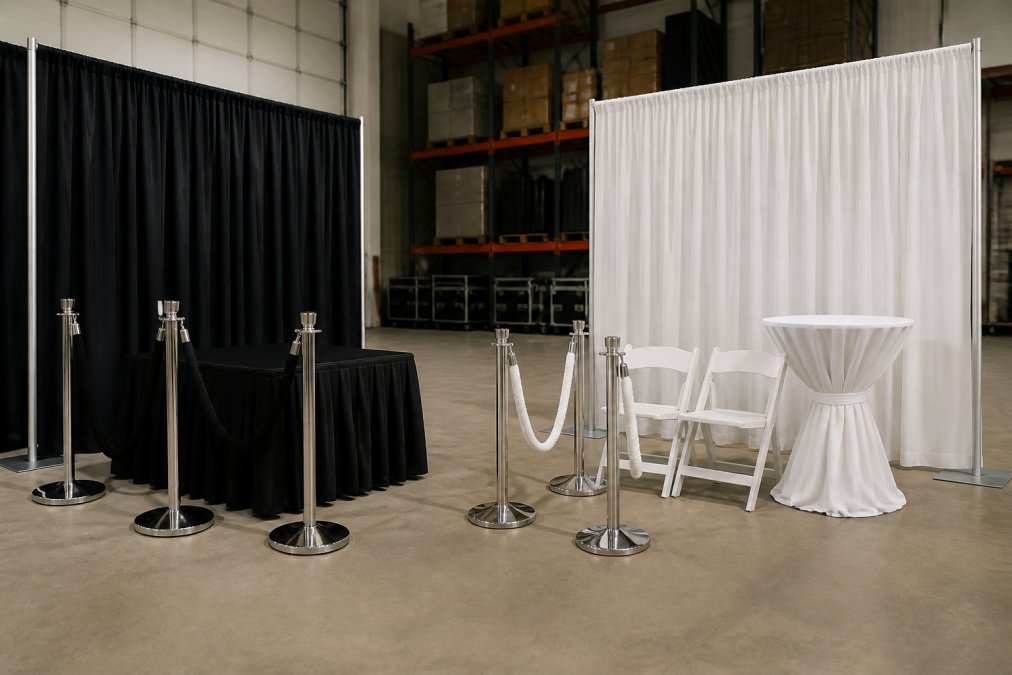
 comparison
Nationwide Event Rentals vs Local Providers: How to Choose
Table of Contents
- Nationwide Event Rentals vs Local Providers: The Core Trade-Offs
- Quick Comparison: National Chains vs Regional Specialists
- Inventory Breadth and Specialized Gear: Who Has What You Need?
- Logistics and Shipping: The Hidden Cost of Distance
- How to Calculate Cost of Event Draping Per Square Foot
- DIY vs Professional Event Setup: Labor, Risk, and Quality
- Your Event Rental Logistics Checklist: What to Ask Before Booking
- Decision Matrix: Which Provider Type Fits Your Event?
- Frequently Asked Questions
Last Updated: September 7, 2026
Nationwide Event Rentals vs Local Providers: The Core Trade-Offs
The decision between nationwide event rentals vs local providers comes down to whether you prioritize inventory depth and scalability, or hands-on service and speed to site.
The most common mistake is choosing a provider type before defining the event's actual constraints. A national chain can reserve 2,000 chairs across three warehouses, but cannot send a technician to your loading dock in 40 minutes when a delivery window slips. A local vendor offers that responsiveness, yet may not hold the specialized gear your ballroom ceiling demands.
Event rentals encompass far more than tables and linens. Pipe and drape systems, staging, lighting, and custom fabrication all carry different logistics profiles. Before comparing quotes, map your load-in schedule, venue accessibility, and tolerance for coordinating multiple vendors.
Quick Comparison: National Chains vs Regional Specialists
National chains win on breadth; regional specialists win on proximity. For multi-site events, the national model consolidates procurement under one contract. Local providers counter with site survey expertise and labor force familiarity that no call center can replicate.
| Factor | National Chain | Local Provider |
|---|---|---|
| Inventory depth | Extensive, multi-warehouse | Curated, venue-specific |
| Logistics | Freight and drayage coordination | Direct delivery, shorter turnaround |
| On-site support | Often third-party labor | In-house technicians |
| Pricing model | Standardized, volume discounts | Custom quotes, flexible terms |
| Best for | Multi-city events, tight brand consistency | Single venues, rapid changes |
The trade-off sharpens around contingency planning. A national firm's supply chain reliability means replacements ship from another region if gear arrives damaged. A local vendor can inspect the damaged item and swap it from their warehouse the same morning.
Inventory Breadth and Specialized Gear: Who Has What You Need?
Inventory availability determines what your event can look like. National chains stock standardized infrastructure in volume, making them reliable for large quantities of identical items. Regional specialists often carry specialized gear that national catalogs overlook, such as custom fabrication or fabric options matched to a venue's dimensions.
For drapery, a provider with an extensive inventory of colors and fabric materials can match brand guidelines exactly. Standard drapes top out around 12 feet, but venues with 30-foot ceilings need extended risers and engineered bases (ararental.org). Ask every provider for their full inventory list.
National chains rotate stock across regions, meaning you may receive equipment with significant wear. Local specialists who maintain their own inventory typically inspect each piece before every event, catching wrinkles, damaged hardware, or coating failures before they reach your venue.
Logistics and Shipping: The Hidden Cost of Distance
Distance is the silent budget killer in event rentals. A national chain's quote may look competitive on paper, but the true cost of moving gear from a regional hub to your loading dock involves fees that local providers simply do not incur.
The Fee Stack You Will Actually See
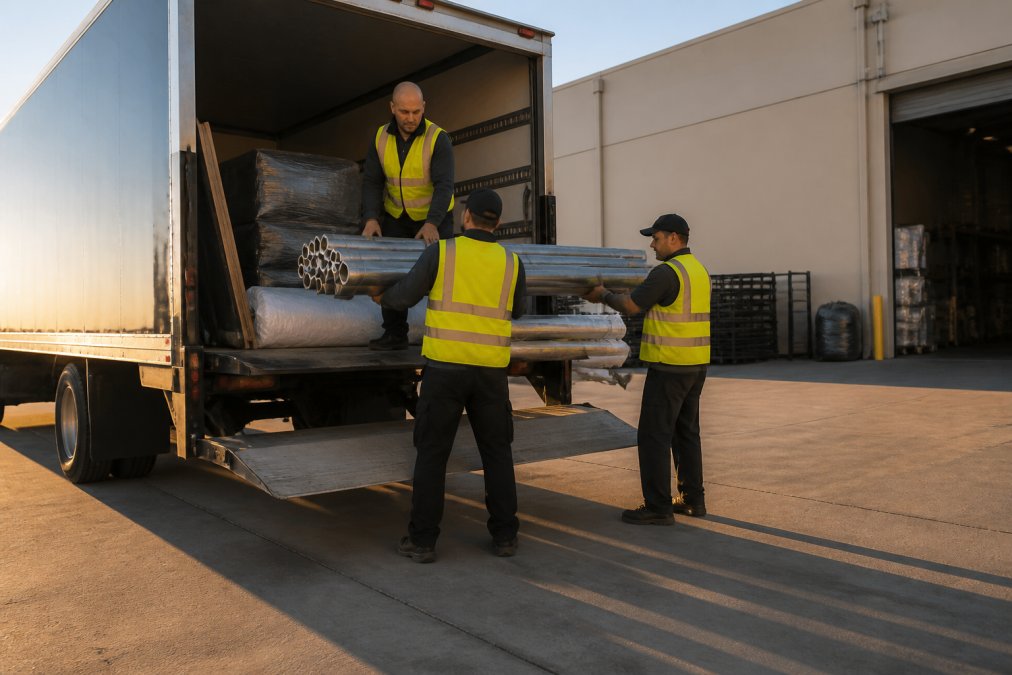
When a national provider ships equipment, the quoted freight rate rarely tells the whole story. The standard fee stack includes:
- Fuel surcharges, Carriers apply a percentage-based surcharge that fluctuates with diesel prices, often 5-10 percent of the base freight rate, and it is almost never baked into the rental quote.
- Liftgate service, If your venue lacks a dock, the carrier charges a flat fee per delivery for a truck equipped with a liftgate. This fee applies on both delivery and pickup, doubling the cost.
- Inside delivery, Getting equipment from the truck to your staging area is a separate line item. Carriers charge by the floor and by the pallet, and union venues or buildings with freight elevator restrictions can add hours to the process.
- Drayage, For events in convention centers or venues with union labor rules, the union handles all freight movement from the dock to your booth or ballroom. Drayage rates are set by the venue's labor contract, not by your rental provider, and they can exceed the rental cost of the equipment itself.
- Residential or limited-access fees, Venues without a commercial loading dock trigger additional carrier fees that local providers absorb because their own trucks and drivers handle the delivery.
A national quote often looks 15-20 percent cheaper than a local bid, only for logistics add-ons to erase that margin. Local providers who own their fleet quote one price that includes the truck, driver, fuel, and labor to get equipment to your staging area.
The Last-Mile Problem
The 'last mile', from the regional hub to your venue, is where national providers lose their advantage. A national chain coordinates deliveries across multiple clients, so your 6:00 AM load-in slot depends on a driver who may be running behind. If a previous client's load-out is delayed, your window shifts and you absorb the cost of idle crew.
Local providers control their own fleet and drivers. When a window slips, they can reroute a truck or send a second vehicle without navigating a national dispatch system. For venues with union rules, limited dock access, or tight load-in windows, this flexibility prevents costly downtime.
Who Owns the Risk in Transit?
Ask pointed questions about shipping and freight before signing. The American Rental Association's guidance on rental contracts recommends itemizing every logistics line to avoid surprise charges. The critical questions are:
- Who owns the risk if equipment arrives damaged? National providers often ship via third-party carriers, which means damage claims go through the carrier's process, not the rental company's. That process can take weeks and requires photographic evidence, inspection reports, and signed delivery receipts.
- What is the turnaround time for replacements? A national firm may need to ship a replacement from another state, adding 2-3 days to the timeline. A local provider can physically inspect the damaged item and swap it from their warehouse the same morning.
- Does the quote include pallet fees, liftgate service, and driver wait time? Driver wait time is billed by the hour after the first 30 minutes, and venues with slow load-in processes can generate hundreds of dollars in additional charges.
The Sustainability Angle No One Talks About
Distance also carries an environmental cost relevant for planners with ESG reporting requirements. Shipping equipment across state lines involves diesel trucks and multiple transport legs. A single cross-country shipment can generate several times the carbon emissions of a local delivery route.
Local providers who maintain inventory within a single metro area offer a measurably lower carbon footprint. Some corporate RFPs now ask vendors to disclose transport distances and emissions estimates, and local providers can answer with far more favorable numbers.
The Bottom Line on Logistics
Build a logistics comparison sheet that includes every fee category above. If a national provider cannot itemize shipping costs in writing, treat that as a red flag. The provider whose logistics model matches your venue's reality will not surprise you on the final invoice.
How to Calculate Cost of Event Draping Per Square Foot
Calculating how to calculate cost of event draping per square foot requires more than multiplying width by height. Installation method, hardware, and labor all factor into the true cost. A basic estimate uses the fabric's per-square-foot rate multiplied by the total drape area, then adds 10-15 percent for pleating and overlap.
Measure the actual span, then add 15 percent for fullness if you want a gathered look. Floor-to-ceiling height determines whether standard 12-foot drapes suffice or whether you need 20- or 30-foot panels. Taller drapes require counterweighted bases that cost more to ship and install.
DIY installation changes the math: subtract labor costs but add equipment rental for lifts or ladders, plus the risk of damage. Professional installation shifts cost to the provider but transfers liability. Event Drape Rental offers both approaches, with drapes ranging from 12 to 30 feet in height.
DIY vs Professional Event Setup: Labor, Risk, and Quality
The DIY vs professional event setup decision often comes down to who touches the equipment last. Many planners assume rental includes installation, only to discover the drapes arrive in crates with no crew to hang them. Verify labor coverage in writing before you book.
Professional installation justifies its cost through speed and risk transfer. Trained crews complete in hours what an untried team struggles with for a full day. They arrive with correct tools, understand load-in protocols, and carry insurance that protects you if equipment fails.
DIY setup works when your team has done it before and your venue is forgiving. If you choose this route, schedule a site survey and request detailed technical specifications, including base weights and pole lengths. The Occupational Safety and Health Administration's guidance on aerial lifts applies directly here: any setup above 12 feet requires proper lift equipment and trained operators, which is a cost and liability many DIY planners underestimate.
Your Event Rental Logistics Checklist: What to Ask Before Booking
A structured event rental logistics checklist prevents common booking failures. Start with delivery and installation scope: confirm who unloads the truck, stages the equipment, and returns it. These responsibilities define your labor costs as much as the rental rate.
- Site access: Confirm dock height, elevator dimensions, and hallway clearances for your largest equipment pieces
- Load-in window: Verify the exact time slot and whether overtime rates apply if your crew runs late
- Installation labor: Specify whether setup and breakdown are included or billed separately
- Damage policy: Request the inspection process for both delivery and pickup to avoid disputed charges
- Contingency stock: Ask what happens if equipment arrives damaged or missing on event day
- Turnaround time: Confirm how far in advance gear must be ordered, especially for peak season dates
Vendor coordination becomes simpler when one provider owns more of the event lifecycle. A single point of contact for drapery, staging, and labor reduces miscommunication risk. For multi-venue events, ask whether the provider can handle different delivery locations on the same day.
Decision Matrix: Which Provider Type Fits Your Event?
Use this decision matrix to match provider type to your specific constraints. The right choice balances inventory needs, timeline pressure, budget predictability, and the risk profile of your venue agreement.
| Your Situation | Better Choice | Why |
|---|---|---|
| Multi-city conference, consistent branding | National chain | Centralized procurement, standardized gear across sites |
| Single venue, rapid timeline | Local provider | Faster delivery, direct site access, no freight lag |
| Custom drapery, specific colors | Specialist with deep inventory | Broader fabric and color selection beyond standard catalogs |
| Tight budget, flexible dates | Local provider | Fewer freight and drayage surcharges; one quoted price |
| High-profile gala, zero margin for error | Full-service provider | Professional installation, insured labor, single point of contact |
| Warehouse venue, 30-foot ceilings | Specialist with tall drapes | Extended heights beyond standard 12 feet; engineered rigging |
| Venue with union labor requirements | Local provider | Familiarity with local union rules and labor coordination |
| ESG reporting requirements | Local provider | Lower transport emissions; easier sustainability documentation |
Insurance and Liability: The Fine Print That Decides
Insurance and liability nuances often tip the scale between provider types. The two models carry fundamentally different risk profiles.
National chains carry broad umbrella policies, but their risk department processes additional insured endorsements through a centralized system that can take 2-4 weeks. If your venue requires naming it as an additional insured and your event is three weeks away, a national chain may not deliver the paperwork in time.
Local providers can often add your venue as an additional insured within days, sometimes 24-48 hours. Their brokers are local and policies are simpler. Where the venue's risk manager demands proof of coverage before load-in, this speed is a requirement.
Certificate of Insurance: What to Request
Regardless of provider type, request a certificate of insurance (COI) naming your organization and the venue as additional insureds. Verify these specifics before signing:
- General liability limits, Most venues require $1 million per occurrence and $2 million aggregate. Confirm the provider's policy meets your venue's minimums.
- Workers' compensation, If the provider's crew installs equipment, their workers' comp policy must cover the state where your event takes place. A national provider's out-of-state policy may not extend coverage to your state without a specific endorsement.
- Property damage to rented equipment, Some contracts hold the renter liable for damage to the equipment itself, while others cover it under the provider's policy. This distinction can mean thousands of dollars in exposure if a drape panel tears or a base gets scratched.
- Subcontractor coverage, National chains often use third-party labor for installation. Confirm that the subcontractor carries their own liability and workers' comp coverage, because if they do not, the claim may fall back on you as the event host.
The If/Then Decision Tool
If still weighing options, walk through this sequence:
- If your event spans multiple cities or states → National chain, because centralized procurement ensures brand consistency across sites.
- If your event is in a single venue and your timeline is under 4 weeks → Local provider, because insurance endorsements and delivery logistics cannot compress fast enough with a national chain.
- If your venue has union labor rules → Local provider with local labor relationships, because union coordination is relationship-based, not contract-based.
- If your drapery requires specific colors, custom heights, or specialty fabrics → Specialist with deep inventory, regardless of whether they are national or local.
- If your organization reports ESG metrics → Local provider, because transport emissions are a measurable and reportable difference.
- If your event is high-profile with zero tolerance for equipment failure → Full-service provider with in-house installation crews and insured labor, because the risk transfer is worth the premium.
The Sustainability Tie-Breaker
When two providers match on price, inventory, and timeline, sustainability impact becomes the deciding factor. Local sourcing eliminates the cross-country freight leg, reducing the carbon footprint of every rental piece. Some venues include sustainability criteria in vendor approval, and a local provider's shorter transport distance is a documentable advantage.
Frequently Asked Questions
What are the primary benefits of using a nationwide event rental company?
Nationwide providers excel at multi-site deployments and large-scale consistency. They maintain deep inventory pools, standardized equipment, and centralized logistics that simplify vendor consolidation for events across multiple cities. Their scale often means better availability for specialized gear like 30-foot drapes or custom fabrication. However, that scale can come with higher shipping costs and less flexibility on site. For corporate event managers coordinating several venues simultaneously, the single-contract convenience and supply chain reliability of a national partner often outweigh the premium.
When should you choose a local event rental provider over a national chain?
Choose a local provider when your event has tight timelines, unusual venue constraints, or requires hands-on coordination. Local teams can perform site surveys quickly, adjust to load-in windows at specific venues, and provide on-site technical support with shorter turnaround times. They also eliminate long-distance shipping and freight costs, which can be significant for heavy items like pipe and drape. For single-venue weddings or private celebrations where personalized service and rapid problem-solving matter more than inventory scale, a regional specialist often delivers better value.
How do shipping and logistics costs differ between national and local rentals?
Nationwide rentals typically include shipping and freight charges that scale with distance, weight, and fuel surcharges. A 500-mile shipment of drape hardware can add hundreds of dollars to your total, plus potential drayage fees at convention centers. Local providers eliminate most freight costs because equipment travels short distances. But local inventory is finite, so you may pay rush fees or accept substitute items. Always request an itemized quote that separates delivery, setup, and pickup charges. Ask about load-in and load-out windows, since overtime labor at venues can rival the rental cost itself.
Are there hidden costs associated with nationwide event rental shipping?
Yes. Common hidden costs include fuel surcharges, liftgate fees if the venue lacks a loading dock, and residential delivery premiums. Some national providers charge for equipment maintenance or cleaning if items return with damage beyond normal wear. Cross-state rentals may trigger use taxes depending on your jurisdiction. Before signing, ask for a full breakdown that includes freight, drayage, labor for load-in and load-out, and contingency fees for weather delays. A vendor-agnostic checklist should verify whether the quoted price covers return shipping, because many quotes only include one-way transport.
How do I calculate the cost of event draping per square foot?
To calculate draping cost per square foot, first measure the total drape area: multiply the linear width of each backdrop or wall by its height. For a 20-foot-wide, 10-foot-tall backdrop, that is 200 square feet. Divide the total quoted price, including fabric, hardware, and delivery, by this number. Industry quotes typically range from a few dollars to over ten dollars per square foot depending on fabric choice, height, and installation complexity. Professional-grade flame-retardant fabrics cost more than standard polyester. Always request the per-square-foot figure in writing so you can compare quotes from national and local providers on equal terms.