 listicle
7 Best Sheer Fabrics for Wedding Draping
Table of Contents
- Quick Comparison: Sheer Fabrics for Wedding Draping
- 1. Voile: The Lightweight Ceremony Backdrop Essential
- 2. Chiffon: Fluid Elegance for Arches and Soft Backdrops
- 3. Organza: Crisp Structure Meets Sheer Transparency
- 4. Tulle: Romantic Layering for Budget-Conscious Events
- 5. Batiste: Durable Elegance for Ceiling Treatments
- 6. IFR Poplin: Fire-Safe Professionalism for Large Backdrops
- 7. Mesh: Modern Texture for Contemporary Weddings
- How to Choose the Right Sheer Fabric for Wedding Draping
- Avoiding Wrinkled Drapes for Event Rentals
- Fabric Selection for Ceiling Draping
- Color Trends for Wedding Draping
- Budget-Friendly Draping Options
- Fire Safety and Venue Compliance
- Fabric Calculation and Yardage Math
- Texture and Lighting Interaction
- Professional Installation vs. DIY Draping
- Installation Timeline and Rush Orders
- Comparing Sheer Fabrics: Key Differences
- Getting Started with Event Drape Rental
- Key Takeaways
- Frequently Asked Questions
Last Updated: September 21, 2026
Quick Comparison: Sheer Fabrics for Wedding Draping
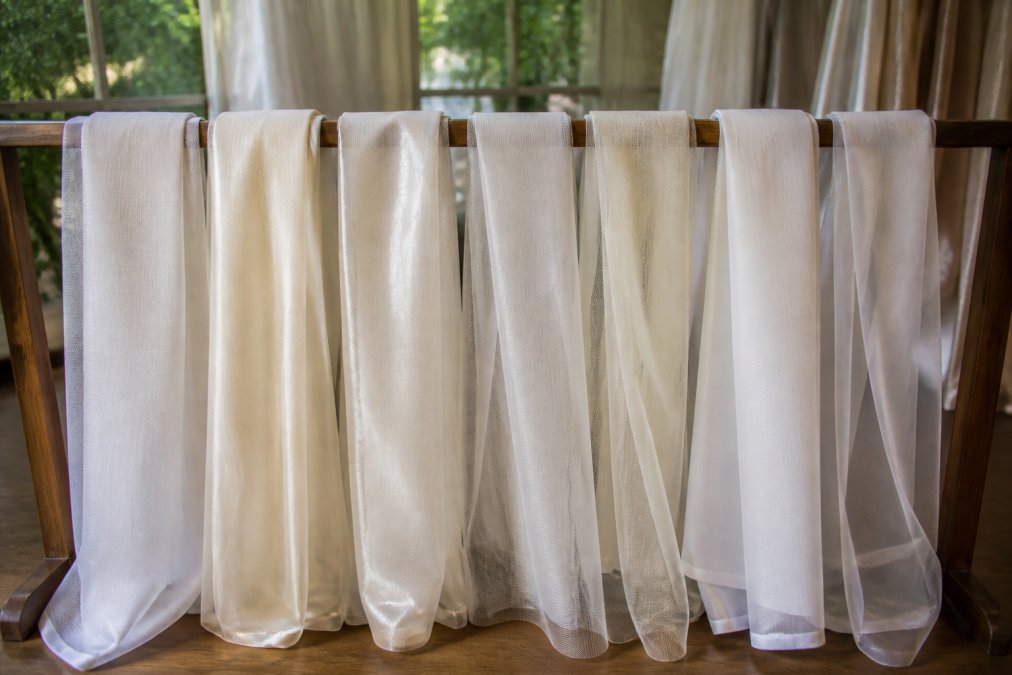
Choosing the right sheer fabric for wedding draping transforms a venue from ordinary to unforgettable. Voile holds its shape with minimal support, while chiffon flows like water. Organza adds crispness; tulle builds volume through layering. Each fabric responds differently to light, gravity, and installation methods, separating a polished event from one that looks hastily assembled.
| Fabric | Best For | Opacity | Drapeability | Durability | Installation Difficulty |
|---|---|---|---|---|---|
| Voile | Ceremony backdrops, ceiling treatments | Semi-transparent | Clean, structured | Moderate | Easy |
| Chiffon | Arches, soft backdrops | Sheer | Highly fluid | Delicate | Easy |
| Organza | Layered effects, bows | Transparent | Crisp, holds shape | Moderate | Easy |
| Tulle | Romantic layering, volume | Very sheer | Gathers easily | Moderate | Easy |
| Batiste | Formal wall draping, ceiling | Semi-opaque | Smooth, clean | High | Moderate |
| IFR Poplin | Large corporate backdrops | Semi-opaque | Structured | Very high | Moderate |
| Mesh | Modern, industrial looks | Open weave | Organic, flexible | Very high | Moderate |
1. Voile: The Lightweight Ceremony Backdrop Essential
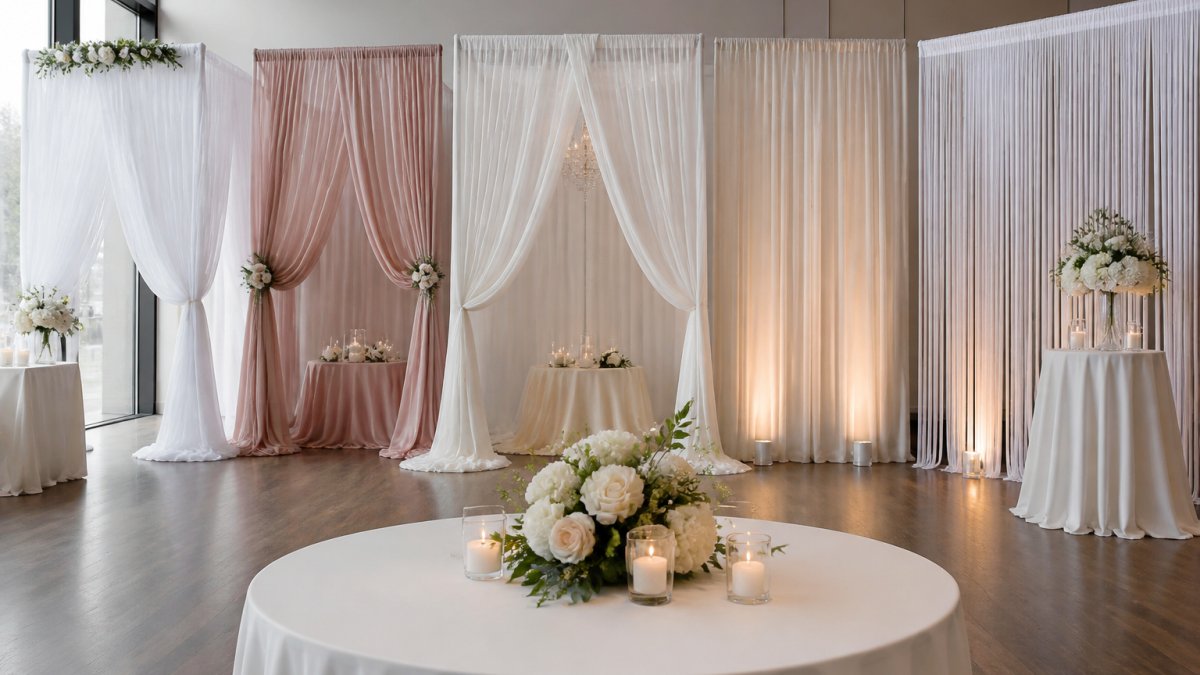
Voile is the workhorse of wedding draping. This lightweight, semi-transparent plain-weave fabric diffuses light beautifully while maintaining clean, structured lines and holding its shape once hung. It's ideal for ceremony backdrops, though it wrinkles more visibly than batiste or IFR poplin. A 12-foot-wide by 10-foot-tall arch typically needs 80-120 linear yards depending on fullness.
2. Chiffon: Fluid Elegance for Arches and Soft Backdrops
Chiffon photographs beautifully with subtle sheen and movement, cascading naturally without structural support. However, it's delicate, it snags easily and shows wrinkles readily. A 10-foot-wide arch might need 60-80 yards of chiffon versus 40-50 yards of voile for the same visual fullness.
3. Organza: Crisp Structure Meets Sheer Transparency
Organza offers sheer transparency with architectural structure, creating defined folds and crisp lines ideal for structured backdrops and layered effects. However, multiple layers can appear heavy and require steaming before installation.
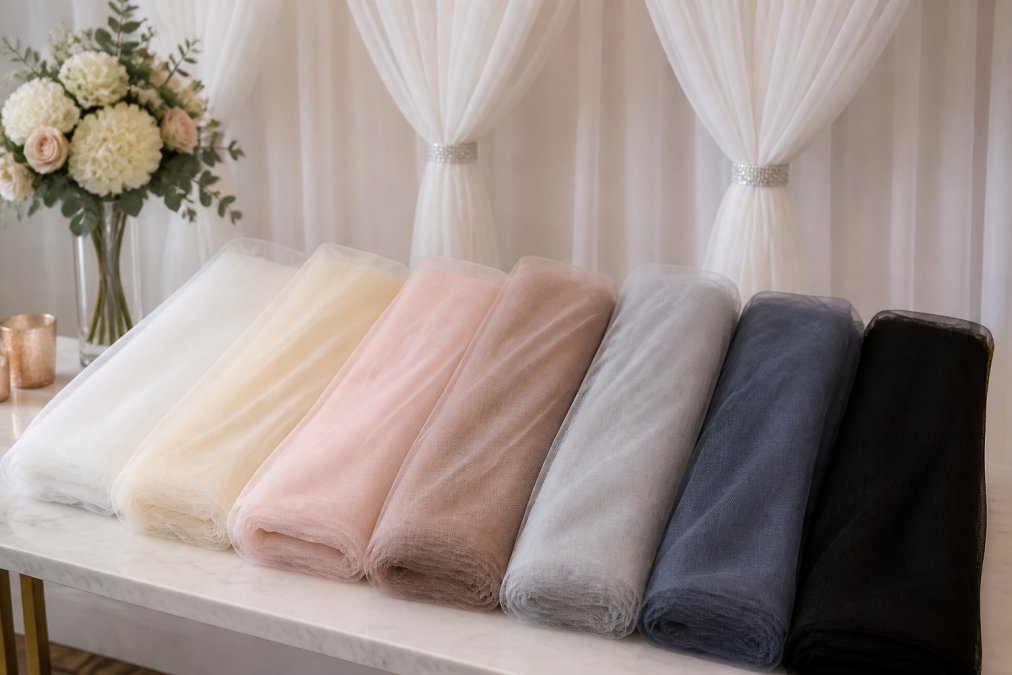
4. Tulle: Romantic Layering for Budget-Conscious Events
Tulle's affordability makes it ideal for tight budgets or large venues where yardage costs become prohibitive.
5. Batiste: Durable Elegance for Ceiling Treatments
Batiste is a fine, plain-woven fabric that drapes with clean, smooth lines while preventing sagging. A 20-foot ceiling needs 30-40 yards of batiste versus 50-80 yards of voile or tulle for the same visual fullness. It's remarkably durable and resists snagging and wrinkles, though it reads as formal and traditional.
6. IFR Poplin: Fire-Safe Professionalism for Large Backdrops
IFR (Inherently Flame Retardant) poplin is a tightly woven, durable fabric that meets fire safety codes required by many venues. Its tight weave and substantial weight mean it hangs beautifully without sagging, even across 30-foot spans, and resists wrinkles better than lighter fabrics. However, it reads as structured and formal.
7. Mesh: Modern Texture for Contemporary Weddings
Mesh requires less yardage than lighter fabrics because the open weave creates visual fullness without gathered folds. A 10-foot-wide arch might need only 30-40 yards of mesh, making it cost-effective for large installations.
How to Choose the Right Sheer Fabric for Wedding Draping
The right fabric depends on aesthetic vision, venue constraints, and budget. Romantic and soft? Chiffon or tulle. Formal and structured? Organza or batiste. Modern and architectural? Mesh. Corporate and compliant? IFR poplin. Consider venue requirements: fire-retardant materials require IFR poplin; extreme ceiling heights favor voile and batiste; outdoor wind requires voile or organza.
Avoiding Wrinkled Drapes for Event Rentals
Wrinkled drapes destroy the polished look. Store fabrics loosely in fabric storage bags or open shelving, never compressed. Before installation, steam all draping thoroughly, this is non-negotiable for voile, chiffon, and organza. Allow steamed fabric to hang for at least 24 hours before installation.
Fabric Selection for Ceiling Draping
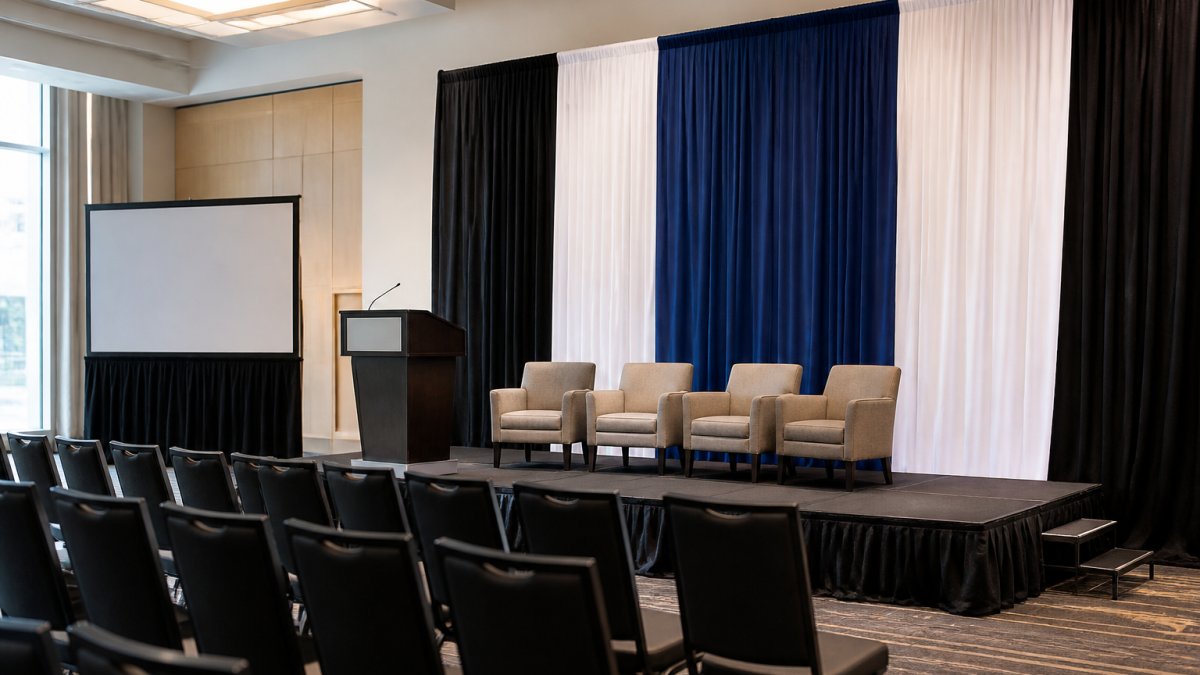
Ceiling draping requires balancing weight, drapeability, and visual impact. Voile prevents excessive sagging while diffusing light beautifully. Batiste is superior for large ceilings, requiring less yardage and delivering substantial coverage. Avoid chiffon for ceilings unless layered over a substantial base, as its fluidity causes sagging. A 20-foot-wide, 10-foot-high ceiling needs minimum 40 yards of voile, 30 yards of batiste, or 60+ yards of tulle for full coverage.
Color Trends for Wedding Draping
Ivory and white remain the dominant choices for wedding draping because they photograph cleanly and work with virtually any décor scheme. Blush, champagne, and soft gold have gained popularity for creating warmth and romance. Layering multiple shades creates visual depth and sophistication with tulle and organza. For corporate events, white, ivory, black, and gray dominate as professional backdrops.
Budget-Friendly Draping Options
Tulle is the most budget-conscious choice because it's affordable and requires no special handling. Voile offers excellent value, it's inexpensive, versatile, and delivers professional results. Avoid the false economy of choosing the cheapest fabric available; low-quality voile wrinkles excessively and photographs poorly. Investing in mid-range quality fabrics delivers better results and longer rental value.
Fire Safety and Venue Compliance
Fire safety codes vary by jurisdiction and venue type. Hotels and convention centers almost universally require IFR (Inherently Flame Retardant) certification. Always request your venue's specific fire safety requirements in writing before selecting draping fabric. Non-compliance can result in last-minute rejections, costly replacements, or event cancellations.
Fabric Calculation and Yardage Math
Accurate yardage calculations prevent both waste and shortages. For backdrops, a fullness multiplier of 1.5 to 2 is standard. A 12-foot-wide backdrop with 1.75 fullness needs 21 linear feet of fabric per foot of height. Lighter fabrics like chiffon and tulle need higher multipliers (2 to 3) for visual fullness.
Texture and Lighting Interaction
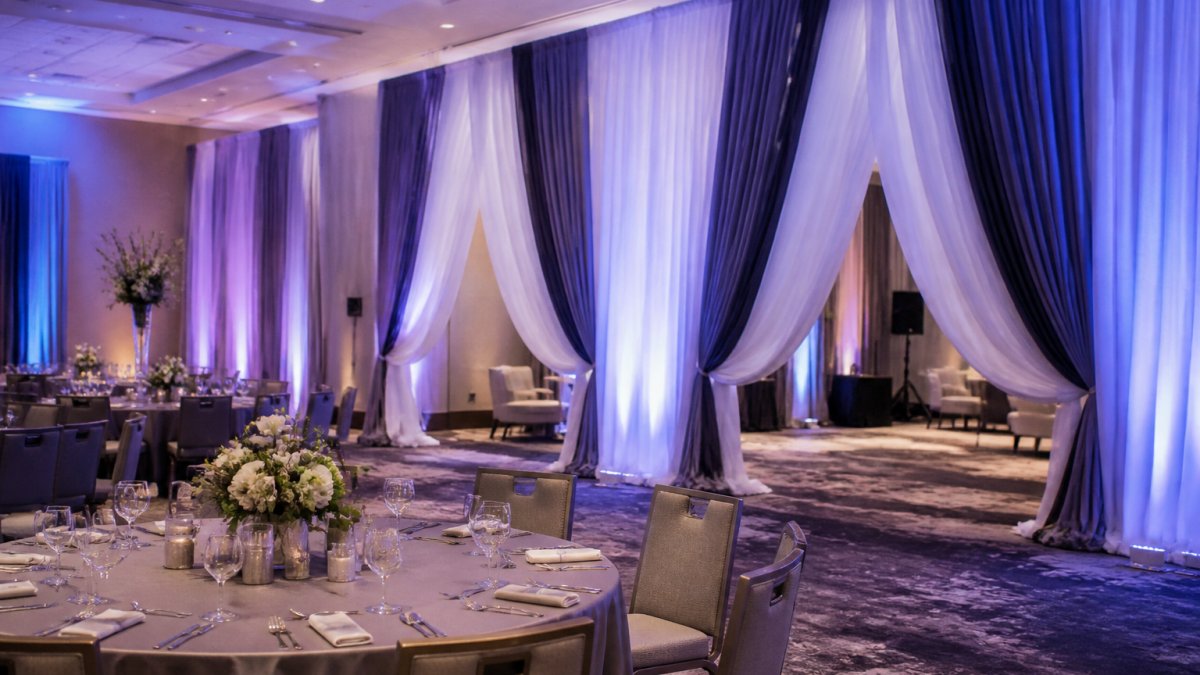
Different fabrics interact with light in distinctly different ways. Voile diffuses light softly; chiffon catches light and creates movement; organza's shimmer adds sparkle; tulle breaks light into patterns; mesh creates shadow patterns. Uplighting dramatically changes how fabrics appear, voile and chiffon become almost luminous when backlit, while mesh creates geometric patterns. Request uplighting samples with your fabric selections.
Professional Installation vs. DIY Draping
Professional installation ensures fabrics hang properly, wrinkles are eliminated, and rigging is safe and secure. DIY installation often results in sagging, visible wrinkles, and installation time that exceeds expectations. Pipe and drape systems require proper hardware, weight distribution, and height management. Professional installation includes proper steaming, rigging, and support, eliminating wrinkles and sagging entirely.
Installation Timeline and Rush Orders
Standard installation timelines allow 2-3 days for delivery, setup, and final adjustments. Rush orders are possible but incur additional costs and require advance coordination. For events with tight timelines, professional installation is especially valuable because it eliminates setup time on the event day.
Comparing Sheer Fabrics: Key Differences
| Characteristic | Voile | Chiffon | Organza | Tulle | Batiste | IFR Poplin | Mesh |
|---|---|---|---|---|---|---|---|
| Transparency | Semi-sheer | Sheer | Transparent | Very sheer | Semi-opaque | Semi-opaque | Open weave |
| Drapeability | Structured | Fluid | Crisp | Gathers easily | Smooth | Structured | Organic |
| Yardage needed | High | High | Moderate | Very high | Moderate | Moderate | Low |
| Wrinkle resistance | Moderate | Low | Moderate | Moderate | High | Very high | Very high |
| Durability | Moderate | Low | Moderate | Moderate | High | Very high | Very high |
| Cost | Low | Low | Moderate | Very low | Moderate | High | Moderate |
| Best for | Backdrops, ceilings | Arches, soft effects | Layered effects | Romantic volume | Formal draping | Corporate, fire code | Modern, industrial |
Getting Started with Event Drape Rental
Event Drape Rental offers an extensive inventory with heights ranging from 12 to 30 feet. The process starts with a detailed consultation about your aesthetic vision, venue requirements, and budget. Fabric samples can be provided, yardage calculated, and pricing quoted. Request a quote from Event Drape Rental today and get professional guidance on fabric selection, yardage, and installation options for your specific event.
Key Takeaways
The 7 best sheer fabrics for wedding draping each serve specific purposes. Voile delivers clean, structured backdrops. Chiffon creates romantic, flowing effects. Organza provides crisp, layered designs. Tulle builds volume affordably. Batiste offers durable, formal elegance. IFR poplin meets fire safety codes. Mesh provides modern, architectural interest.
Frequently Asked Questions
What is the best fabric for draping at a wedding?
The best fabric depends on your vision and venue. Voile and chiffon create soft, romantic backdrops with excellent light diffusion. Organza offers crisp structure and elegance. For large formal ceremonies, IFR poplin provides durability and safety compliance. Consider your lighting, color palette, and whether you need the fabric to move fluidly or hold a defined shape when selecting sheer fabrics for wedding draping.
Is chiffon or voile better for wedding arches?
Chiffon is typically superior for arches because its fluid drapeability creates graceful, flowing movement that frames the ceremony beautifully. Voile works well too but requires more yardage to achieve the same volume and soft effect. Chiffon's ability to move with air currents adds an ethereal quality, while voile provides crisper, more controlled lines. Your choice depends on whether you prefer dramatic flow or structured elegance.
How do I choose the right weight for wedding drapes?
Lighter fabrics like voile, chiffon, and tulle work best for ceiling draping and soft backdrops because they hang easily and create an airy aesthetic. Heavier options like batiste and IFR poplin suit wall installations and large backdrops where durability matters. Consider your venue height, lighting, and the effect you want, lightweight fabrics diffuse light beautifully, while heavier options provide opacity and formality. If unsure, request samples to test in your actual space.
Can you reuse wedding draping fabric?
Yes, many sheer fabrics are durable enough for multiple events when properly maintained. Voile, batiste, and IFR poplin hold up well to repeated use. Delicate fabrics like chiffon and tulle may show wear faster, especially if handled roughly during installation. Proper storage in breathable garment bags and careful handling during setup preserves fabric longevity. Professional rental services often maintain and refresh inventory between events, extending the life of quality sheer fabrics.