 listicle
5 Elegant Backdrop Ideas for Corporate Presentations
Table of Contents
- 1. Floor-to-Ceiling Pipe and Drape: The Clean, Architectural Look
- 2. Layered Sheer and Solid Backdrops for Depth
- 3. Branded Fabric Walls That Look Designed, Not Printed
- 4. Corporate Event Stage Design Ideas That Frame the Speaker
- 5. Pipe and Drape Backdrop Rental: What to Specify Before You Book
- Professional Event Backdrop Lighting Tips for a Polished Finish
- Conclusion
- Frequently Asked Questions
Last Updated: October 20, 2026
1. Floor-to-Ceiling Pipe and Drape: The Clean, Architectural Look
A floor-to-ceiling pipe and drape wall is the most reliable way to make a corporate presentation look designed rather than improvised. At Event Drape Rental, we see the difference every week: a stage framed by full-height fabric reads as intentional, while a short backdrop leaves the room looking unfinished. The target keyword here is simple: height signals investment.
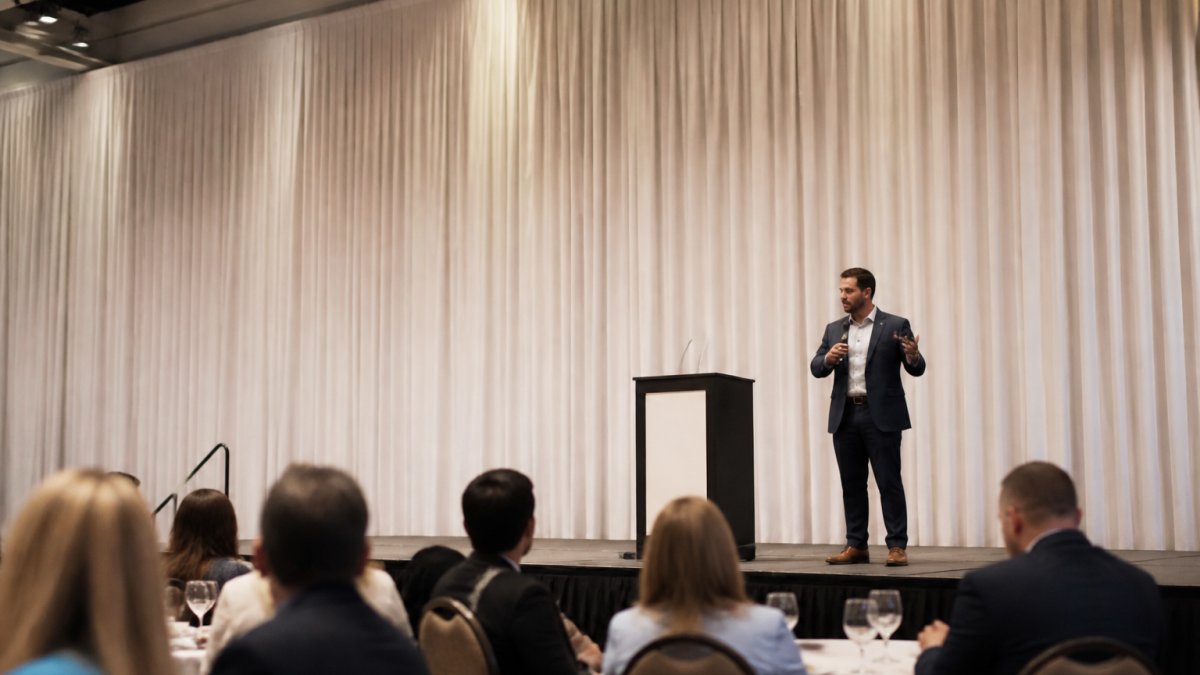
Why Full-Height Drape Reads as Elegant
Full-height drape hides the messy parts of a venue: exposed rigging, brick, ceiling grid, exit signage. It also draws the eye upward, which makes a low-ceilinged ballroom feel taller and a cavernous hall feel contained. Elegant corporate presentations depend on controlled sightlines, and nothing controls a sightline faster than fabric that runs from floor to truss.
Fabric and Color Choices That Stay Understated
We stock over 100 colors and six fabric materials, and the ones that photograph best are rarely the boldest. Charcoal, slate, ivory, and soft dove gray keep attention on the speaker. A matte fabric absorbs stage light instead of bouncing it, which prevents the washed-out glare that ruins keynote photos. Save the saturated tones for accent panels, not the full wall.
2. Layered Sheer and Solid Backdrops for Depth
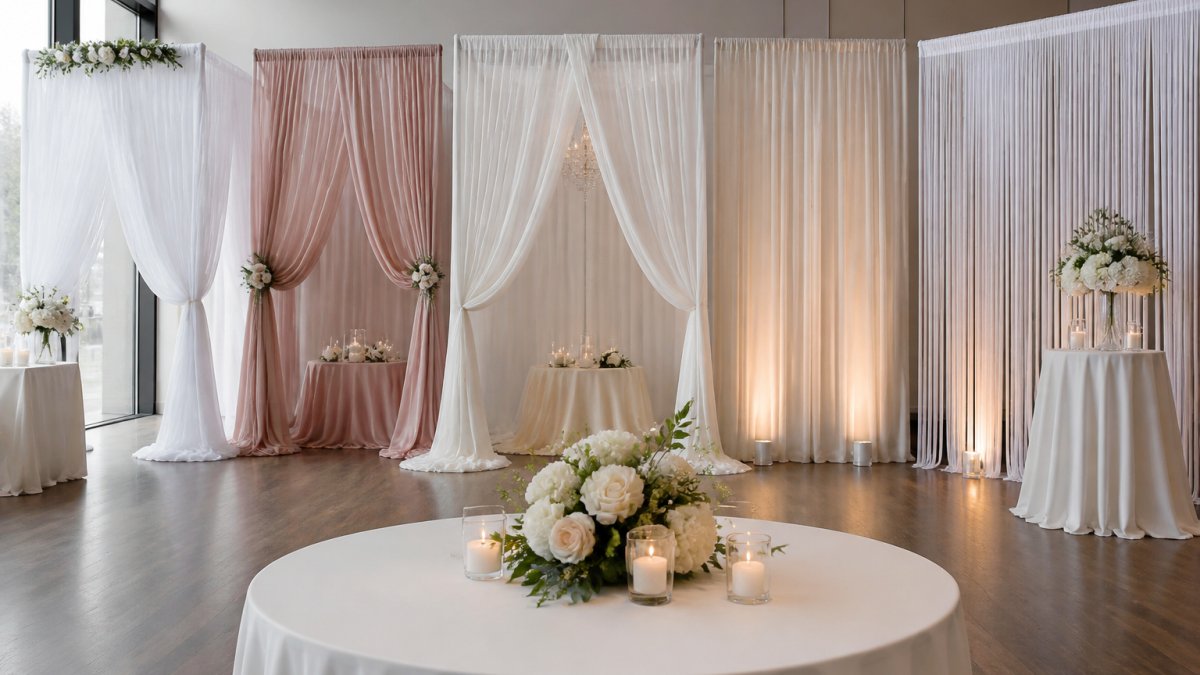
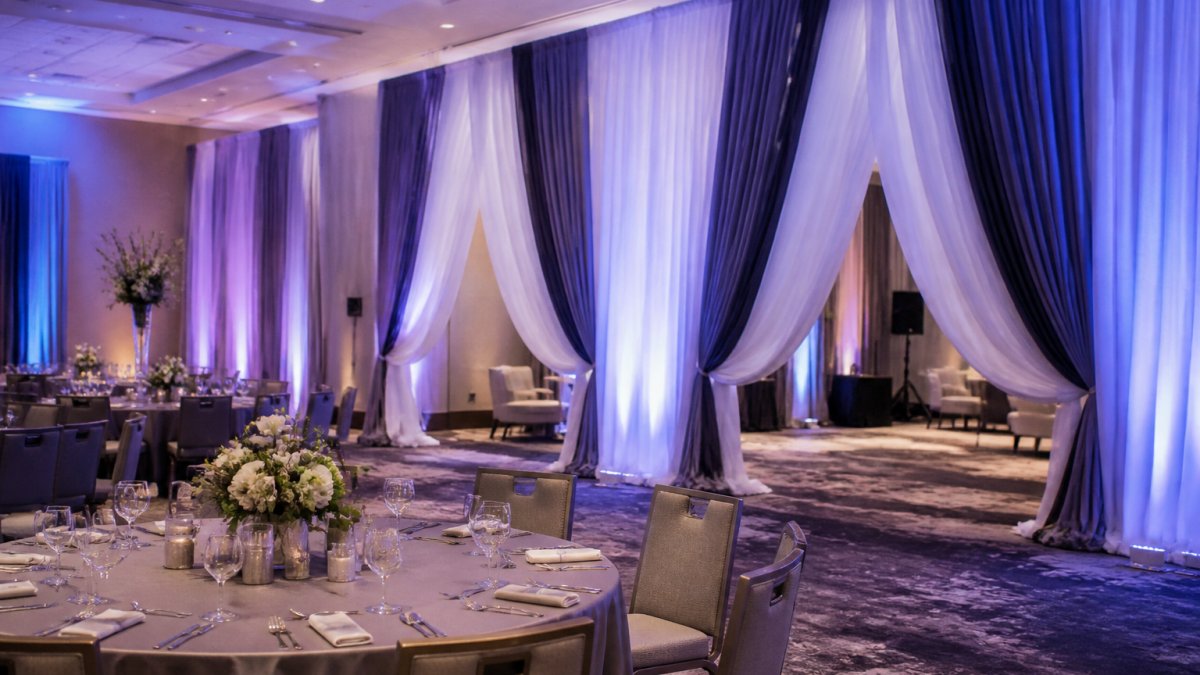
Layering is the fastest way to make a flat stage look dimensional. Put a solid fabric wall at the back, then hang a sheer panel a few feet in front of it. The sheer catches light and creates a soft glow that a single flat wall can never produce.
This approach suits corporate presentations that want warmth without pattern. A sheer overlay in the same color family as the solid behind it adds texture while staying restrained. The trick is spacing: too close and the layers merge into one muddy tone; too far apart and the depth disappears from the camera's angle.
- Solid back layer: matte fabric, darker tone for contrast
- Sheer front layer: lighter tone, hung with a slight gather
- Gap between layers: enough for a light to sit between them
Layered setups also solve a practical problem. If the rear wall is imperfect or the venue's backstage is visible, the solid layer blocks it while the sheer softens the transition.
3. Branded Fabric Walls That Look Designed, Not Printed
A branded backdrop should look like part of the room, not a banner stapled to a frame. The difference comes down to fabric tension and color matching, not logo size. When the fabric is stretched properly on a pipe and drape frame, brand colors read as rich and even instead of patchy.
We recommend keeping the logo restrained and letting the fabric do the work. A large centered mark on a taut ivory wall feels premium; the same mark on a wrinkled panel looks like a trade show booth. If your brand palette includes a deep color, use it as the wall and place the logo in a light tone for contrast.
4. Corporate Event Stage Design Ideas That Frame the Speaker
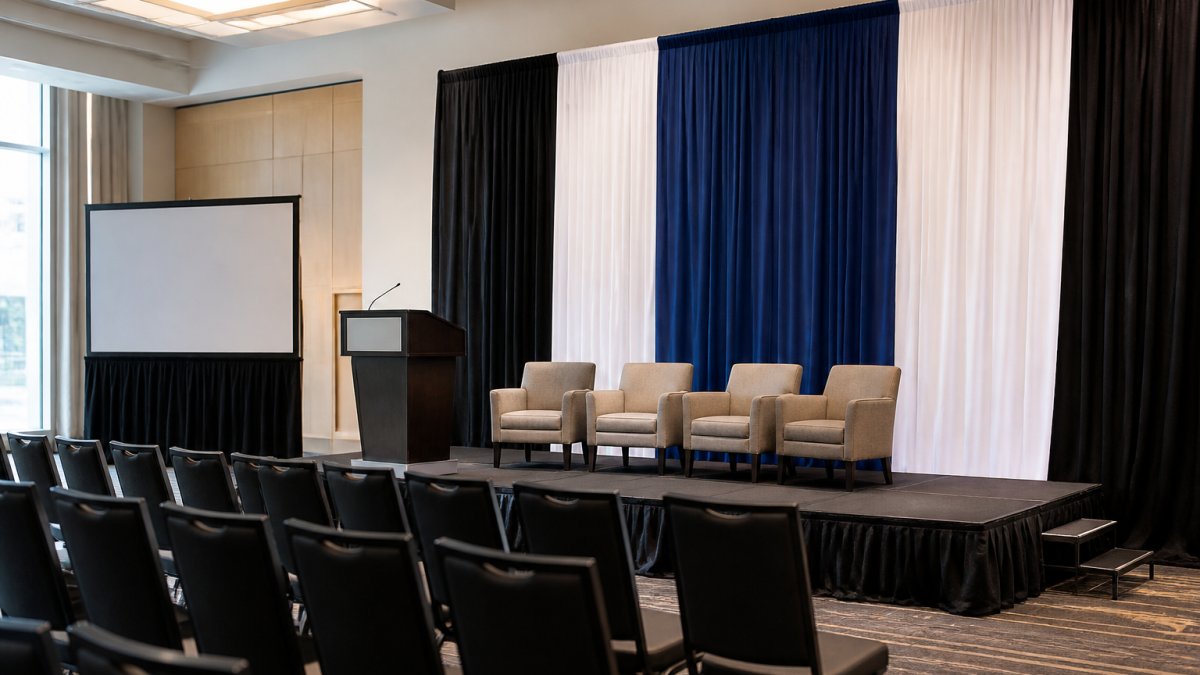
Good corporate event stage design ideas all share one principle: the speaker is the focal point, and everything else supports that. A backdrop should frame a person, not compete with them.
Consider these framing approaches:
- The portal: two drape columns flanking the stage opening, drawing the eye to center
- The sweep: a single curved drape wall behind the podium for a softer, modern look
- The reveal: drape that opens at the center to expose a screen or branded panel
Each option changes how the stage feels without changing the room. For corporate presentations with a single keynote, the portal works best because it creates a natural frame around the presenter. For panel discussions, the sweep keeps the group visually unified.
5. Pipe and Drape Backdrop Rental: What to Specify Before You Book
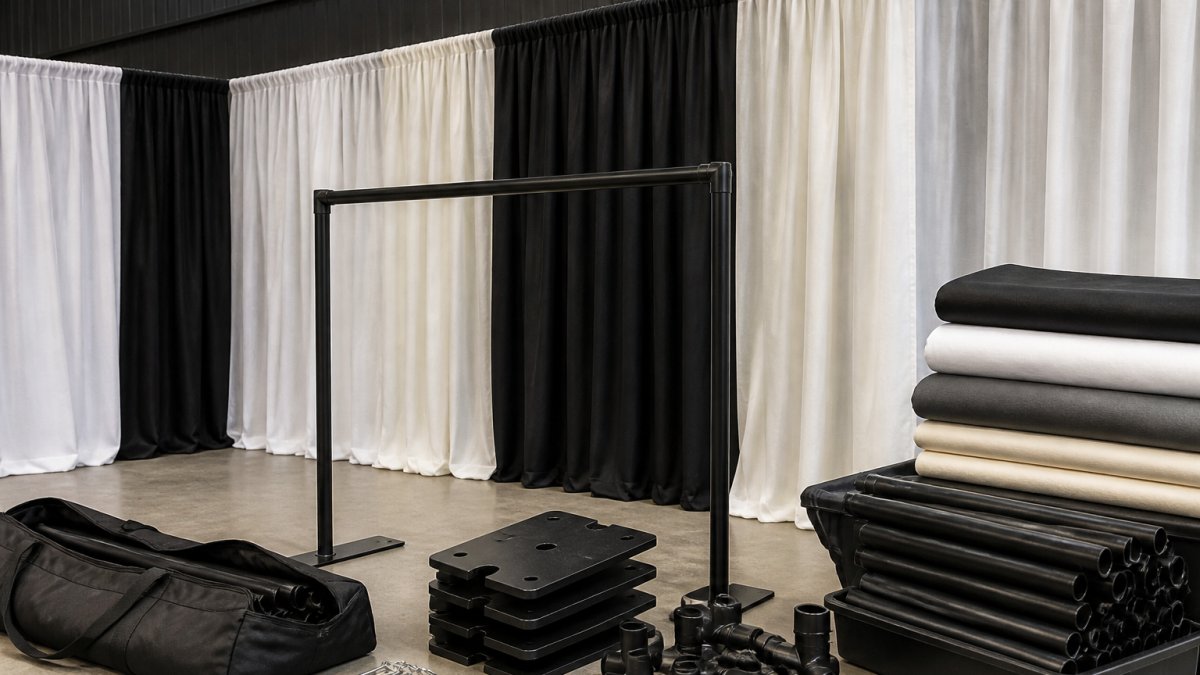
Booking pipe and drape backdrop rental goes smoothly when you specify four things up front: height, width, fabric, and installation. Height matters most. Confirm the venue's ceiling clearance and whether rigging points are available, then match your drape to that measurement.
Width should account for the full stage plus a margin on each side, so the fabric extends past the sightline. Fabric choice affects both look and logistics: heavier materials drape cleanly but need sturdier frames. Finally, decide whether you want DIY or professional installation. We offer both, and for a high-stakes gala, professional installation removes the risk of a sloppy setup on the day.
| What to Specify | Why It Matters | What to Confirm |
|---|---|---|
| Height | Frames the stage and hides the venue | Ceiling clearance and rigging points |
| Width | Extends past the sightline | Full stage width plus margin |
| Fabric | Affects drape quality and light | Material weight and finish |
| Installation | Determines setup risk | DIY or professional crew |
Professional Event Backdrop Lighting Tips for a Polished Finish
Professional event backdrop lighting tips start with one rule: light the fabric, not just the speaker. A backdrop that receives no light goes flat and gray on camera, no matter how good the fabric is.
Use a soft wash from above or the sides to bring out the fabric's texture. For sheer layers, place a light between the layers to create glow. Avoid harsh spots aimed directly at the wall, which create hot spots and shadows. Test the lighting during rehearsal with the actual camera angle, because what looks fine to the eye often looks uneven on screen.
Color temperature matters too. Warm stage light on a cool gray drape shifts the tone toward beige, which can clash with brand colors. Set your backdrop lighting to match the room's ambient temperature before the doors open.
Conclusion
Getting corporate presentations to look polished comes down to height, layering, and lighting working together. If you are planning a keynote, gala, or trade show and want fabric that photographs as well as it looks in the room, Event Drape Rental can help. We offer drapes from 12 to 30 feet, over 300 colors across 15 fabric materials, and both DIY and professional installation options. Request a quote and let us frame your next stage.
Frequently Asked Questions
What makes a backdrop look professional for a corporate event?
Height, fabric quality, and lighting do most of the work. A backdrop that runs floor to ceiling removes visual clutter and makes the stage look intentional. Wrinkle-free fabric with a matte finish photographs better than shiny material, and even lighting across the surface prevents hot spots. For corporate presentations, choose a palette of one or two colors and keep branding small and precise rather than oversized.
Are pipe and drape systems suitable for formal corporate presentations?
Yes. Pipe and drape is the standard system behind most corporate stages because it adjusts to the room and can reach 12 to 30 feet in height. With the right fabric weight and a pressed finish, it reads as tailored drapery rather than a trade show booth. Specify flame-retardant fabric, confirm the height against your ceiling, and ask for professional installation if the stage is customer-facing.
How can lighting enhance a corporate presentation backdrop?
Lighting separates the backdrop from the speaker and adds depth. Uplights placed at the base of the drape wash color upward and create a gradient. A soft key light on the speaker keeps faces visible without flattening the fabric. Avoid pointing spotlights directly at the backdrop, which creates hot spots on camera. Test the setup during rehearsal with the room lights at event level.
What are the best color palettes for corporate event backdrops?
Neutral bases, including white, ivory, charcoal, and navy, photograph cleanly and let branding stand out. Add one accent color drawn from your logo or campaign. Deep jewel tones work for evening galas, while lighter neutrals suit daytime conferences. Request fabric swatches before booking so you can check the color under the venue's lighting rather than on a screen.
How do you incorporate branding into a corporate presentation backdrop?
Keep the logo proportionate to the stage. A mark that is too large looks like a banner, while a smaller, well-placed logo on a clean fabric wall reads as designed. Place the logo where cameras will frame it, usually centered above the speaker or on a side panel. Confirm color matching against your brand guidelines and ask for a proof before production.