 listicle
Top 5 Pipe and Drape Styles for Weddings
Table of Contents
- Quick Comparison: The 5 Best Pipe and Drape Styles for Weddings
- 1. Classic White and Ivory Draping for Timeless Elegance
- 2. Sheer Pipe and Drape Wedding Backdrop for Romance
- 3. Jewel-Tone Draping for Modern Sophistication
- 4. Layered and Textured Draping for Depth
- 5. Ceiling and Entrance Draping to Define Your Space
- Wedding Pipe and Drape Backdrop Ideas and Color Palettes
- How to Prevent Wrinkles in Event Drapes
- Frequently Asked Questions
Last Updated: October 19, 2026
Quick Comparison: The 5 Best Pipe and Drape Styles for Weddings
The top 5 pipe and drape styles for weddings can transform a blank venue into something memorable. Your style choice affects how the space looks, how photos turn out, and how much setup and maintenance you'll deal with.
These five styles range from timeless classics to dramatic modern statements, each with different equipment needs, installation requirements, and costs. Here's what makes each distinct and where it works best.
Quick Picks:
- Best for Timeless Elegance: Classic White and Ivory Draping, works in any venue, photographs beautifully, wrinkle-resistant options available
- Best for Romance: Sheer Pipe and Drape, soft, ethereal look with excellent lighting effects
- Best for Modern Sophistication: Jewel-Tone Draping, bold color statement, hides imperfect walls
- Best for Visual Depth: Layered and Textured Draping, adds dimension and luxury feel
- Best for Space Definition: Ceiling and Entrance Draping, divides large venues, creates intimate zones
| Style | Best Venue Type | Installation Complexity | Wrinkle Risk | Photography Impact |
|---|---|---|---|---|
| Classic White/Ivory | Any | Low | Low with stretch velvet | Excellent |
| Sheer Backdrop | Indoor with lighting | Medium | Medium | Excellent with soft light |
| Jewel-Tone | Any | Low | Low | Bold, dramatic |
| Layered/Textured | Large spaces | High | Medium | Luxe, dimensional |
| Ceiling/Entrance | Large venues | High | Medium | Defines space, immersive |
1. Classic White and Ivory Draping for Timeless Elegance
Classic white and ivory draping remains our most requested style. It's forgiving, complements any color scheme, photographs clean and bright, and creates instant formality without competing with your flowers, lighting, or other decor.
The appeal comes from simplicity: white frames your ceremony without demanding attention. Ivory adds warmth, especially in venues with natural wood or brick, where pure white can feel too stark.
Setup and Equipment
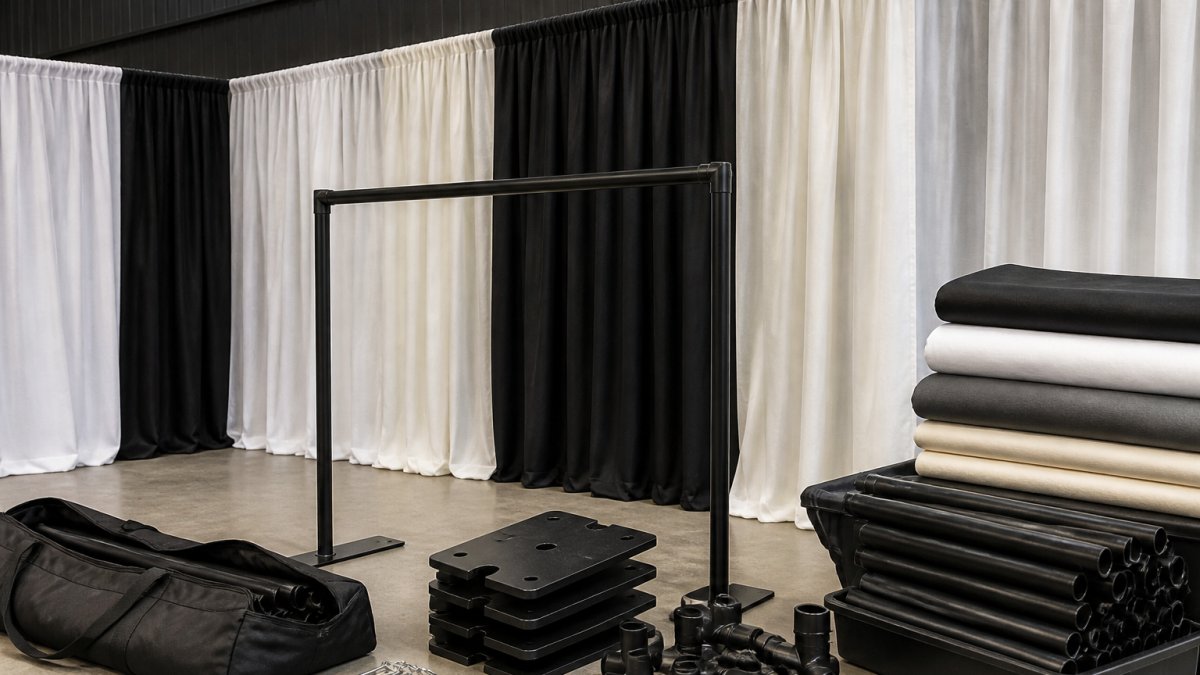
You'll need standard pipe-and-drape stands with vertical uprights and horizontal pipes, typically 12 to 30 feet high depending on your ceiling.
Pinch draping, gathering fabric at intervals along the pipe, adds subtle dimension without extra complexity.
Venue Considerations
White and ivory works in nearly every venue. Ballrooms with high ceilings let you use the full 25-30 foot height for drama; hotel halls with 12-16 foot ceilings suit standard heights. Outdoors, wind makes heavier fabrics and secure weighting critical.
Ivory softens industrial warehouses with exposed brick or concrete. White suits historic venues with ornate details and modern venues with clean lines, providing a neutral canvas that lets flowers and lighting take center stage.
Classic draping also covers imperfect walls, stained ceilings, or visible support columns, one reason it remains the industry standard.
2. Sheer Pipe and Drape Wedding Backdrop for Romance
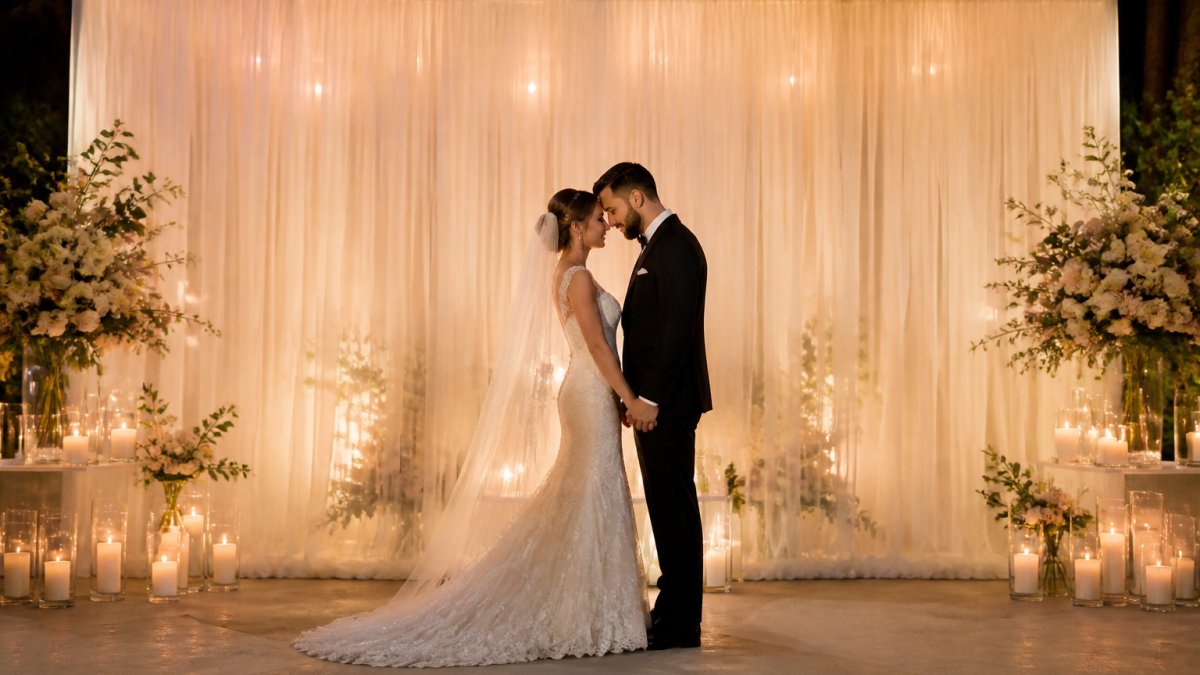
Sheer draping creates a different mood: instead of a solid wall, sheer materials let light pass through for a soft, romantic atmosphere, revealing lighting, flowers, or decor behind the layer and adding depth solid fabrics can't achieve.
Sheer fabrics work best where you control the lighting. Evening uplighting behind sheer draping creates an ethereal effect: the fabric glows rather than blocks.
Sheer draping also photographs beautifully: light diffusing through the fabric creates a soft-focus effect that flatters skin tones, especially in ceremony moments and couple portraits.
Lighting and Photography Impact
Sheer fabrics need intentional lighting. Without backlighting or uplighting they can look washed out; with it, they become a design element that enhances your entire aesthetic.
Coordinate with your photographer about lighting placement, they may want uplighting or backlighting positioned to create the dreamy, shadow-reducing effect they want in photos.
Sheer draping also suits entrance treatments and aisle runners: a sheer tunnel leading to your ceremony feels more intimate than a solid wall.
3. Jewel-Tone Draping for Modern Sophistication
Jewel tones, emerald green, sapphire blue, deep burgundy, rich navy, create a bold, modern statement. Unlike classic white, jewel-tone draping becomes a design centerpiece that sets the mood and photographs dramatically.
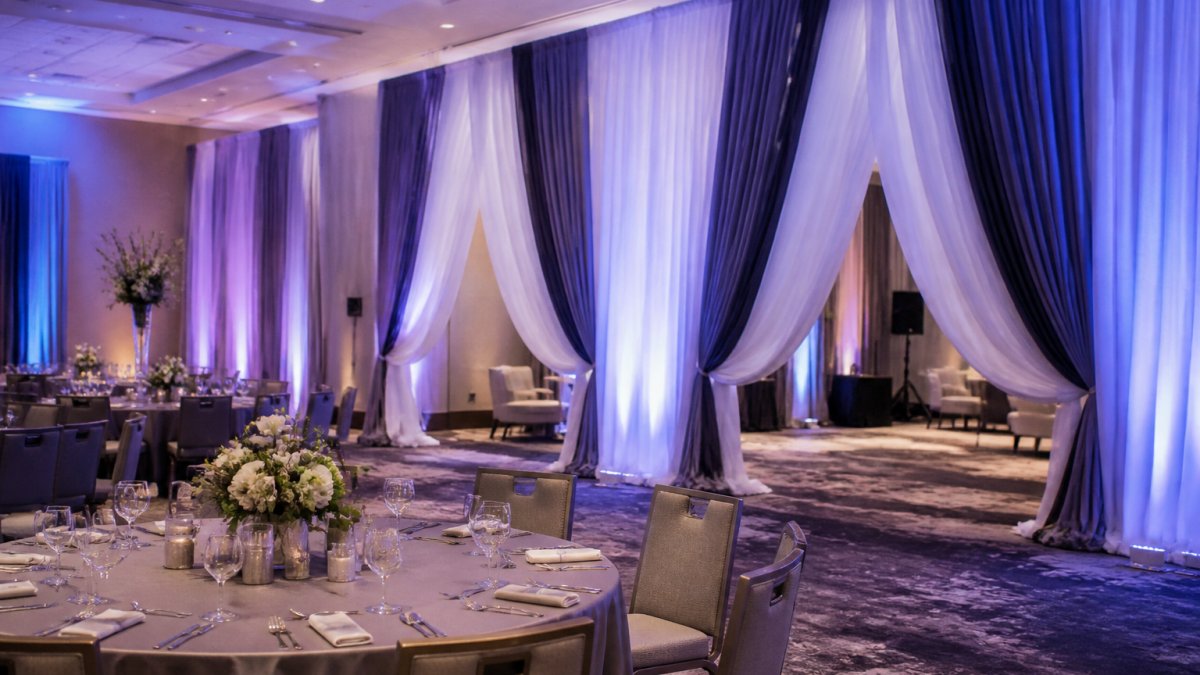
It works especially well for evening receptions and formal galas: deep colors create intimacy even in large venues and photograph richly under warm lighting.
Practically, jewel tones hide imperfections, a stained wall, visible support column, or imperfect ceiling becomes irrelevant under deep color.
Emerald and navy combinations suit modern, minimalist weddings. A single jewel tone across the backdrop creates cohesion, and if you add flowers, uplighting, or accents, jewel tones provide a strong foundation that doesn't compete.
4. Layered and Textured Draping for Depth
Layered draping combines multiple fabrics, colors, or textures for visual depth: alternating panels, matte and shiny materials, or sheer over solid draping.
Baroque draping, multiple layers with varying textures and sometimes colors, creates an opulent look. It needs more fabric, uprights, and careful installation, but adds complexity single-fabric approaches can't match.
Textured fabrics add interest even in a single color: texture catches light differently, creating shadows and highlights that make the backdrop dimensional, especially in photography.
Layered draping takes more installation time and equipment, multiple panels, color combinations, and complex pinching or gathering. Professional installation matters more here to ensure everything hangs evenly and looks intentional rather than cluttered.
5. Ceiling and Entrance Draping to Define Your Space
Ceiling draping transforms how a venue feels by covering overhead elements and creating an intimate enclosure.
It works best in large venues with high ceilings: a ballroom with 20-foot ceilings feels cavernous without overhead treatment, while draping creates visual intimacy and makes the space feel intentionally designed.
Entrance draping creates a moment for your guests.
This approach requires more fabric and installation complexity: multiple drape lines at different heights, coordinated entrance treatments, and substantial equipment, more uprights, horizontal pipes, and secure anchoring, especially for ceilings.
Venue restrictions often apply to ceiling draping. Some venues prohibit direct attachment to ceilings due to structural concerns or building codes.
Wedding Pipe and Drape Backdrop Ideas and Color Palettes
Beyond the five main styles, specific color combinations create distinct moods and aesthetics, shaping how your entire venue feels.
Warm Neutrals and Blush Tones
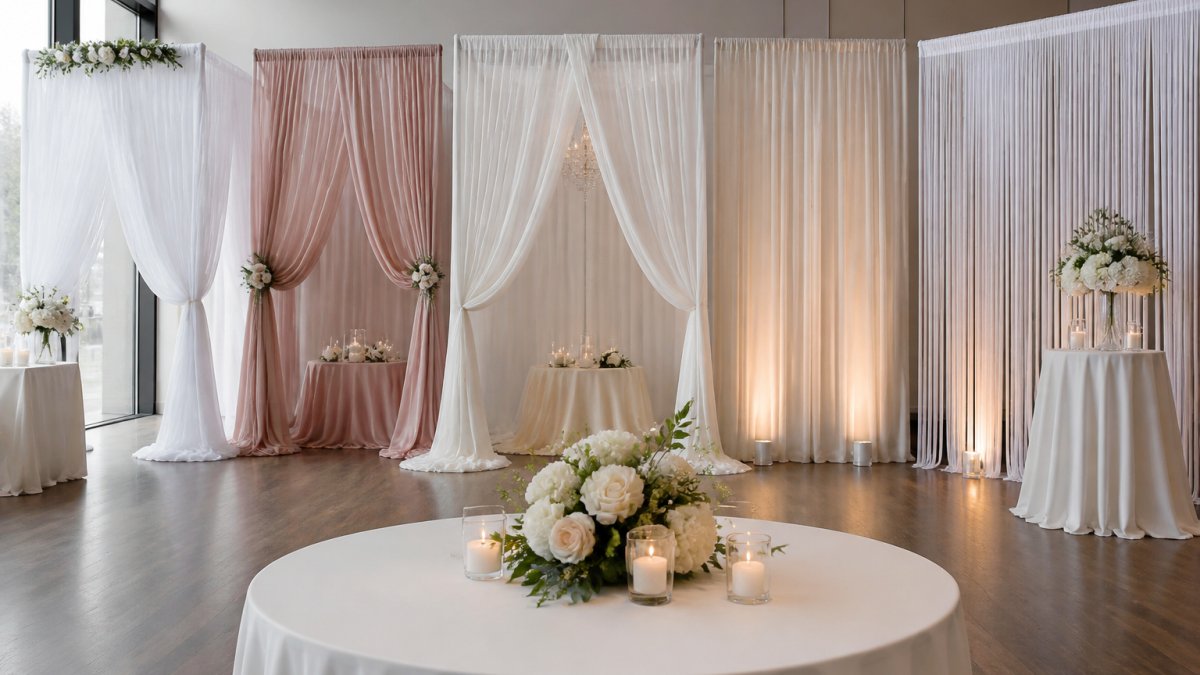
Warm neutrals like beige, champagne, and blush create a soft, romantic aesthetic for spring and summer weddings, outdoor venues, and traditional themes. Blush pink is increasingly popular because it's flattering in photography and complements most flower choices.
Layering warm neutrals, say, champagne with ivory, creates subtle depth while maintaining the soft, romantic feel. This approach works well for venues with natural wood or warm architectural elements, complementing rather than contrasting with the space.
Warm neutrals photograph beautifully in natural light. Outdoor ceremonies with afternoon sunlight benefit from champagne or blush draping, which glows rather than looks washed out. For evening receptions, warm lighting (2700K-3000K color temperature) makes these colors appear even warmer and more luxurious.
Bold Emerald and Navy Combinations
Emerald and navy together create a sophisticated, modern look that photographs dramatically, ideal for formal evening events, contemporary weddings, and venues where draping should make a bold statement.
Emerald alone creates a jewel-box effect, intimate, luxurious, and visually rich. Navy provides a more corporate or formal feel while remaining versatile enough to work with most color schemes. Combining them creates visual interest without feeling chaotic.
These colors require intentional lighting to look their best. Warm uplighting (amber or gold) makes emerald appear richer and more jewel-like. Cool white lighting makes navy feel more sophisticated and modern. Consider your lighting plan when choosing between these colors or combinations.
How to Prevent Wrinkles in Event Drapes
Wrinkled drapes undermine even the best design. A gorgeous backdrop that arrives creased or shows wrinkles after installation looks unprofessional. Preventing wrinkles requires attention to fabric selection, storage, delivery, and installation.
Fabric Selection and Care
Your fabric choice is the first line of defense against wrinkles. Ask your rental company about wrinkle resistance, it's worth prioritizing.
Storage matters significantly. When fabrics are stored rolled rather than folded, wrinkles are less likely to set in permanently.
Handling during storage and transport affects wrinkle development. Fabrics compressed under heavy weight or crammed into tight spaces arrive more wrinkled than those stored carefully.
Never store damp fabrics. If drapes get wet during an outdoor event or during cleaning, they must dry completely before being stored or packed. Damp fabrics develop permanent wrinkles and can develop mold or mildew.
Delivery and Installation Best Practices
How drapes are delivered and installed determines whether they arrive wrinkle-free. Fabrics should be transported to minimize compression and folding.
On-site handling matters too. Drapes should be unrolled or removed from transport containers well before installation, allowing them to relax and any minor wrinkles to fall out naturally.
Professional installation reduces wrinkles because installers know proper techniques for hanging and securing fabric.
If you're handling installation yourself, give yourself extra time. Unroll fabrics early, hang them loosely at first, then make adjustments once everything is in place.
Event Drape Rental provides professional-grade drapes.
Wrinkled drapes can undermine months of planning. Our drapes range from 12 to 30 feet in height, and we offer both DIY and professional installation to fit your needs. REQUEST a QUOTE to explore options for your venue and see how the right draping style can create the atmosphere you envision.
Frequently Asked Questions
What are the most popular pipe and drape styles for weddings?
The five most popular pipe and drape styles for weddings are classic white and ivory for timeless elegance, sheer fabrics for romantic backdrops, jewel-tone draping for modern sophistication, layered and textured options for depth, and ceiling and entrance draping to define your space. Each style offers distinct visual impact depending on your venue, color palette, and overall wedding aesthetic. Your choice depends on your venue's architecture, lighting conditions, and the mood you want to create.
How do you prevent wrinkles in event drapes during rental and installation?
Prevent wrinkles by selecting wrinkle-resistant fabrics that maintain their appearance after delivery. Request professional installation to ensure proper hanging tension and support. Proper fabric width and fullness during installation also minimize visible creases.
What fabric is best for a sheer pipe and drape wedding backdrop?
Sheer fabrics are ideal for sheer wedding backdrops because they allow light to pass through while creating a romantic, ethereal effect. These fabrics photograph beautifully and work well with backlighting and candlelight. Sheer fabrics also layer effectively to add dimension and depth. When selecting sheer pipe and drape wedding backdrop materials, consider how natural and artificial lighting will interact with the fabric to create the mood you want for ceremony and reception photos.
How much does pipe and drape rental typically cost for a wedding?
Pipe and drape rental costs depend on several factors: height and width of coverage, fabric type and quality, number of drape panels needed, delivery location, installation method (DIY or professional), and rental duration. Request a quote from your rental company with your specific dimensions and requirements to get accurate pricing for your wedding.
Can pipe and drape be used to divide a wedding reception space?
Yes, pipe and drape is an effective way to divide a wedding reception space, define separate areas for dining or dancing, or create distinct zones within an open venue. This allows you to control guest flow, adjust acoustics, and create more intimate spaces within a larger room. Ceiling height and room dimensions determine how tall your dividers can be and how much fabric you'll need. Professional installation ensures the dividers are stable and won't shift during your event.