 listicle
10 Modern Corporate Event Draping Styles for Galas
Table of Contents
- Corporate Event Draping Ideas: Venue Transformation Essentials
- 1. Monochromatic Elegance: Single-Color Depth
- 2. Geometric Blocking: Color-Blocked Sections
- 3. Layered Drapes with Sheer Overlays
- 4. Draped Backdrops for Stage and Ceremony
- 5. Ceiling Draping and Overhead Fabric Tunnels
- 6. Event Draping With Lighting: Illuminated Fabric Walls
- 7. Pipe and Drape Room Dividers for Branded Spaces
- 8. Modern Minimalist Draping: Clean Lines and Negative Space
- Quick Comparison Guide
- Practical Considerations for Your Gala
- Frequently Asked Questions
Last Updated: October 15, 2026
Corporate Event Draping Ideas: Venue Transformation Essentials
Corporate galas demand more than standard decor. The right corporate event draping transforms a blank ballroom into an immersive experience that reinforces brand identity and creates a visual backdrop attendees remember. At Event Drape Rental, we understand what separates a forgettable venue from one that feels intentional, luxurious, and on-brand.
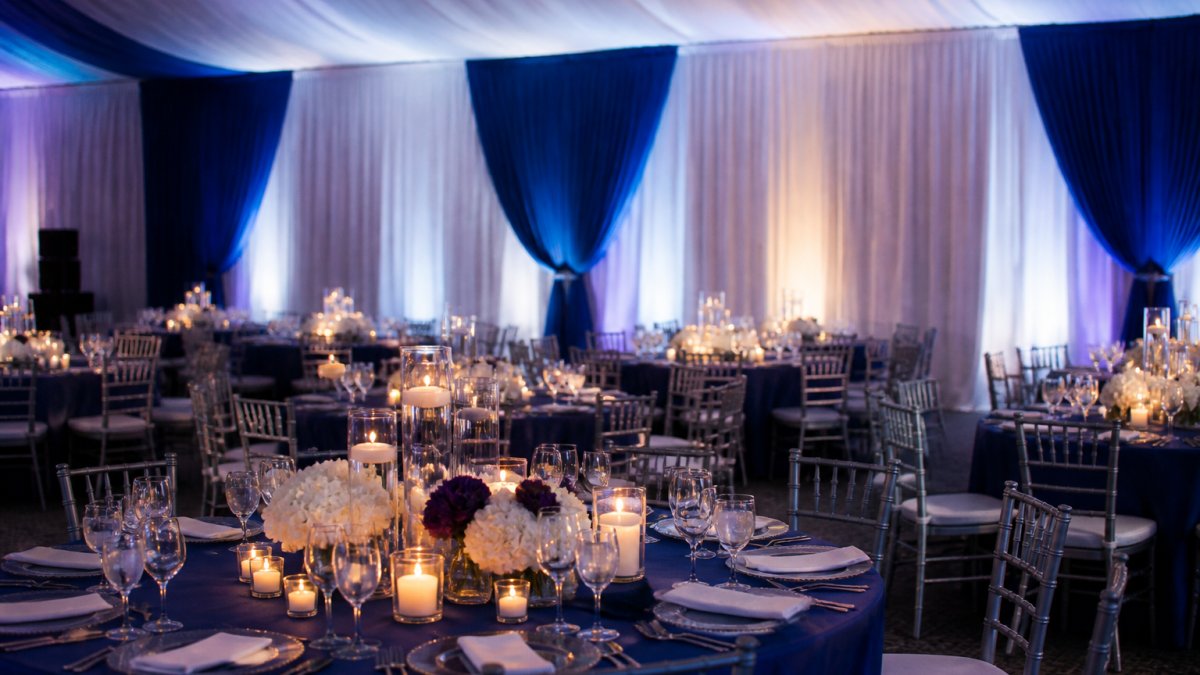
The challenge most planners face is deciding which draping style works for their space, budget, and brand aesthetic. This guide walks you through 10 modern styles that deliver impact, from minimalist elegance to dramatic transformation, each achievable within typical event timelines.
Below, we'll show how each style works, what fabrics deliver the best results, and how to match draping to your venue's challenges, whether it's a hotel ballroom, warehouse, or convention center.
1. Monochromatic Elegance: Single-Color Depth
Monochromatic draping creates sophistication through fabric layering and texture rather than color contrast. A single hue, deep navy, charcoal gray, or classic white, becomes the canvas, with depth coming from mixing fabric weights: sheer overlays paired with heavier velvet or poly premier bases create dimension without competing colors.
This style works well for corporate galas where brand consistency matters. A monochromatic blue treatment reinforces identity while feeling refined, and ordering one color family reduces inventory complexity and installation time.
Monochromatic draping also hides venue imperfections better than multi-color schemes: exposed pipes, uneven walls, or awkward architectural features disappear into a cohesive backdrop that feels curated rather than patched together.
For ceiling draping, monochromatic treatments create a tunnel effect when fabric extends from walls to overhead, guiding attendee flow and making large, cavernous spaces feel intimate. Event Drape Rental's inventory of over 100+ colors means you can match brand specifications.
2. Geometric Blocking: Color-Blocked Sections
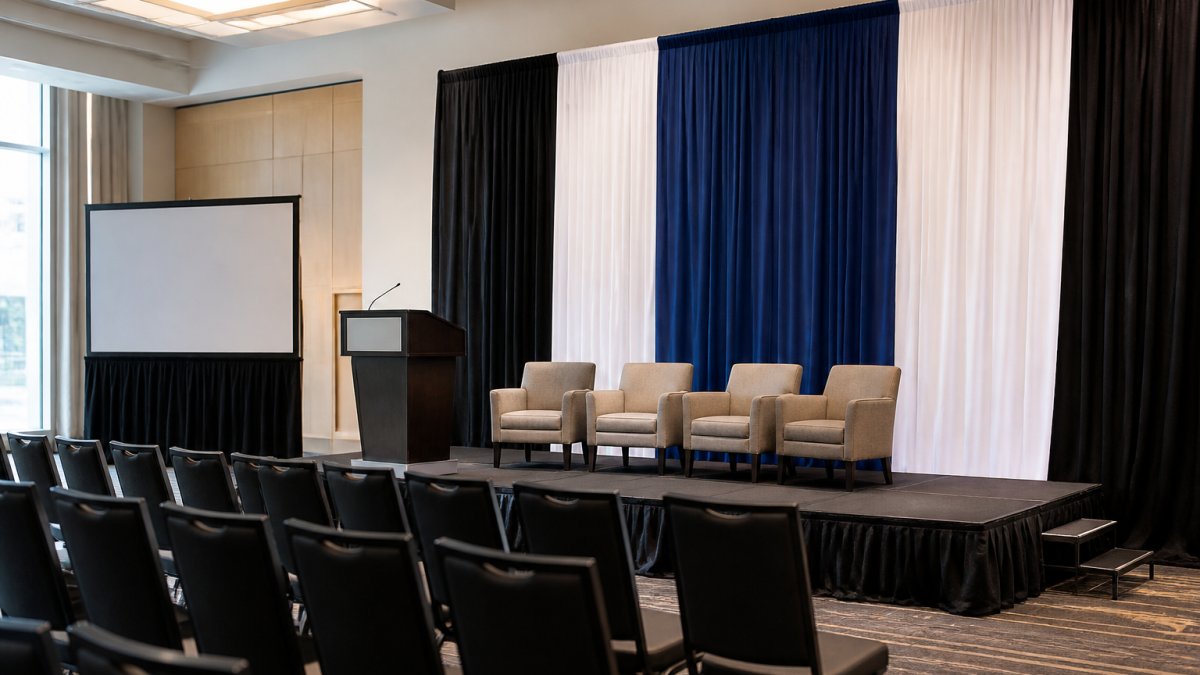
Geometric blocking divides your venue into distinct color zones using sharp, clean lines. Unlike layered drapes that blend fabrics, blocking creates intentional contrast: a white section meets a deep blue section with a clear boundary, using triangles, vertical stripes, or checkerboard patterns.
This style appeals to modern corporate brands and tech companies, reading as intentional and contemporary. It also solves practical problems: blocking can hide unsightly areas or create visual flow that guides guests through the space.
Installation requires precision: straight lines matter, and pipe and drape systems with proper tension keep blocks crisp and professional. Sloppy geometry looks amateurish immediately.
Color selection determines whether blocking feels sophisticated or chaotic. Limit yourself to two or three colors maximum: white paired with one corporate color (navy, burgundy, forest green) creates impact without visual noise, and a third color should serve a purpose, like highlighting the stage.
3. Layered Drapes with Sheer Overlays
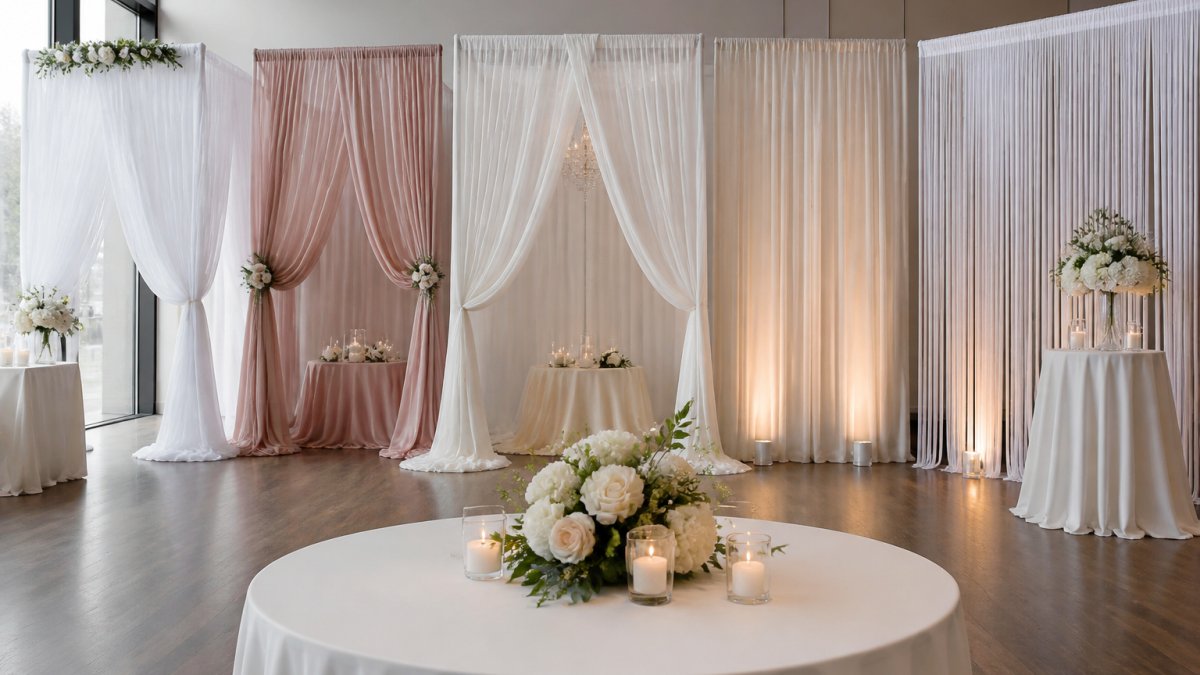
Layering creates depth and movement. Start with a heavier base fabric, velvet, poly premier, or satin, then overlay sheer fabric (voile, chiffon, or organza) in the same or complementary color. The sheer layer catches light, creates texture, and softens the appearance.
This approach works beautifully for ceiling draping: sheer overlays suspended from the ceiling create a floating, ethereal quality, and paired with uplighting the fabric glows.
For backdrop walls, layered drapes add visual richness without multiple colors. A white satin base with white voile overlay creates dimension, and subtle lighting behind the sheer layer makes the fabric luminous rather than flat.
Layered installations are also forgiving: minor wrinkles in the sheer layer disappear when the base fabric is taut, and the overlay protects the base fabric during setup and breakdown.
Event Drape Rental stocks multiple fabric weights and sheer options, making layered installations straightforward, provided both layers are properly tensioned so the overlay doesn't sag or bunch.
4. Draped Backdrops for Stage and Ceremony
A draped backdrop behind the stage or speaking area becomes the focal point of your gala, where attendees' eyes focus during remarks, awards presentations, or speeches. It sets the tone for the entire event.
Effective stage backdrops typically feature a single dramatic color (burgundy, forest green, or charcoal), a branded logo or pattern projection on neutral fabric, or a layered combination that creates visual depth.
The backdrop must be installed securely, since any sag or movement undermines the professional appearance; proper pipe and drape systems with adequate bracing ensure stability. A 20-foot backdrop works for most ballrooms, while 30-foot installations suit convention centers and warehouse venues.
Lighting the backdrop separately from general room lighting creates visual hierarchy and adds production value. If you're projecting branding elements or video content, matte finishes project better than shiny ones.
For corporate galas, consider a branded approach: company colors or a subtle pattern incorporating brand elements, reinforcing corporate identity without feeling like an advertisement.
5. Ceiling Draping and Overhead Fabric Tunnels
Ceiling draping transforms a room's proportions and atmosphere, creating enclosure and intimacy even in large spaces. The effect ranges from subtle (fabric gathered at center points) to dramatic (complete ceiling coverage with a tunnel effect).
The tunnel approach, fabric suspended from opposite walls to create a fabric "hallway," works well for venue entry sequences, building anticipation as guests walk through before entering the main gala space.
Installation requires proper rigging points and adequate ceiling structure to support fabric weight. Event Drape Rental's drapes range from 12 to 30 feet in height, accommodating everything from standard ballroom ceilings to converted warehouses.
Ceiling draping softens hard architectural lines, hides exposed ductwork or pipes, and creates a finished appearance. Pairing it with uplighting makes fabric an architectural element rather than decoration.
Ceiling draping color should complement rather than compete with wall draping: if walls are bold, keep ceiling fabric neutral or lighter; if walls are neutral, ceiling fabric can introduce color or pattern.
6. Event Draping With Lighting: Illuminated Fabric Walls
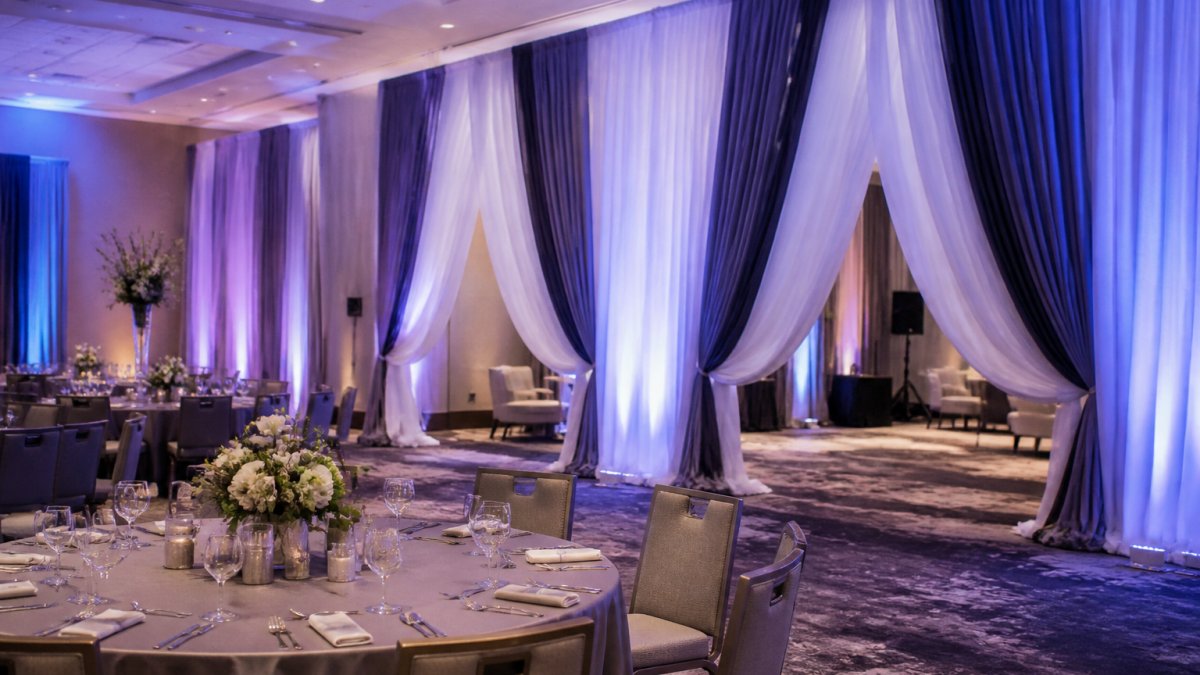
Lighting paired with draping creates drama static fabric alone cannot achieve: uplighting behind or within fabric creates a glow, spotlighting draws focus, and moving light across draped surfaces adds motion and energy.
For corporate galas, lighting control matters: shifting from brighter during cocktail hour to softer during dinner and energetic during dancing keeps the atmosphere dynamic, requiring coordination between your draping provider and lighting technician.
Practical considerations include power placement, heat management (some lighting generates significant heat near fabric), and safety (all rigging must meet code requirements). Event Drape Rental can advise on fabric placement relative to lighting equipment to ensure safety and visual impact.
The investment in lighting is worthwhile: illuminated draping creates the "wow factor" guests photograph and share, elevating a standard gala into a memorable experience. Warm amber lighting paired with cream or white draping is particularly effective for formal corporate events.
7. Pipe and Drape Room Dividers for Branded Spaces
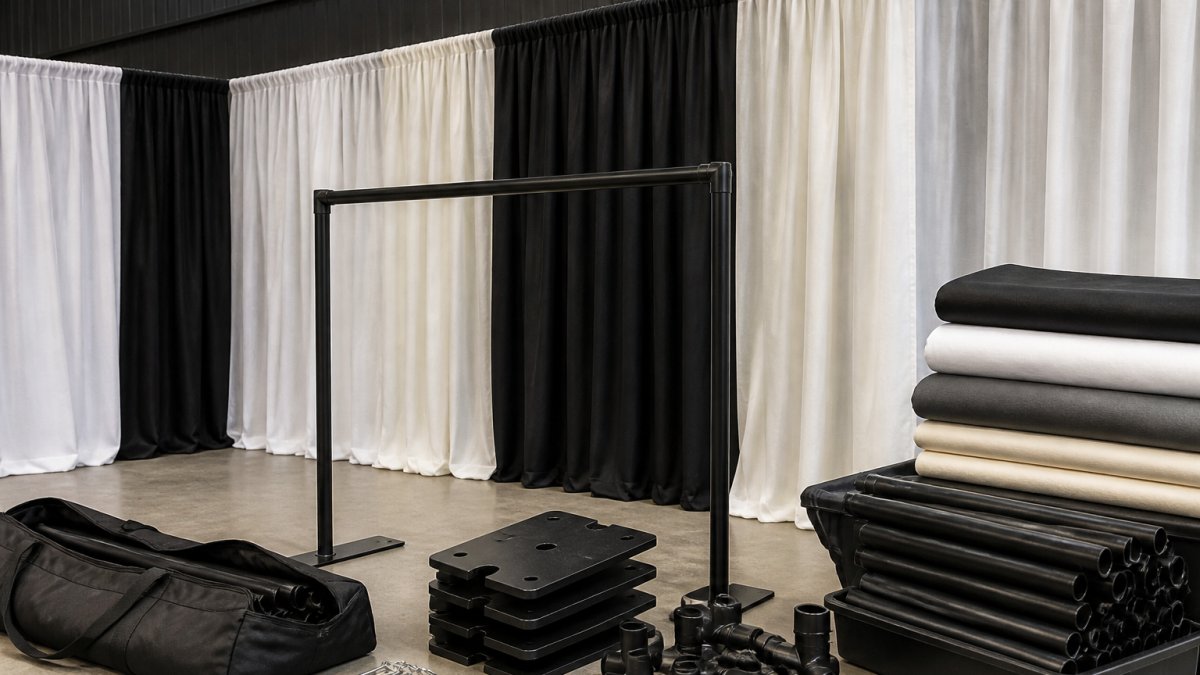
Pipe and drape systems create flexible room dividers that define spaces within your venue. A large ballroom can become multiple functional areas: cocktail space, silent auction area, lounge, and dining room, each defined by draped dividers.
This approach directs traffic flow, creates intimate spaces within large venues, and hides unsightly areas (kitchen entrance, storage, back-of-house operations).
For corporate galas, branded dividers create distinct experiences: the cocktail space might feature one color, the dining area another, helping guests navigate intuitively while reinforcing brand consistency.
Installation flexibility is a major advantage: pipe and drape systems are modular, so you can adjust configurations based on final attendance numbers or venue layout changes, ideal for corporate events where logistics shift close to the event date.
Professional appearance depends on installation quality: properly tensioned fabric with clean lines reads as intentional, while loose, sagging dividers undermine the aesthetic. Event Drape Rental's installation services ensure dividers meet professional standards.
8. Modern Minimalist Draping: Clean Lines and Negative Space
Minimalist draping embraces simplicity, using fabric strategically, a single draped wall, a stage backdrop, or overhead fabric in specific zones, rather than covering every wall and ceiling.
This style appeals to contemporary brands and venues with strong architectural features worth showcasing: exposed brick, high ceilings, or interesting structural elements are highlighted rather than obscured.
Color selection becomes even more critical in minimalist designs: a single wall in a bold corporate color creates impact, while neutral fabric in a strategic location creates sophistication.
Minimalist draping works exceptionally well for venues with strong existing aesthetics (loft spaces, historic buildings, modern architectural venues), complementing rather than competing with the space.
This approach also simplifies logistics and reduces costs compared to full venue coverage, since fewer linear feet of fabric means budget flexibility for higher-quality materials or professional installation.
Quick Comparison Guide
| Style | Best For | Visual Impact | Installation Complexity | Budget Consideration |
|---|---|---|---|---|
| Monochromatic Elegance | Brand consistency, sophisticated events | Refined, cohesive | Moderate | Moderate |
| Geometric Blocking | Modern brands, contemporary aesthetics | Bold, intentional | Moderate to High | Moderate |
| Layered Drapes | Texture and depth, elegant events | Luxurious, dimensional | Moderate | Moderate to High |
| Stage Backdrops | Focused attention, brand visibility | Dramatic, focal point | Moderate | Moderate |
| Ceiling Draping | Venue transformation, intimate atmosphere | Immersive, architectural | High | Moderate to High |
| Lighting Integration | Dynamic atmosphere, visual drama | Striking, memorable | High | High |
| Pipe & Drape Dividers | Space definition, flexible layouts | Professional, organized | Moderate | Moderate |
| Minimalist Draping | Contemporary venues, architectural features | Sophisticated, restrained | High (precision required) | Lower |
Practical Considerations for Your Gala
Venue Assessment
Before selecting a draping style, evaluate your venue carefully: measure ceiling height, identify structural rigging points, note architectural features to highlight or hide, and assess the overall aesthetic.
Fabric Selection by Effect
Different fabrics create different effects: velvet absorbs light for a luxurious, dramatic look; poly premier has a crisp, linen-like quality suited to corporate events; satin reflects light and adds elegance; sheers create ethereal, floating effects.
Installation Timeline
Professional installation typically requires 4-6 hours for a standard ballroom setup, while larger venues or complex designs (ceiling draping with lighting integration) may require 8+ hours.
Color Psychology for Corporate Events
Color choices influence attendee perception: navy and charcoal convey professionalism and stability; burgundy and deep jewel tones create luxury and sophistication; white and cream feel clean and modern; warm earth tones (rust, bronze, warm gray) create approachability.
Transforming a corporate gala venue requires more than standard decoration. The right corporate event draping becomes architecture, defining spaces, reinforcing brand identity, and creating the immersive experience that makes your event memorable.
Frequently Asked Questions
What types of draping work best for a corporate gala?
Corporate galas benefit from elegant, professional fabrics like velvet, satin, and poly premier. Monochromatic backdrops create sophistication, while layered drapes add visual depth. Ceiling draping and dramatic room transformations enhance the luxury feel. Choose flame-retardant materials that meet safety standards and coordinate with your brand colors. The right fabric selection depends on your venue height, lighting design, and overall aesthetic direction.
How can pipe and drape room dividers enhance a gala venue?
Pipe and drape dividers define separate spaces within a large venue, creating intimate areas for cocktails, dining, or branded experiences. They work as draped screens to hide unsightly areas, establish booth boundaries, or create dramatic hallway installations. Dividers allow you to control sight lines, manage traffic flow, and reinforce corporate branding through custom color selection. Professional installation ensures structural stability and a polished appearance.
What colors are best for modern corporate event draping?
Modern corporate galas favor neutral palettes (white, gray, black) paired with one accent color aligned to your brand. Blue and white combinations create elegance, while brown and orange tones work for warm, intimate settings. Monochromatic depth, layering shades of one color, feels contemporary without overwhelming. Consider lighting effects: white fabric reflects light beautifully, while darker hues create drama. Your color choice should enhance the venue's architecture and complement florals and tablescape styling.
How tall should drapes be for a corporate event?
Drape height depends on your venue ceiling. Event Drape Rental offers heights from 12 to 30 feet to accommodate varied spaces. Standard ballroom ceilings (12-14 feet) work with floor-to-ceiling drapes. Warehouse and loft venues with 20-30 feet of height allow dramatic ceiling treatments and overhead fabric tunnels that create visual impact. Taller drapes emphasize vertical space and make rooms feel more luxurious. Consult your venue's specifications and ceiling height when planning.