 listicle
Best Fabric for Event Backdrops: 8 Top Choices
Table of Contents
- Best Fabric for Event Backdrops: Quick Comparison
- Sheer vs Opaque Event Drapes: Which Works Best
- Flame Retardant Backdrop Fabric Requirements for Venues
- Understanding Fabric Weight, Texture, and Drapeability
- Avoiding Wrinkled Drapes for Event Rentals
- Luxury Fabrics vs Budget-Friendly Options
- How to Choose the Right Backdrop Fabric for Your Event
- Conclusion
- Frequently Asked Questions
Last Updated: August 23, 2026
Best Fabric for Event Backdrops: Quick Comparison
Selecting the best fabric for event backdrops determines whether your space transforms into an elegant focal point or falls flat. The right choice depends on venue requirements, lighting conditions, budget constraints, and the specific atmosphere you're creating. The fabric selection is far more nuanced than most people realize.
The fabric you choose affects aesthetics, installation complexity, maintenance demands, fire safety compliance, and total cost of ownership. A velvet backdrop creates drama and luxury but demands careful handling. Chiffon delivers ethereal elegance but requires layering for opacity. Polyester blends offer durability and wrinkle resistance at a fraction of the cost.
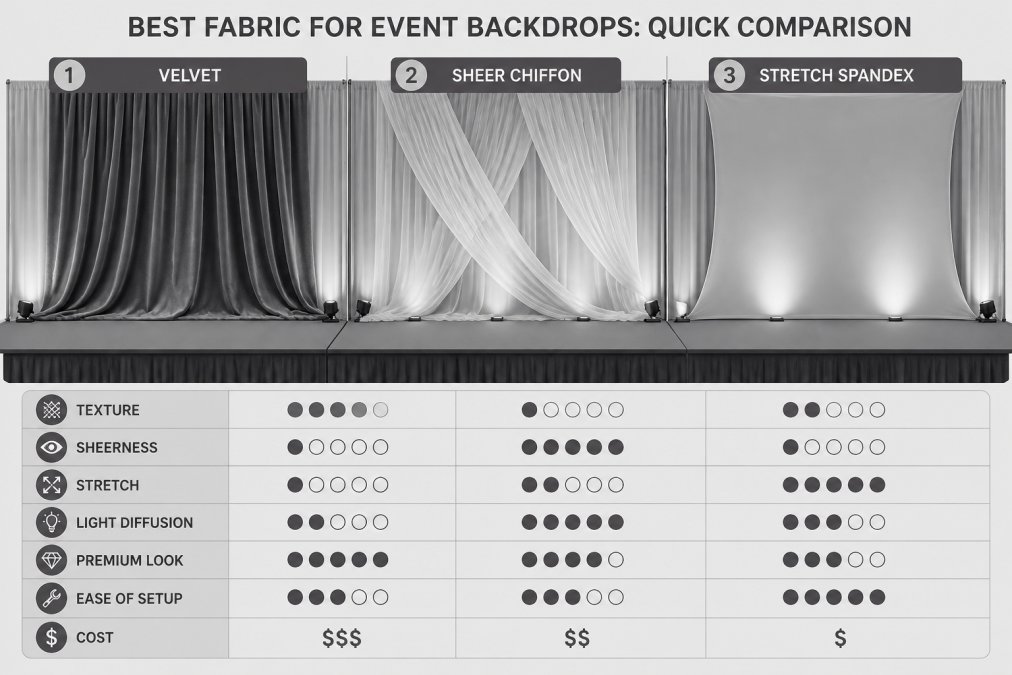
This guide covers eight proven fabrics used across the event industry, their specific performance characteristics, and how to match each to your particular needs.
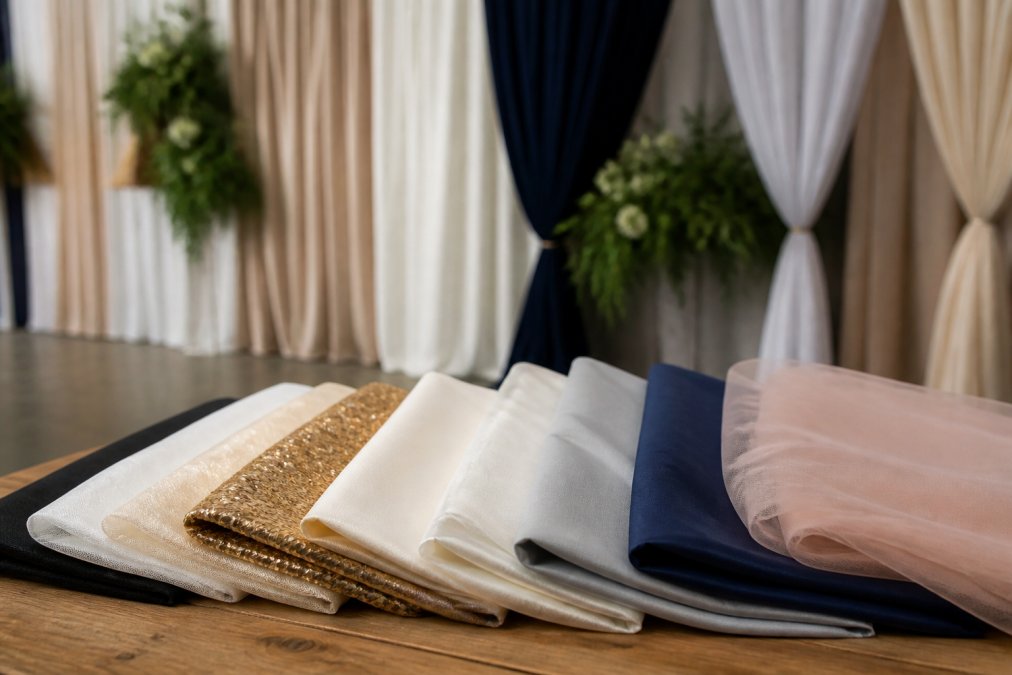
| Fabric Type | Best For | Opacity | Wrinkle Resistance | Fire Retardant |
|---|---|---|---|---|
| Velvet (Panne/Stretch) | Luxury events, photo backdrops | Full | Moderate | Check certification |
| Polyester Chiffon | Weddings, ambient lighting | Sheer | Good | NFPA 701 certified |
| Stretch Spandex | Modern events, trade shows | Full | Excellent | Varies by vendor |
| Duvetyne/Commando Cloth | Stage production, masking | Full | Moderate | FR treated |
| Sequin Fabric | Galas, celebrations, photo ops | Varies | Moderate | Check vendor specs |
| Polyester Blockout | Outdoor events, photography | Full | Excellent | Often included |
| Banjo Cloth | Trade shows, exhibits | Partial | Good | IFR standard |
| Voile | Wedding ceremony, ceiling drape | Sheer | Good | Varies |
Sheer vs Opaque Event Drapes: Which Works Best
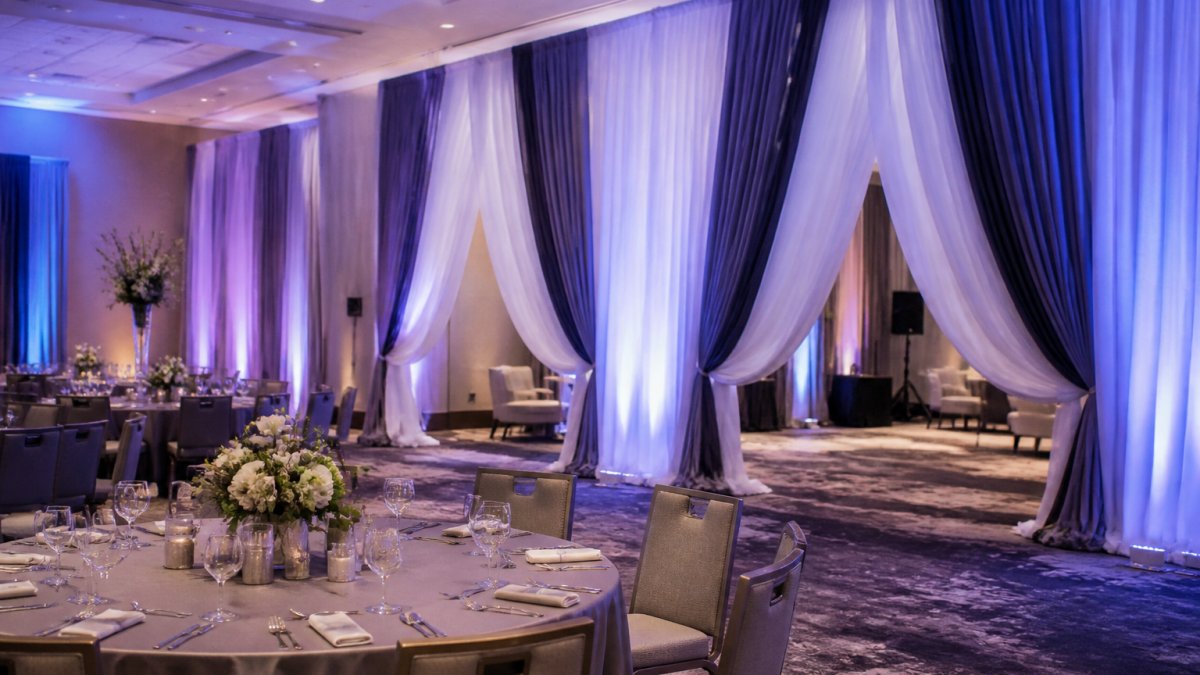
The fundamental choice between sheer and opaque fabrics shapes your entire backdrop strategy. Sheer fabrics like chiffon and voile diffuse light, creating an ethereal quality perfect for ceremonies and ambient settings. Opaque fabrics like velvet and spandex block light entirely, providing a clean, professional background that hides venue distractions and supports projection or photography.
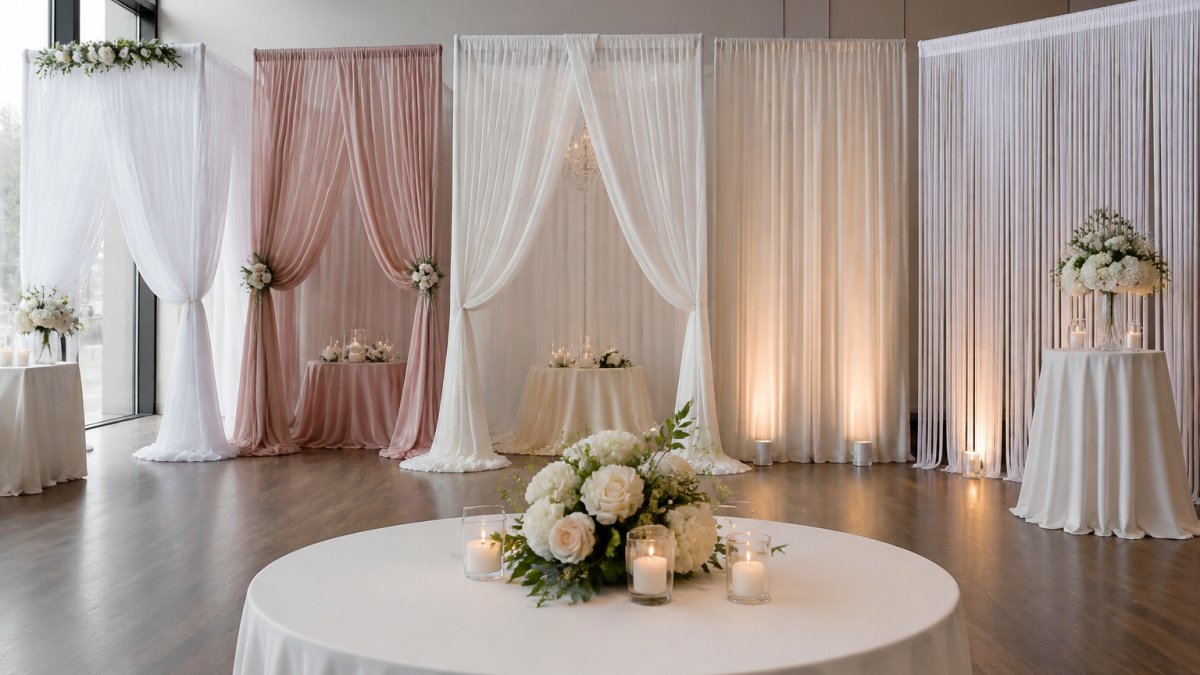
Sheer materials excel when you want atmosphere over concealment. Light passes through them, creating depth and movement. They're preferred for wedding ceremonies and hospitality spaces. The downside: they don't hide walls, equipment, or architectural flaws. You'll often layer multiple panels to increase coverage.
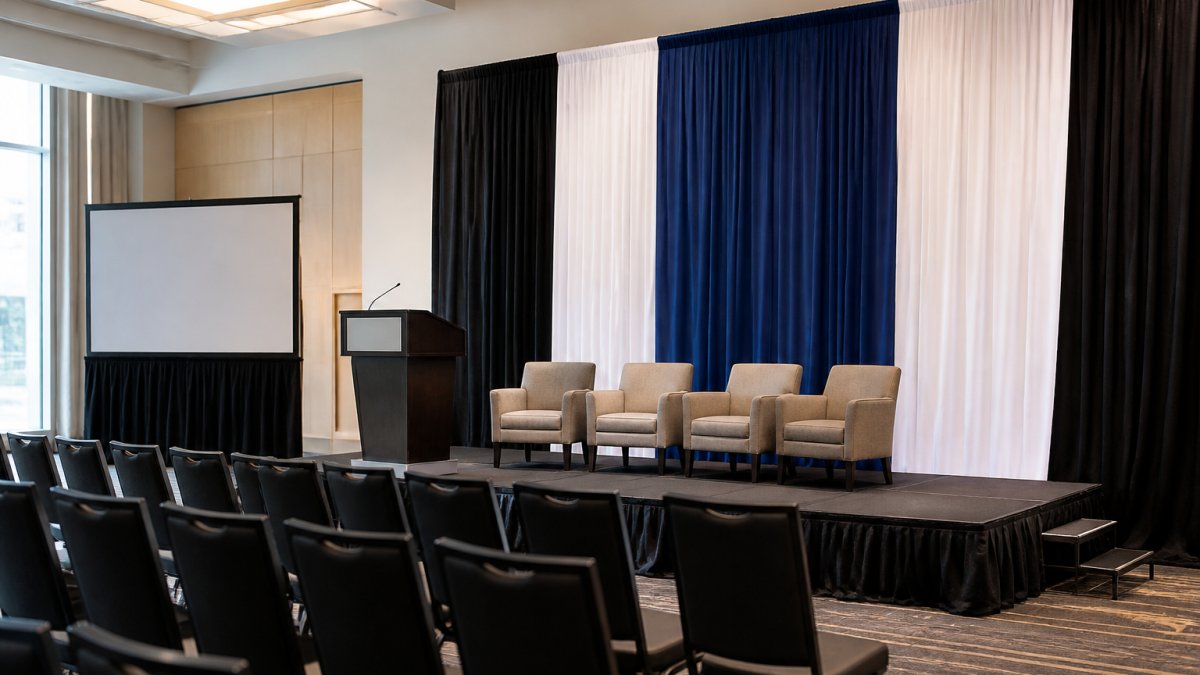
Opaque backdrops solve the concealment problem entirely. Velvet absorbs light, eliminating glare and creating a sophisticated frame. Stretch spandex provides a seamless, tailored appearance that photographs exceptionally well. Duvetyne (commando cloth) is the industry standard for stage production because its brushed surface absorbs light completely, preventing reflections that interfere with lighting design.
The trade-off is practical: opaque fabrics are heavier, more expensive to ship and install, and demand more careful handling. Sheer fabrics are lighter and faster to hang, but they require strategic layering and careful lighting placement.
Choose sheer when: you want light to pass through, you're creating ambient atmosphere, your venue has attractive architecture you want to highlight, or budget is tight. Choose opaque when: you're hiding venue distractions, shooting photography or video, you need a professional stage backdrop, or you're using projection mapping or special lighting effects.
Flame Retardant Backdrop Fabric Requirements for Venues
Fire safety is non-negotiable in event planning, and most venues enforce strict compliance standards. The standard that governs most event spaces is NFPA 701 (National Fire Protection Association Standard 701), which tests fabric's resistance to flame spread and smoke production (nfpa.org).
Certain fabrics meet flame retardant standards inherently. Polyester chiffon is certified to NFPA 701 in most commercial versions. Banjo cloth carries an Inherently Flame Resistant (IFR) rating, meaning the fiber itself resists ignition (cpsc.gov). Duvetyne and commando cloth are treated with flame retardant compounds and labeled accordingly.
Other fabrics require verification before use. Velvet, sequin fabrics, and stretch spandex depend entirely on the manufacturer's specifications. Before ordering any fabric, request a Certificate of Compliance or Safety Data Sheet that explicitly states NFPA 701 certification or IFR status.
Venues typically require NFPA 701 certification, IFR fiber content, or a signed waiver. High-profile venues like hotels, convention centers, and theaters rarely accept waivers. When sourcing fabrics, ask explicitly: "Is this NFPA 701 certified?" If the vendor hesitates, that's a red flag. Get written documentation before committing.
Understanding Fabric Weight, Texture, and Drapeability
Fabric weight, measured in ounces per square yard, determines how a material hangs, installation costs, and how it responds to light and movement. Lightweight fabrics like voile (2-4 oz) drape naturally and flow with air currents. Medium-weight fabrics like chiffon (4-6 oz) maintain structure while still moving. Heavy fabrics like velvet (12-16 oz) hang stiffly and require more rigging support.
Drapeability refers to how a fabric falls when suspended. Chiffon, voile, and satin have excellent drapeability and create elegant folds. Stretch spandex is designed to hang flat and smooth, creating a tailored, seamless appearance that photographs cleanly.
Texture affects both visual and tactile experience. Velvet's pile creates depth and richness, absorbing light and adding luxury. Chiffon's matte finish diffuses light softly. Satin's glossy surface reflects light, adding shimmer. Duvetyne's brushed surface is deliberately non-reflective for stage masking.
The relationship between weight and texture matters practically. A heavy velvet drape delivers luxury but demands strong rigging. A lightweight chiffon panel can use simpler equipment, but you'll need multiple layers for opacity. When selecting fabric, consider your venue's rigging capacity. Ask your venue what they've successfully rigged before.
Avoiding Wrinkled Drapes for Event Rentals
Wrinkled drapes destroy the professional appearance you've invested in creating. Prevention starts with fabric selection and extends through storage, shipping, and installation.
Stretch spandex is the wrinkle-resistant champion. Its polyester composition and four-way stretch design allow it to conform smoothly without creasing. Polyester blockout fabrics also resist wrinkles well. Banjo cloth maintains its appearance through multiple uses.
Natural fibers and delicate synthetics are more wrinkle-prone. Velvet can crease if folded improperly. Chiffon wrinkles easily but typically releases wrinkles once hung. Satin is notoriously prone to creasing and requires careful handling.
Rental companies prevent wrinkles through proper storage and delivery. Fabrics should be stored on rolling racks or hung in climate-controlled spaces rather than folded. During transport, drapes should remain on hangers or laid flat rather than compressed.
For DIY installations, unroll drapes at least 24 hours before the event and hang them loosely so air circulates. Steam wrinkles out if necessary, but test on an inconspicuous area first. Polyester and spandex typically handle steaming well. When selecting rental fabrics, ask the company about their storage and delivery practices.
Luxury Fabrics vs Budget-Friendly Options
Luxury fabrics like velvet and satin create unmistakable elegance but come with proportional costs. Budget-friendly options like banjo cloth and polyester blends deliver professionalism at a fraction of the price.
Velvet represents the luxury tier. Its deep texture, rich color absorption, and sophisticated appearance justify premium pricing. Weddings, high-end galas, and luxury brand events benefit from velvet's visual impact. Satin adds formal elegance with its glossy surface, perfect for evening events and photography backdrops.
The mid-range includes stretch spandex, polyester blockout, and duvetyne. These materials deliver professional appearance without luxury pricing. Spandex works beautifully for modern corporate events and trade shows. Blockout polyester suits photography and outdoor events. Duvetyne is the standard for stage production.
Budget-friendly options like banjo cloth and basic polyester blends are genuinely practical choices. Banjo cloth's inherent flame resistance and wrinkle-resistant properties make it ideal for trade shows. Many exhibitors use banjo cloth year after year because it delivers value without sacrificing appearance.
The real cost calculation includes more than material price. Heavier luxury fabrics demand professional installation, which adds labor costs. Lighter budget materials can often be DIY installed. A velvet backdrop might cost 40% more in material but require professional rigging that adds another 50-100% to total cost. Mid-range fabrics like stretch spandex often deliver the best value proposition.
How to Choose the Right Backdrop Fabric for Your Event
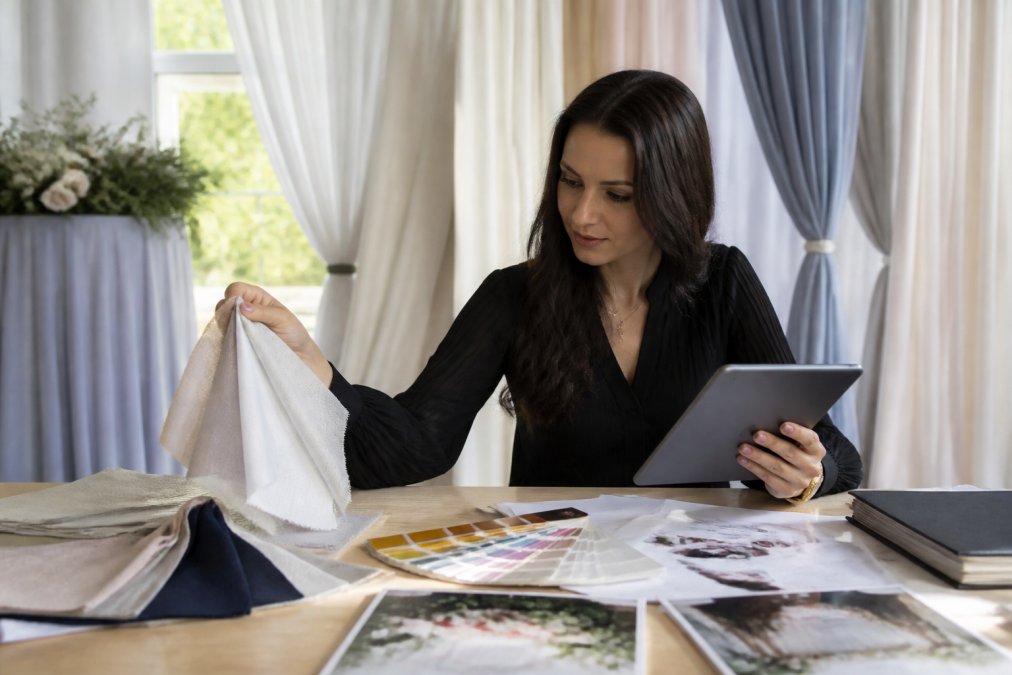
Selecting the right fabric requires evaluating five key factors: venue characteristics, lighting conditions, event type, budget, and installation method.
Step 1: Assess Your Venue
Start with physical constraints. What's the height of your space? What's the rigging capacity? Does the venue have existing walls, equipment, or architectural features you need to conceal? If yes, you need opaque fabric. If the architecture is attractive and you want to showcase it, sheer fabric might work.
Step 2: Evaluate Lighting Design
How will the space be lit? Duvetyne and other non-reflective materials work best with theatrical lighting because they absorb light and prevent glare. Reflective fabrics like satin enhance ambient and decorative lighting. Sheer fabrics like chiffon diffuse light beautifully in spaces with soft illumination. If you're using projection mapping, you need a smooth, opaque surface like spandex or blockout polyester.
Step 3: Define the Event Type and Atmosphere
Wedding ceremonies call for elegance and romance; sheer chiffon or voile create that aesthetic. Corporate galas benefit from sophisticated opaque backdrops like velvet or professional spandex. Trade shows demand durability and visual impact; banjo cloth excels here. Photo opportunities benefit from eye-catching materials like sequin fabric.
Step 4: Set Your Budget
Establish a realistic budget for fabric, delivery, and installation. If budget is tight, stretch spandex or banjo cloth deliver professional results without premium pricing. Don't confuse cost with quality; a well-chosen budget fabric outperforms an inappropriate luxury option.
Step 5: Determine Installation Method
Will you handle installation yourself or hire professionals? DIY installation works best with lightweight, wrinkle-resistant materials like spandex. Heavy fabrics like velvet demand professional rigging. Professional installation adds cost but ensures flawless execution.
Step 6: Verify Fire Safety Requirements
Contact your venue and confirm their flame retardant requirements. Request NFPA 701 certification or IFR documentation for any fabric you're considering. Get written confirmation to prevent last-minute rejections.
Step 7: Request Samples
Before committing to a large order, request fabric samples in your event's lighting conditions. How does velvet look under your specific stage lighting? Does chiffon achieve the opacity you need when layered?
Common Selection Mistakes to Avoid
Choosing fabric based purely on color without considering opacity and light response. Underestimating rigging complexity and material weight. Ignoring fire safety requirements until setup day. Selecting budget materials for high-profile events and expecting luxury results.
Conclusion
The best fabric for event backdrops depends on balancing venue constraints, lighting conditions, event atmosphere, and practical considerations like installation and maintenance. Luxury fabrics like velvet deliver unmistakable elegance for high-profile events. Practical options like stretch spandex and polyester blockout provide professional results at reasonable cost. Sheer materials like chiffon create ethereal beauty in the right context.
The most successful event backdrops result from intentional fabric selection matched to specific venue and event requirements. Start with your venue's physical constraints and rigging capacity. Evaluate your lighting design and how different fabrics respond to it. Define the atmosphere you're creating and select materials that support that vision. Verify fire safety compliance before committing. Request samples if you're uncertain.
Event Drape Rental maintains an extensive inventory featuring over 300 colors and 6 distinct fabric materials, with drapes ranging from 12 to 30 feet in height. Whether you're planning a wedding ceremony requiring elegant chiffon, a corporate gala needing professional velvet, or a trade show booth demanding durable banjo cloth, our team can help you select the right fabric and handle installation, DIY or professional, to match your needs and budget.
=== FAQ ANSWERS (audit these too, same rules) ===
[1] Q: What is the best fabric for a backdrop? A: The best fabric for event backdrops depends on your venue, lighting, and aesthetic goals. Velvet creates a luxurious, light-absorbing backdrop ideal for formal events. Chiffon and voile offer soft, elegant light diffusion for weddings. Duvetyne (commando cloth) excels at masking walls and eliminating glare for stage productions. Stretch spandex provides a modern, wrinkle-free finish for corporate events. All professional options should meet flame-retardant standards for safety compliance.
[2] Q: What is the difference between sheer and opaque event drapes? A: Sheer fabrics like chiffon, voile, and organza allow light to pass through, creating a soft, diffused glow and layered visual effects. They work well for atmospheric backdrops and ceiling treatments. Opaque fabrics like velvet, duvetyne, and blockout polyester block light completely, providing full coverage and hiding wall distractions. Choose sheer for intimate, light-filled spaces and opaque when you need complete masking or a bold, dramatic statement.
[3] Q: Which backdrop fabrics are flame retardant and event-safe? A: Most professional event fabrics meet NFPA 701 flame-retardant standards required by venues and insurance. Duvetyne, commando cloth, banjo cloth, and polyester chiffon are inherently or treated to be flame-retardant. Always verify compliance with your venue before booking. Flame-retardant treatments can diminish with washing, so professional maintenance is recommended. Event Drape Rental maintains compliant inventory across all fabric materials to ensure your event meets safety requirements.
[4] Q: How do I avoid wrinkled drapes for event rentals? A: Choose wrinkle-resistant fabrics like stretch spandex, polyester blockout, or banjo cloth for a pristine appearance. These materials maintain their shape during transport and setup. Professional installation and proper rigging techniques also minimize wrinkles. Duvetyne and velvet naturally resist wrinkles due to their weight and texture. If wrinkles appear, professional steamers can restore the fabric before your event. Request delivery with adequate setup time to allow fabrics to hang and settle.
[5] Q: Can I use velvet for event backdrops? A: Yes, velvet is an excellent choice for event backdrops, especially luxury weddings, galas, and stage productions. Its rich texture and deep colors create a polished, opulent frame that absorbs light and hides wall distractions. Panne velvet offers a reflective sheen, while stretch velvet provides added flexibility. Velvet is heavier than lighter fabrics, so ensure your rigging system can support the weight. Its dramatic appearance justifies the investment for high-profile events.
Frequently Asked Questions
What is the best fabric for a backdrop?
The best fabric for event backdrops depends on your venue, lighting, and aesthetic goals. Velvet creates a luxurious, light-absorbing backdrop ideal for formal events. Chiffon and voile offer soft, elegant light diffusion for weddings. Duvetyne (commando cloth) excels at masking walls and eliminating glare for stage productions. Stretch spandex provides a modern, wrinkle-free finish for corporate events. All professional options should meet flame-retardant standards for safety compliance.
What is the difference between sheer and opaque event drapes?
Sheer fabrics like chiffon, voile, and organza allow light to pass through, creating a soft, diffused glow and layered visual effects. They work well for atmospheric backdrops and ceiling treatments. Opaque fabrics like velvet, duvetyne, and blockout polyester block light completely, providing full coverage and hiding wall distractions. Choose sheer for intimate, light-filled spaces and opaque when you need complete masking or a bold, dramatic statement.
Which backdrop fabrics are flame retardant and event-safe?
Most professional event fabrics meet NFPA 701 flame-retardant standards required by venues and insurance. Duvetyne, commando cloth, banjo cloth, and polyester chiffon are inherently or treated to be flame-retardant. Always verify compliance with your venue before booking. Flame-retardant treatments can diminish with washing, so professional maintenance is recommended. Event Drape Rental maintains compliant inventory across all fabric materials to ensure your event meets safety requirements.
How do I avoid wrinkled drapes for event rentals?
Choose wrinkle-resistant fabrics like stretch spandex, polyester blockout, or banjo cloth for a pristine appearance. These materials maintain their shape during transport and setup. Professional installation and proper rigging techniques also minimize wrinkles. Duvetyne and velvet naturally resist wrinkles due to their weight and texture. If wrinkles appear, professional steamers can restore the fabric before your event. Request delivery with adequate setup time to allow fabrics to hang and settle.
Can I use velvet for event backdrops?
Yes, velvet is an excellent choice for event backdrops, especially luxury weddings, galas, and stage productions. Its rich texture and deep colors create a polished, opulent frame that absorbs light and hides wall distractions. Panne velvet offers a reflective sheen, while stretch velvet provides added flexibility. Velvet is heavier than lighter fabrics, so ensure your rigging system can support the weight. Its dramatic appearance justifies the investment for high-profile events.
Ready to transform your event space with the perfect backdrop? Request a quote from Event Drape Rental today. Our team will help you select from our extensive inventory of premium fabrics, coordinate delivery and installation, and ensure your backdrop looks spectacular. With flexible DIY and professional installation options, we deliver the customizable aesthetic your event deserves.
This article was written using GrandRanker