 listicle
Best Pipe and Drape Companies 2026
Table of Contents
- Top Pipe and Drape Companies for 2026
- Event Drape Rental: Maximum Color and Fabric Variety
- Event Decor Direct: Wholesale Kits and Bulk Pricing
- Georgia Expo: American-Made Systems with Price Matching
- Pipe and Drape USA: Fast Shipping and Flame Retardant Options
- Regional Rental Companies: AFR, Bright Event Rentals, and EventWorks
- CV Linens: Affordable Purchase Options with Premium Fabrics
- How to Calculate Cost of Event Draping Per Square Foot
- Pipe and Drape Installation Best Practices
- Pipe and Drape Safety and Fire Code Compliance
- DIY vs. Professional Installation: What to Expect
- Choosing the Right Pipe and Drape Company for Your Event
- Frequently Asked Questions
Last Updated: August 25, 2026
Top Pipe and Drape Companies for 2026
When planning an event, the backdrop transforms a blank space into a polished venue. Choosing between rental companies, wholesale suppliers, and DIY options requires understanding what each provider does well and where they fall short. This guide covers pipe and drape companies that deliver, breaking down their strengths, ideal use cases, and how their approaches differ.
Event Drape Rental: Maximum Color and Fabric Variety
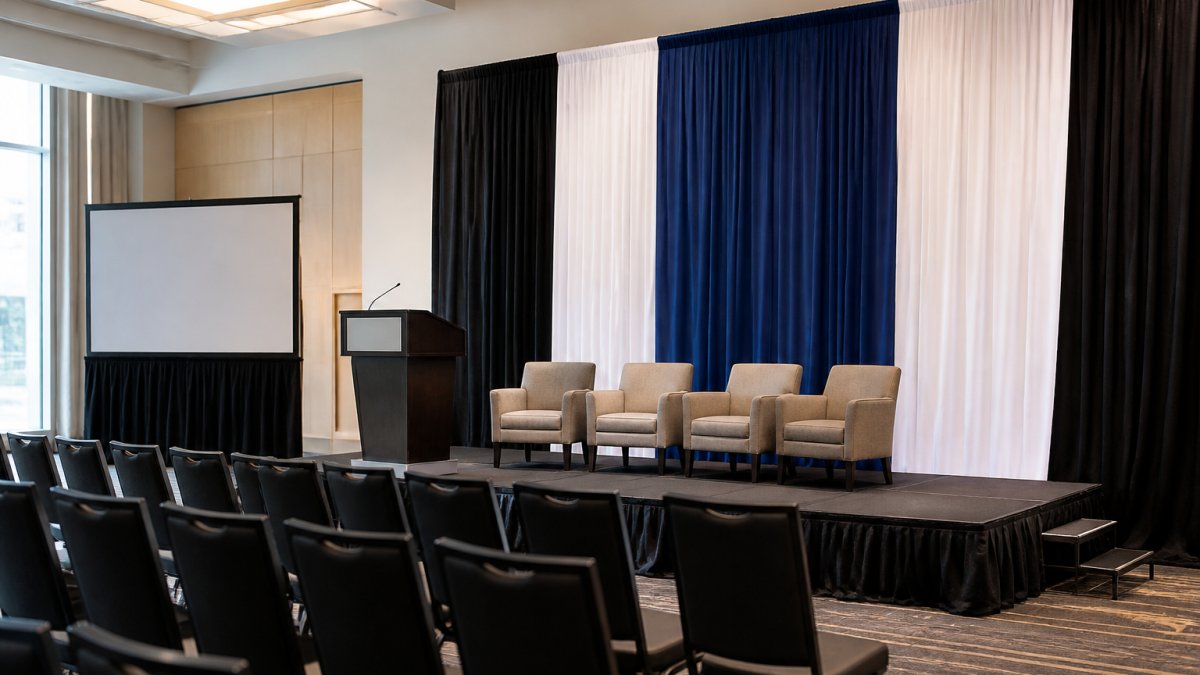
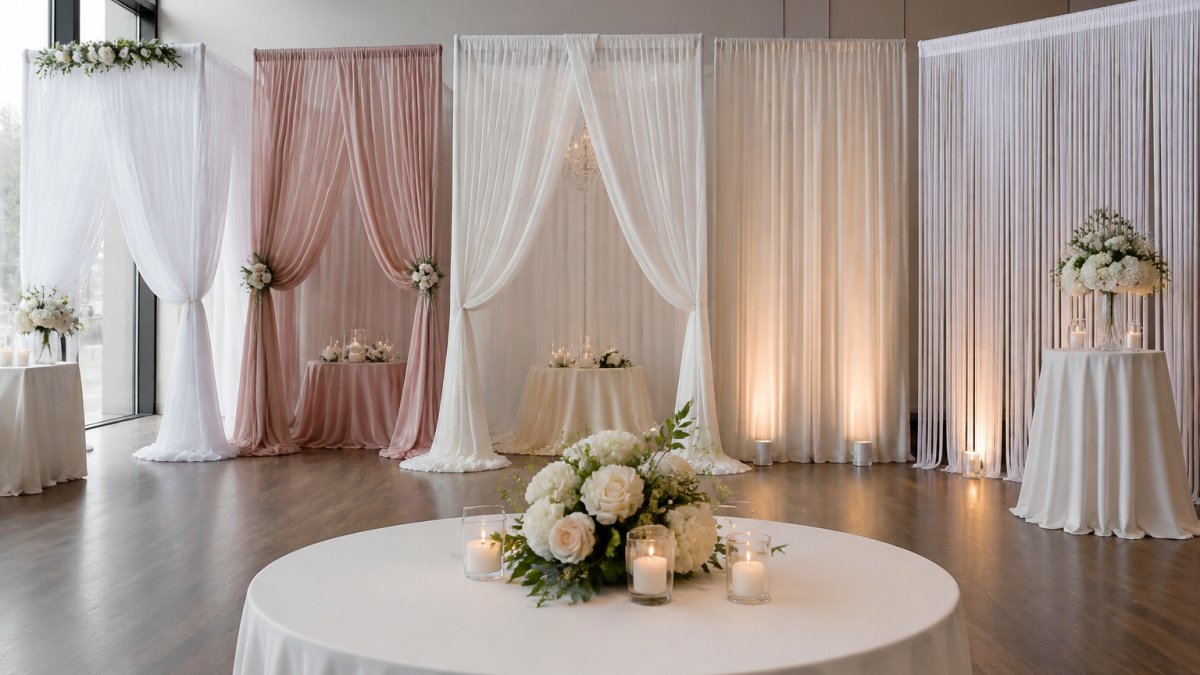
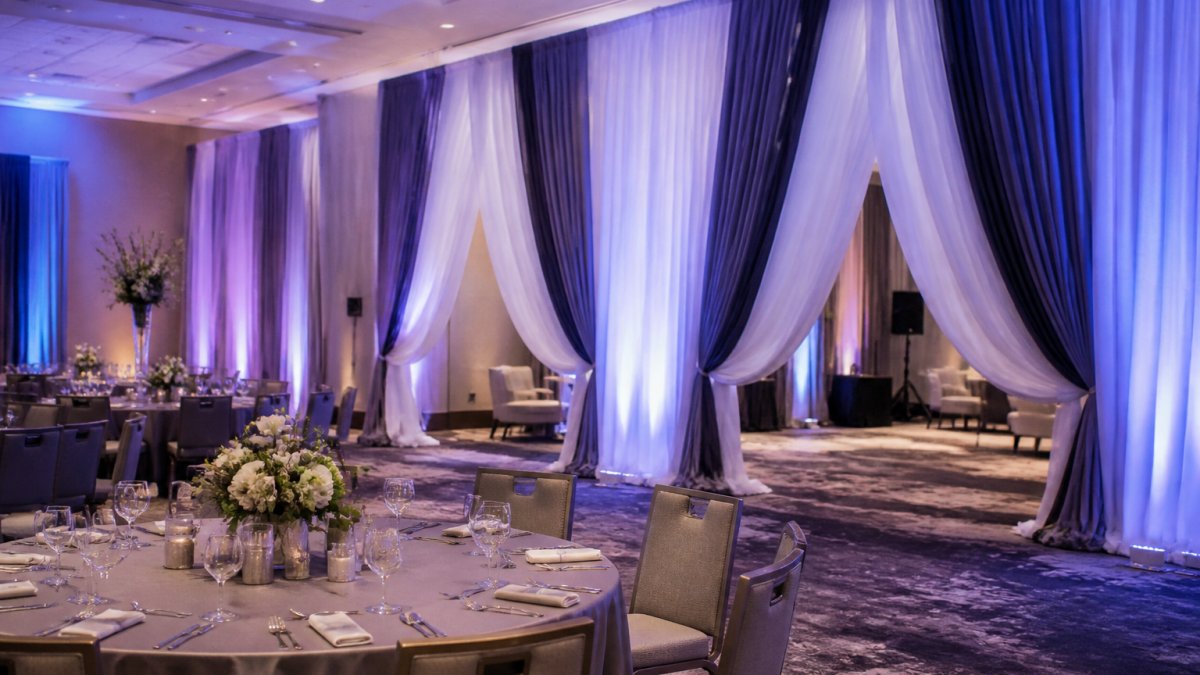
Event Drape Rental stands out for inventory depth. With over 300 colors and 15 distinct fabric materials, this company solves a common frustration: finding the exact shade and texture that matches your vision. You're selecting from multiple blacks (charcoal, midnight, jet), multiple reds, and everything in between. Fabric options span from sheer voile for elegant, light-diffusing backdrops to heavy velour for dramatic, light-absorbing statements. This variety is essential for corporate events requiring brand color precision and weddings where aesthetic matching makes the difference between adequate and stunning.
The company offers drapes from 12 to 30 feet in height, accommodating everything from intimate ceilings to soaring ballroom spaces. Both DIY and professional installation options are available.
The key consideration: with this much choice, decision-making takes longer. Standard black drapes arrive quickly; specific dusty rose with particular fabric weight requires more upfront collaboration.
Event Decor Direct: Wholesale Kits and Bulk Pricing
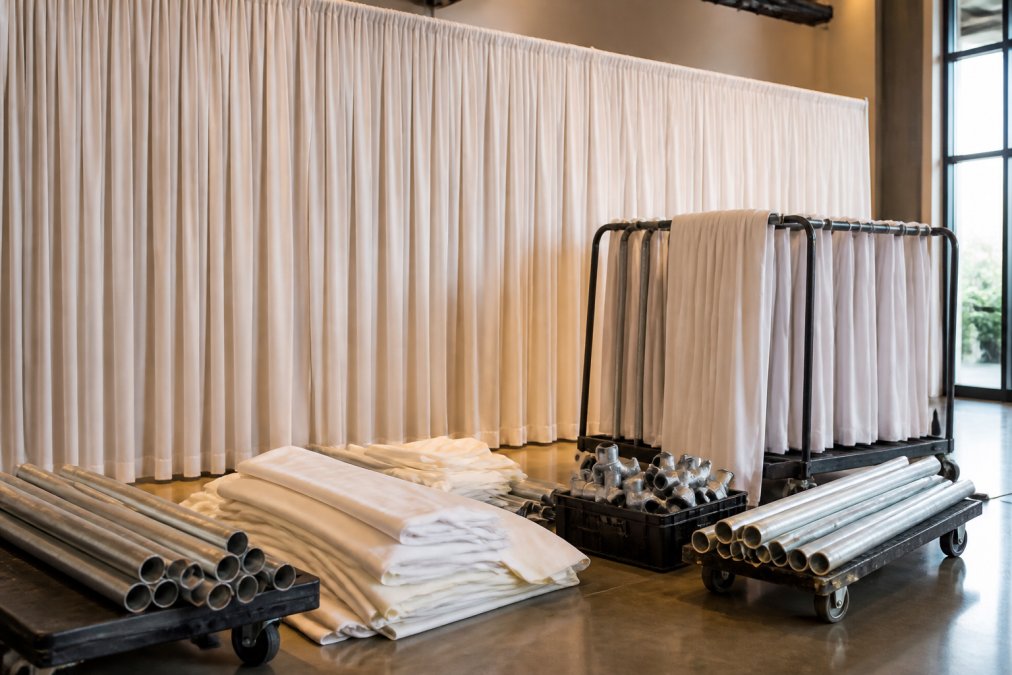
Event Decor Direct operates as a wholesale supplier rather than a rental company, making them ideal for building permanent inventory or running multiple events regularly. Their kits come in configurations from 1-panel to 40-panel setups with fabrics including sheer voile, poly premier, satin, velour, and spandex. You purchase components outright: uprights, crossbars, bases, and fabric panels.
Pricing for 8ft x 10ft backdrop kits ranges from $100 to $400 depending on fabric choice. Full-room draping typically runs $1,000 to $5,000 or more depending on venue size and fabric selection. The tradeoff: Event Decor Direct doesn't offer setup services. You handle installation yourself or hire a separate crew, which works fine with installation experience but becomes problematic for first-time large events.
Georgia Expo: American-Made Systems with Price Matching
Georgia Expo manufactures pipe and drape systems domestically, giving them cost control that rental-only companies can't match. Their product line includes adjustable-height kits with drape fabrics like Banjo, Poly Premier, and Sheer (Voile). An 8ft fixed-height kit 10 feet wide starts at $113.51. The company backs this pricing with a price-matching policy, eliminating negotiation friction.
The manufacturing advantage extends beyond pricing. Since Georgia Expo controls production, they accommodate custom requests and bulk orders without typical delays. This is valuable for large trade shows or corporate events requiring multiple identical setups on schedule.
Watch for: shipping costs are charged separately, and custom graphics add to the total. For single standard kits this is minimal; for large multi-location events, these add-ons accumulate.
Pipe and Drape USA: Fast Shipping and Flame Retardant Options
Pipe and Drape USA specializes in speed, shipping in-stock items within 1-3 business days nationwide. Complete kits range from 10 feet to 100 feet wide, with a 10-foot-wide kit starting at $420. Their critical distinction: drapes are inherently flame retardant, meeting fire code requirements without additional treatment. This is significant for venues with strict fire marshal oversight.
The company sells individual components as well, so you can purchase replacement drape panels if you already own uprights and bases. The limitation: custom drape options aren't prominently featured. Standard black, white, and primary colors are readily available; everything else requires direct contact.
Regional Rental Companies: AFR, Bright Event Rentals, and EventWorks
AFR Furniture Rental, Bright Event Rentals, and EventWorks represent full-service event rental companies incorporating pipe and drape as part of broader furnishing solutions. AFR operates nationwide with focus on modern furniture and event design, integrating drapes with tables, chairs, lighting, and lounge furniture. Bright Event Rentals operates across California, Arizona, and Texas with extensive inventory including backdrops, stages, and lighting. EventWorks dominates the Southeast with seven locations across five states.
All three offer comprehensive inventory; pricing requires direct quotes rather than transparent rates.
CV Linens: Affordable Purchase Options with Premium Fabrics
CV Linens occupies the middle ground between wholesale suppliers and rental companies. Basic kits run $100-$400, making them accessible for budget-conscious planners. Their fabric selection includes premium options like chiffon, velvet, and sequins, choices rental companies often reserve for premium pricing.
Most customers handle installation themselves. If you're renting repeatedly rather than purchasing, rental costs run $8-$20 per linear foot depending on fabric and design. For large venues requiring full-room draping, this becomes expensive compared to ownership. The math favors purchasing only if you're hosting multiple events annually.
How to Calculate Cost of Event Draping Per Square Foot
Calculating pipe and drape costs per square foot gives you a standardized comparison method. Start with your venue dimensions: measure linear feet of wall space, multiply by drape height. A 40-foot-wide wall with 12-foot-tall drapes equals 480 square feet.
Rental companies typically charge per linear foot regardless of height. Wholesale suppliers pricing by kit make calculations different since you're buying fixed configurations. Fabric choice affects pricing significantly: sheer voile costs less than velour, which costs less than specialty fabrics. Always verify vendors are quoting the same fabric.
Professional installation typically runs $500-$2,000 depending on complexity. Include this in your total cost calculation.
A practical example: A 2,000-square-foot ballroom needing 12-foot-tall drapes costs approximately $2,000-$4,000 in rental fees plus installation with professional vendors. That's $1-$2 per square foot for rental. Purchasing kits runs higher initially ($3,000-$6,000) but amortizes across multiple events.
Pipe and Drape Installation Best Practices
Professional installation separates polished events from amateurish ones. Start with structural assessment: verify your venue can support the weight. A 40-foot-wide, 12-foot-tall setup with standard velour drapes weighs 800-1,200 pounds (peer-reviewed research). This load concentrates on base plates, so verify flooring can handle point loads. Concrete handles this easily; polished wood, marble, or carpeted surfaces require floor protection using plywood sheets under base plates.
Ceiling height determines your setup approach. For 9-12-foot ceilings, standard telescopic uprights work well. For higher ceilings (15+ feet), you need taller uprights or different rigging. Determine this before committing to a specific setup.
Base plate installation is where most DIY failures occur. Base plates must sit flat; even slight tilts create instability under drape weight. Use a level to verify and adjust feet if needed. Never rely on floor levelness; check each base plate individually.
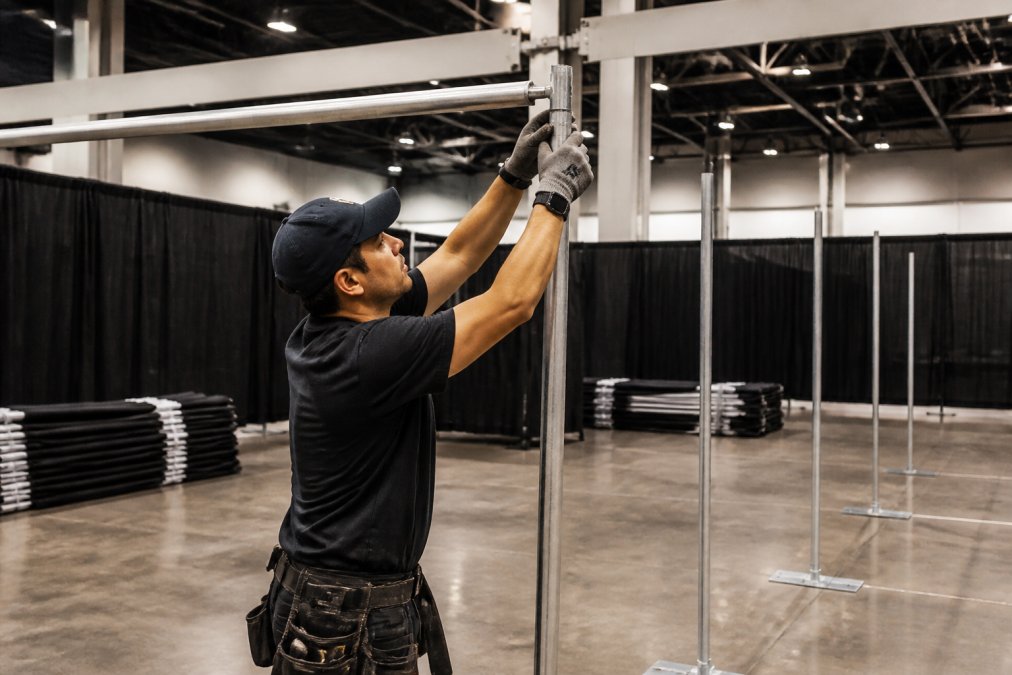
Upright assembly requires attention to detail. Telescopic uprights have locking mechanisms that must be fully engaged. Partially locked uprights slip under load, causing system collapse. Test each upright by applying downward pressure before hanging drapes.
Crossbar placement determines drape appearance. Crossbars should sit at upright tops, not floating between them. Ensure crossbars are level across their entire length using a level tool. Drape hanging requires patience: start at one end and work systematically, using consistent tension. Uneven hanging creates visible waves undermining professional appearance. Distribute panels evenly across the crossbar rather than loading weight onto one side.
Pipe and Drape Safety and Fire Code Compliance
Fire code compliance is a legal requirement varying by jurisdiction and venue type. Most jurisdictions require drapes used in public events to be flame retardant (the CDC). This means the fabric resists ignition and slows flame spread. The standard test is NFPA 701, measuring fabric behavior when exposed to open flame (nfpa.org).
Inherently flame retardant fabrics pass this test without chemical treatment. Treated fabrics have flame retardant chemicals applied during manufacturing. Both approaches work; inherent flame retardancy lasts the fabric's lifetime while chemical treatment can wash out with repeated cleaning.
Always request documentation of flame retardancy. Get a copy of the NFPA 701 test certificate. Fire marshals will ask for this, proving compliance. The weight and stability calculation is equally important: drapes create horizontal and vertical loads that the system must handle without tipping or failing. Heavier base plates provide stability for taller uprights or heavier drapes.
Document everything: keep copies of flame retardancy certificates, weight specifications, and installation photos. This documentation protects you legally and demonstrates due diligence.
DIY vs. Professional Installation: What to Expect
The decision between DIY and professional installation hinges on timeline, complexity, and your team's experience. DIY installation saves money but costs time. A straightforward 40-foot-wide, 12-foot-tall single-wall drape takes 3-4 hours for experienced installers, 6-8 hours for first-timers. Multi-wall setups or high ceilings extend this significantly.
Complexity escalates quickly. Single flat walls are manageable. Curved walls, multiple height levels, or ceiling-hung systems require problem-solving skills and equipment knowledge most event planners lack. Professional installers have seen every venue configuration and know how to adapt.
Quality differences are real: professional installation looks polished because installers ensure even tension, proper alignment, and secure attachment. DIY installations often have visible waves, uneven hanging, or slight tilts that trained eyes notice. For high-profile events where appearance is scrutinized, this matters.
Professional installation typically costs $500-$2,000 depending on complexity and venue size. For a $5,000+ event budget, this is minimal. For a $2,000 event budget, it's significant. Timeline is often the deciding factor: with two weeks, DIY is feasible; with two days and no prior experience, professional installation is necessary.
Choosing the Right Pipe and Drape Company for Your Event
Selecting a vendor requires matching your specific needs against what each company does well. Start with your core requirement: are you renting for a single event or building inventory? Renters should focus on rental specialists like Event Drape Rental or regional companies. Purchasers should consider wholesale suppliers like Event Decor Direct or Georgia Expo.
Next, prioritize speed versus selection. If you need drapes within a week, Pipe and Drape USA's 1-3 day shipping is valuable. If you need a specific color match with two weeks, Event Drape Rental's 300-color inventory justifies longer lead times.
Consider installation support. Without experience or available labor, companies offering professional installation eliminate a major variable. If you're comfortable handling setup, any supplier works.
Budget constraints matter. For tight budgets, CV Linens' affordable kits work well. For events where appearance is paramount, investing in higher-quality fabrics and professional installation from Event Drape Rental justifies higher cost.
Venue requirements are critical. If your venue has ceiling height limitations, weight restrictions, or specific fire code requirements, discuss these with your vendor before committing. Ask for references or photos from similar events. Request examples matching your venue type and event size.
Pricing transparency matters. Companies quoting prices upfront (Georgia Expo, Pipe and Drape USA, CV Linens) allow easy comparison. Companies requiring custom quotes (regional rental companies) make comparison difficult. Neither approach is inherently better; transparent pricing just makes your decision faster.
Choosing the right pipe and drape company requires balancing inventory depth, installation support, pricing, and timeline. Event Drape Rental's combination of extensive color selection, flexible installation options, and professional-grade quality makes it a strong choice for many event planners. With over 300 colors, 15 fabric materials, and drapes ranging from 12 to 30 feet in height, you have flexibility to match virtually any aesthetic requirement. Whether handling installation yourself or needing professional support, Event Drape Rental delivers the customization and quality that transforms ordinary venues into spectacular events. Get started with Event Drape Rental and request a quote for your next event.
| Company | Best For | Strength | Consideration |
|---|---|---|---|
| Event Drape Rental | Color/fabric precision, professional events | 300+ colors, 15 fabrics, DIY or pro installation | Pricing depends on quantity, dates, and delivery |
| Event Decor Direct | Bulk purchasing, venue inventory | Wholesale pricing, complete kits | No installation services |
| Georgia Expo | Budget-conscious, American-made preference | Price matching, domestic manufacturing | Shipping costs separate |
| Pipe and Drape USA | Fast turnaround, fire code compliance | 1-3 day shipping, inherently flame retardant | Limited custom options |
| Regional Companies (AFR, Bright, EventWorks) | Multi-category event rentals | Comprehensive inventory, local support | Higher single-category pricing |
| CV Linens | Affordable purchase, premium fabrics | Cost-effective kits, variety of materials | Expensive for frequent rentals |
=== FAQ ANSWERS (audit these too, same rules) ===
[1] Q: How much does pipe and drape typically cost? A: Pricing depends on several factors: the square footage of your space, fabric type (sheer, velour, poly premier), rental duration, and whether you choose DIY or professional installation. Wholesale kits range from $100 to $400 for basic backdrops, while full-room draping for large venues can reach $1,000 to $5,000 or more. Request a quote from your chosen pipe and drape company to get accurate pricing based on your specific event needs and venue dimensions.
[2] Q: What should I look for when comparing pipe and drape companies? A: Evaluate companies on color and fabric inventory (look for 100+ colors and multiple fabric options like velour and poly premier), height range (12 to 30 feet accommodates most venues), installation support (DIY or professional options), flame retardancy certification, delivery logistics, and customer references. Ask about their load-bearing capacity calculations, setup and strike timelines, and whether they handle rush orders. Check reviews specifically mentioning condition upon delivery and installation quality.
[3] Q: How do I calculate the cost of event draping per square foot? A: Measure your venue's linear footage where draping will be installed, then multiply by the height of the drapes. For example, a 50-foot wide space with 20-foot tall drapes equals 1,000 square feet. Divide the total rental or purchase cost by this figure to get per-square-foot pricing. This helps you compare companies fairly and budget for different venue sizes. Remember that complex installations with multiple sections, custom colors, or rush delivery may have higher per-square-foot costs than standard setups.
[4] Q: What is the difference between rental and purchase options for pipe and drape? A: Rental companies deliver, install, and retrieve drapes after your event, handling all logistics and maintenance. Purchase options from wholesale suppliers give you ownership of the equipment for repeated use. Rentals suit one-time events and provide professional-grade, flame-retardant materials ready to use. Purchasing makes sense if you coordinate multiple events annually or want permanent inventory. Rental typically costs $8 to $20 per linear foot depending on fabric; purchase kits range from $100 to $5,000 based on size and quality.
[5] Q: Are pipe and drape systems safe for high-ceiling venues? A: Yes, when properly installed by professionals. Pipe and drape systems use telescopic uprights and secure base plates to handle various ceiling heights. Most quality systems accommodate 12 to 30 feet safely. However, venues with ceilings exceeding 40 feet require weight and stability calculations to ensure safe load-bearing capacity. Confirm that drapes meet fire code compliance standards (inherently flame retardant fabrics are required in most public venues). Always have professionals assess your specific venue's structural requirements before installation.
Frequently Asked Questions
How much does pipe and drape typically cost?
Pricing depends on several factors: the square footage of your space, fabric type (sheer, velour, poly premier), rental duration, and whether you choose DIY or professional installation. Wholesale kits range from $100 to $400 for basic backdrops, while full-room draping for large venues can reach $1,000 to $5,000 or more. Request a quote from your chosen pipe and drape company to get accurate pricing based on your specific event needs and venue dimensions.
What should I look for when comparing pipe and drape companies?
Evaluate companies on color and fabric inventory (look for 100+ colors and multiple fabric options like velour and poly premier), height range (12 to 30 feet accommodates most venues), installation support (DIY or professional options), flame retardancy certification, delivery logistics, and customer references. Ask about their load-bearing capacity calculations, setup and strike timelines, and whether they handle rush orders. Check reviews specifically mentioning condition upon delivery and installation quality.
How do I calculate the cost of event draping per square foot?
Measure your venue's linear footage where draping will be installed, then multiply by the height of the drapes. For example, a 50-foot wide space with 20-foot tall drapes equals 1,000 square feet. Divide the total rental or purchase cost by this figure to get per-square-foot pricing. This helps you compare companies fairly and budget for different venue sizes. Remember that complex installations with multiple sections, custom colors, or rush delivery may have higher per-square-foot costs than standard setups.
What is the difference between rental and purchase options for pipe and drape?
Rental companies deliver, install, and retrieve drapes after your event, handling all logistics and maintenance. Purchase options from wholesale suppliers give you ownership of the equipment for repeated use. Rentals suit one-time events and provide professional-grade, flame-retardant materials ready to use. Purchasing makes sense if you coordinate multiple events annually or want permanent inventory. Rental typically costs $8 to $20 per linear foot depending on fabric; purchase kits range from $100 to $5,000 based on size and quality.
Are pipe and drape systems safe for high-ceiling venues?
Yes, when properly installed by professionals. Pipe and drape systems use telescopic uprights and secure base plates to handle various ceiling heights. Most quality systems accommodate 12 to 30 feet safely. However, venues with ceilings exceeding 40 feet require weight and stability calculations to ensure safe load-bearing capacity. Confirm that drapes meet fire code compliance standards (inherently flame retardant fabrics are required in most public venues). Always have professionals assess your specific venue's structural requirements before installation.
This article was written using GrandRanker