 how-to
Best Ways to Hide Venue Walls: 7 Methods
Table of Contents
- Why Hiding Venue Walls Matters for Your Event
- Pipe and Drape Installation Tips for Full Wall Coverage
- Event Drapery Height Requirements and Venue Restrictions
- How to Cover Walls for Weddings Using Freestanding Backdrops
- Using Uplighting and Lighting Design to Distract from Walls
- Natural Elements and Greenery Walls for Organic Coverage
- DIY Solutions: Budget-Friendly Alternatives to Professional Draping
- Rental vs. DIY: Cost Analysis and Safety Considerations
- Frequently Asked Questions
Last Updated: September 17, 2026
Why Hiding Venue Walls Matters for Your Event
Bare venue walls kill the vibe. They scream "empty space" instead of "polished event." Event Drape Rental works with event planners who understand that what surrounds your guests shapes how they experience the entire occasion. A plain concrete wall, exposed brick, or dated paint color pulls focus away from your carefully planned details. It breaks the aesthetic you're trying to build.
The stakes are real. A corporate gala in a bland ballroom feels cheap, even with premium catering. A wedding in a warehouse with industrial walls fights against every romantic detail you add. A trade show booth surrounded by exposed ductwork and pipes loses credibility against competitors with polished backdrops.
Hiding venue walls isn't vanity, it's event design. The best ways to hide venue walls transform a raw space into a curated environment that matches your brand, your theme, and your budget. Below, we'll walk through seven proven methods to cover walls, from professional-grade pipe and drape systems to budget-friendly DIY solutions.
Pipe and Drape Installation Tips for Full Wall Coverage
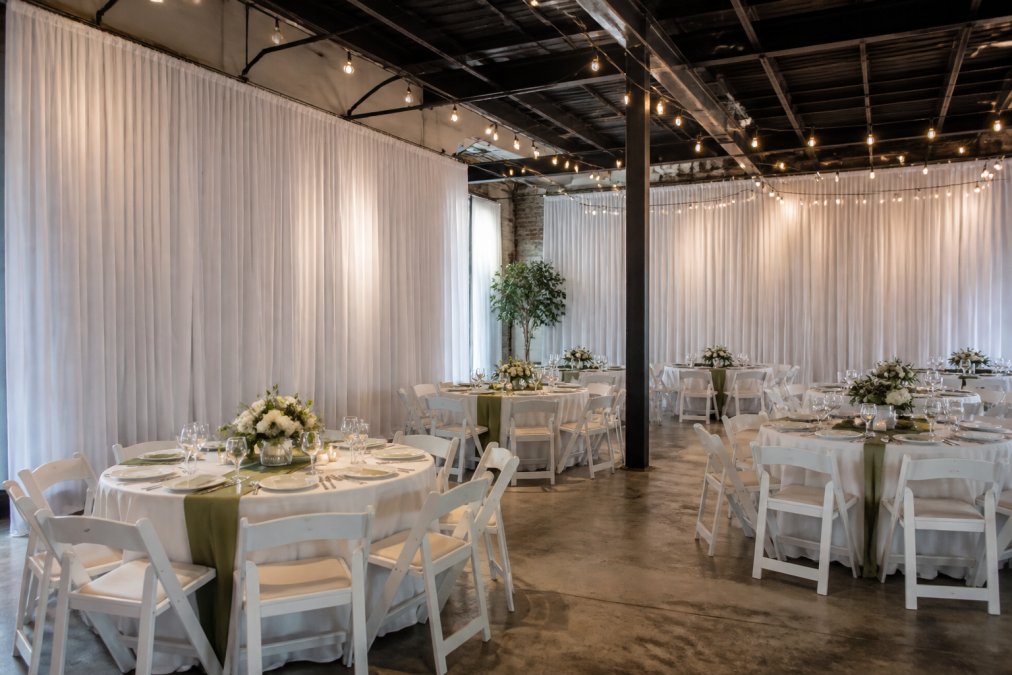
Pipe and drape is the gold standard for hiding venue walls. It's what professionals use at major conferences, weddings, and corporate galas. A pipe and drape system consists of vertical poles (uprights) connected by horizontal crossbars, with fabric panels hung from the frame. The result is a seamless wall covering that can reach 12 to 30 feet in height.
Choosing the Right Fabric and Color
Fabric choice determines how your space feels. A sheer white drape creates an ethereal, open atmosphere. A heavy velvet black drape conveys luxury and formality. Matte fabrics hide wrinkles better than shiny ones. Flame-retardant materials are non-negotiable for commercial venues, they're required by fire codes.
Event Drape Rental offers over 100+ colors and 6 different fabric materials. This range matters because exact color matching to your brand guidelines or theme isn't a luxury, it's what separates a polished event from a cobbled-together one. Mismatched drapes signal improvisation.
Consider the venue's lighting. A pale fabric looks washed out under harsh fluorescent lights but glows under warm uplighting. Darker fabrics absorb light and create intimate spaces. Test fabric samples in your actual venue if possible, or request photos showing the same fabric under similar lighting conditions.
Securing the System Safely
Pipe and drape systems must be secured properly. Unsecured drapes fall. Fallen drapes injure people and destroy your event. This is where DIY attempts often fail.
Professional installation uses weighted base plates that anchor uprights to the floor without drilling or damaging walls. The crossbars are locked tightly to prevent slipping. Fabric is clipped securely to prevent sagging or shifting. The entire structure must pass stability tests, especially in high-traffic areas or near guests.
If you're installing yourself, invest in heavy-duty base plates rated for your drape height and fabric weight. Use cross-bracing for systems taller than 15 feet. Never rely on gravity alone. Test the system before your event, push on it. A properly installed pipe and drape system should feel rock-solid.
Event Drapery Height Requirements and Venue Restrictions
Not all venues allow floor-to-ceiling draping. Some have sprinkler systems, fire suppression equipment, or structural limitations. Others prohibit permanent mounting or drilling. Understanding your venue's restrictions before selecting your solution saves time and money.
Ask your venue manager these specific questions:
- What is the maximum drape height allowed?
- Can we use base plates on the floor, or do you require wall mounting?
- Are there sprinkler heads, vents, or lighting fixtures we need to work around?
- What is your fire code requirement for fabric, does it need to be flame-retardant?
- Are there weight restrictions on equipment?
- Can we use tension rods, or is that prohibited?
Event drapery height requirements vary by venue and event type. Weddings often need 12 to 20 feet to hide industrial ceilings. Corporate events in hotel ballrooms may only need 10 to 12 feet. Trade show booths frequently use 8 to 10 feet for perimeter draping. Warehouse events sometimes require 25 to 30 feet to hide exposed beams and ductwork.
Your venue restrictions directly determine which solutions work. A venue that prohibits wall mounting eliminates custom-built partitions but allows freestanding backdrops. A venue with low ceilings eliminates tall pipe and drape but accommodates room dividers and furniture placement.
How to Cover Walls for Weddings Using Freestanding Backdrops
Freestanding backdrops are the go-to solution for weddings when you need flexibility and damage-free installation. A freestanding backdrop stands independently using weighted base plates, no wall mounting, no drilling, no venue damage.
Backdrops work best for covering specific problem areas rather than entire walls. Use them to hide an ugly corner, frame your head table, or create a focal point for photos. They're portable, reusable, and quick to set up.
Backdrop frames come in standard sizes: 8x8 feet, 10x10 feet, and custom dimensions. Pair them with fabric panels, paper garlands, greenery, or custom prints. The flexibility is the strength, you can swap out backdrops between ceremony and reception, or move them to different venues.
Freestanding backdrops work well for:
- Photo booth areas where you need a branded or decorative background
- Sweetheart tables that need visual separation from the rest of the room
- Ceremony focal points in plain venues
- Covering specific wall sections without full coverage
For how to cover walls for weddings at a larger scale, layer multiple backdrops or combine them with draping. A 10x10 foot backdrop covers roughly 100 square feet. A standard ballroom wall is 40 feet wide by 12 feet tall, you'd need four backdrops side by side, or use pipe and drape for full coverage.
Using Uplighting and Lighting Design to Distract from Walls
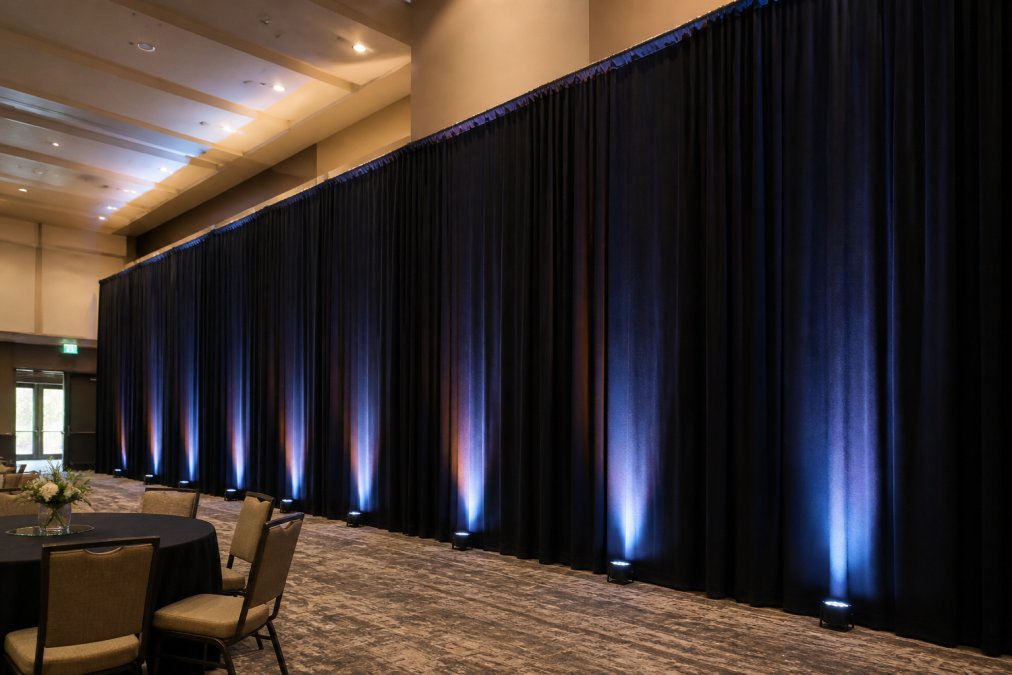
Lighting doesn't hide walls, it redirects attention. Strategic uplighting washes walls with color, breaking up visual monotony and drawing the eye upward. A plain white wall becomes a canvas for blue, amber, or rose-colored light.
Uplighting works because it changes the emotional tone of the space. Soft amber light feels warm and romantic. Cool blue light feels modern and energetic.
Natural Elements and Greenery Walls for Organic Coverage
Greenery walls create organic, Instagram-worthy backdrops. A living wall or artificial greenery arrangement adds texture, color, and visual interest that fabric alone can't match. Real plants require maintenance and may not survive event conditions. Artificial plants are durable, reusable, and maintenance-free.
Greenery pairs beautifully with other solutions:
- Combine greenery with uplighting for a botanical garden effect
- Layer greenery over fabric draping for a modern, organic look
- Use greenery clusters to frame freestanding backdrops
- Mix real and artificial plants for texture variety
DIY Solutions: Budget-Friendly Alternatives to Professional Draping
Professional pipe and drape rental costs money. If your budget is tight, DIY alternatives deliver results, with caveats about installation time and visual polish.
Rental vs. DIY: Cost Analysis and Safety Considerations
The rental versus DIY decision comes down to budget, time, and risk tolerance. Both approaches work, they just work differently.
Rental advantages:
- Professional installation ensures safety and stability
- Fabric arrives clean and wrinkle-free
- Extensive color and material options
- Minimal setup time
- Guaranteed quality and appearance
- Professional liability insurance covers accidents
DIY advantages:
- Lower upfront cost for materials
- Reusable for multiple events
- Full creative control
- No rental deadlines or delivery schedules
DIY disadvantages:
- Installation takes significantly longer
- Risk of improper securing or collapse
- Visible wrinkles, sagging, or misalignment
- Limited material options
- Storage space required
- No insurance coverage if something fails
| Solution | Best For | Setup Time | Durability | Cost Level |
|---|---|---|---|---|
| Pipe and Drape | Full wall coverage, formal events | 2-4 hours | Reusable for years | Higher |
| Freestanding Backdrops | Specific areas, photo zones | 30-60 minutes | Reusable for years | Medium |
| Uplighting | Atmosphere, accent coverage | 1-2 hours | Reusable for years | Medium |
| Greenery Walls | Organic look, focal points | 2-3 hours | Reusable if artificial | Medium |
| Tension Rods + Fabric | Budget solution, small areas | 1-2 hours | Single use | Low |
| Paper Garlands | Casual events, texture | 3-6 hours | Single use | Low |
Frequently Asked Questions
What height should event drapery be to effectively hide a wall?
Event drapery should extend from floor to ceiling or at least 12 feet high to conceal most wall imperfections and create a polished appearance. For venues with high ceilings, drapes up to 30 feet tall ensure complete coverage and prevent the eye from drifting to exposed wall sections above the fabric. The exact height depends on your venue's ceiling height and the wall defects you're covering. Always measure your space before ordering to avoid gaps that expose unwanted areas.
Are there DIY solutions for hiding venue walls without renting professional drapes?
Yes. Freestanding room dividers, tension-rod systems, and backdrop stands offer affordable DIY options that require no wall mounting or damage. String lights, peel-and-stick wallpaper, and large potted plants can also mask specific wall sections. These solutions work well for smaller events or budget-conscious planners, though they typically cover less area than professional pipe and drape systems. For large spaces or high-traffic events, professional rentals provide superior stability and aesthetic finish.
How can uplighting and lighting design distract from unsightly venue walls?
Uplighting washes walls with color, drawing attention to the light itself rather than wall texture, damage, or discoloration. By positioning LED fixtures at the base of walls and projecting vibrant colors, you create a focal point that makes wall imperfections visually recede. This technique works especially well when combined with draping or greenery, as the colored light transforms the overall room ambiance and redirects guest focus to decorated areas and event highlights.
What makes pipe and drape systems better than other wall-hiding methods?
Pipe and drape systems offer complete, professional-grade coverage with flame-retardant materials, adjustable heights, and freestanding bases that require no wall damage. They accommodate venues with restrictions on drilling or permanent fixtures, hide large areas quickly, and come in hundreds of colors and fabric options to match your event aesthetic. Unlike temporary solutions, professional pipe and drape maintains its appearance throughout the event and can be installed or removed by trained crews.