 listicle
Common Draping Mistakes: How to Avoid Them
Table of Contents
- Common Draping Mistakes That Ruin Your Event Look
- Uneven or Messy Pleats: The Foundation Problem
- Incorrect Fabric Choice for Your Event Space
- Poor Framework Stability and Sagging Drapes
- How to Calculate Drape Fullness for Professional Results
- Pipe and Drape Installation Tips for Secure Setup
- Best Pipe and Drape for Weddings: Avoiding Common Pitfalls
- Long-Term Maintenance to Keep Your Drapes Looking Professional
- Frequently Asked Questions
Last Updated: September 28, 2026
Common Draping Mistakes That Ruin Your Event Look
When you're planning an event, the details matter. Draping transforms a space from ordinary to extraordinary, but only when executed correctly. Common draping mistakes can undermine even the most carefully planned event, turning what should be a polished backdrop into a distraction. Understanding what goes wrong, and why, gives you the knowledge to avoid costly missteps.
The good news: most draping mistakes are preventable. Understanding what goes wrong, and why, gives you the knowledge to avoid costly missteps. Whether you're managing a corporate gala, trade show booth, or wedding reception, this guide covers the critical errors that separate professional results from amateur installations.
Uneven or Messy Pleats: The Foundation Problem
Uneven pleats are often the first sign of poor draping fundamentals. When pleats lack consistency, the entire drape structure looks sloppy, no matter how expensive the fabric. The issue usually stems from improper fabric handling during setup rather than a problem with the fabric itself.
The foundation of good pleats starts before you even hang the drape. Fabric weight plays a crucial role, lighter materials create sharper, more defined pleats, while heavier fabrics require different handling techniques. Many installers rush this step, leading to bunched, twisted, or misaligned pleats that catch light unevenly.
To achieve consistent pleating, you need to understand drape tension. Too little tension and pleats collapse; too much and the fabric distorts. The pleats should fall naturally from the top of your framework, creating a clean vertical line. This requires careful pinning at the top and methodical spacing as you work downward. Most DIY attempts fail because people don't account for how fabric naturally wants to hang, fighting that tendency creates visible wrinkles and uneven folds.
Event Drape Rental offers a wide range of fabric materials. Choosing the right material for your pleat style matters more than most people realize. The wrong fabric weight for your installation method can lead to disappointing results.
Incorrect Fabric Choice for Your Event Space
Selecting the wrong fabric is a costly mistake that affects both appearance and functionality. Different fabrics behave differently under lighting, movement, and environmental conditions. A fabric that looks stunning in a showroom sample might perform poorly in your actual venue.
Event space characteristics determine which fabric works best. High ceilings with dramatic lighting require fabrics with good drape flow and light-diffusing properties. Conversely, intimate spaces benefit from heavier fabrics that absorb light and create a cozy atmosphere. Outdoor venues demand weather-resistant materials that won't deteriorate or look damaged after exposure to humidity and temperature fluctuations.
Fabric weight directly impacts how your drapes will hang and move. Lightweight fabrics (under 8 ounces per linear yard) create flowing, elegant drapes with natural movement. Medium-weight fabrics offer a balance between structure and flow. Heavy fabrics provide dramatic, structured silhouettes but require stronger framework to support them. Many event planners choose fabric based solely on color, ignoring weight entirely, then wonder why their drapes don't look like the sample images.
The finish of your fabric matters too. Matte finishes absorb light and create a sophisticated look, while satin finishes reflect light and add visual interest. Sheer fabrics work beautifully for layered effects and creating visual depth. Opaque fabrics block light completely, useful for hiding unsightly walls or creating defined spaces.
Event Drape Rental offers 15 distinct fabric materials across over 300 colors. This variety ensures versatile options for different situations. Taking time to understand your space and selecting accordingly helps prevent subpar drapes.
Poor Framework Stability and Sagging Drapes
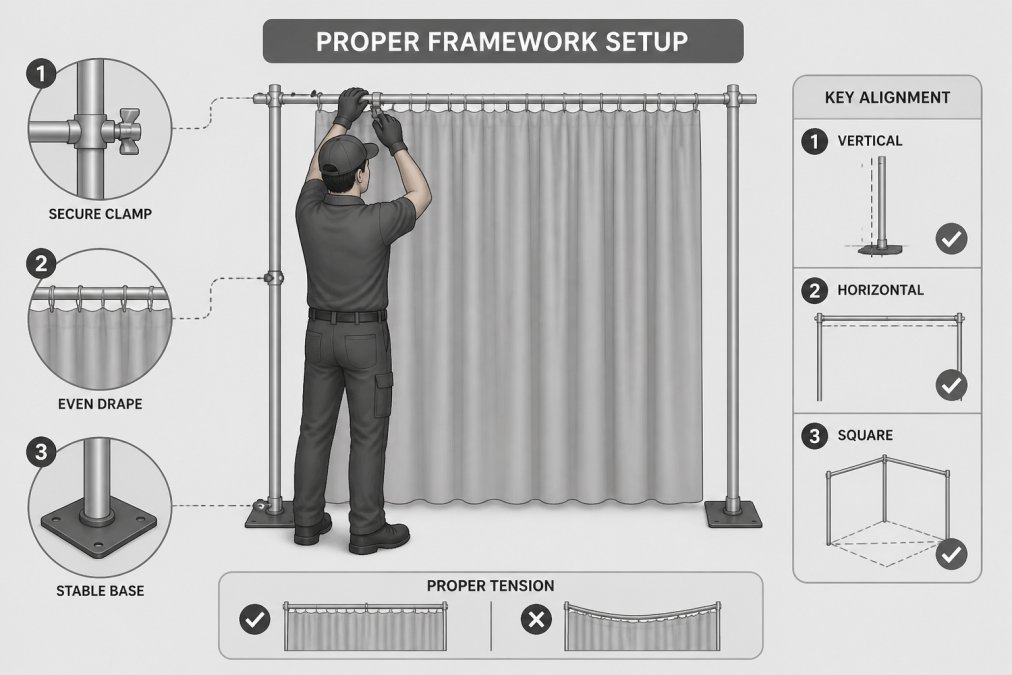
Framework stability is the invisible foundation of professional draping. If your pipes aren't secure, your drapes won't hang properly no matter how carefully you've selected fabric or created pleats. Sagging, tilting, or shifting drapes scream amateur installation.
The framework must support the weight of your fabric without flexing. This means proper pipe diameter, adequate base weighting, and secure connections at every joint. Many DIY installations fail because people underestimate how heavy full-length drapes actually are. A single drape panel 20 feet tall can weigh 50-100 pounds depending on fabric choice. Multiply that across multiple panels and you're dealing with hundreds of pounds of force.
Pipe and drape systems use weighted bases to counterbalance the upward pull of hanging fabric. If these bases aren't heavy enough or properly positioned, the entire structure becomes unstable. Wind, vibration from foot traffic, or even the weight of fabric shifting slightly can cause visible movement. In photos and videos, this movement is distracting and unprofessional.
The connection points between pipes are critical. Loose clamps, improperly seated connectors, or bent pipes create weak points where the framework can fail. Each connection must be checked and tightened before draping begins. This tedious step is where many people cut corners, and where problems emerge.
Height consistency across your drape installation is essential. If some sections hang lower than others, the entire aesthetic suffers. This requires careful measurement and framework leveling before you begin hanging fabric. Using a laser level or string line ensures all your drapes hang at the same height, creating a unified silhouette.
How to Calculate Drape Fullness for Professional Results
Drape fullness refers to how much fabric you need relative to the width you're covering. This calculation determines whether your drapes will hang with elegant folds or look thin and stretched. Getting this wrong creates a visually disappointing installation.
The standard fullness ratio for event draping is 1.5 to 2 times the width being covered. This means if you're covering a 10-foot-wide space, you need 15-20 feet of fabric width. A 1.5 ratio creates a sleek, modern look with subtle folds. A 2.0 ratio creates more dramatic, luxurious draping with pronounced folds and movement.
To calculate your fabric needs:
- Measure the width you're covering in feet
- Multiply by your desired fullness ratio (1.5 or 2.0)
- Divide by the fabric width (typically 54 or 60 inches)
- Round up to the nearest whole number
This gives you the number of fabric panels needed. For example, covering 20 feet with 1.75 fullness using 54-inch fabric: (20 × 1.75) ÷ 4.5 = 7.8 panels, so you'd need 8 panels.
Fullness also affects how fabric moves and photographs. More fullness creates deeper shadows in folds, adding visual dimension. Less fullness creates a flatter, more modern appearance. Your event aesthetic should guide this choice. Achieving this level of tailored movement often requires a significant investment of material and labor, which explains why custom drapery costs reflect the complexity of the final installation.
| Fullness Ratio | Look | Best For |
|---|---|---|
| 1.5x | Sleek, modern | Contemporary events, smaller budgets |
| 1.75x | Balanced elegance | Most weddings and corporate events |
| 2.0x | Dramatic, luxurious | High-end galas, theatrical effects |
Pipe and Drape Installation Tips for Secure Setup
Professional installation requires attention to sequence and detail. Rushing this phase guarantees visible problems that will appear in every photo and video from your event.
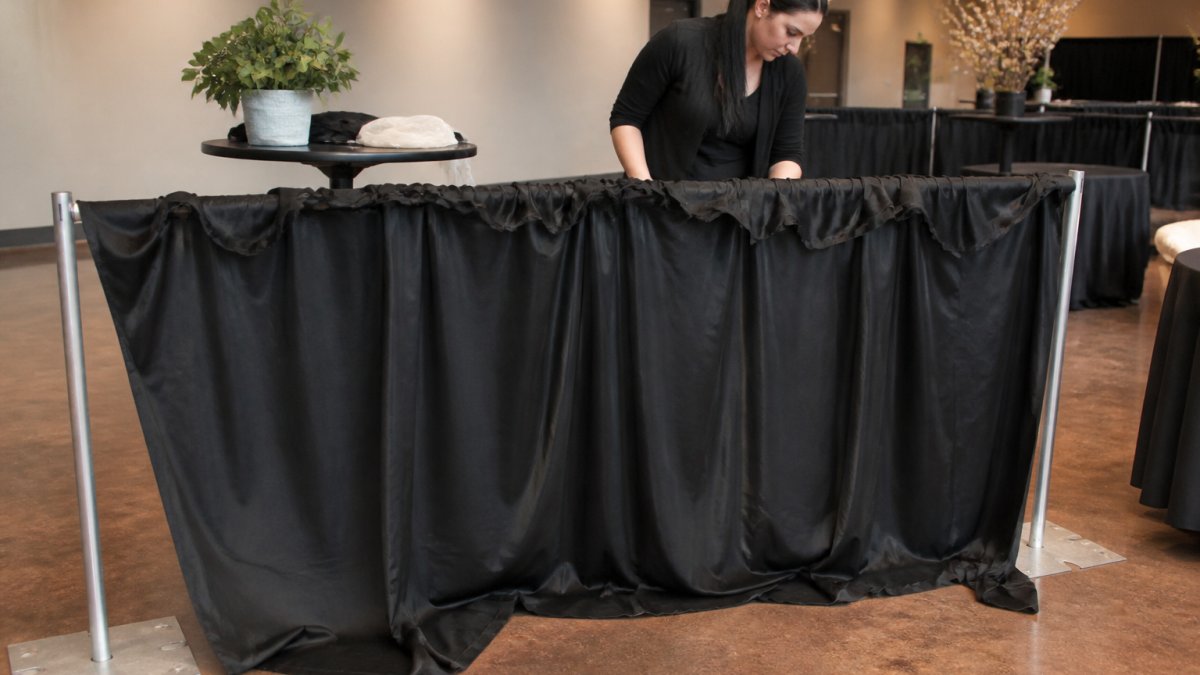
Start by setting up your framework completely before hanging any fabric. Assemble all pipes, connectors, and bases. Check that everything is level and secure. Tighten every clamp and connection point. This foundation work takes time but prevents catastrophic failures during the event.
Next, prepare your fabric. Inspect for wrinkles, tears, or damage. If fabric is wrinkled from storage, steaming or hanging it in a warm space helps gravity do the work. Never hang wrinkled fabric, it will look unprofessional in all lighting conditions.
When hanging fabric, work methodically from top to bottom. Secure the top of each panel to the framework using appropriate hardware, usually clips, pins, or sewn loops depending on your fabric.
Best Pipe and Drape for Weddings: Avoiding Common Pitfalls
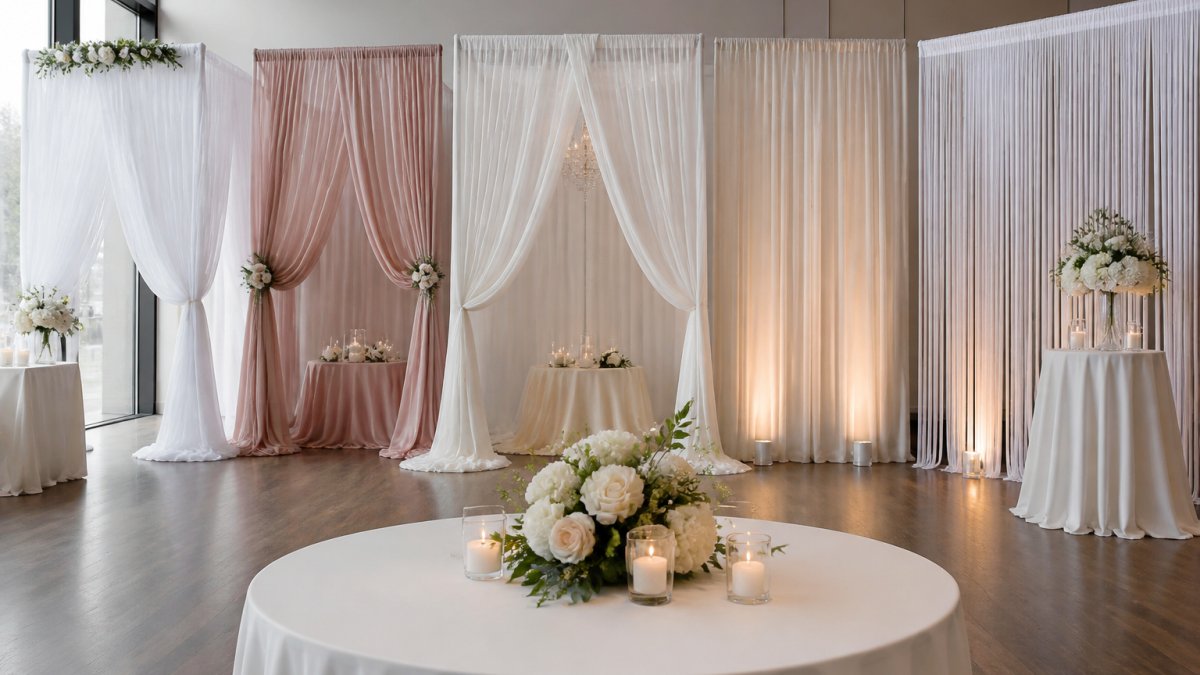
Wedding draping requires balancing elegance with practical functionality. The aesthetic needs to complement your venue and wedding style while holding up to hours of use and photography.
Long-Term Maintenance to Keep Your Drapes Looking Professional
Drapes that look spectacular on day one can deteriorate quickly without proper care. Understanding maintenance extends the life of your investment and ensures drapes look professional across multiple events.
Frequently Asked Questions
What causes uneven pleats and sagging in pipe and drape systems?
Uneven pleats typically result from improper drape tension during installation, incorrect fabric weight selection, or inadequate framework support. Sagging occurs when drapes lack sufficient seam allowance or when the framework doesn't provide enough stability. Ensure your framework is level and secure, use the correct fabric weight for your height, and maintain consistent tension across all pleats during setup. Professional installation prevents most of these issues.
How do I calculate drape fullness to avoid a thin or bunched appearance?
Drape fullness is calculated by multiplying your desired finished width by a fullness factor (typically 1.5 to 2.5, depending on fabric and desired aesthetic). For example, a 10-foot finished width with 2x fullness requires 20 feet of fabric. Measure your framework carefully and account for seam allowance before ordering. Event Drape Rental's team can help you determine the right fullness for your specific setup.
What fabric weight is best for preventing drape problems at different heights?
Fabric weight directly affects how drapes hang and move. For different heights, consider the fabric weight to maintain structure and prevent excessive movement. Lightweight fabrics look elegant but may require more careful installation. Consider your venue's climate and lighting.
Can professional installation really prevent draping mistakes?
Yes. Professional installers understand framework stability, proper tension techniques, and how to secure drapes so they maintain their silhouette throughout your event. They ensure even pleat alignment, correct waist placement, and proper drape flow from the start. DIY installation is possible, but mistakes are common and expensive to fix on event day. Professional installation guarantees your drapes look polished and stay secure, even during long events with movement and activity.