 ultimate-guide
Corporate Gala Decor Planning Guide for 2026
Table of Contents
- Define Event Goals Before Choosing Decor
- Corporate Gala Theme Ideas That Guide Design
- Build a Cohesive Visual Story with a Color Palette
- Use Pipe and Drape for Corporate Events as a Design Foundation
- Plan Lighting Design and Audiovisual for Ambiance
- Design Tablescapes and Centerpieces for Guest Experience
- Create a Corporate Event Decor Budget Breakdown
- Manage Event Logistics, Accessibility, and Sustainability
- Frequently Asked Questions
Last Updated: September 8, 2026
A corporate gala decor planning guide is only as effective as the strategy behind it. Before any fabric is draped or any centerpiece is chosen, the event's purpose must dictate every design decision. A decor-first approach can transform fundraising dinners, award ceremonies, and annual celebrations into immersive brand experiences. This corporate gala decor planning guide covers the full process, from defining objectives through final logistics, so your next event feels intentional rather than assembled.
The most successful galas share one trait: every visual element supports the event's core mission. Whether you are honoring top performers, raising funds, or launching a product line, decor should amplify that message rather than compete with it. Below, we will show you exactly how to sequence your planning, choose a theme that resonates, and build a cohesive visual story that guests remember long after the last toast.
Define Event Goals Before Choosing Decor
Every decor decision should trace back to a measurable event goal. If the objective is fundraising, your design must direct attention to donation stations and auction displays. If the goal is client appreciation, prioritize comfortable seating arrangements and warm hospitality over spectacle.
Start by writing down three specific outcomes for the evening. A common approach is to rank them by importance, then let the top goal guide your budget allocation. This prevents the classic mistake of spending heavily on a grand entrance while the main stage looks unfinished.
Gala decor planning becomes straightforward when you ask one question of every element: does this help us reach our primary objective? If a piece of decor does not serve the mission, it is simply visual noise.
Corporate Gala Theme Ideas That Guide Design
Corporate gala theme ideas should come from your brand identity, not from a generic party catalog. A tech company celebrating a product launch might lean into sleek, modern lines with metallic accents. A nonprofit honoring decades of service could choose a timeless, elegant aesthetic with classic florals and warm lighting. But in the current event landscape, the most forward-thinking themes also build in two layers competitors often miss: sustainability and hybrid-event camera-readiness.
Strong themes provide a filter for every subsequent choice, from invitations to table linens. Consider themes like "Midnight Garden," "Old Hollywood Glamour," or "Modern Minimalist," each offering distinct direction for your event theme. The theme also informs your venue selection, since some concepts require specific architectural features or ceiling heights.
The Sustainable Theme Angle
A theme like "Enchanted Forest" or "Urban Oasis" can be a powerful vehicle for eco-friendly decor. Instead of cut flowers flown in from overseas, source potted plants and local greenery that can be donated to a community garden or hospital after the event. For a "Gilded Age" theme, use rented vintage brass candlesticks and glassware rather than purchasing new, single-use plastic or acrylic items. This approach not only reduces waste but also tells a story of stewardship that resonates with modern employees and clients. The EPA guidelines on sustainable event practices offer a useful framework for reducing waste, and aligning your theme with these practices can be a differentiator.
The Hybrid-Event Camera Angle
If your gala will have a virtual audience, your theme must be designed for the camera. A "Midnight Garden" theme with deep, saturated colors and high-contrast textures will read better on a live stream than a pastel palette that washes out under studio lighting. When selecting a theme, ask your AV team to test it against the camera. For instance, a "Neon Noir" theme with bold, graphic elements will create a more engaging backdrop for remote attendees than subtle, low-light designs. This dual-purpose thinking, designing for both the ballroom and the broadcast, is a technical gap most guides ignore.
A cohesive theme simplifies decision-making for your entire planning team. When vendors understand the creative direction, they can propose options that fit rather than alternatives that miss the mark. By adding a sustainability and hybrid-camera lens to your theme selection, you ensure your decor is not just beautiful but also responsible and inclusive of every attendee, whether they are in the room or on a screen.
Build a Cohesive Visual Story with a Color Palette
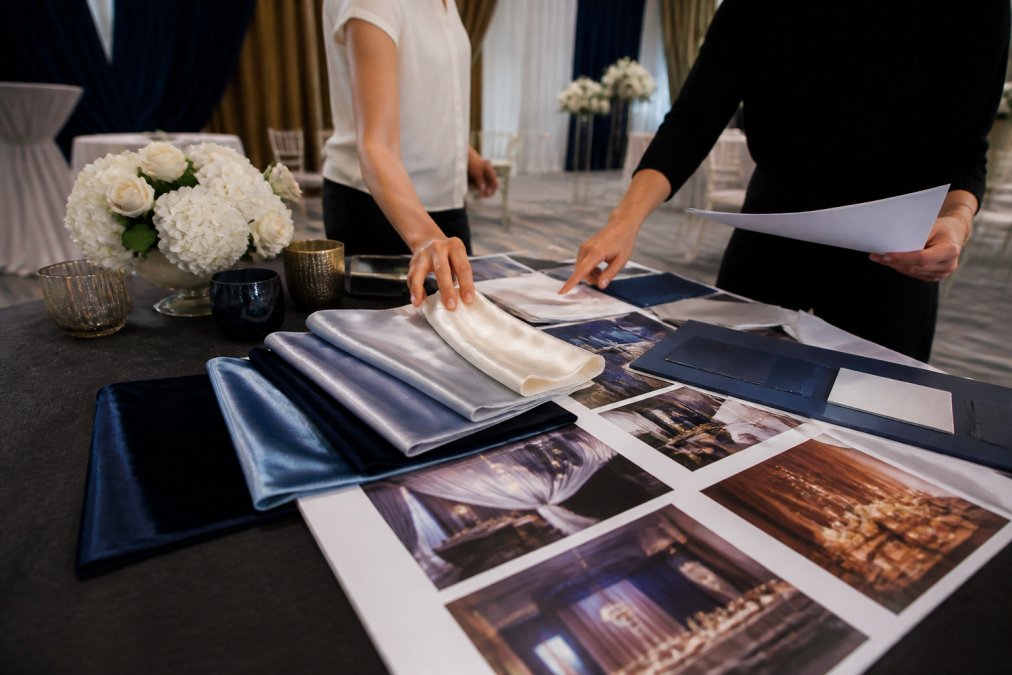
Your color palette is the shorthand for your entire event. Limit yourself to three primary colors: a dominant shade, a secondary tone, and an accent color. This restraint creates a cohesive visual story that photographs well and feels polished.
Pull palette inspiration from your branding, the season, or the venue's existing finishes. Test colors in the actual space, since lighting design dramatically shifts how pigments appear. A deep navy that looks sophisticated in daylight may read as black under low lighting.
Consistency matters across every surface. Your chargers, linens, and centerpieces should all speak the same color language. When guests walk into a room where the drapes, tableware, and stage backdrop share a palette, the event feels professionally produced rather than pieced together.
Use Pipe and Drape for Corporate Events as a Design Foundation
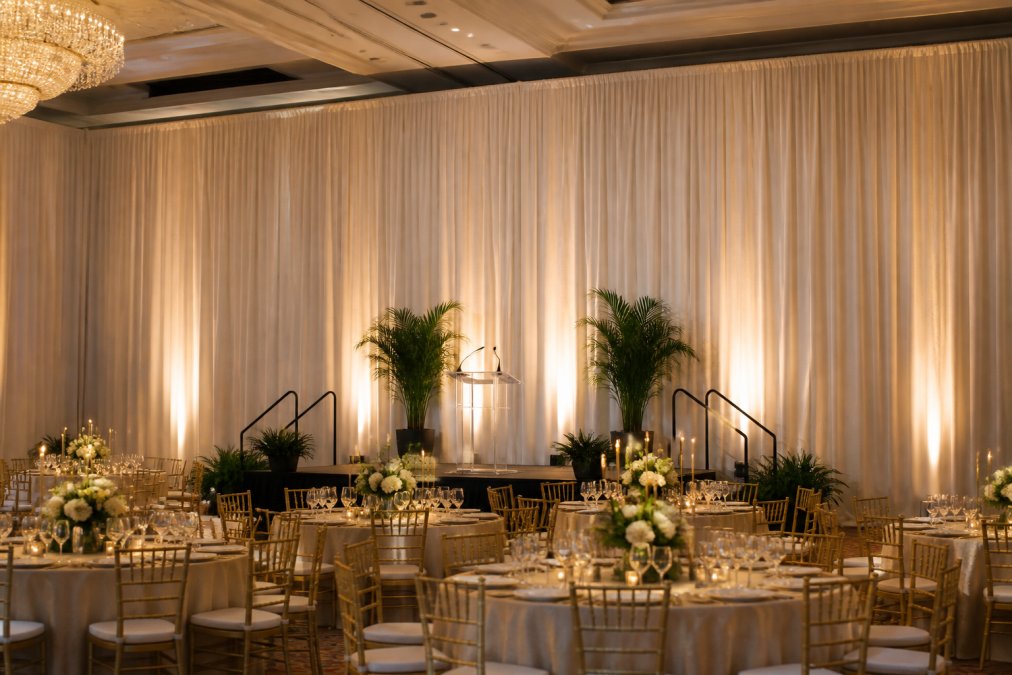
Pipe and drape for corporate events is the backbone of professional venue transformation. This system provides instant architecture, hiding unsightly walls, creating grand entrances, and establishing a focal point for your stage or head table.
The practical advantages are significant. Drapes ranging from 12 to 30 feet in height can accommodate venues with soaring ceilings, while a broad fabric selection allows precise color matching to brand guidelines. Professional installation ensures crisp, wrinkle-free panels that photograph cleanly, which matters when media coverage is part of event goals.
Beyond aesthetics, drapery solves logistical problems. It can divide a large hall into intimate spaces, direct guest flow, and mask service areas. For gala decor planning, consider using drapery to frame the stage, line the back wall, and create a welcoming registration area that sets the tone immediately.
Plan Lighting Design and Audiovisual for Ambiance
Lighting design does more to shape ambiance than any other single element. Uplighting along draped walls adds depth and drama, while pin spots on centerpieces create intimacy at each table. The right lighting transforms a flat room into a layered, inviting space.
Coordinate your lighting plan with your audiovisual requirements early in the process. Projection screens need controlled light levels to remain visible. Stage lighting must complement, not wash out, the drapery backdrop. A lighting designer can create a cue sheet that moves guests through the evening, brightening for dinner and dimming for speeches.
Test everything during the venue walkthrough. Verify that power sources are sufficient, sightlines remain clear, and the lighting design does not create harsh shadows on faces during presentations. This attention to detail separates a premium event from an ordinary gathering.
Design Tablescapes and Centerpieces for Guest Experience
Tablescapes are where your gala decor planning becomes tangible for guests. Each table should balance visual impact with function, allowing conversation to flow without obstruction. Low centerpieces keep sightlines open so guests can see speakers and each other across the room.
Consider the guest experience from a seated perspective. Chargers, linens, and glassware should complement the palette without feeling cluttered. A common mistake is overcrowding tables with decor that leaves no room for dinner service or networking. Restraint here reads as sophistication.
Your centerpieces can double as conversation starters or takeaways. Many planners incorporate elements that reinforce the event theme or mission, such as branded items or symbolic florals. Whatever you choose, ensure it does not block the view of the stage or create congestion during service.
Create a Corporate Event Decor Budget Breakdown
A corporate event decor budget breakdown allocates funds according to visual impact and mission alignment. While exact figures vary by city and season, a typical structure dedicates the largest portion to foundational elements like drapery and lighting, since these transform the entire space.
A practical framework allocates roughly half the decor budget to room transformation, including pipe and drape, lighting design, and staging. Tablescapes and centerpieces consume about a third, with the remainder reserved for signage, branding, and finishing touches. Pricing depends on quantity, dates, and delivery, so request quotes early to lock in availability.
The Hidden Cost Drivers
Most guides stop at the percentage split, but the real depth is in understanding what moves those numbers. The single biggest cost driver is labor, not materials. Union labor rates in major metropolitan areas can double your drapery installation cost compared to a non-union venue. Always ask your drapery vendor for a separate line item for installation and teardown, and confirm whether the venue requires union labor. A second driver is the venue's power distribution. If your lighting design requires more power than the venue provides, you will pay for a generator or a licensed electrician to run additional circuits, often $500 to $2,000 per event. A third driver is the fabric finish. A matte, opaque fabric is more expensive than a sheer or shiny option, but it provides better light absorption for a stage backdrop, reducing the need for additional lighting fixtures to control glare.
Measuring Post-Event ROI
A budget is only as good as the return it generates. Measuring post-event ROI is the missing step in most planning guides. Before the event, define what success looks like: media coverage quality, sponsor satisfaction, or guest engagement on social media. After the event, review the footage and photos to see which decor elements were most visible and which were wasted. For example, if your branded step-and-repeat backdrop appeared in 80% of the press photos, that was a high-ROI investment. If your elaborate ceiling installation was barely visible in any guest photos, it may not have justified its cost. Use this data to refine your next budget, shifting funds from low-visibility elements to those that drive your business goals.
Build in a contingency of at least ten percent for unexpected needs. Rush timelines, additional panels, or last-minute venue constraints are common in event logistics. A buffer prevents compromising your visual standards when surprises arise.
| Decor Category | Budget Share | Primary Elements | Key Cost Driver |
|---|---|---|---|
| Room Transformation | 40-50% | Pipe and drape, lighting, staging | Labor rates and power distribution |
| Tablescapes | 25-35% | Linens, centerpieces, chargers | Fabric finish and floral sourcing |
| Branding & Signage | 10-20% | Backdrops, registration, wayfinding | Print quality and installation |
| Contingency | 10% | Rush fees, additions, adjustments | Venue constraints |
Manage Event Logistics, Accessibility, and Sustainability
Event logistics determine whether your design vision survives contact with reality. Coordinate delivery windows with the venue, confirm installation schedules, and plan teardown timelines that meet your contract obligations. A detailed event timeline keeps every vendor aligned.
Accessibility in decor is a growing priority for inclusive events. Ensure aisle widths accommodate all guests, keep pathways clear of obstructive elements, and confirm that lighting does not create glare for attendees with visual sensitivities. These considerations broaden your guest experience without sacrificing style.
Sustainability in decor also matters to modern audiences. Many planners now choose reusable fabric systems over single-use materials, rent rather than purchase, and source local florals. Pipe and drape systems are inherently reusable, making them an eco-friendly choice compared to disposable decorations. The EPA guidelines on sustainable event practices offer a useful framework for reducing waste. Measuring post-event ROI, including guest feedback on the atmosphere and media coverage quality, helps refine your approach for the next corporate gala. As industry guidance on event production standards notes, professional production quality directly influences attendee perception and sponsor satisfaction, making your decor investment a strategic asset rather than an expense.
Planning a corporate gala involves hundreds of decisions, but a decor-first strategy keeps every choice aligned with your mission. From selecting a theme to managing logistics, each step builds toward an event that feels cohesive and intentional. Event Drape Rental supports this process with professional-grade drapery in an extensive color range, available for DIY installation or with professional setup, so your vision translates flawlessly. Request a quote today and start transforming your next gala into an impactful brand experience.
Frequently Asked Questions
How far in advance should you start planning corporate gala decor?
Start the decor planning process 4 to 6 months before the event date. This timeline allows you to secure the venue, finalize the theme, and book pipe and drape rentals before inventory is reserved. Large events in peak season require even more lead time. Confirm your budget breakdown early, then lock in the major elements like drapery, lighting, and staging. A clear schedule prevents rushed decisions and keeps the design cohesive with your event goals.
What role does pipe and drape play in corporate gala decor?
Pipe and drape is the architectural backbone of gala decor. It transforms blank convention halls into polished spaces by hiding unsightly walls, creating grand entranceways, and framing stages or photo areas. Drapes also manage guest flow by dividing large rooms into intimate sections. With heights from 12 to 30 feet and over 100 colors available in 6 different fabric materials, pipe and drape for corporate events provides a professional finish that aligns with your branding and event theme.
How do you choose a color palette for a corporate gala?
Start with your brand guidelines. Pull the primary logo color and one or two secondary tones, then build a palette with neutral shades like ivory, champagne, or charcoal to balance them. The palette should support the event theme and the mood you want for the evening. Test fabric swatches under the venue's lighting before committing. This ensures the drapes, linens, and centerpieces create a cohesive visual story rather than clashing.
How can lighting enhance corporate gala decor?
Lighting sets the ambiance and highlights your decor investment. Uplighting washes pipe and drape walls with color, turning plain fabric into a branded backdrop. Pin spotting adds drama to centerpieces, and gobo projections can display your logo on the dance floor. Coordinate the lighting design with your audiovisual team to avoid washed-out projections. The right lighting plan directs guest attention to key areas like the stage, bar, and registration desk.
What is a realistic corporate event decor budget breakdown?
A detailed budget breakdown prevents overspending on one element while leaving others underfunded. Exact numbers vary by venue size and vendor, so request itemized quotes.