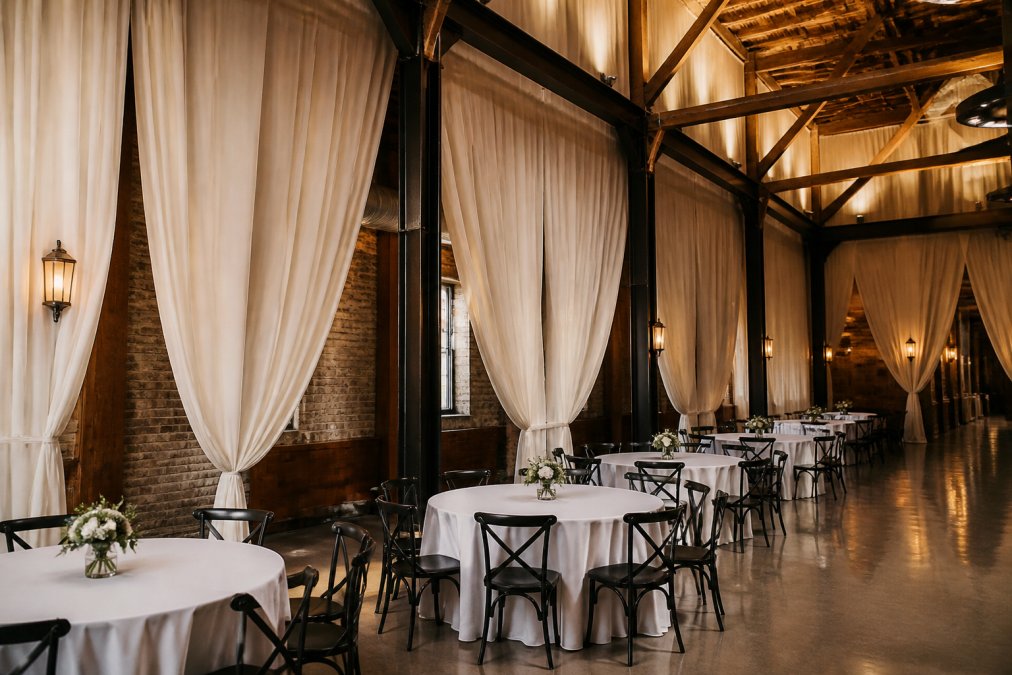
 ultimate-guide
Renting Drapes for High Ceilings: A Complete Guide
Table of Contents
- Why Renting Drapes for High Ceilings Requires Planning
- Types of Ceiling Draping Styles and Applications
- Best Fabric for Ceiling Draping: Materials and Textures
- Pipe and Drape Installation Safety Standards
- How to Calculate Cost of Event Draping Per Square Foot
- DIY vs. Professional Installation for High Ceilings
- Measuring and Planning for High-Ceiling Venues
- Rental Package Inclusions and Delivery Logistics
- Frequently Asked Questions
Last Updated: September 19, 2026
Why Renting Drapes for High Ceilings Requires Planning
Renting drapes for high ceilings isn't like hanging standard window treatments. The moment your venue exceeds 15 feet, the physics change. Weight distribution becomes critical. Rigging hardware must handle loads that seem invisible until something fails. Structural assessment shifts from optional to mandatory.
Most event planners discover this the hard way. They call a rental company, specify their height, and assume the standard solution applies. It doesn't. A 40-foot warehouse ceiling demands entirely different hardware, installation timelines, and safety protocols than a 12-foot ballroom.
The good news: this complexity is manageable once you understand it. The process follows predictable patterns. Below, we'll walk through the technical requirements, installation methods, cost structures, and decision points that separate a successful high-ceiling draping project from one that creates problems on event day.
Types of Ceiling Draping Styles and Applications
Your venue's height determines which styles are practical. Not all draping solutions scale equally to high ceilings.
Ceiling Swags and Starbursts
Ceiling swags create elegant curved fabric formations that draw the eye upward. A starburst radiates fabric from a central anchor point, creating dramatic visual impact. Both styles work exceptionally well in high-ceiling spaces because they use vertical distance as a design asset rather than fighting it.
The technical advantage: swags and starbursts concentrate load at anchor points rather than distributing it across the entire ceiling. This means fewer rigging points are required, which simplifies installation in venues where ceiling access is limited. A single well-placed anchor can support 200+ pounds of fabric and hardware when properly calculated.
Starbursts perform best in spaces 20 feet or taller. Below that height, the visual effect diminishes because the radiating lines don't have enough vertical distance to create the intended perspective. Swags work across a wider range, from 15 feet up to 60 feet, though the curve geometry changes as you increase height.
Ceiling Canopies and Backdrops
A ceiling canopy creates a false ceiling, a fabric plane suspended below the structural ceiling. This transforms a cavernous space into an intimate one. Backdrops hang vertically and define space or create visual frames for stages and photo areas.
Canopies require more distributed rigging than swags. Instead of concentrating load at central points, they need anchor points around the perimeter. This distributes weight but increases the number of connection points that must be assessed for structural integrity. High-ceiling installations often use canopies to conceal poor ceiling conditions or to create intentional visual separation between the venue's architecture and your event's design.
Backdrops in high-ceiling spaces benefit from the vertical distance, they appear more dramatic and photographs better when there's space above them. A 30-foot-tall backdrop creates visual impact that a 12-foot version cannot match.
Best Fabric for Ceiling Draping: Materials and Textures
Fabric choice affects both aesthetics and installation requirements. Not all materials perform equally when suspended at height.
Velvet drapes create luxury but add significant weight. Fire-retardant velvet exists but costs more and requires special handling.
Sheer voile is lightweight and creates ethereal effects. Voile allows light to pass through, which means uplighting effects work beautifully.
Polyester blends offer the middle ground, reasonable weight, good drape, and easier maintenance. Most rental companies stock polyester-blend fabrics in dozens of colors specifically because they perform well across installation types.
Linen creates a sophisticated look but wrinkles easily. If your event requires pristine fabric immediately after installation, linen demands more preparation time.
Fire-Retardant Requirements and Compliance
Most venues require fire-retardant fabric for ceiling draping. This isn't optional, it's a liability requirement. Fire-retardant treatment adds cost and limits color availability in some fabric types.
According to the National Fire Protection Association guidelines on fabric treatment, fabrics used in overhead applications must meet specific flammability standards. Treatment involves chemical processes that slow flame spread. The treatment degrades over time, which is why rental companies refresh treated fabrics periodically.
Verify with your venue before selecting fabric. Some venues specify NFPA 701 compliance, others reference different standards. Event Drape Rental maintains fire-retardant fabrics across its inventory, which simplifies compliance.
Pipe and Drape Installation Safety Standards
This section separates successful high-ceiling projects from disasters. Installation safety determines whether your event happens on schedule or becomes a liability incident.
Load-Bearing Capacity and Structural Assessment
Every ceiling has a maximum load it can support. This isn't theoretical, it's a structural engineer's calculation based on ceiling material, framing, and anchor point design. Exceeding that limit causes failure.
Calculating load capacity requires knowing:
- Fabric weight (multiplied by total square footage)
- Hardware weight (pipe, crossbars, base plates, rigging equipment)
- Safety factor (typically 4:1, meaning the ceiling must support four times the actual load)
A 400-square-foot ceiling installation with velvet draping weighs approximately 1,200-1,500 pounds before safety margin. With a 4:1 safety factor, the ceiling must support 4,800-6,000 pounds safely. Many high-ceiling venues can't accommodate this without reinforcement.
Professional installers assess ceiling structure before quoting. They identify load-bearing beams, truss systems, and existing anchor points. If the ceiling can't support the load, they modify the design, fewer drapes, lighter fabrics, or distributed rigging across more anchor points.
Rigging Hardware and Anchor Points
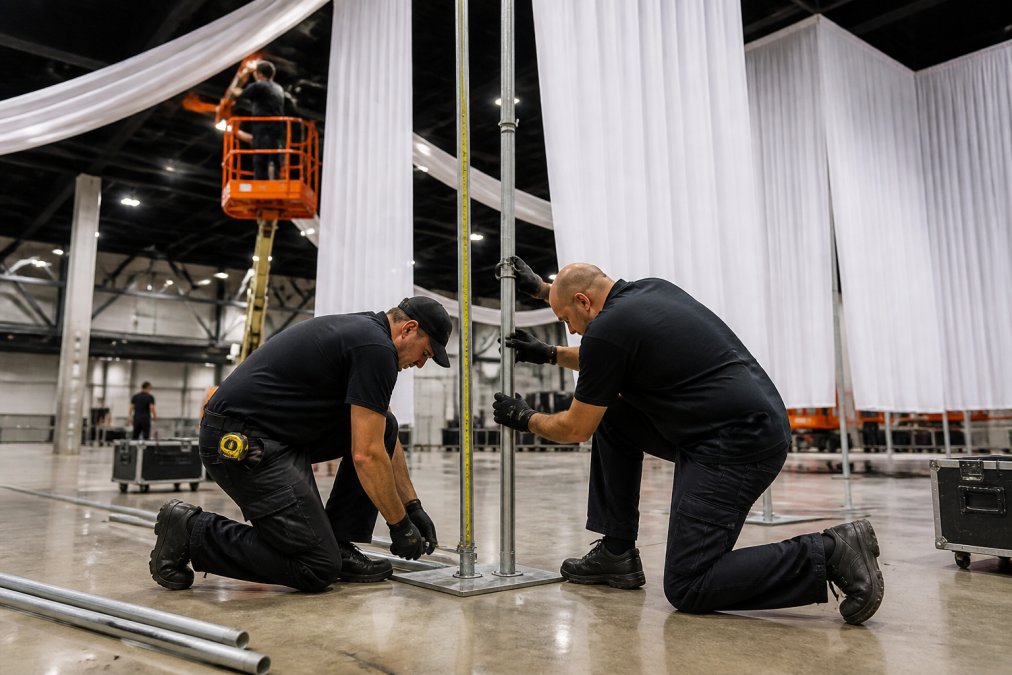
Pipe and drape systems use standardized components. Understanding them clarifies why high-ceiling installations cost more.
Vertical uprights are the foundation. They extend from weighted base plates to the ceiling. In high-ceiling spaces, uprights extend 20-40 feet. Longer uprights require more bracing to prevent sway. A 40-foot upright needs cross-bracing every 8-10 feet to maintain stability.
Crossbars connect uprights and hold the fabric.
How to Calculate Cost of Event Draping Per Square Foot
Pricing for renting drapes for high ceilings depends on multiple variables. There's no single per-square-foot rate because complexity increases costs.
Basic factors that affect pricing:
- Fabric type: Velvet costs more than polyester blends. Fire-retardant treatment adds to base fabric cost.
- Installation height: 15-20 feet is standard. Above 25 feet, rigging complexity and labor increase significantly.
- Style complexity: Simple ceiling swags cost less than multi-point canopies. Starbursts with custom radiating patterns require more setup time.
- Installation method: DIY rental kits cost less than professional installation, but professional installation saves time and reduces risk.
- Delivery and logistics: Venues across the city add delivery costs. Same-day multiple deliveries are more expensive than single-location setups.
- Rental duration: Multi-day rentals cost more than single-event setups. Setup and breakdown are charged separately from rental duration.
The cost calculation typically includes:
- Fabric rental (per square foot or by panel)
- Hardware rental (pipe, uprights, crossbars, base plates)
- Installation labor (if professional installation is selected)
- Delivery and setup
- Breakdown and pickup
- Damage waiver or insurance
DIY vs. Professional Installation for High Ceilings
This decision affects timeline, risk, and final appearance.
DIY installation works for simple projects in accessible venues. A basic 200-square-foot ceiling swag in a 15-foot space with clear ceiling access is manageable for a small team with some experience. Event Drape Rental offers DIY rental packages that include hardware, fabric, and instructions.
When Professional Installation Is Essential
Professional installation is essential for:
- Heights above 25 feet: Rigging at this height requires safety equipment, fall protection, and structural knowledge that DIY teams lack.
- Complex designs: Multi-point canopies, custom starbursts, and integrated lighting require coordination that professionals handle routinely.
- Tight timelines: Professional crews set up in hours what DIY teams need days for.
- Venue restrictions: Some venues require licensed installers for liability reasons.
- Load-bearing concerns: When ceiling capacity is questionable, professional assessment and reinforcement are necessary. Understanding the logistical requirements of these high-stakes environments helps in establishing a realistic drapery installation timeline that accounts for both safety protocols and structural limitations.
Professional installation costs more upfront but eliminates setup day stress. Crews arrive, assess conditions, install safely, and leave. Your team focuses on other event details instead of managing rigging logistics.
Measuring and Planning for High-Ceiling Venues
Accurate measurements determine whether your design is feasible.
Measure ceiling height at multiple points. Vaulted or cathedral ceilings vary. A warehouse might have 40 feet in the center and 20 feet at the edges. Map the ceiling topography before designing.
Rental Package Inclusions and Delivery Logistics
Understanding what's included prevents surprises.
Standard rental packages typically include fabric, hardware, and basic delivery. Professional installation is usually separate. Insurance and damage waivers add to the cost.
Delivery logistics matter for high-ceiling projects. The rental company needs to know:
- Venue address and access details
- Ceiling height and structure type
- Whether loading dock access exists
- Setup timeline and event date
- Breakdown timeline
Frequently Asked Questions
How do you hang drapes safely in a venue with very high ceilings?
Safe installation of drapes in high-ceiling venues requires proper rigging hardware, secure anchor points, and load-bearing calculations. Professional installers assess ceiling structure, use fire-retardant materials, and secure pipes using crossbars and base plates rated for the total weight of fabric and hardware. For ceilings above 20 feet, professional installation is strongly recommended to ensure compliance with venue safety standards and proper tensioning of drape panels.
What fabric types work best for ceiling draping applications?
All rental fabrics must meet fire-retardant standards required by venues and event regulations. Fabric choice depends on your event type, and heavier drape materials for room dividers and pipe-and-drape booth systems. Texture and weight affect installation difficulty and overall aesthetic impact.
How do I calculate how much draping I need for a high-ceiling space?
Measure ceiling height, width, and length of the area you want to cover. Calculate square footage by multiplying width by height for each drape panel section. Most rental companies provide drapes in standard widths (typically 4-10 feet), so divide your total square footage by the panel width to determine panel count. Account for swags, starbursts, or canopy designs, which require additional fabric. Request a site assessment or quote from your rental provider to refine measurements and confirm fabric quantities.
Can I install pipe and drape myself on high ceilings, or do I need professionals?
DIY installation is possible for ceilings under 15 feet with proper equipment and experience. High ceilings (20+ feet) require professional rigging expertise, specialized equipment like lifts or scaffolding, and knowledge of load-bearing calculations. Safety risks increase dramatically with height: improper tensioning, inadequate anchor points, or miscalculated weight loads can cause collapse or injury. Professional installation ensures compliance with venue safety codes, proper uplighting integration, and aesthetic quality that reflects your event's importance.