 ultimate-guide
Event Transformation for Corporate Galas: A Professional Guide
Table of Contents
- Understanding Event Transformation for Corporate Functions
- NFPA 701 Flame Retardant Standards for Events
- Pipe and Drape Installation Best Practices
- Corporate Event Stage Design Ideas
- Modular and Reusable Decor Systems
- Logistics of Large-Scale Installation
- Hybrid Event Formats and Immersive Environments
- Frequently Asked Questions
Last Updated: September 25, 2026
Understanding Event Transformation for Corporate Functions
Event transformation corporate functions for managers at large companies needing professional-grade, flame-retardant decor for conferences and galas goes far beyond hanging fabric. It's about reshaping an entire space to reflect your brand, engage your audience, and create an immersive environment that attendees remember long after the event ends. The difference between a forgettable venue and a transformed space often comes down to intentional design choices, compliance with safety standards, and logistics executed flawlessly.
Corporate events demand more than aesthetics. They require strategic spatial planning, professional-grade materials, and installation expertise that transforms a blank canvas into a branded experience. Whether you're hosting a 500-person conference, an intimate gala, or a multi-venue trade show, the approach to event transformation must balance visual impact with practical constraints like venue capacity, fire safety regulations, and installation timelines.
Event Drape Rental specializes in helping corporate event managers achieve this balance. With an extensive inventory of over 100+ colors and 6 distinct fabric materials, we understand that event transformation corporate needs require flexibility, quality, and the ability to scale from small gatherings to large-scale functions.
The stakes are high for corporate events. A poorly executed transformation reflects directly on your organization's professionalism and attention to detail. This guide walks you through the professional-grade approach to corporate event design, from safety compliance to logistics management.
NFPA 701 Flame Retardant Standards for Events
Why Compliance Matters for Corporate Events
Flame-retardant compliance isn't optional for corporate events, it's a legal and safety requirement. The National Fire Protection Association (NFPA) establishes NFPA 701 as the standard for flame retardant fabrics used in temporary installations. If your event involves fabric draping, curtains, or any textile that could be exposed to ignition sources, NFPA 701 compliance is mandatory in most jurisdictions.
Corporate event managers often underestimate this requirement. A single non-compliant fabric installation can expose your organization to liability, trigger venue shutdowns, and damage your brand reputation. Venues take this seriously, many won't allow drapes on stage or in high-traffic areas without proof of NFPA 701 certification.
What makes compliance critical is that it applies to all fabrics, regardless of their intended use. That backdrop behind your keynote speaker? It needs certification. The drapes framing your stage? Same requirement. The ceiling treatment in your VIP lounge? Certified. There's no exemption for "temporary" installations at corporate events.
Testing and Certification Requirements
NFPA 701 testing involves exposing fabric samples to controlled flame under specific conditions. The fabric must self-extinguish within 60 seconds and meet strict criteria for char length and afterflame. When you source drapes for corporate events, you're looking for documentation that proves this testing has been completed by an accredited laboratory.
Reputable rental companies maintain current NFPA 701 certifications for their entire inventory. This means the fabric has been tested, documented, and verified to meet the standard. When you request drapes from Event Drape Rental, you receive materials that carry this certification, no guesswork, no liability on your end.
The certification process isn't one-time. Fabrics can lose their flame-retardant properties if they're washed improperly, exposed to certain chemicals, or damaged during storage. Professional rental companies re-test and re-certify their inventory regularly to ensure compliance. This ongoing commitment to safety is what separates professional-grade providers from budget alternatives.
Pipe and Drape Installation Best Practices
Planning Your Spatial Layout
Before a single pipe is assembled, spatial planning determines your success. The layout of pipe and drape directly affects how attendees move through the space, where they focus their attention, and how your brand messaging lands. For corporate events, this means thinking strategically about sight lines, traffic flow, and brand visibility.
Start by mapping your venue dimensions and identifying key focal points. Where will your stage sit? Which areas need visual separation? How will attendees flow from registration through main sessions? These questions drive your spatial layout. A common mistake is treating drapes as decoration rather than architectural elements that shape the attendee experience.
When planning pipe and drape for corporate event stage design ideas, consider the height and scale of your venue. Drapes ranging from 12 to 30 feet in height offer flexibility for different ceiling heights and visual impact levels. A 20-foot drape in a ballroom with 14-foot ceilings creates drama and focus. That same drape in a warehouse with 40-foot ceilings might look lost. Scale matters.
Professional vs. DIY Installation
The installation choice fundamentally changes your event outcome. DIY installation saves money upfront but introduces significant risks: installation delays, improper rigging that creates safety hazards, uneven draping that looks unprofessional, and the distraction of your team troubleshooting logistics instead of managing the event itself.
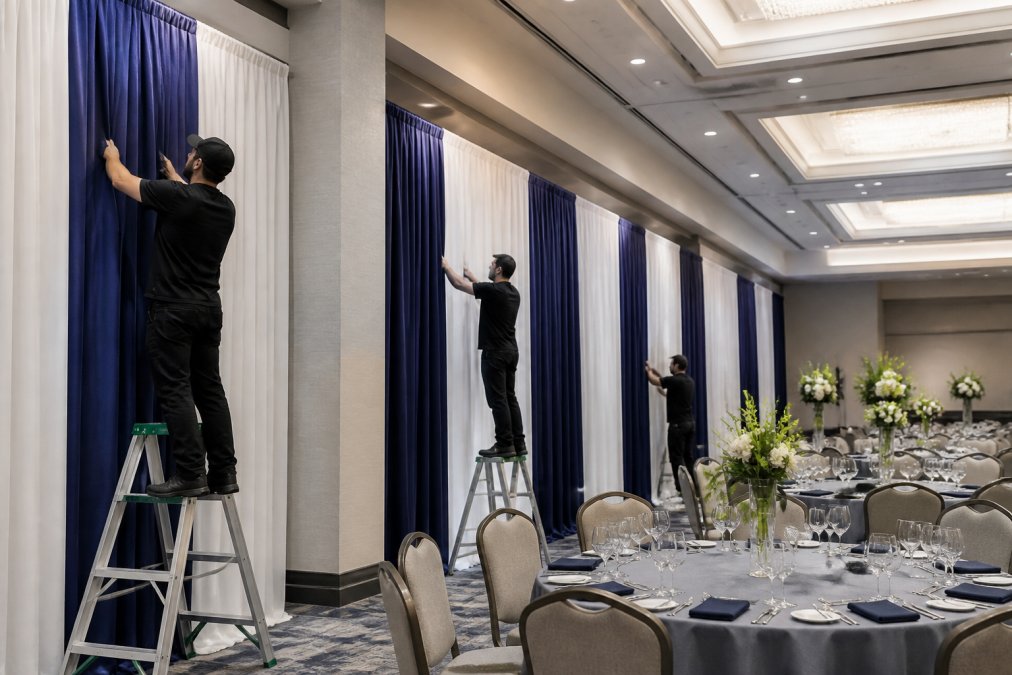
Professional installation ensures your drapes are rigged correctly, hung evenly, and secured safely. Installers understand weight distribution, proper rigging points, and how to work with your venue's specific infrastructure. They also handle the physical labor, freeing your team to focus on event execution. For corporate events where professional appearance is non-negotiable, professional installation is worth the investment.
Event Drape Rental offers both DIY rental and professional installation options.
Corporate Event Stage Design Ideas
Color Palette Strategy and Brand Integration
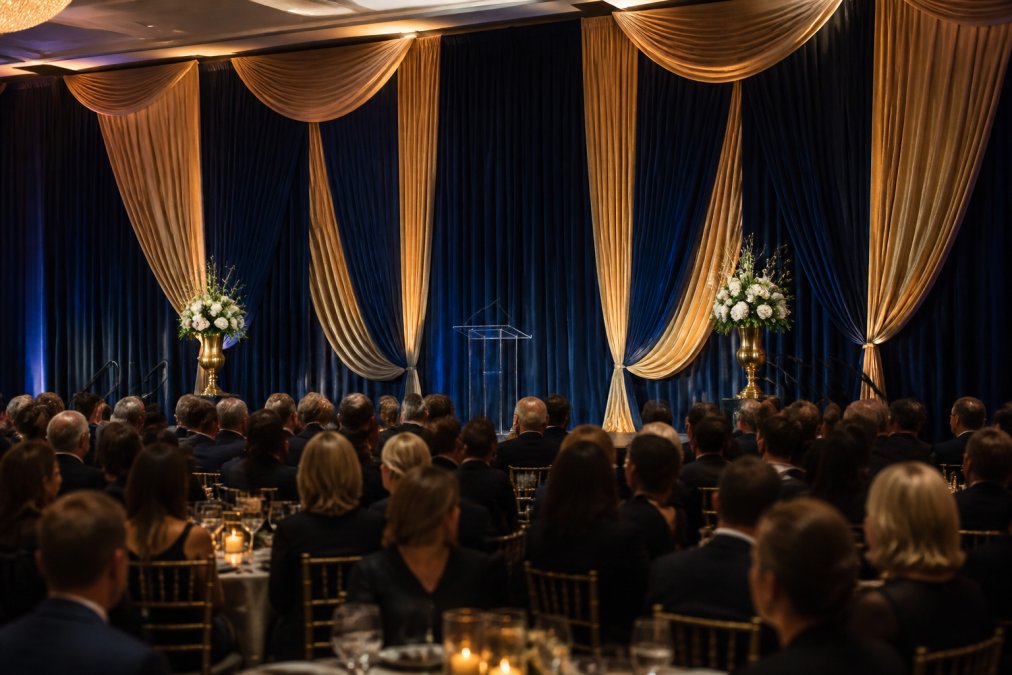
Your color palette is the foundation of visual coherence. For corporate events, this means aligning drape colors with your brand guidelines, event theme, and the emotional response you want to trigger. A tech company might choose bold accent colors with neutral backgrounds. A luxury brand might opt for rich jewel tones. A healthcare organization might select calming, professional palettes.
Lighting Techniques for Visual Impact
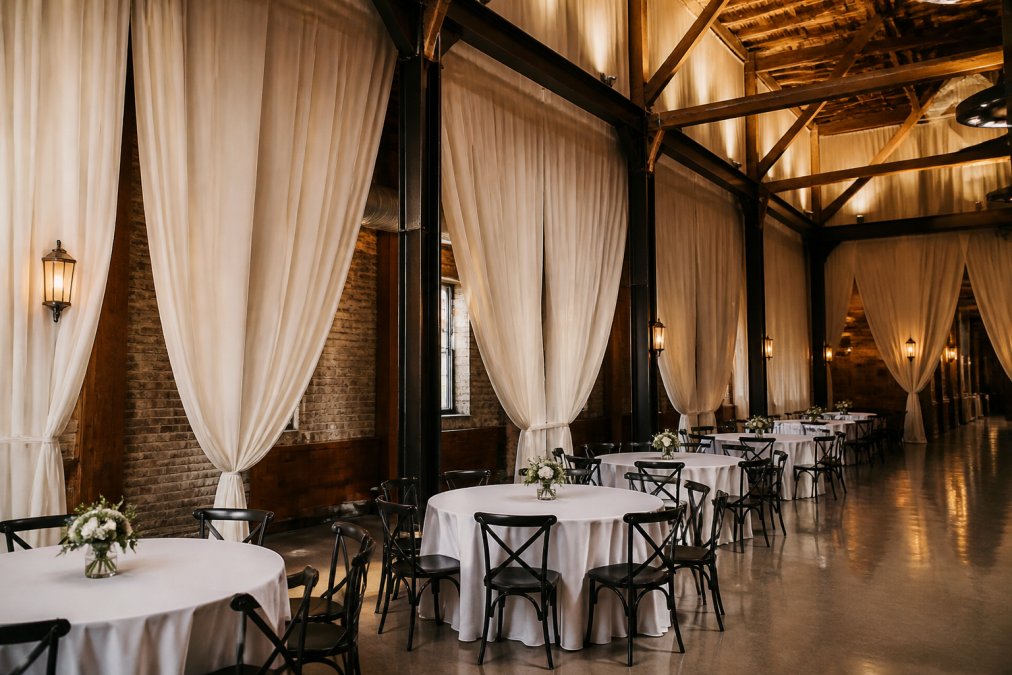
Lighting transforms how attendees perceive your drapes and the entire space. Uplighting, directing light from below toward the drapes, creates drama and depth. Pin spotting, using narrow beams to highlight specific areas, draws attention to key focal points. Color-changing lighting allows you to shift the mood throughout the event.
Modular and Reusable Decor Systems
Modular drape systems offer efficiency for corporate event managers handling multiple events or large-scale installations. Rather than custom-cutting and fabricating new drapes for each event, modular systems use standardized panels that connect, adjust, and reconfigure quickly. This approach reduces setup time, minimizes waste, and creates consistency across multiple events.
Logistics of Large-Scale Installation
Delivery, Setup, and Venue Coordination
Large-scale installation logistics involve coordinating delivery timing, venue access, setup crew scheduling, and storage space. A typical corporate gala might require drapes delivered 2-3 days before the event to allow for proper setup and quality checks. A multi-venue trade show requires coordinating deliveries across different locations on the same day, a significant logistical undertaking.
Managing Multiple Venues and Rush Timelines
Corporate event managers often coordinate events across multiple venues simultaneously. A company might run regional conferences in three cities the same week, each requiring different spatial transformations. This requires a rental partner with inventory depth, logistics capability, and the ability to execute rush timelines.
Hybrid Event Formats and Immersive Environments
Hybrid events, combining in-person and virtual attendance, introduce new spatial design considerations. Your physical stage must be designed not just for the attendees in the room but for the camera angles and lighting that will broadcast the event to remote participants. This means considering how drapes frame the stage on camera, how lighting translates through video, and how the spatial transformation reads through a screen.
| Element | In-Person Focus | Hybrid Event Focus |
|---|---|---|
| Drape height | Attendee sight lines | Camera framing and depth |
| Color choice | Brand consistency | Video color accuracy |
| Lighting design | Ambient and accent | Camera exposure and contrast |
| Spatial layout | Traffic flow | Stage positioning for multiple camera angles |
Frequently Asked Questions
What are the NFPA requirements for flame-retardant event drapery?
NFPA 701 is the standard fire test for flame spread of textiles and films used in event venues. All drapery must pass this test to be compliant in most jurisdictions. The standard measures how quickly fabric burns and how much smoke it produces. Professional event drapery suppliers provide NFPA 701 certification documentation with their materials. This certification is non-negotiable for corporate events in hotels, convention centers, and public venues.
How can pipe and drape systems transform a standard conference ballroom?
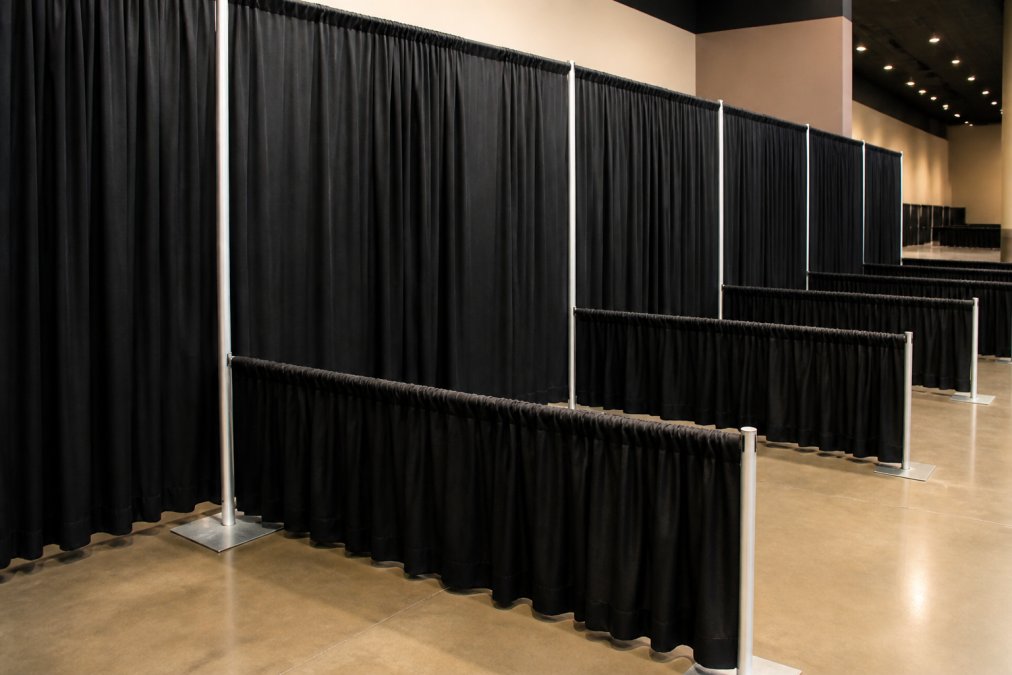
Pipe and drape installation best practices involve using modular framework to create distinct zones, hide unsightly walls or equipment, and define stage areas. By adjusting drape height from 12 to 30 feet, you control visual sightlines and create intimate spaces within large ballrooms. Strategic placement of uplighting and pin spotting behind the drapes amplifies the transformation. This spatial planning allows you to customize the aesthetic for your brand without permanent renovations.
What makes modular drapery systems better for corporate event branding?
Modular and reusable decor systems allow you to reconfigure the same inventory across multiple events and venues. This reduces waste and cost over time while maintaining consistent brand integration. You can match corporate color palettes exactly, reuse the same framework for conferences and galas, and adapt layouts to different venue capacities. Modularity also simplifies logistics since components break down for efficient storage and transport.
How do you ensure event decor meets professional safety standards?
Verify that all drapery materials carry NFPA 701 certification before rental. Confirm that rigging and installation comply with venue safety requirements and load capacity limits. Work with suppliers who carry liability insurance and provide professional installation. Request documentation of safety inspections and certifications. For large-scale installations, hire experienced production teams familiar with event architecture and structural safety protocols.
Can pipe and drape systems handle venue heights above 30 feet?
Standard rental inventory typically reaches 12 to 30 feet in height. For venues with higher ceilings, custom fabrication or bespoke solutions may be required. Discuss your venue's specific height requirements with your rental partner during the planning phase. Some suppliers offer extended rigging options, but these require specialized equipment and expertise. Always verify ceiling height and structural capacity before committing to a design.
What is the typical timeline for delivery and professional installation?
Standard timelines depend on event size, complexity, and delivery distance. Most suppliers offer rush options for additional fees. Coordinate delivery schedules with your venue manager well in advance to avoid conflicts. Professional installation typically occurs 1-2 days before your event, depending on the scope. Multi-venue events require careful logistics planning to ensure simultaneous or sequential setup across locations without delays.