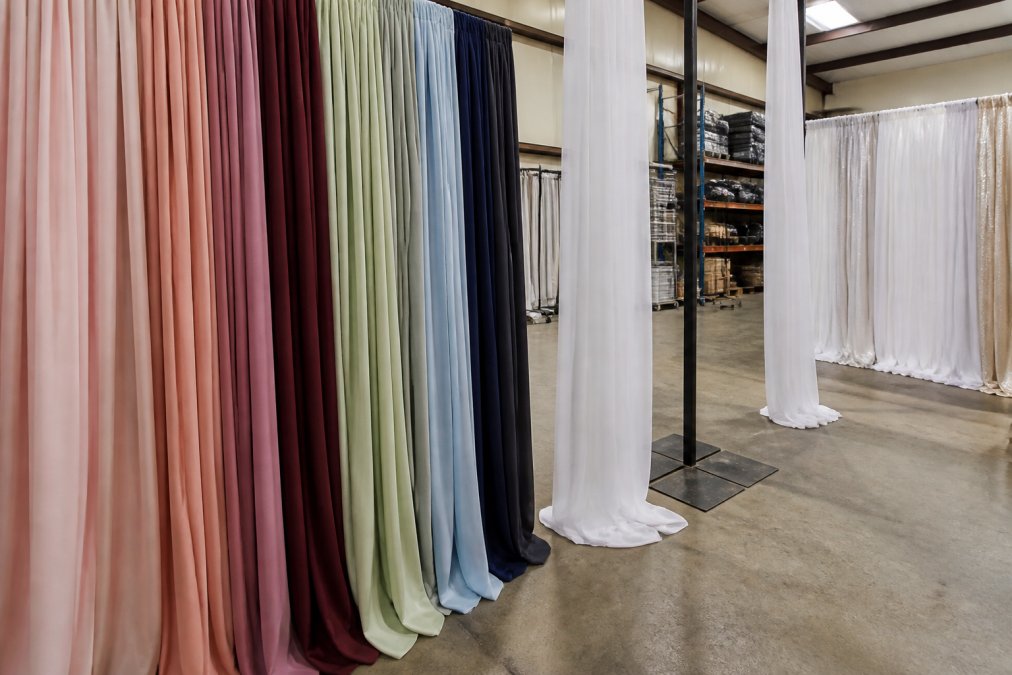
 how-to
Draping Near Me: How to Rent Event Drapes in 2026
Table of Contents
- What Draping Near Me Actually Means (and What You Get)
- Pipe and Drape Height Requirements: Matching Drapes to Your Venue
- DIY vs Professional Event Draping: Which Fits Your Timeline?
- Pipe and Drape Rental Cost: What Drives Your Quote
- Safety and Fire Code Compliance for Event Draping
- Fabric Types, Colors, and Ceiling Treatments That Transform a Venue
- Common Mistakes to Avoid When Booking Draping Near Me
- Frequently Asked Questions
Last Updated: September 13, 2026
What Draping Near Me Actually Means (and What You Get)
Searching for draping near me usually means you need pipe and drape delivered, installed, and looking flawless before guests walk in. That's the honest definition: it's local event drapery rental with logistics included, not just fabric. At Event Drape Rental, the difference between a good vendor and a bad one comes down to two things: inventory depth and installation reliability.
Pipe and drape is a modular system of adjustable uprights, crossbars, and fabric panels that creates freestanding walls, backdrops, and ceiling canopies without touching the venue's structure. The system matters because it defines space: a trade show booth, a ceremony aisle, a room partition behind a bar.
What most guides miss is that "near me" isn't really about proximity. It's about whether the vendor can deliver on your date, at your venue's height, in your brand colors. Get those three right and geography becomes a scheduling detail.
Full-Service Rental vs. DIY Kits
Full-service rental means the vendor surveys the venue, loads the truck, installs the drape, and strikes it after the event. DIY rental means the same hardware and fabric show up, but your team builds it.
The trade-off is straightforward:
- Full-service: higher labor cost, lower risk, better for high-visibility events and tight timelines
- DIY: lower cost, more control, workable for smaller spaces and experienced crews
Many planners split the difference, hiring professional install for the main stage backdrop and building simple aisle draping themselves.
Service Areas and Coverage
Delivery range decides whether a vendor is actually local to you. Ask two questions before booking: how far do you travel without a surcharge, and can you handle multiple delivery locations on the same day? Coordinators running events across several venues need the second answer to be yes, because one truck making three stops is a logistics problem, not a favor.
Pipe and Drape Height Requirements: Matching Drapes to Your Venue
The most common booking failure is ordering drapes that don't reach the ceiling. Standard pipe and drape height requirements run from 8 to 12 feet for most hotel ballrooms and conference rooms, but converted warehouses, atriums, and industrial venues can run 30 feet or higher. Measure the actual clearance, not the room's advertised square footage.
Event Safety Alliance guidance on temporary structures notes that temporary installations should be planned around the venue's real dimensions and load paths, not assumptions.
Standard Heights vs. Tall Ceilings
Standard-height drape covers most corporate functions and hotel ballrooms. Tall-ceiling venues need taller uprights and more fabric, which changes both the hardware and the labor.
| Venue Type | Typical Ceiling Height | Drape Approach |
|---|---|---|
| Hotel ballroom | 10-14 ft | Standard uprights, floor-to-ceiling panels |
| Conference center | 12-20 ft | Extended uprights, ceiling canopy option |
| Converted warehouse | 20-40 ft | Tall uprights, star drape or AV drop systems |
| Trade show hall | 10-12 ft booth | Booth-height pipe and drape kits |
DIY vs Professional Event Draping: Which Fits Your Timeline?
DIY vs professional event draping comes down to crew size, timeline, and how much risk you can absorb. A two-person team can install a simple 10-foot backdrop in under an hour. A 40-foot ceiling canopy with lighting integration is a different job entirely.
Here's the practical split:
- Choose DIY when: the space is under 12 feet, you have two or more people, and setup windows are generous
- Choose professional install when: ceilings exceed 14 feet, you need a same-day multi-venue setup, or the event is high-profile
- Always choose professional when: the venue requires a certificate of insurance or union labor
What a Simple DIY Backdrop Actually Takes
If you're building a ground-level pipe and drape wall, here's the honest sequence most first-timers underestimate:
- Lay out the footprint. Mark where each base plate sits. Base plates are heavy and you don't want to drag them twice.
- Set and level the bases. Uneven floors are the number one cause of a sagging or leaning wall. Shims and a level are not optional.
- Insert uprights and set height. Lock each upright at the same height before you hang anything.
- Attach crossbars. Telescoping crossbars adjust to your span; over-tightening bends them, under-tightening lets them drop.
- Drape and dress. Hang panels, then adjust the gather so pleats are even. This is the step that takes the longest and shows the most in photos.
Tools and supplies that make it survivable: a tape measure, a level, work gloves, a steamer or handheld steamer for wrinkles, zip ties or drape clips for dressing, and a step stool. A second person to hold uprights while you lock them saves your back and your timeline.
Venue-Specific Draping Challenges
This is the part generic guides skip, and it's where DIY projects go sideways:
- Barns and rustic venues. Exposed beams and uneven dirt or gravel floors make base plates unstable. You often need weighted bases or anchoring, and ceiling attachment may be prohibited entirely.
- Low ceilings (under 10 feet). Standard uprights won't fit. You need shorter pipe and drape kits or a different treatment like a fabric swag or a low backdrop wall.
- Outdoor tents. Wind is the enemy. Drape that looks fine indoors will billow and pull hardware over outdoors unless it's weighted and secured. Confirm the tent vendor allows attachment before you plan on it.
- Atriums and open spaces. No ceiling attachment points means freestanding only, which caps your height and changes the whole design.
- Historic or landmark venues. Attachment rules are strict. Assume no drilling, no tape on finished surfaces, and no rigging without approval.
The thing nobody tells you about DIY is that the fabric is the easy part. Leveling base plates on uneven floors, tensioning panels so they don't sag, and hiding hardware takes practice. If your team has never built a pipe and drape wall, budget double the time you think you need.
When to Split the Difference
Many planners hire professional install for the main stage backdrop and build simple aisle draping themselves. That hybrid works because the high-visibility, high-height, high-risk pieces get expert hands, and the low, simple runs get your own crew. If you go this route, tell your vendor up front which pieces you're handling so the quote and the delivery reflect it.
Pipe and Drape Rental Cost: What Drives Your Quote
Pipe and drape rental cost is driven by four variables: total linear footage of drape, ceiling height, fabric type, and installation labor. There's no single per-foot rate that applies everywhere, because a 30-foot velvet panel and a 30-foot sheer panel are different products with different handling needs.
How Vendors Actually Build the Number
Most rental houses price in three stacked layers, and knowing the layers is how you compare quotes apples to apples:
- Fabric and panel rental, priced per linear foot of drape, per panel, or per 10-foot section. Sheer and chiffon sit at the low end; velvet, satin, and specialty textures sit higher because they weigh more, wrinkle more, and take longer to dress.
- Hardware rental, uprights, crossbars, base plates, and any specialty pieces like star drape rings or ceiling canopy hubs. Taller uprights cost more because fewer vendors stock them and they require heavier bases.
- Labor and logistics, delivery, setup, strike, and travel. This is usually the line item that separates a cheap quote from an accurate one.
A Rough Estimator You Can Run Before You Call
You don't need a vendor's rate card to sanity-check your budget. Build a rough estimate in four steps:
- Measure the run. Add up the linear feet of drape you need, a 20-foot backdrop wall is 20 linear feet, a 40-foot room divided in half is 40 linear feet.
- Multiply by height factor. A 10-foot wall is baseline. A 20-foot wall uses roughly twice the fabric and taller hardware, so expect the fabric and hardware portion to scale up meaningfully, not linearly with a small bump.
- Add fabric tier. Sheer is the budget choice. Velvet and heavy textures typically add a noticeable premium per linear foot.
- Add labor. Simple ground-level installs are the cheapest labor tier. Ceiling work, tall uprights, rigging, and multi-venue days push labor up fast.
A single 10-foot-by-10-foot pipe and drape backdrop for a small event is the entry point most vendors quote. A full ballroom perimeter with a ceiling canopy is a different category of project entirely, often several times the cost of the backdrop alone.
What Quietly Inflates a Quote
- Rush timelines. Booking inside two weeks usually triggers a premium or a refusal.
- Multiple delivery locations. One truck, three venues, one day is a scheduling problem that gets priced as one.
- Union venues. Some facilities require union labor for install, which replaces your vendor's crew rate with a higher one.
- Strike timing. Same-night teardown versus next-morning pickup changes the labor window.
Questions That Get You a Real Number Fast
When you request a quote, hand the vendor these five data points and you'll skip two rounds of email:
- Total linear feet of drape
- Ceiling height at the install point
- Fabric preference or "match this color"
- Venue address and load-in window
- Whether you need install and strike, or rental only
For current pricing on your specific event, request a quote from Event Drape Rental with your venue dimensions and date.
Safety and Fire Code Compliance for Event Draping
Fire code compliance is the requirement most planners discover too late. In the United States, drapery used in public assembly spaces generally must be flame retardant, and venues will often ask for documentation before they let you install.
NFPA 701 standard for flame propagation of textiles is the benchmark most venues reference for textiles and films used in event settings. OSHA requirements for exit routes and fire safety also applies to temporary setups that could block egress.
What this means in practice:
- Confirm your vendor supplies flame-retardant fabric as standard
- Ask for documentation you can hand to the venue
- Never block exits, fire lanes, or sprinkler clearance with drape
- Keep hardware clear of emergency lighting and alarms
This is the angle most service pages skip, and it's the one that can cancel your event.
Fabric Types, Colors, and Ceiling Treatments That Transform a Venue
Fabric selection is where a room stops looking like a rental hall and starts looking designed. Sheer fabric softens light and reads elegant. Velvet drape absorbs light and photographs rich. Ceiling treatments like a ceiling canopy or star drape turn a flat ceiling into a feature.
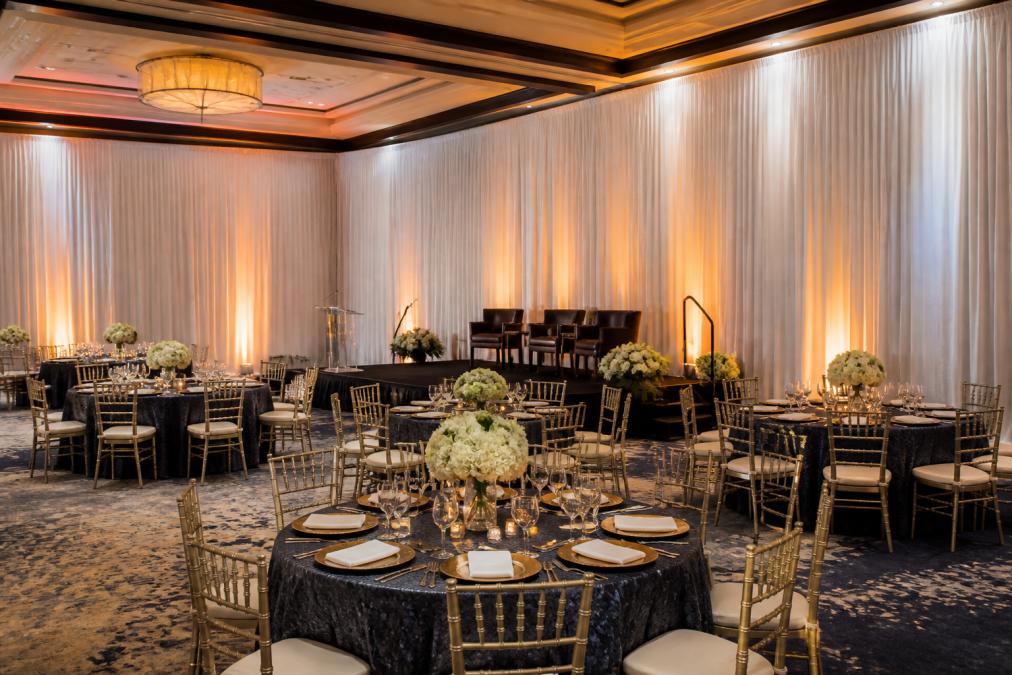
Coverage matters as much as color. Event Drape Rental stocks over 100+ colors and 6 different fabric materials, with drapes from 12 to 30 feet tall, so brand-matched trade show booths and custom wedding decor are both realistic requests rather than compromises.
Pair fabric with event lighting integration and the same drape reads three different ways across one evening: bright for cocktail hour, dimmed for dinner, dramatic for the keynote.
Common Mistakes to Avoid When Booking Draping Near Me
Most bad drape experiences trace back to booking decisions, not the fabric itself. A common mistake is choosing on price alone and discovering the quote excluded installation, delivery, or strike. Another is skipping the site survey and guessing at ceiling height.
The mistakes that cost the most:
- Not confirming flame-retardant certification before the venue asks
- Booking DIY without a crew that has built pipe and drape before
- Forgetting to plan for wrinkles, which show up in every photo under uplighting
- Assuming one vendor can cover multiple venues on the same day without confirming
Frequently Asked Questions
How much does pipe and drape rental cost?
Pricing depends on quantity, drape height, fabric choice, delivery distance, and whether you add professional installation. A single 10-foot booth panel and a 30-foot ceiling canopy sit at very different price points. Most providers quote per linear foot plus labor and delivery. Request an itemized quote with your venue dimensions and date so you can compare apples to apples.
How do I determine the right height for event drapes?
Measure your venue's ceiling clearance first, then decide how much of that height you want to cover. Standard pipe and drape kits run 8 to 12 feet, while taller rooms often need 20 to 30-foot drapes to reach the ceiling. Leave a few inches of clearance for hardware and lighting. If your ceiling is above 12 feet, confirm the rental company stocks taller uprights before booking.
What is the difference between DIY draping and professional installation?
DIY rental ships or delivers the pipe, bases, and fabric for you to set up yourself, which lowers labor cost but adds setup time and risk of uneven panels. Professional installation includes a site survey, crew, hardware, and teardown, so the drapes hang straight and meet venue rules. For high-visibility events or ceilings over 15 feet, professional install is usually the safer choice.
Can pipe and drape be used for outdoor events?
Yes, with the right hardware. Outdoor setups need heavier base plates, stakes or ballast, and flame-retardant fabric that can handle wind and moisture. Check your venue's rules on staking and whether a permit is required for temporary structures. Tell your rental company it's an outdoor job so they bring the correct uprights and weights for your surface.
Coordinating drapery across venues, brand colors, and tight load-in windows is where most events get complicated, and it's exactly where the right partner removes the friction. Event Drape Rental supplies flame-retardant pipe and drape with more than 100 colors, six fabric types, and drapes from 12 to 30 feet, with either DIY rental or professional installation to match your timeline. Get started with Event Drape Rental and request a quote for your next event.