 ultimate-guide
Pipe and Drape Rental Pricing Guide 2026: What to Expect
Table of Contents
- What Drives Pipe and Drape Rental Pricing in 2026
- How to Calculate Cost of Event Draping Per Square Foot
- Pipe and Drape Installation Labor Costs Explained
- DIY vs Professional Pipe and Drape Rental: Which Saves More?
- Fabric Choices and Height Options That Affect Your Quote
- The Hidden Costs Most Pricing Guides Skip
- Conclusion: Getting an Accurate Pipe and Drapery Quote for Your Event
- Frequently Asked Questions
Last Updated: September 14, 2026
What Drives Pipe and Drape Rental Pricing in 2026
Pipe and drape rental pricing in 2026 is shaped by four variables: linear footage, fabric selection, drape height, and labor. Material costs for flame-retardant fabrics have climbed steadily since 2024, and event insurance requirements now push more venues toward certified fire-retardant panels (Employment Cost Index News Release). That combination means the cheapest quote you receive this year will likely come from a vendor cutting corners on compliance, not on fabric.
At Event Drape Rental, we quote hundreds of events annually and see the same pattern: planners fixate on the per-panel rate and miss the labor, delivery, and strike charges that can double the invoice. This guide breaks down exactly how pipe and drape rental pricing works, so you can compare quotes line by line instead of guessing.
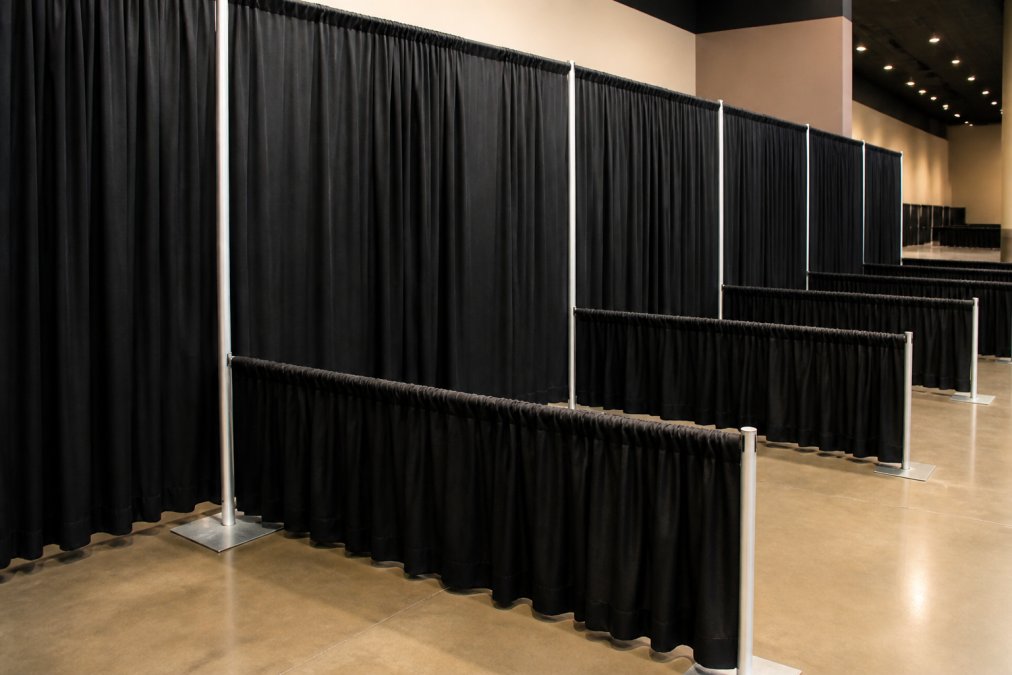
A pipe and drape system is a modular event backdrop consisting of adjustable uprights, telescoping crossbars, fabric drape panels, and weighted base plates. The system defines booth spaces, partitions rooms, and creates branded backdrops without permanent construction.
Three cost drivers matter more than any other:
- Linear feet of coverage. Everything scales from this number.
- Fabric weight and type. Sheer chiffon costs less than heavy velour.
- Labor and venue rules. Union venues can add significant cost.
How to Calculate Cost of Event Draping Per Square Foot
To calculate cost of event draping per square foot, divide your total quote by the square footage of covered wall space. A quote for 40 linear feet at 10 feet tall covers 400 square feet. If the all-in quote is $X, your per-square-foot rate is $X divided by 400.
That single number lets you compare wildly different quotes fairly. Vendors who quote per panel, per linear foot, or per section all collapse into one comparable figure.
Measuring Your Space: Uprights, Crossbars, and Floor Coverage
Measure the total run you need covered, then measure ceiling height at the highest point. Uprights are telescoping, so a single upright adjusts across a range rather than fitting one fixed height. Crossbars extend to span the gap between uprights, and base plates anchor each upright to the floor.
Floor coverage is where most planners under-order. Drape panels need overlap to look full, so order 10 to 15 percent more fabric width than your measured run. A 40-foot wall typically needs 44 to 46 feet of panel width.
The Formula: Linear Feet, Panel Count, and Total Drape Area
Use this sequence:
- Measure the total run in linear feet.
- Add 10 to 15 percent for panel overlap.
- Multiply by your drape height to get total square footage.
- Divide the quoted total by that square footage.
| Measurement | Example | Notes |
|---|---|---|
| Run length | 40 linear feet | Wall or booth perimeter |
| Overlap allowance | +15% | 46 feet of panel width |
| Drape height | 10 feet | Match ceiling or design height |
| Total drape area | 460 sq ft | Run × height |
| Per-sq-ft rate | Quote ÷ 460 | Your comparison number |
Pipe and Drape Installation Labor Costs Explained
Pipe and drape installation labor costs depend on three things: crew size, setup complexity, and venue rules. A standard 40-foot run with a two-person setup crew takes a few hours. A 30-foot-tall warehouse installation with rigging takes longer and requires more crew.
Labor is usually quoted separately from hardware and fabric, which is why two quotes for identical drapery can differ by thousands of dollars.
Delivery, Setup, and Strike Fees
Delivery covers transport to your venue, often priced by distance and truck size. Setup covers load-in and installation. Strike covers teardown and load-out after the event.
Ask one question that separates honest quotes from padded ones: is strike included, or billed hourly after the event? Venues with tight load-out windows can turn a fixed strike fee into overtime charges fast.
Venue Labor Rules and Union Requirements
Many convention centers and hotels require their own staff to handle load-in, load-out, or rigging. Some mandate union crews for anything touching the ceiling. These rules can override your vendor's labor entirely, and the venue bills you directly.
The hidden cost of venue compliance is real: a venue labor requirement can add a line item your vendor never mentioned because it is not their charge to quote. Confirm labor rules with the venue before you sign a rental agreement.
DIY vs Professional Pipe and Drape Rental: Which Saves More?
DIY pipe and drape rental saves the labor line but moves the risk onto you. Professional installation costs more upfront and moves the risk onto the vendor. The right answer depends on four variables: run length, drape height, load-in window, and venue labor rules.
The Labor Math Behind Each Option
Professional labor is quoted by crew size and hours. A standard 40-foot run at 10 feet tall is typically a two-person job that takes a few hours from load-in to strike. Taller runs, rigged installations, and multi-room layouts scale the crew up. The vendor's quote should separate delivery, setup, and strike so you can see which line is driving the total.
DIY rental removes the setup and strike labor but keeps delivery, and it adds your own time. First-time installers routinely take two to three times longer than they expect, especially on tall uprights that need careful base plate weighting. If your venue charges for early access or overtime load-out, that extra time has a price that never shows up on the rental quote.
When DIY Actually Wins
DIY is the better call when all four of these are true:
- The run is short enough that two people can handle it in a single load-in window.
- Drape height is low enough that uprights do not need rigging or heavy counterweighting.
- Your schedule has slack, so a slow first-time setup does not push into overtime.
- The venue does not require its own staff or a union crew for load-in.
If any one of those fails, the labor savings shrink or disappear.
When Professional Installation Pays for Itself
Professional installation is the better call when the setup is tall, complex, or time-boxed. High ceilings, rigged crossbars, multi-room partitions, and tight load-in windows all favor a crew that has done the setup before. The same is true when a high-profile client or a brand-sensitive backdrop is on the line, a crooked run of drape is a visible problem, and re-hanging it costs more than the original labor.
Venue Labor Rules That Override Your Choice
Many convention centers and hotels require their own staff to handle load-in, load-out, or anything touching the ceiling. Some mandate union crews for rigging. When those rules apply, your vendor's labor is either excluded or supplemented by venue labor billed directly to you. Confirm the venue's labor rules before you choose DIY or professional, because a venue requirement can make the DIY decision irrelevant.
| Factor | DIY Rental | Professional Installation |
|---|---|---|
| Upfront cost | Lower | Higher |
| Labor risk | Yours | Vendor's |
| Best for | Short runs, low height, flexible schedule, no venue labor rules | Tall, complex, tight timelines, brand-sensitive events |
| Setup time | Longer, variable | Predictable |
| Damage liability | You | Typically vendor |
| Venue labor rules | Can override the plan | Vendor coordinates |
Fabric Choices and Height Options That Affect Your Quote
Fabric and height are the two quote variables planners most often underestimate. Fabric weight drives both price and appearance, and drape height drives hardware requirements.
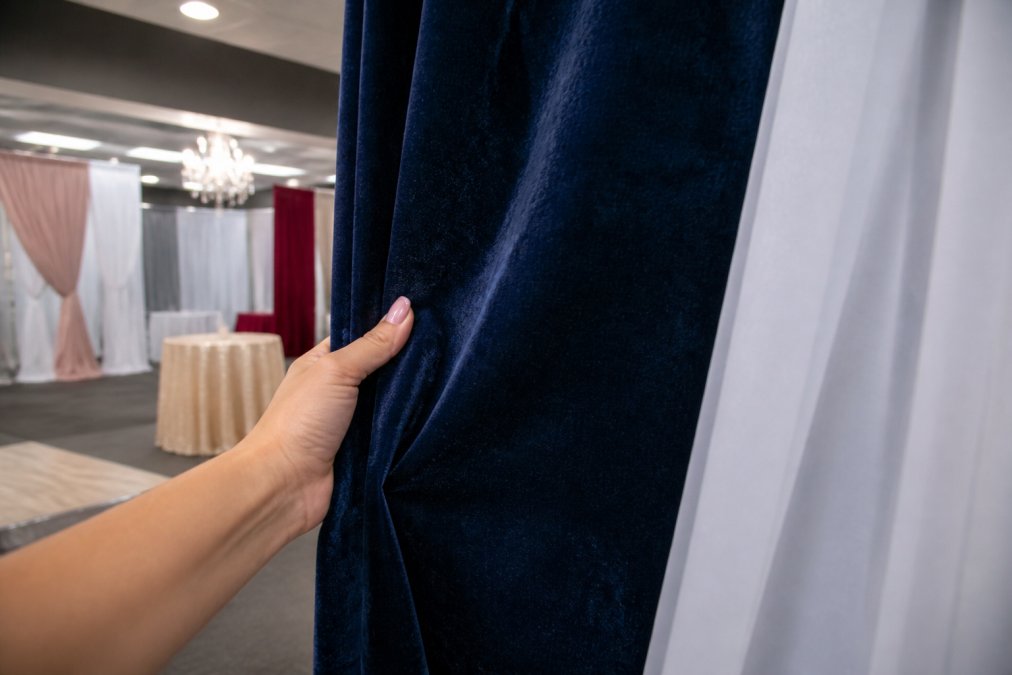
The main fabric tiers:
- Sheer fabrics like chiffon let light through and suit soft, airy backdrops.
- Opaque fabrics like poly premier block sightlines and suit room partitions.
- Heavy fabrics like velour absorb light and sound, ideal for galas and stage settings.
Height changes everything. Standard drape heights work for most booths, but tall venues need taller uprights and heavier base plates. Event Drape Rental stocks drapes from 12 to 30 feet tall.
Color availability matters too. Event Drape Rental carries over 100 colors across 6 fabric materials.
The Hidden Costs Most Pricing Guides Skip
Published pipe and drape pricing guides quote hardware, fabric, and labor, then stop. Real invoices carry four more line items that rarely appear in a rate card. Budget for them before you sign, because none of them are negotiable after the event.
Venue Compliance: Fire Marshal Certification and Insurance Certificates
Most public assembly venues require drapery to carry documented flame-retardant treatment. The applicable standard is NFPA 701, Standard Methods of Fire Tests for Flame Propagation of Textiles and Films, and a fire marshal or venue manager can ask for the test certificate before load-in (NFPA 701 Standard Development). If your vendor cannot produce it, you pay for one of two fixes: re-treatment of the panels, or substitution with certified inventory at a higher rate. Neither is cheap on short notice.
Insurance is the second compliance cost. Many venues require a certificate of insurance naming the venue as additional insured, with general liability limits set by the venue's risk department (Background on: Compulsory Auto/Uninsured Motorists). If your vendor's policy does not meet those limits, you either buy a short-term event policy or find another vendor. Ask for the COI and the NFPA 701 certificate at the quote stage, not the week of the event.
Regional Pricing Variance: Why the Same Setup Costs More in a Convention City
Labor is the most regionally volatile part of a pipe and drape quote. A two-person setup crew in a dense convention market commands a higher hourly rate than the same crew in a secondary market, and the gap widens for rigging and overnight work. Fuel surcharges on delivery scale with distance from the vendor's warehouse, so a venue 90 minutes out can carry a delivery premium that a downtown venue does not.
Venue density matters too. Markets with many competing event spaces push labor rates up because crews have steady work and can hold their price. Markets with fewer venues and longer idle periods tend to quote lower. When you compare two quotes from different markets, normalize the labor line before you conclude one vendor is overcharging.
Damage and Maintenance Fees: What Counts as Damage
Damage terms are where a cheap quote becomes an expensive invoice. Vendors typically distinguish between normal wear and chargeable damage. Normal wear is expected: minor dust, light creasing from folding, and the general handling that any fabric sees in transit. Chargeable damage usually includes tears, punctures, burns, and permanent staining, red wine, coffee, ink, and grease are the common culprits at receptions and galas.
Hardware damage is billed separately. Bent crossbars, cracked base plates, and bent uprights are replaced, not repaired, and the replacement charge reflects the vendor's cost to re-stock the item. Ask two questions before you sign: what is the damage threshold, and is there a cleaning fee for stained-but-intact panels? A vendor that answers both in writing is easier to work with than one that answers verbally.
Sustainability: Reusable Panel Programs and Procurement Requirements
Corporate and institutional buyers increasingly ask whether drape inventory is reusable and whether the vendor has a take-back or re-use program. Reusable panel programs reduce waste versus single-use backdrop materials, and some procurement departments now require a sustainability statement as part of the vendor packet. The cost difference is usually modest, but the documentation requirement is not optional for those buyers. Ask your vendor what happens to the panels after strike.
Conclusion: Getting an Accurate Pipe and Drapery Quote for Your Event
The gap between a cheap quote and an accurate one is almost always the hidden line items: strike fees, venue labor, damage terms, and compliance documentation. Get those in writing, calculate your per-square-foot rate, and you can compare any two vendors fairly.
Event Drape Rental provides professional-grade pipe and drape rental with drapes from 12 to 30 feet tall, over 100 colors, and 6 fabric materials, plus both DIY and professional installation options. Request a quote from Event Drape Rental and get a line-item breakdown you can actually compare.
Frequently Asked Questions
How much does pipe and drape rental cost?
Pipe and drape rental pricing depends on total linear feet, fabric type, height, rental duration, and whether you need delivery and professional installation. Most quotes combine a per-linear-foot rate for the drape panels and hardware with separate charges for setup crew, delivery, and strike. Because rates shift with location, season, and order size, the most accurate figure comes from a quote based on your room dimensions and event date.
How do I calculate the cost of event draping per square foot?
Start by measuring the total wall or backdrop area you need covered in square feet. Then divide your quoted total by that number. For example, a 20-foot-wide by 10-foot-tall backdrop equals 200 square feet. If the quote is $600, your cost is $3 per square foot. This method lets you compare vendors fairly, because it normalizes for room size and shows whether a lower linear-foot rate is actually cheaper once labor and delivery are added.
Is it cheaper to DIY pipe and drape or hire professional installation?
DIY pipe and drape rental saves on labor, but only if your venue allows self-installation and your team has the time and tools. Professional installation adds labor costs but reduces the risk of wrinkled fabric, unstable uprights, and damage fees. For tall configurations above 12 feet or events with strict load-in windows, professional setup is usually the safer and often cheaper choice once you factor in potential repairs and overtime.
What factors influence the cost of event draping per square foot?
Fabric weight and type (sheer chiffon versus heavy velour), drape height, custom color matching, rental duration, delivery distance, and venue labor rules all affect the per-square-foot price. Higher ceilings require taller uprights and more fabric, which raises cost. Flame-retardant treatments, rush timelines, and multiple delivery locations also add to the total. Getting a detailed line-item quote helps you see which factors apply to your specific event.
What are the standard height options for pipe and drape rentals?
Standard pipe and drape heights range from 8 feet for trade show booths up to 12, 16, 20, and 24 feet for larger backdrops and room partitions. Some suppliers offer telescoping uprights that reach 30 feet for tall venues. Always confirm your ceiling height and any overhead obstructions before ordering, because taller drapes need heavier base plates and may require additional labor to install safely.
Does fabric material affect the total rental price?
Yes. Sheer fabrics like chiffon cost less per panel than opaque options such as velour or poly premier, but sheers often require double layering to block light, which offsets the savings. Heavier fabrics resist wrinkles better and photograph well, making them popular for galas and weddings. Flame-retardant certification, color matching, and custom sewing also raise the price. Ask for fabric samples before committing to a large order.