 how-to
Fire Safety Standards for Event Decor: A Practical Guide
Last Updated: October 30, 2026
Quick Summary
Fire safety standards for event decor are the rules that decide whether drapes, backdrops and fabric displays stay safe when a crowd gathers. They require materials to resist ignition and slow flame spread, and they are set locally, so the venue and fire marshal determine what applies to your event.
- Ask the venue for its written decor and fire safety policy before you choose materials.
- NFPA 701 is the test method most often used for flame-resistant textiles like drapes.
- Verify that each certificate matches the actual fabric, color and batch on site.
- Never cover exit signs, fire alarm pull stations or sprinkler heads with fabric or props.
- Build a 30-minute buffer into load-in for a possible re-inspection.
Table of Contents
- Why Fire Safety Standards for Event Decor Matter
- Which Fire Codes and Local Rules Apply to Your Event
- NFPA 701 Fabric Testing: What It Covers and How to Read Results
- Event Drape Certificate of Flame Resistance: How to Verify It
- Fire Marshal Event Decor Requirements: Inspection Readiness
- Event Decoration Fire Safety Checklist by Material
- Booking Compliant Drapes for Your Next Event
- Frequently Asked Questions
Why Fire Safety Standards for Event Decor Matter
Fire safety standards for event decor are the rules that decide whether drapes, backdrops and fabric displays stay safe when a crowd gathers. Fire safety standards exist because decorative fabric can ignite fast and spread flame through a packed room.
The core idea is simple: materials must resist ignition and slow flame spread. The Event Safety Alliance publishes ANSI ES1.4-2021, a standard that addresses fire safety requirements across the live event industry Event Safety Alliance ANSI ES1.4-2021 standard.
Many planners assume a fabric is safe because it looks heavy or high quality. Appearance tells you very little. A drape can look thick and still burn quickly without treatment or testing.
Which Fire Codes and Local Rules Apply to Your Event
Fire codes are set at the local level, so the rules for your event depend on where it takes place. Your venue, city and state can each add requirements on top of national standards.
Start by asking the venue for its fire safety policy. Most venues keep written rules on decor, open flames and exit access. Specialized installations like fabric overheads often require additional scrutiny regarding stretch ceiling fire safety to ensure that all decorative elements remain compliant with regional mandates.
- Ask the venue for its written decor and fire safety policy
- Confirm which codes the local fire marshal enforces
- Ask whether a permit is required for temporary structures
- Verify occupancy limits before adding large decor pieces
Plan for variation. Two venues in the same city can apply different rules, so never assume one event's approval carries over to the next.
NFPA 701 Fabric Testing: What It Covers and How to Read Results
NFPA 701 is the test method most often used for flame-resistant textiles, including drapes and curtains. It measures how fabric behaves when exposed to a flame source under controlled conditions. Fire marshals often ask for documented flame-resistance test results when reviewing decorative fabrics.
Reading the results takes some care. A passing result means the specific fabric met the test criteria at the time it was tested. It does not automatically cover every color, batch or treatment.
Check three things on any test report:
- The fabric name and construction match what you are renting
- The test date and laboratory are listed
- The result states a pass under the stated test method
If any detail is missing, ask for a corrected report before the event.
Event Drape Certificate of Flame Resistance: How to Verify It
A certificate of flame resistance is the document that proves a fabric passed a recognized test. Inspectors look for it because it creates a paper trail.
Verify the certificate before you accept delivery. Confirm the fabric type, the testing standard cited, and the issuing body. Then match the certificate to the actual drapes on site, not just to a product name.
Treatments can wear off. Fire-retardant treatment is not always permanent, especially after washing or repeated cleaning. Ask how the material was treated and whether the certificate applies to its current condition.
Keep copies on hand. Send them to the venue and the fire marshal ahead of the event, and bring the originals to the site.
Fire Marshal Event Decor Requirements: Inspection Readiness
Fire marshal event decor requirements focus on three things: material compliance, clear exit paths and safe placement. Inspectors walk the room and compare what they see against the approved plan. The difference between a smooth walk-through and a failed inspection usually comes down to preparation before the marshal arrives.
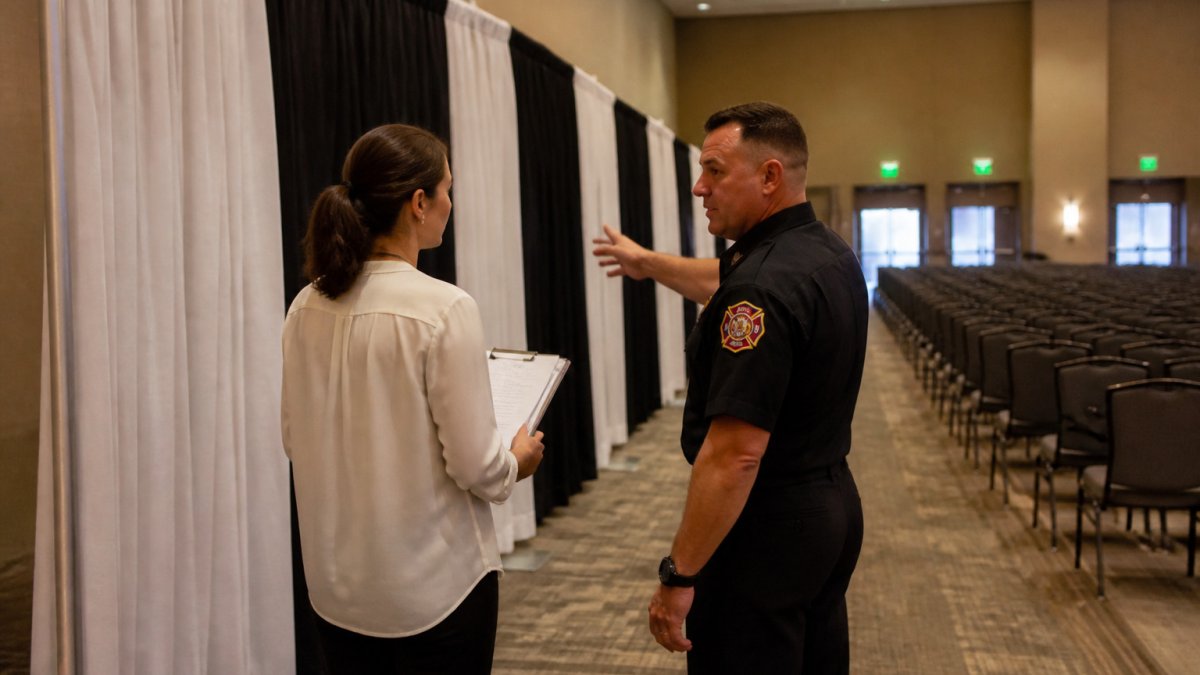
What Inspectors Actually Check
Fire marshals generally review decor for valid test documentation, unobstructed exits and egress routes, distance from ignition sources, and conformance with any approved plan.
Walking the room yourself before an inspection helps you see it the way a marshal will.
Clearance Guidance for Decorative Elements
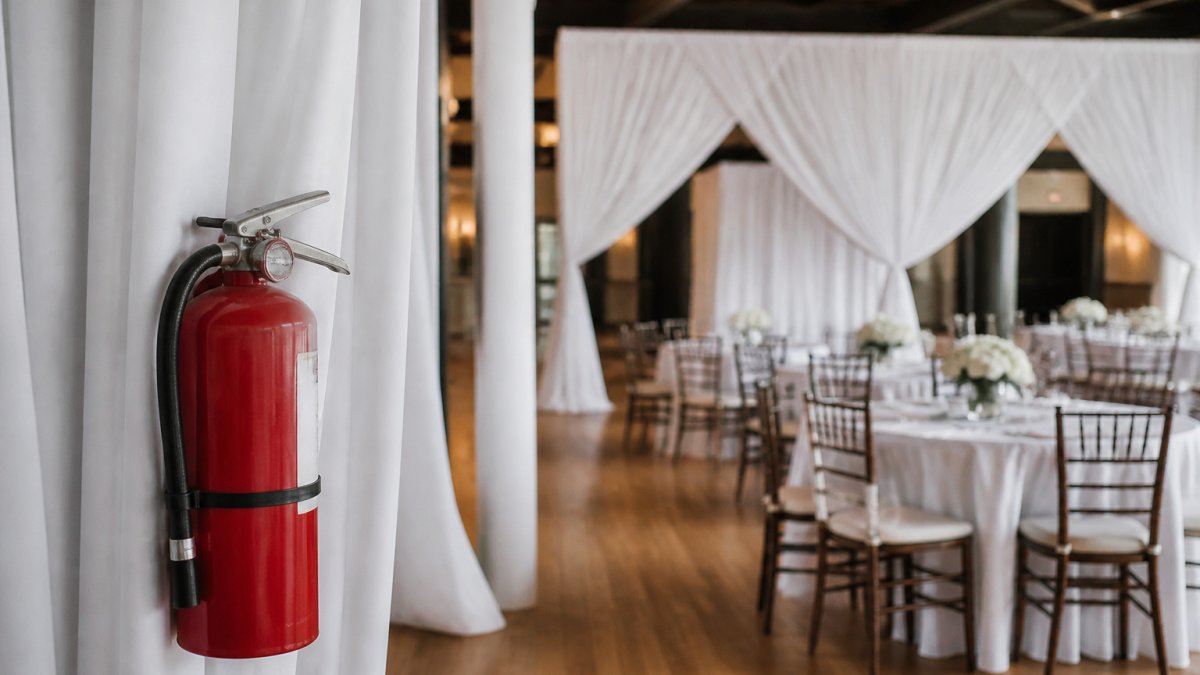
Specific clearance numbers vary by venue and jurisdiction, so practical guidance helps. Keep drapes and backdrops clear of exit doors and exit signs so the signage stays visible from across the room. Leave aisle and egress widths unobstructed by fabric, cables, or prop bases. Keep decor away from heaters, candles, and electrical equipment, and do not block fire extinguishers or sprinkler heads. Where a venue provides written clearance rules, follow those over general guidance, since local requirements vary.
The Documentation Packet to Have Ready
Bring a packet that lets the inspector verify compliance without leaving the room:
- Flame-resistance certificates for each fabric type on site, matched to the actual material
- Test reports showing the standard cited (such as NFPA 701) and the test date
- A layout drawing showing where each drape, backdrop, and prop sits relative to exits and equipment
- Vendor contact information in case the inspector has a question about a specific material
Send copies to the venue and the fire marshal ahead of the event, and bring originals to the site. A clear drawing of where each drape sits makes the walk-through faster and reduces disputes.
When Decor Fails Inspection
When decor fails inspection, move quickly and document what you do. Remove or reposition the failing items first, then address the underlying issue. If a fabric lacks valid documentation, replace it with a material that has a current certificate or apply an approved flame-retardant treatment if the venue and marshal allow it. Photograph the corrected condition and keep a short written record of the corrective action. Then request a re-inspection rather than waiting for the event to start.
Waiting until the event starts is not an option. A failed inspection can delay opening or force removal of decor after setup, so plan the fix-and-reinspect loop into your timeline.
Event Decoration Fire Safety Checklist by Material
Most guides cover tents, flooring, and holiday decorations separately. This checklist pulls event decor into one place so you can match each material to the right documentation and installation checks. Use it as a pre-purchase and pre-installation filter.
Drapes, Backdrops, and Fabric Displays
- Polyester and blended drapes: Confirm NFPA 701 results and the treatment status. Ask whether the certificate covers the specific color and batch you will receive.
- Custom printed fabrics: Ask whether a flame-retardant treatment was applied and whether a certificate exists for the printed material, not just the base fabric.
- Sheer fabrics: Check that the specific weight and weave were included in the test, since lightweight sheers can behave differently from heavier goods.
- Metallic or novelty fabrics: Request documentation, since these are often not certified and may need replacement with a documented alternative.
Artificial Greenery, Foam, and Props
- Artificial greenery and floral: Ask for flame-resistance documentation or treat with an approved retardant and keep a record of the treatment.
- Foam and foam-core props: Foam can burn quickly and produce heavy smoke. Confirm whether the venue permits it and whether a fire-retardant coating is required.
- Wood and painted props: Check whether the venue requires fire-retardant coatings or limits the amount of exposed wood.
- Paper and cardboard decor: Keep away from heat sources, and confirm documentation for any paper or cardboard decor.
How to Verify Flame-Retardant Certificates and Treatment Validity
A certificate only helps if it matches the material in front of the inspector. Check three things on any test report: the fabric name and construction match what you are renting, the test date and laboratory are listed, and the result states a pass under the stated test method. If any detail is missing, ask for a corrected report before the event.
Treatments can wear off. Fire-retardant treatment is not always permanent, especially after washing or repeated cleaning. Ask how the material was treated and whether the certificate applies to its current condition. When treated materials have been cleaned or stored for long periods, confirm with the vendor whether retesting or retreatment is needed.
Handling Documentation Gaps
Custom fabrics often carry a flame-retardant treatment but do not come with a certificate. Treat them as a documentation gap, and resolve it with the venue before the event. Options include requesting a certificate from the vendor, switching to a documented material, or applying an approved treatment if the venue allows it.
For the strongest option, choose fabric that is inherently flame retardant. Inherent resistance comes from the fiber itself, so it does not depend on a treatment that can fade.
The checklist below matches common event decor materials to the documentation and installation checks each one needs.
| Material | Documentation to request | Key check |
|---|---|---|
| Drapes and fabric displays | NFPA 701 results and treatment status | Certificate covers the specific color and batch |
| Custom printed fabrics | Certificate for the printed material | Treatment was applied and documented |
| Sheer fabrics | Test covers the specific weight and weave | Lightweight sheers were included in testing |
| Artificial greenery and floral | Flame-resistance documentation or retardant record | Treatment is recorded if applied |
| Foam and foam-core props | Venue permission and retardant coating | Confirm the venue allows the material |
| Wood and painted props | Coating requirements | Exposed wood stays within venue limits |
Booking Compliant Drapes for Your Next Event
Booking compliant drapes starts with asking the right questions before you commit. Ask the rental company for the fabric name and its test documentation.
Share your venue requirements early. Tell us the room size, the ceiling height and any fire marshal notes, and we can help you match fabric to the space. Our drapes range from 12 to 30 feet tall, with over 100 colors and six fabric materials, so you can plan with options in hand.
Request a quote and documentation together. Our team can help you choose materials for your venue. Use our Request for Quote (RFQ) to get started.
Frequently Asked Questions
What fire safety rules apply to decorations at events?
Event decorations are generally governed by the fire code adopted by the local jurisdiction, most often a version of the International Fire Code or NFPA 1 (Fire Code). These rules typically require decorative materials to be flame resistant, prohibit decorations from blocking exits, exit signs, or sprinkler heads, and limit open flames and candles. Fire marshals usually enforce these rules at the time of inspection, so confirm requirements with the local fire department before finalizing your decor plan.
Do event drapes need to be flame retardant?
In most U.S. venues, yes. Drapes, backdrops, and other fabric decor used in assembly occupancies are commonly required to be flame resistant under NFPA 701, the standard that sets test methods for flame propagation in textiles and films. Ask your rental provider for documentation showing the fabric has passed NFPA 701 testing, and check whether the venue or fire marshal requires a current certificate for the specific fabric before the event.
How can you verify that event fabric meets fire safety requirements?
Start by requesting a certificate of flame resistance for the exact fabric and style you are renting, not a general product sheet. The certificate should name the test standard (such as NFPA 701), the test date, and the testing laboratory. For treated fabrics, confirm whether the flame resistance is permanent or must be reapplied after washing or cleaning, since treatment validity affects compliance. Keep these records on site so you can present them during inspection.
Can decorations block fire exits or sprinkler systems?
No. Decorations must not obstruct means of egress, exit doors, exit signage, fire extinguishers, or the clearance around sprinkler heads. Most fire codes require a clear distance from sprinkler heads and a clear path to every exit at all times. Map the exit routes on your floor plan before installing drapes, pipe and drape, or ceiling treatments, and recheck the layout after any late changes.