 how-to
How to Calculate Event Drape Yardage: A Step-by-Step Guide
Table of Contents
- Understanding Event Drape Basics
- How to Measure for Pipe and Drape
- Pipe and Drape Fullness Ratio Explained
- Step-by-Step Yardage Calculation Formula
- Calculating Fabric for Event Backdrops
- Special Considerations for Pipe and Drape Systems
- Common Mistakes to Avoid
- Conclusion
- Frequently Asked Questions
Last Updated: August 24, 2026
Understanding Event Drape Basics
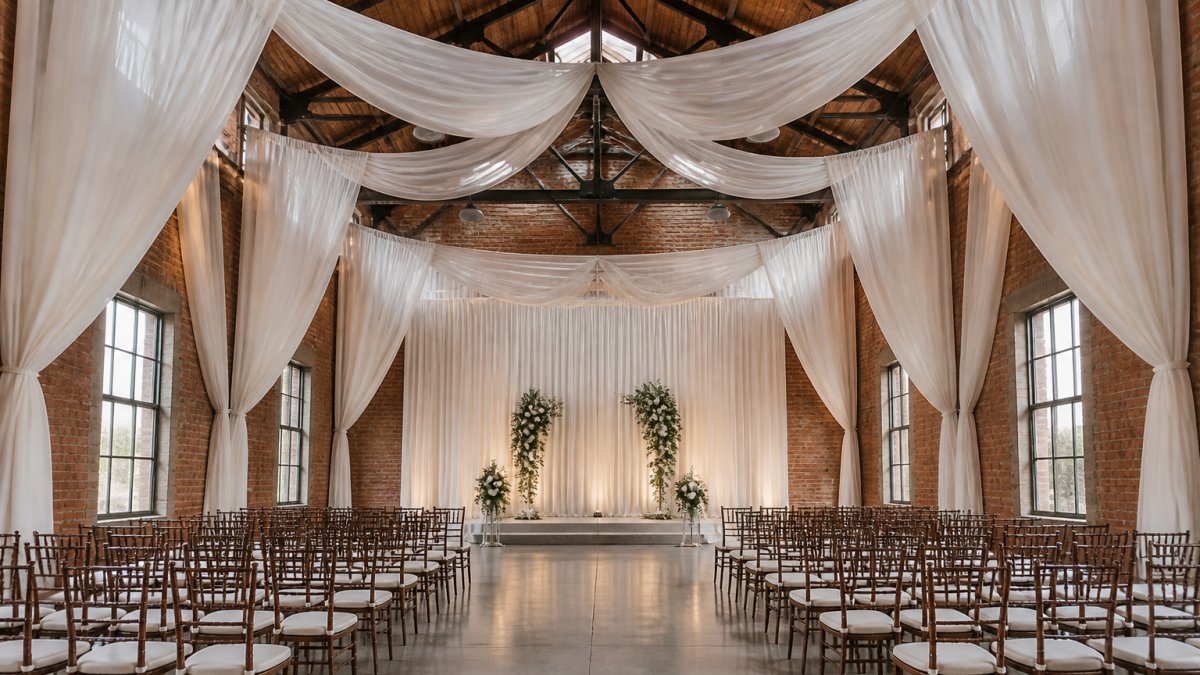
Event drapes transform spaces by defining areas, creating backdrops, and setting the mood. Before ordering or installing them, you must calculate how much fabric you need. Getting the yardage calculation wrong means either running short mid-event or paying for unused fabric.
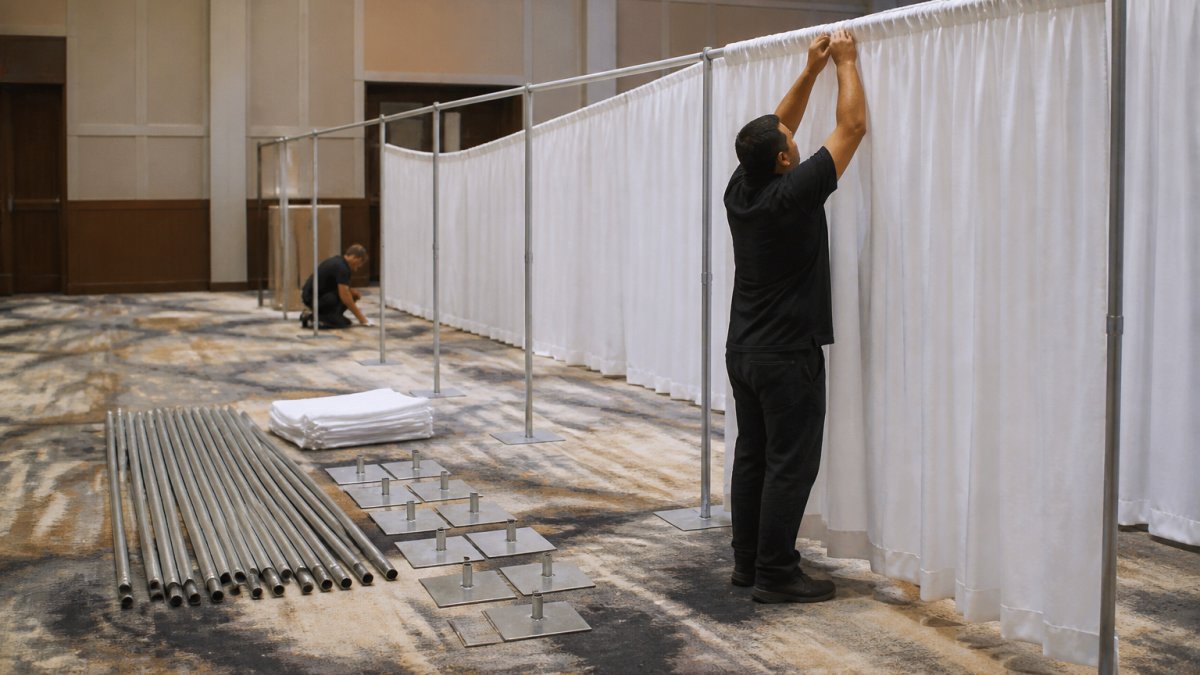
Pipe and drape systems use vertical fabric panels hung from horizontal pipes supported by weighted bases. The flexibility of this setup allows custom configurations for any space, but translating your vision into an accurate fabric order requires understanding several key variables: finished length, finished width, fullness ratio, hem allowances, seam allowances, and fabric width.
How to Measure for Pipe and Drape
Accurate measurements are the foundation of accurate yardage calculations. You need two primary measurements: finished length and finished width.
Finished length is how far down you want the fabric to hang from the pipe. Finished width is the horizontal distance the panel will cover. These are not the same as your space dimensions, they're the dimensions of the actual draped fabric you'll see.
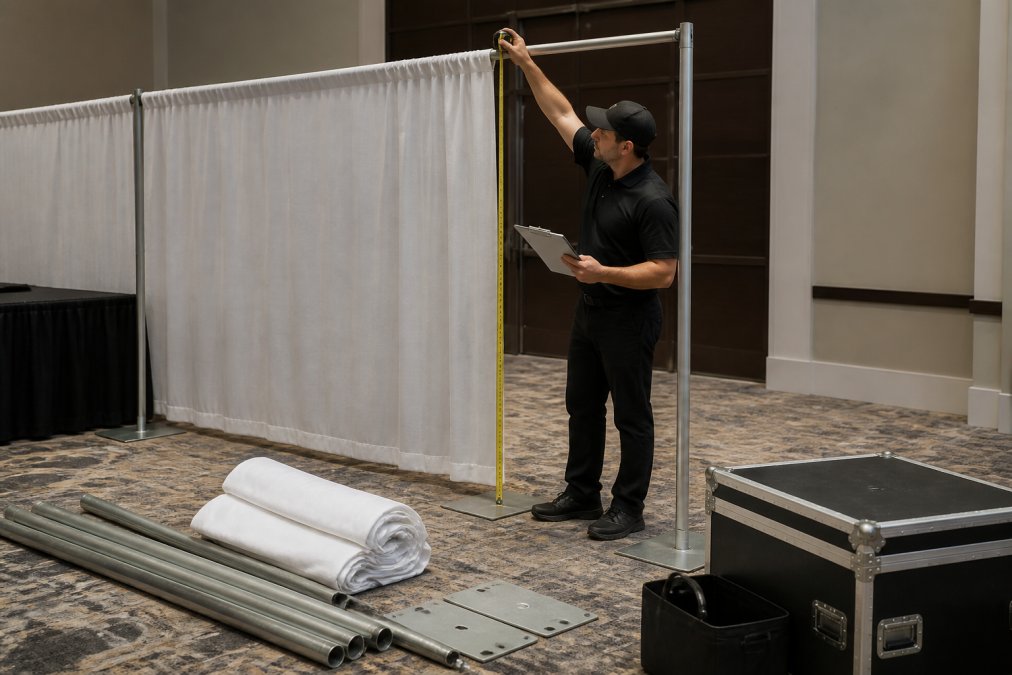
Measuring Finished Length and Width
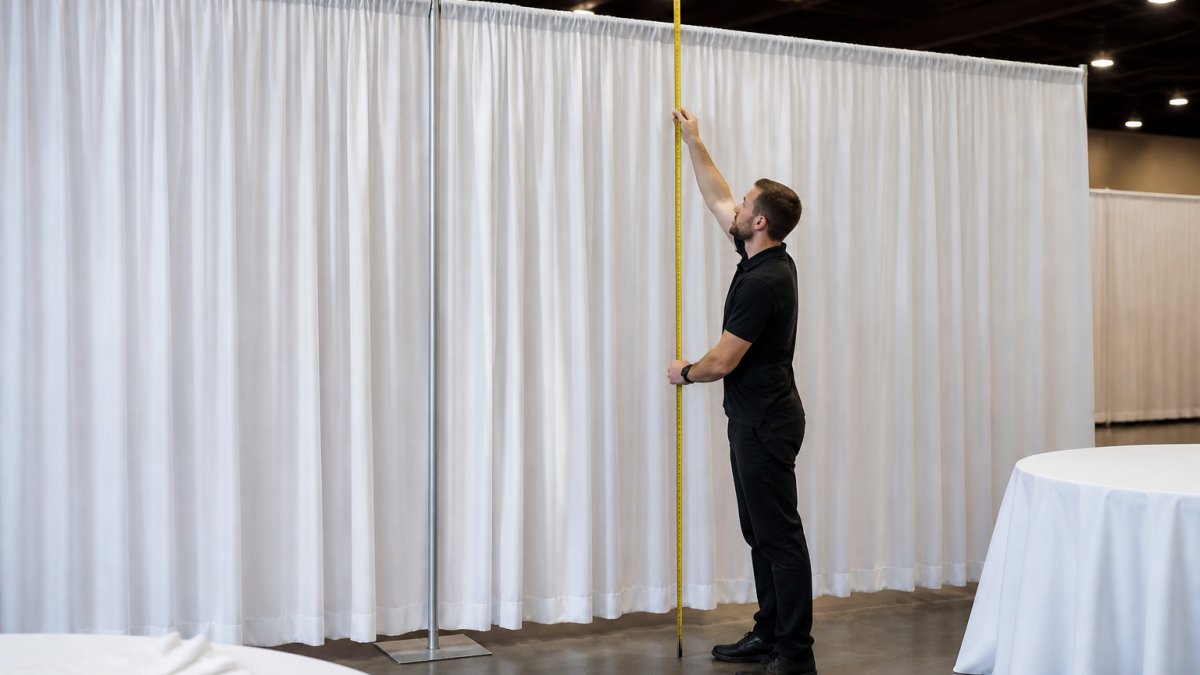
Start with finished length, measured from where the fabric attaches to the pipe down to where you want it to end. For most event applications, drapes hang between 8 and 20 feet (the American Academy of Dermatology). Use a measuring tape, not your eye.
Finished width is the horizontal distance each panel will cover. If you're covering a 20-foot wall with four panels, each panel's finished width is five feet. The critical point: finished width is the distance the fabric will actually span when hung, not the width of the fabric bolt.
Accounting for Hem and Seam Allowances
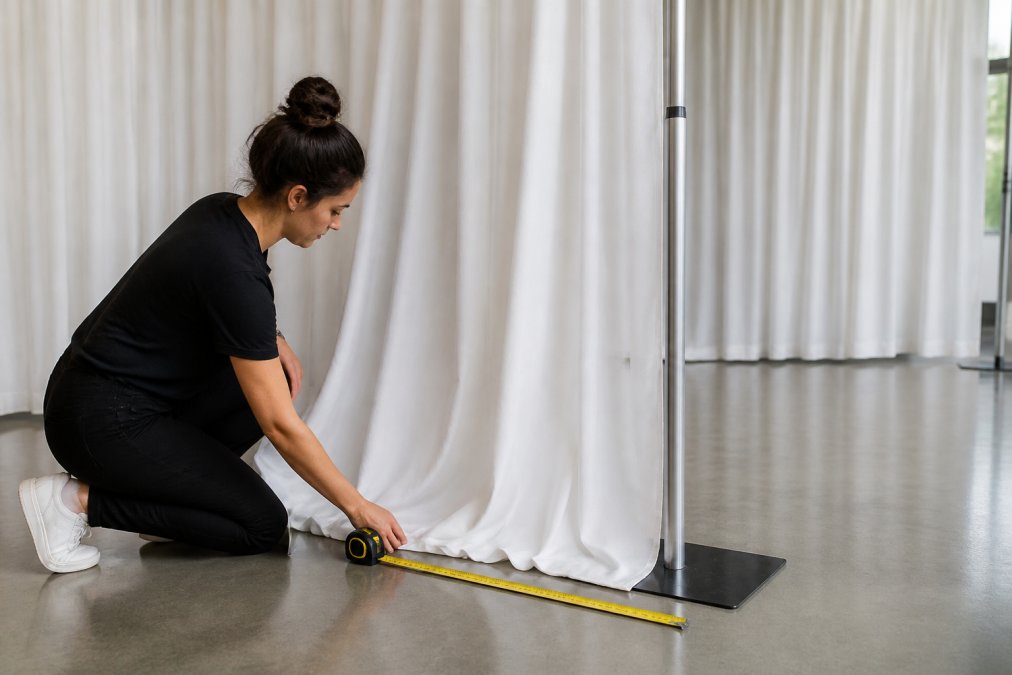
Finished measurements don't include allowances needed for sewing. A standard bottom hem requires 2 to 3 inches of fabric folded under. Seam allowances apply where panels are sewn together or wrap around the rod pocket, typically 0.5 inches on each side. A rod pocket (the sleeve that slides over the pipe) requires additional fabric, typically 2 to 4 inches depending on pipe diameter.
Here's the practical formula for a single panel's cut length:
Cut length = Finished length + Hem allowance (bottom) + Rod pocket allowance (top) + Seam allowances
For example, if your finished length is 10 feet with a 3-inch bottom hem, 3-inch rod pocket, and 0.5-inch seam allowance, your cut length is 10 feet 6.5 inches.
Pipe and Drape Fullness Ratio Explained
Fullness ratio determines how much fabric you need relative to the finished width. A fullness ratio of 1.0 means the fabric width equals the finished width with no gathering. A fullness ratio of 2.0 means you use twice as much fabric, creating gathered, full-looking drapes. A fullness ratio of 3.0 means three times the fabric.
Event drapes almost never use a 1.0 ratio. Most applications use either double fullness (2.0) or triple fullness (3.0).
Double Fullness vs. Triple Fullness
Double fullness (2.0 ratio) creates a professional, gathered appearance. For corporate events, trade shows, and formal settings, double fullness is standard.
Triple fullness (3.0 ratio) creates dramatic, luxurious drapes with deep folds. This is common for high-end weddings and theatrical productions but requires significantly more fabric.
The choice depends on your budget, aesthetic goals, and event formality. A corporate gala might use double fullness for a polished look, while a wedding might use triple fullness for drama.
Step-by-Step Yardage Calculation Formula
The formula for calculating fabric yardage for pipe and drape is straightforward once you have your measurements.
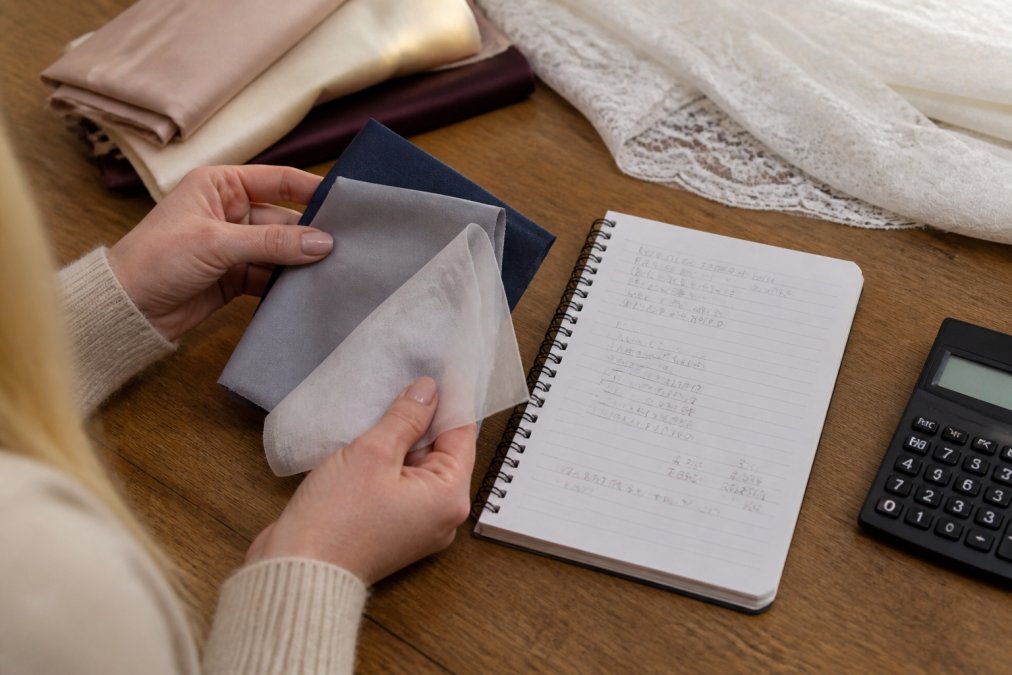
Basic Formula for Single Panels
Linear yards = (Finished width × Fullness ratio × Number of panels) ÷ (Fabric width in inches ÷ 36)
Example: You're covering a 15-foot wall with:
- Finished width per panel: 5 feet
- Fullness ratio: 2.0 (double fullness)
- Number of panels: 3
- Fabric width: 54 inches (standard)
Linear yards = (5 × 2.0 × 3) ÷ (54 ÷ 36) = 30 ÷ 1.5 = 20 linear yards
This is your base calculation. Now add allowances for cut length. If your finished length is 10 feet and total allowances are 6.5 inches, your cut length is 10.54 feet or 3.51 yards per panel.
Total yards = 3.51 × 3 panels × 2.0 fullness = 21.06 yards
Calculating Fabric for Multiple Panels
Calculate each section separately, then add them together. For example:
- Wall 1: 15 feet wide, 10 feet tall, double fullness = 21 yards
- Wall 2: 20 feet wide, 10 feet tall, double fullness = 28 yards
- Wall 3: 12 feet wide, 10 feet tall, double fullness = 16.8 yards
Total: 65.8 yards
Calculating Fabric for Event Backdrops
For a single-sided backdrop, calculate as you would for any drape panel. For a double-sided backdrop (fabric visible from both front and back), double your yardage.
Accounting for Pattern Repeats
If your fabric has a vertical pattern, you must account for pattern repeat, the vertical distance before the pattern repeats. When cutting panels from patterned fabric, you want the pattern to align from panel to panel. This requires extra fabric beyond your calculated cut length.
If your cut length is 10 feet and your pattern repeat is 12 inches, you may need to add an extra 12 inches to ensure pattern alignment at seams.
Fabric Waste and Cutting Considerations
Fabric waste occurs when you cut panels from a bolt and some material remains unused. Common waste factors:
- Small-scale events with few panels: 5-10% waste
- Medium events with pattern matching: 10-15% waste
- Large events with complex layouts: 15-25% waste
- Events with significant pattern repeats: 20-30% waste
Example: You calculate 65.8 yards for your event with 15% estimated waste.
Total fabric to order = 65.8 × 1.15 = 75.67 yards
Special Considerations for Pipe and Drape Systems
Rod Pocket and Header Allowances
The rod pocket is the sleeve of fabric that slides over the horizontal pipe. For a 1.5-inch pipe, a 2-inch rod pocket is typical. For a 2-inch pipe, a 2.5-inch rod pocket works.
A header is optional decorative fabric that extends above the rod pocket, typically 2 to 6 inches in height. If you want a 4-inch header and 4-inch rod pocket, add 8 inches to your top allowance.
Cut length = Finished length + Bottom hem (3 inches) + Rod pocket (4 inches) + Header (4 inches) + Top seam allowance (0.5 inches)
Fabric Weight and Drape Behavior
Lightweight fabrics (under 5 ounces per linear yard) drape loosely and create soft folds but may look thin. Medium-weight fabrics (5-8 ounces per linear yard) are the standard for event draping, they hold folds well and drape elegantly (the American Academy of Dermatology). Heavy fabrics (over 8 ounces per linear yard) create deep, structured folds and look luxurious but are more expensive.
When calculating fullness, consider your fabric weight. A lightweight fabric might achieve acceptable fullness at a 1.5:1 ratio, while a heavy fabric might need 2.5:1 or 3:1.
Common Mistakes to Avoid
Confusing finished dimensions with cut dimensions. Finished dimensions are what you see. Cut dimensions include allowances for sewing. Many planners forget to add hem, seam, and rod pocket allowances, resulting in panels that are too short.
Forgetting to account for fullness. Ordering fabric equal to your finished width creates flat, thin-looking drapes. Always multiply your finished width by your fullness ratio.
Underestimating fabric width constraints. Standard event draping fabric is 54 inches wide (the American Academy of Dermatology). If your panels are wider than 4.5 feet, you'll need to seam multiple widths together.
Ignoring pattern repeats. Patterned fabrics require extra yardage to align designs across panels.
Not calculating waste. A 10-15% waste buffer is realistic for most events.
Mixing finished and cut measurements. Ensure all measurements use the same units and account for the same allowances.
The best way to avoid these mistakes is to write out your calculation step by step, documenting each measurement and allowance.
Conclusion
Calculating event drape yardage requires precision, but the process becomes straightforward once you understand the variables. Start with accurate finished measurements, add appropriate allowances for hems and rod pockets, apply your fullness ratio, and account for waste.
When planning a significant event, working with professionals eliminates calculation risk. Event Drape Rental offers over 100+ colors across 6 distinct fabric materials, with drapery options ranging from 12 to 30 feet in height. Whether you're managing a corporate gala, trade show booth, or wedding celebration, their team can help you select the right fabric, calculate accurate yardage, and choose between DIY or professional installation. REQUEST a QUOTE to discuss your specific project and get accurate pricing based on your exact requirements.
Frequently Asked Questions
How do I calculate yardage for drapes?
Start by measuring your finished length (from rod to floor) and finished width. Multiply finished width by your fullness ratio (typically 2 for double fullness or 3 for triple fullness) to get cut width. Add hem allowances (usually 4-6 inches) and rod pocket depth (typically 2-3 inches). Divide total linear inches by 36 to convert to yards. For multiple panels, multiply by the number of panels needed. This formula ensures your event drape yardage accounts for proper fullness and installation requirements.
What is the formula for calculating yardage?
The basic formula is: (Finished Width × Fullness Ratio + Hem Allowance + Rod Pocket Depth) ÷ 36 = Yards per Panel. For calculating fabric for event backdrops, multiply this result by the number of panels. Always add a waste factor for cutting, seams, and pattern matching. This ensures you have enough fabric to account for mistakes and achieve professional results without running short mid-project.
Does fabric fullness affect yardage calculations?
Yes, fullness is critical. Double fullness (2× width) requires twice the linear yards compared to single fullness, while triple fullness requires three times as much. The pipe and drape fullness ratio determines how much fabric gathers on the rod, affecting both appearance and material consumption. Event professionals typically use double or triple fullness for elegant draping. Underestimating fullness results in thin, unflattering panels that don't achieve the desired visual effect.
How do I account for drape height in my yardage estimate?
Measure from your rod or header down to where the drape should end (floor, stage edge, or design point). This is your finished length. Add hem allowance (4-6 inches minimum) and rod pocket depth (typically 2-3 inches) to determine cut length. Multiply cut length by the number of linear yards needed based on width and fullness calculations. Taller drapes require proportionally more yardage, so always measure your specific venue height rather than assuming standard dimensions.
This article was written using GrandRanker