 how-to
How to Calculate Pipe and Drape Fabric
Table of Contents
- What You'll Need Before You Start
- How to Measure for Pipe and Drape
- Drape Fullness Ratio: 1.5x vs. 2x Explained
- Standard Pipe and Drape Panel Sizes
- How to Calculate Pipe and Drape Fabric: Step-by-Step
- Pipe and Drape System Components and Hardware
- Common Mistakes to Avoid When Calculating Pipe and Drape Fabric
- Frequently Asked Questions
Last Updated: August 15, 2026
What You'll Need Before You Start
Knowing how to calculate pipe and drape fabric before you order is the difference between a polished event and an expensive scramble. At Event Drape Rental, we've seen countless planners underestimate their fabric needs, then face a frantic last-minute call the morning of setup.
Before running any numbers, gather these items:
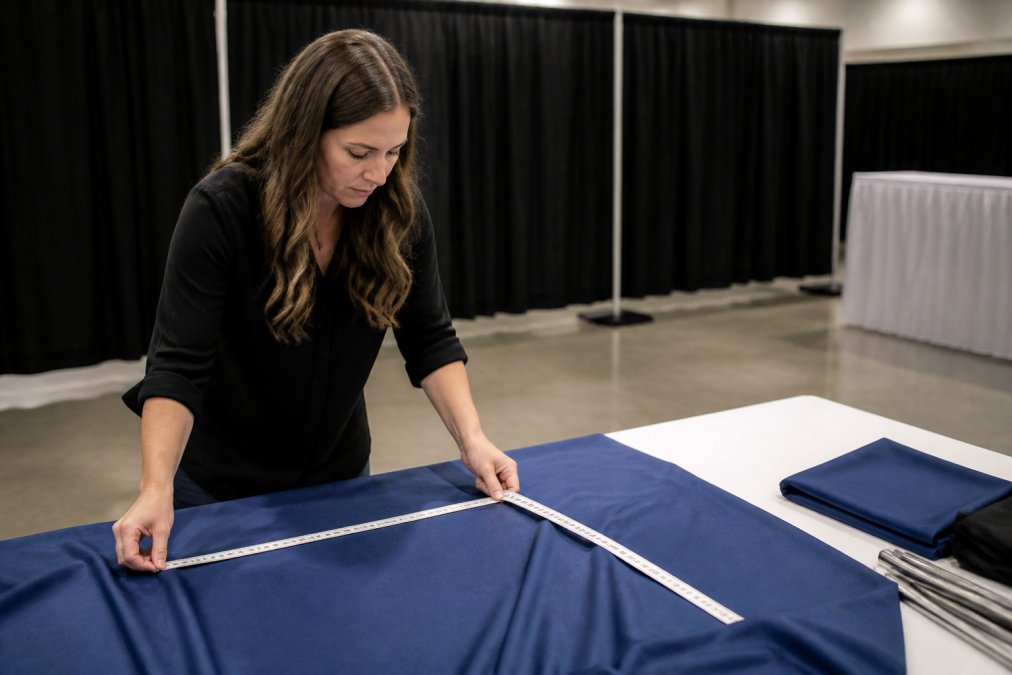
- A laser measure or standard measuring tape (laser is faster and more accurate in large venues)
- The floor plan or venue diagram with dimensions
- A calculator or spreadsheet
- Knowledge of your desired drape fullness ratio (more on this below)
- The finished height you need, accounting for ceiling height and rigging clearance
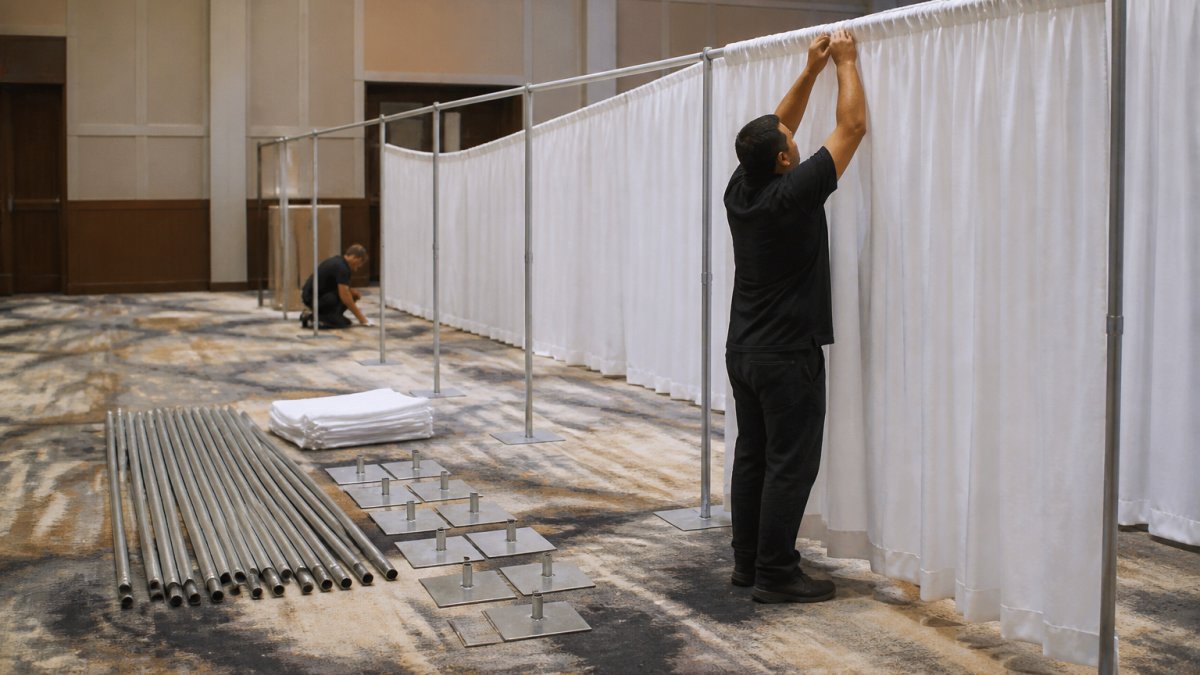
Pipe and drape fabric is the textile component that hangs from a horizontal crossbar supported by telescoping upright rods anchored to weighted base plates. Fabric weight matters before you order, heavier materials like velour create a lush look but add meaningful load to each upright rod and base plate. Lighter fabrics like voile are easier to transport but behave differently at high fullness ratios.
How to Measure for Pipe and Drape
Accurate measurement is the foundation of every successful pipe and drape setup. Errors at this stage multiply through every subsequent calculation.
Measuring Event Space Width (Linear Footage)
Linear footage is the total horizontal distance your pipe and drape system needs to span. Walk the perimeter or specific wall runs you intend to cover and measure each segment separately. Add them together for your total linear footage.
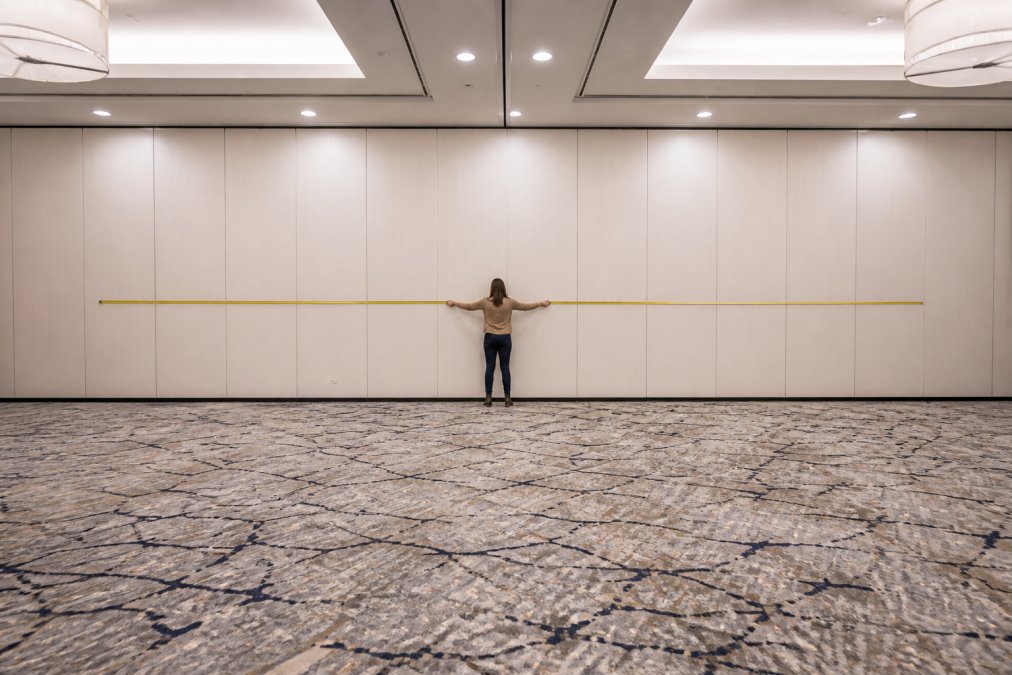
For a straight backdrop, this is straightforward. For a U-shaped room divider or trade show booth perimeter, break the layout into individual straight runs and sum them. A 40-foot-wide backdrop plus two 10-foot returns equals 60 linear feet total.
Common measurement mistakes include measuring from the wrong reference point (always measure from where the base plate will sit), forgetting return panels at the ends, and ignoring door clearances that interrupt the drape line.
According to ASTM International standards for temporary event structures, accurate site measurement is a prerequisite for safe load distribution on temporary display systems.
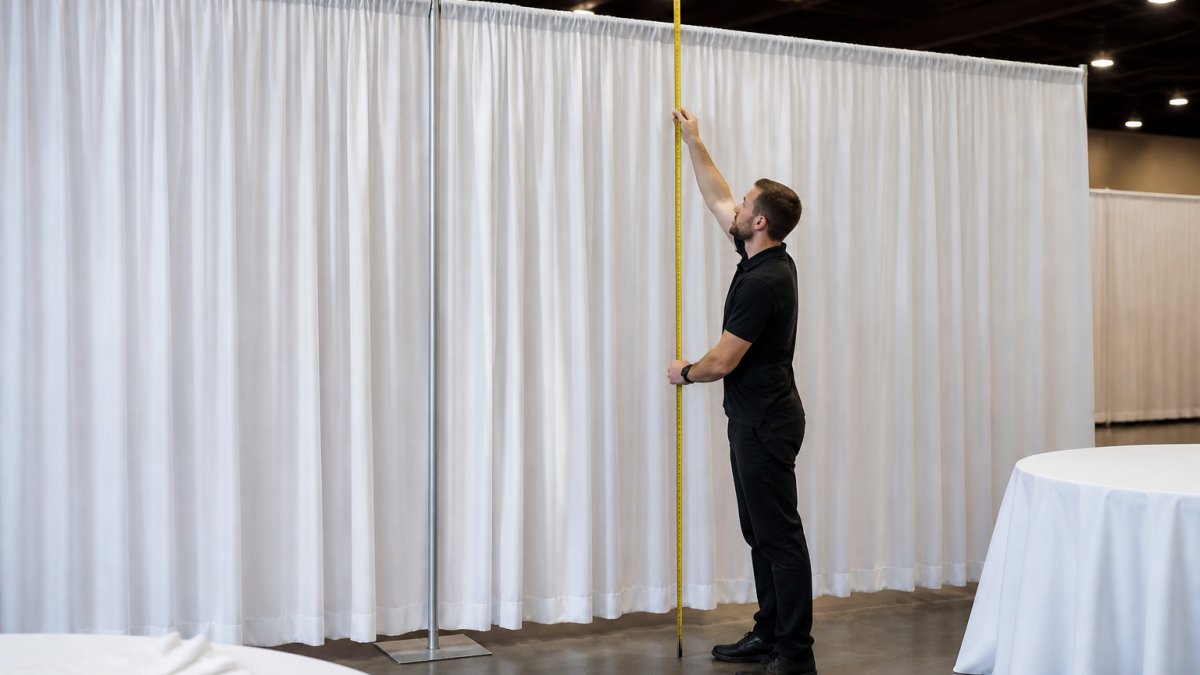
Determining Finished Height and Vertical Coverage
Finished height is the actual length of drape panel you need, measured from the crossbar to where the drape will end. This is not the same as ceiling height.
A common mistake is ordering panels cut to ceiling height. Drapes hung from a crossbar that sits 6 inches below the ceiling, intended to stop 6 inches above the floor, need a finished height equal to ceiling height minus 12 inches. In a room with 10-foot ceilings, that's an 8-foot panel, not a 10-foot one.
Event Drape Rental's inventory includes drapes ranging from 12 to 30 feet in height.
Drape Fullness Ratio: 1.5x vs. 2x Explained
The drape fullness ratio determines how much fabric width you need relative to the horizontal span you're covering. A higher ratio means more fabric gathered onto each section, creating a richer, more layered appearance.
Fullness ratio is the multiplier applied to your linear footage to calculate total fabric width needed. A 1.5x fullness ratio means you need 1.5 feet of fabric for every 1 foot of span. A 2x ratio means 2 feet of fabric per foot of span.
- 1.5x fullness: Appropriate for trade show booths, room dividers, and budget-conscious setups. Works well with heavier fabrics like velour that have natural body.
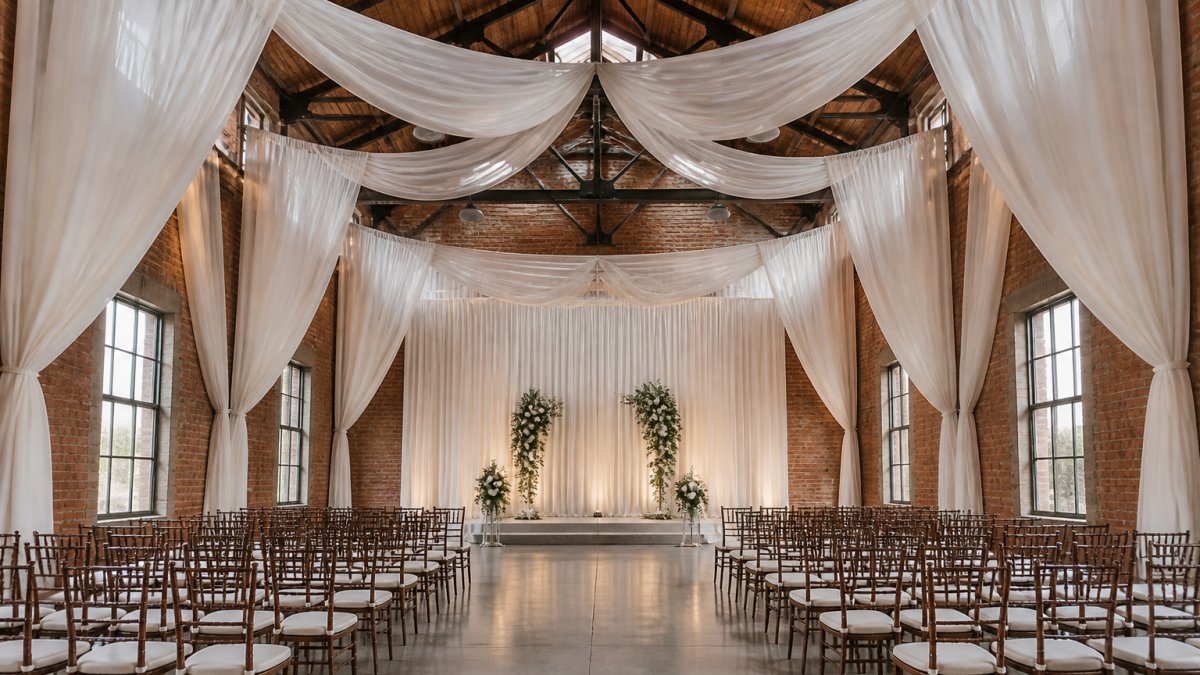
- 2x fullness: The standard for weddings, galas, and high-end corporate events. Creates full, theatrical pleating. Recommended for lighter fabrics like voile or poly premier.
Most professional event designers default to 2x for any client-facing event. The 1.5x ratio is practical when rental inventory is constrained or the setup is purely functional.
Standard Pipe and Drape Panel Sizes
Standard pipe and drape panel sizes vary by supplier, but most rental inventories are built around a few common widths and heights.
| Panel Dimension | Common Width | Typical Use Case | Fullness Impact |
|---|---|---|---|
| Standard backdrop panel | 10 ft wide | Ballroom backdrops, stage settings | Works at 1.5x or 2x |
| Narrow panel | 5 ft wide | Trade show booths, tight spaces | Best at 2x for visual density |
| Wide panel | 12 ft wide | Large venue coverage, fewer seams | Efficient at 1.5x |
| Tall panel | Up to 30 ft | Warehouse venues, high ceilings | Requires heavier uprights |
Panel width determines how many panels you need to cover a given span at your chosen fullness ratio. A 10-foot-wide panel used at 2x fullness covers 5 feet of linear span. The same panel at 1.5x covers roughly 6.7 feet of span.
How to Calculate Pipe and Drape Fabric: Step-by-Step
Follow these three steps in sequence to arrive at an accurate fabric order for any event configuration.
Step 1: Calculate Total Drape Width Needed
Total drape width is your linear footage multiplied by your fullness ratio.
Formula: Linear Footage × Fullness Ratio = Total Drape Width Needed
Example: You need to cover 60 linear feet of wall at a 2x fullness ratio. 60 ft × 2 = 120 feet of total drape width needed.
Step 2: Determine Number of Panels
Divide your total drape width by the width of your chosen panel to get the number of panels required.
Formula: Total Drape Width ÷ Panel Width = Number of Panels (round up)
Example: 120 feet of total drape width ÷ 10-foot panel width = 12 panels.
Always round up, never down. A fractional panel still requires a full panel in most rental scenarios.
Step 3: Estimate Total Fabric Yardage
If you're ordering fabric by the yard rather than pre-made panels, convert your total drape width to yardage using the finished height.
Formula: (Total Drape Width in inches × Finished Height in inches) ÷ 1,296 = Total Fabric Yardage
Example: 120 feet of total drape width = 1,440 inches. Finished height of 8 feet = 96 inches. (1,440 × 96) ÷ 1,296 = 106.7 square yards. Round up to 107 yards, then add 10% for waste and seam allowance: approximately 118 yards.
According to the Event Industry Council's event planning resource library, accurate material estimation is a core competency for professional event coordinators.
Pipe and Drape System Components and Hardware
Understanding the hardware helps you calculate not just fabric but the full system requirements for your event.
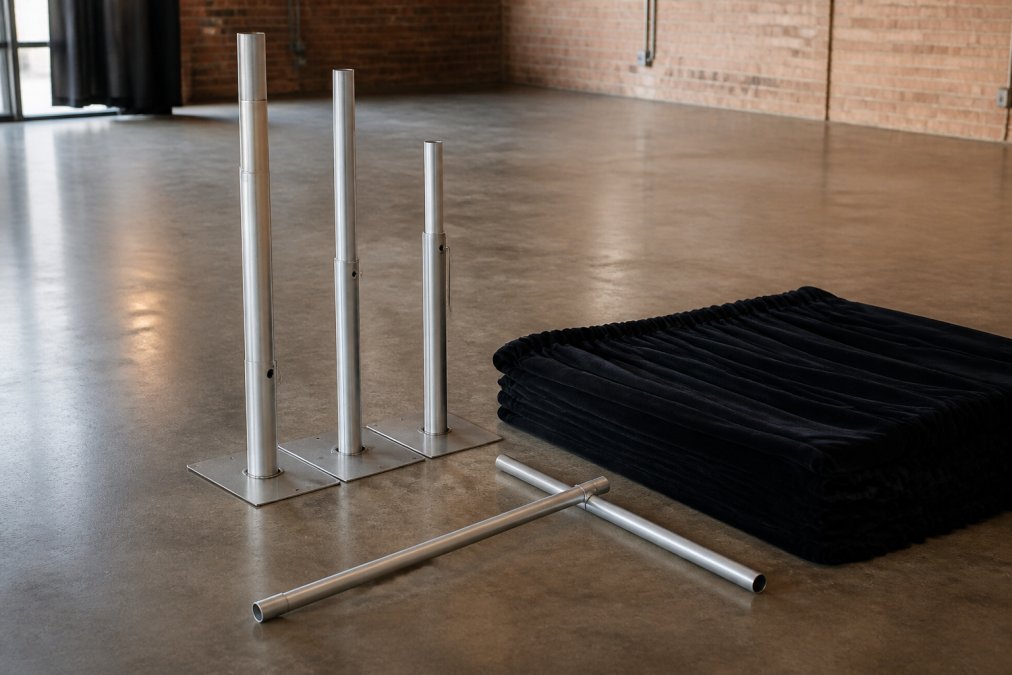
A complete pipe and drape system includes:
- Base plates: Weighted plates that anchor each upright rod. Standard base plates handle a defined load rating. For taller uprights or heavier fabric, use wider or heavier base plates.
- Telescoping uprights: Vertical rods that adjust to your finished height.
- Crossbars (drape supports): Horizontal rods that span between uprights. Standard crossbar lengths range from 6 to 12 feet.
- Drape panels: The fabric itself, hung from the crossbar via sewn-in pockets or clip rings.
- Connectors and couplers: Hardware that joins uprights to crossbars and allows for corner configurations.
Hardware quantity calculation: You need one upright for every crossbar end. A straight 60-foot run using 10-foot crossbars requires 7 uprights.
Weight and safety load considerations: Each base plate has a maximum load rating that accounts for upright height, crossbar span, and fabric weight. Velour fabric can weigh several pounds per linear foot at 2x fullness. For uprights above 12 feet, consult the manufacturer's load specifications. The Occupational Safety and Health Administration guidelines for temporary structures require that temporary display systems at public events be assembled within their rated load capacities.
Common Mistakes to Avoid When Calculating Pipe and Drape Fabric
Most calculation errors fall into a handful of predictable patterns.
Forgetting to account for fullness. Ordering fabric equal to your linear footage with no fullness multiplier gives you flat, stretched-looking drape. This is the single most common error.
Measuring ceiling height instead of finished height. Your drape panels need to match the distance from crossbar to floor, not the raw ceiling height.
Ignoring section width when counting uprights. Map out your crossbar sections on paper before finalizing your upright count.
Not accounting for fabric type in fullness decisions. Voile needs 2x or even 2.5x fullness to look intentional. Velour at 1.5x can still look full.
Rounding down instead of up. Always round panel counts and yardage up. Under-ordering means a mid-setup scramble.
The Exhibit Designers and Producers Association resources for trade show setup consistently highlights measurement accuracy and hardware planning as the top two failure points in temporary display installations.
| Common Mistake | What Goes Wrong | The Fix |
|---|---|---|
| No fullness multiplier | Flat, stretched drape appearance | Multiply linear footage by 1.5x or 2x |
| Ceiling height vs. finished height | Panels too long or too short | Measure from crossbar to floor endpoint |
| Underestimating uprights | Gaps in coverage, unstable sections | One upright per crossbar end, map sections first |
| Wrong fullness for fabric type | Sheer fabrics look sparse | Use 2x for voile; 1.5x works for velour |
| Rounding down panel count | Not enough panels on event day | Always round up to the next whole panel |
| Ignoring load ratings | Safety risk, potential collapse | Check manufacturer specs for all hardware |
Calculating pipe and drape fabric accurately takes a few minutes of focused measurement and arithmetic, but the payoff is a setup that looks intentional and professional from every angle. Event Drape Rental carries drapes from 12 to 30 feet in height across many fabric materials, including velour, voile, and poly premier, with options that suit both 1.5x and 2x fullness configurations. Whether you're handling installation yourself or bringing in a professional crew, getting the numbers right before you order is what separates a clean event from a costly one. Request a quote from Event Drape Rental and get expert guidance on fabric selection, panel sizing, and hardware requirements for your specific venue.
Frequently Asked Questions
What is the standard fullness ratio for event drapery?
Most event professionals use either a 1.5x or 2x fullness ratio. A 1.5x ratio creates a clean, lightly gathered look suitable for corporate events and trade show booths. A 2x ratio produces a fuller, more luxurious pleat commonly used for weddings and galas. Heavier fabrics like velour typically work well at 1.5x, while lighter materials such as voile or poly premier benefit from a 2x ratio to achieve proper visual weight and coverage.
How do I calculate how much pipe and drape fabric I need?
Multiply your total linear footage of wall or backdrop by your chosen fullness ratio (1.5 or 2). Divide that number by your panel width to get the number of panels needed. Then multiply the panel count by the finished height to get total fabric yardage. For example, a 20-foot-wide backdrop at 2x fullness with 10-foot-tall panels requires 40 linear feet of fabric, divided into panels based on your standard panel width. Always add 5-10% for seam allowance and measurement error.
Does the type of fabric affect how much drape I need to order?
Yes. Lightweight fabrics like voile gather easily and typically require a 2x fullness ratio to look full and intentional. Heavier materials such as velour hold their shape with less fabric and often look best at 1.5x. Fabric weight also affects how panels hang from the crossbar, so choosing the wrong fullness for your material can result in flat, limp coverage or overly bunched panels. Always match your fullness ratio to the specific fabric you're ordering.
What is the difference between flat and gathered drape?
Flat drape uses a 1x fullness ratio, meaning the fabric width equals the span it covers with no gathering. This creates a smooth, taut look. Gathered drape uses a 1.5x or 2x ratio, bunching the fabric along the crossbar to create soft folds and pleating. Gathered styles are far more common at events because they hide seams, add visual depth, and make the overall backdrop setup look more polished and intentional than flat panels.
This article was written using GrandRanker