 how-to
How to Hide Venue Walls With Drapes: A Complete Guide
Table of Contents
- Why Hide Venue Walls With Drapes
- How to Measure for Pipe and Drape
- Event Drapery Fabric Types and Selection
- Pipe and Drape Installation Guide
- Safety and Liability Considerations
- DIY vs. Professional Installation
- Budget-Friendly Alternatives and Cost Optimization
- Frequently Asked Questions
Last Updated: August 19, 2026
Why Hide Venue Walls With Drapes
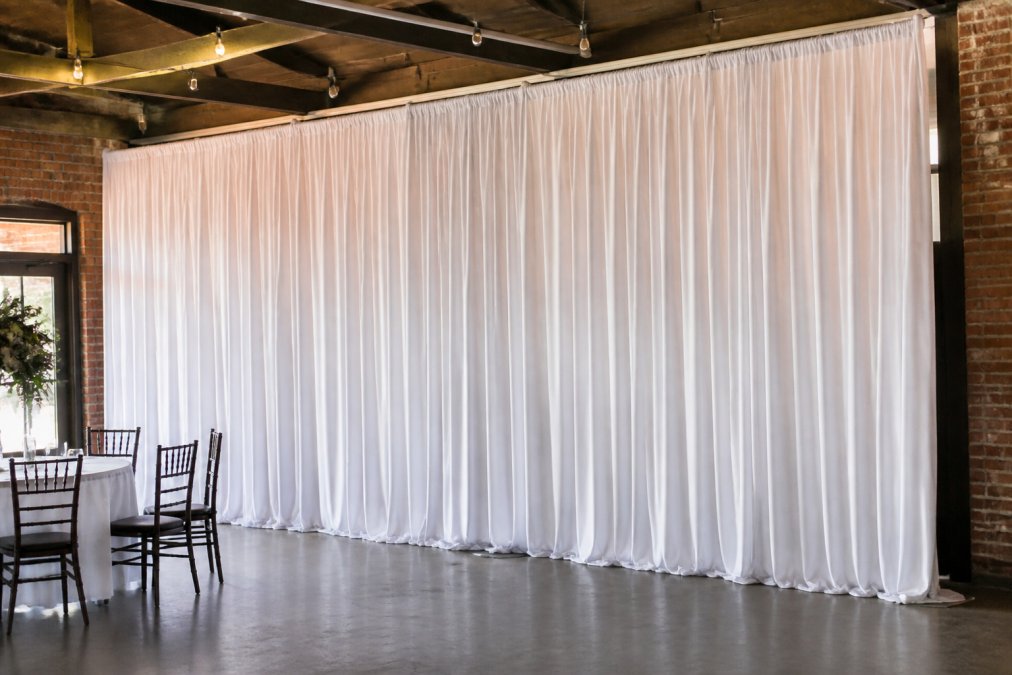
Concrete, brick, exposed pipes, or dated paint can undermine even the most carefully planned event aesthetic. Draping accomplishes what paint and renovation cannot: instant, temporary, and reversible transformation. Whether you're managing a corporate gala, wedding reception, trade show booth, or private celebration, fabric concealment solves the venue eyesore problem without permanent changes or damage.
Strategic draping creates aesthetic cohesion across the entire venue, regardless of what lies behind the fabric. Beyond appearance, draping improves acoustics by absorbing sound, adds depth and dimension to flat spaces, and provides a professional backdrop for photography and video. For corporate events, this translates to better attendee experience and sharper visual content. For weddings, it creates an intimate, customized environment. For trade shows, it defines booth space and reinforces branding.
How to Measure for Pipe and Drape
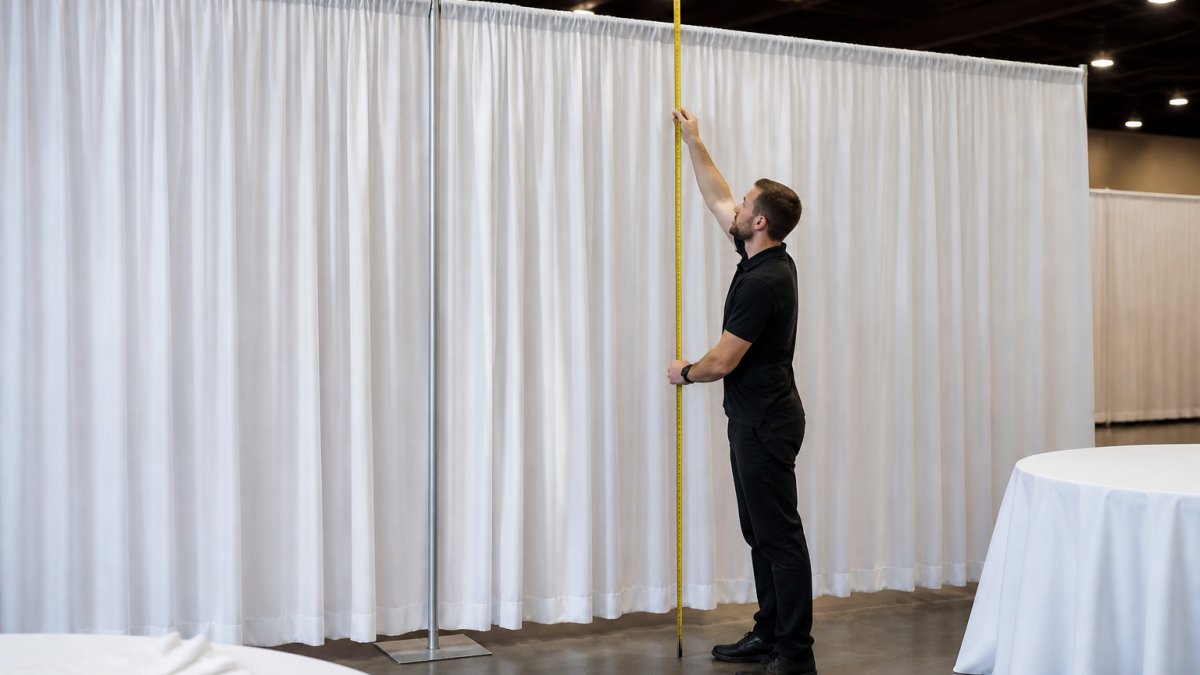
Accurate measurements are the foundation of successful drape installation. Start by measuring the total linear footage of wall you want to cover using a measuring tape. For curved walls or irregular spaces, break the area into sections and measure each separately.
Next, determine the height you need by measuring from the floor to where you want the drape to end. Most venues benefit from floor-to-ceiling coverage, though some applications call for partial height. Standard drape heights range from 12 to 30 feet, depending on your venue's ceiling and aesthetic goals.
Account for fullness. Drapes have natural folds and pleats that create visual interest. Plan for 1.5 to 2 times the linear footage of wall space when selecting fabric quantity. A 20-foot wall typically requires 30 to 40 feet of drape material to achieve professional pleating.
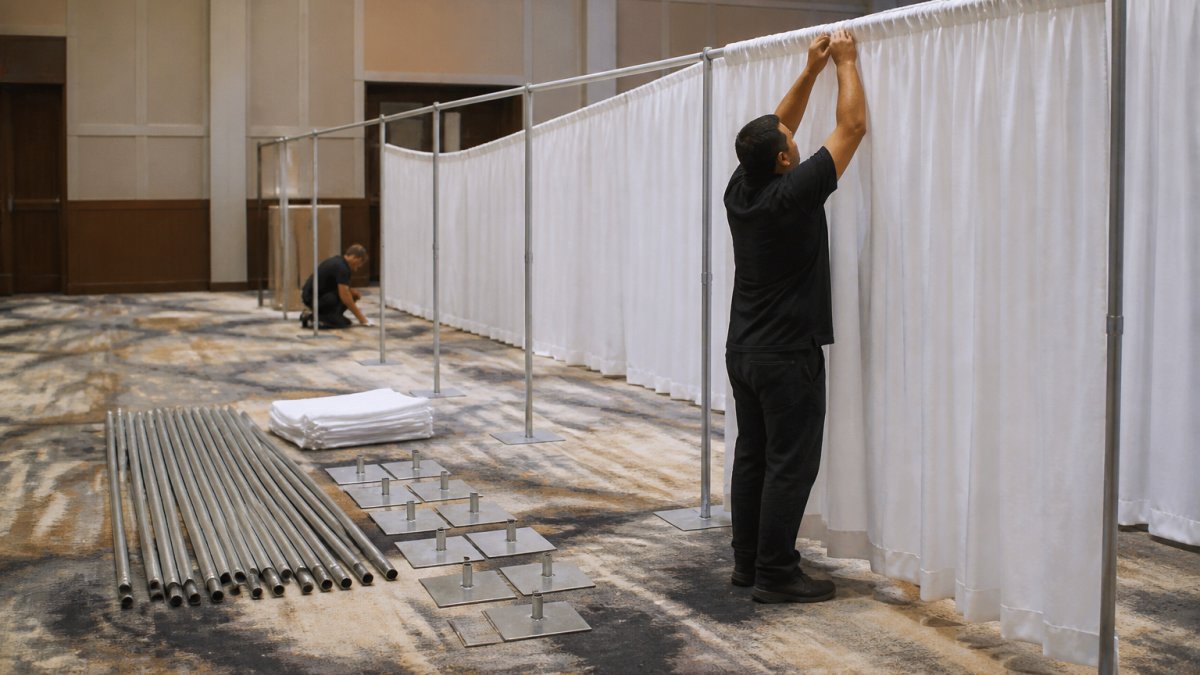
Consider the mounting structure. Pipe and drape systems use uprights (vertical posts), crossbars (horizontal pipes), and base plates. Measure the distance between where you'll place uprights, typically 8 to 10 feet apart for stability.
Document any obstacles: columns, doorways, windows, or architectural features that interrupt the wall space. These require special attention during installation and may necessitate custom cutting or additional hardware.
| Measurement Type | Purpose | How to Record |
|---|---|---|
| Linear wall footage | Total width to cover | Measure end-to-end, note in feet |
| Height | Floor to drape endpoint | Measure vertically, note in feet |
| Fullness factor | Fabric quantity needed | Multiply linear footage by 1.5-2 |
| Upright spacing | Hardware placement | Note distance between posts, typically 8-10 feet |
| Obstacles | Plan around features | Mark columns, doors, windows with measurements |
Event Drapery Fabric Types and Selection
Choosing the right fabric affects both appearance and functionality.
Velvet draping offers luxury and light absorption. This dense fabric creates rich color saturation and eliminates shine, making it ideal for upscale events like galas and high-end weddings. Velvet drapes beautifully with minimal support but is heavier to install.
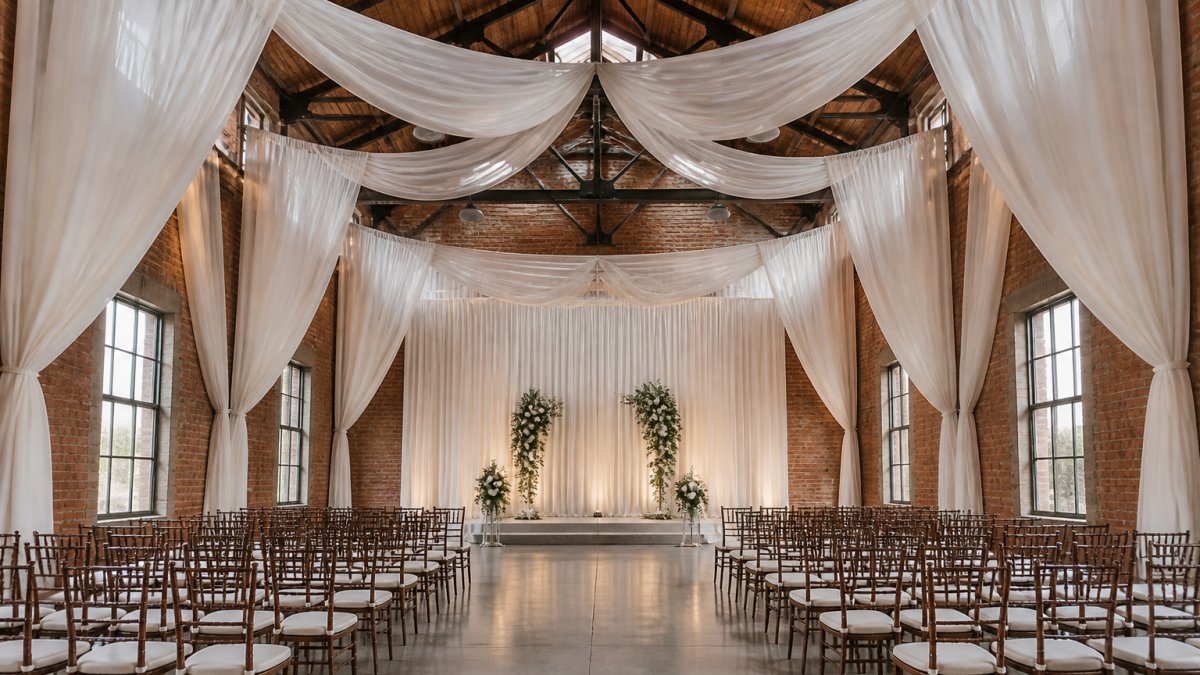
Sheer voile provides elegance and diffusion. This lightweight, translucent fabric allows light to pass through while softening the space. Sheer voile works beautifully with uplighting and is popular for creating layered, dimensional backdrops.
Pleated fabric combines structure with aesthetic appeal. Pre-pleated materials hold their shape consistently, creating uniform vertical lines that enhance visual geometry. This fabric type is practical for trade shows, corporate events, and professional settings.
Muslin is the workhorse of event draping. This cotton-blend fabric is durable, affordable, and versatile. It takes dye well, comes in numerous colors, and works for nearly every event type.
Flame-retardant materials are mandatory for venues with safety codes. Most professional-grade event drapes meet flame-retardant standards, but verify this before ordering. Event Drape Rental ensures all inventory complies with applicable safety regulations.
Color selection depends on your event's aesthetic and venue characteristics. Lighter colors reflect light and make spaces feel larger. Darker colors create intimacy and absorb light, which is advantageous when using uplighting. Consider how your color choice interacts with existing venue elements to ensure aesthetic cohesion.
Event Drape Rental's inventory includes over 100 colors across six distinct fabric materials, giving you flexibility to match brand guidelines, seasonal themes, or specific aesthetic visions.
Pipe and Drape Installation Guide
Professional installation requires understanding the hardware system and following a logical sequence.
Non-Damaging Mounting Techniques
Non-damaging installation is critical for venue preservation and your liability protection.
Command hooks and adhesive strips work for lightweight applications on painted drywall. These removable fasteners hold drape support hardware without puncturing walls. Verify weight limits before use; most command systems support 5 to 20 pounds.
Tension rods span between two points without wall contact. These adjustable rods wedge between walls or structural elements, distributing weight across a wider area. Tension rods are ideal for temporary installations.
Freestanding backdrop systems eliminate wall contact entirely. Base plates with weighted feet support uprights and crossbars that hold drape panels. This approach is the safest for venue preservation and offers maximum flexibility.
Ceiling mounting requires care but is often the most secure option. Use appropriate rigging hardware rated for your drape weight, and work with venue staff to identify load-bearing points.
Avoid adhesive products on delicate surfaces like wallpaper or specialty finishes. Test any adhesive product on an inconspicuous area first. Document the venue's condition before installation with photos.
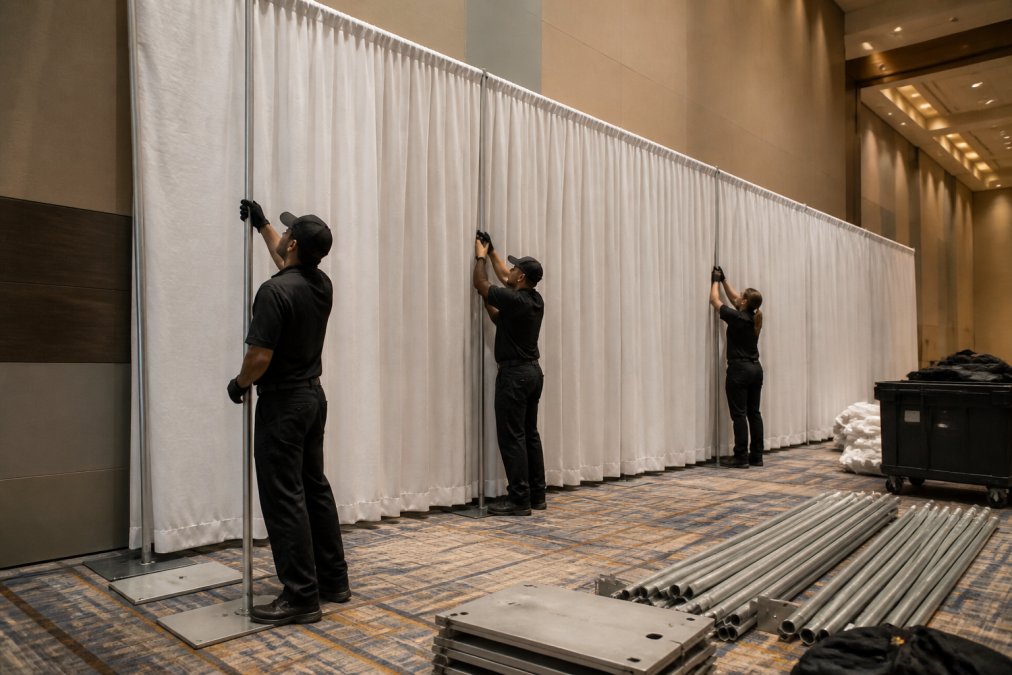
Installation sequence:
- Assemble base plates and uprights according to manufacturer specifications. Ensure all connections are tight and stable.
- Attach crossbars between uprights at the height where you'll hang drapes.
- Hang drape panels on the crossbar using hooks, clips, or rings designed for your fabric weight.
- Adjust panel positioning to create even pleating and coverage.
- Secure panel edges to prevent shifting during the event.
- Test stability by applying gentle pressure; the system should not sway or shift.
Calculate the total weight of your drape panels and ensure your hardware and mounting system can support it. Velvet drapes are significantly heavier than sheer voile. Event Drape Rental can advise on weight specifications for your chosen fabric and height.
Using Lighting to Enhance Your Drapes
Strategic lighting transforms drapes from simple wall coverage into a sophisticated design element.
Uplighting directs light upward from floor level, illuminating the drape from below. This technique creates depth, emphasizes texture, and makes colors appear more saturated. Colored uplighting can completely change the mood of a space while keeping the drape fabric the same.
Curtain lights (string lights embedded within or in front of drape panels) add sparkle and intimacy. These are popular for weddings, evening receptions, and celebrations.
Backlighting positions lights behind the drape to create a glowing halo effect. This technique works best with sheer or semi-transparent fabrics and creates drama and visual separation.
Color temperature affects how your drape appears. Warm light (2700K-3000K) makes fabric appear cozy and intimate. Cool light (5000K-6500K) makes colors appear crisp and modern.
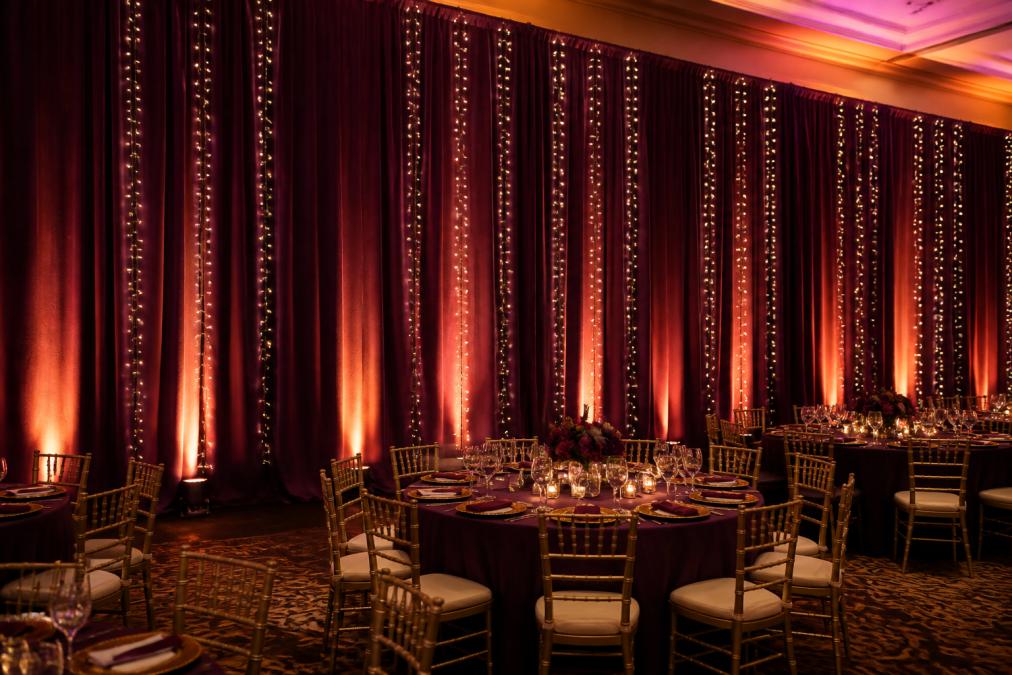
Lights positioned 6 to 12 feet away from the drape create even illumination. For large wall areas, use multiple light fixtures positioned at intervals rather than relying on single sources. Test lighting during venue setup, ideally during the same time of day as your event.
Safety and Liability Considerations
Event draping involves structural, electrical, and safety considerations that require attention.
Flame-retardant compliance is mandatory in most venues. Building codes, fire marshals, and venue insurance policies require that event drapes meet flame-retardant standards. Event Drape Rental ensures all inventory meets flame-retardant requirements.
Structural load calculations matter when rigging drapes to ceilings or walls. Calculate the total weight of your drape panels and ensure mounting points are rated to support that load. A 20-foot-tall velvet drape covering 100 linear feet can weigh 500+ pounds. Consult your venue's technical specifications or hire a professional rigger to verify load capacity.
Electrical safety applies when using uplighting or other powered equipment. Keep electrical cords away from high-traffic areas. Use appropriate power distribution and grounding. If you're unfamiliar with electrical requirements, hire a licensed electrician.
Venue damage liability requires understanding your venue's damage policy before installation. Document the venue's pre-existing condition with photos and video to protect you if questions arise about responsibility for damage.
Attendee safety requires clear sightlines and unobstructed pathways. Don't drape in ways that hide emergency exits, block fire extinguishers, or create tripping hazards.
Insurance considerations vary by event type and venue. Verify that your event liability insurance covers draping installations.
DIY vs. Professional Installation
The choice between DIY and professional installation depends on complexity, timeline, budget, and risk tolerance.
DIY installation works well for smaller events, simpler spaces, and experienced installers. You save on labor costs and have complete control. However, DIY carries risks: improper installation can result in poor appearance, safety issues, or venue damage. Setup typically takes 4 to 8 hours depending on scope.
DIY works best when you have adequate time for setup, experience with pipe and drape systems, access to proper tools, and a straightforward space without complex rigging requirements.
Professional installation handles complexity, meets tight timelines, and carries insurance protection. Professionals understand load calculations, rigging safety, and aesthetic best practices. Professional installation is essential for complex ceiling rigging, tight setup timelines, expensive fabrics, venue restrictions, or high-profile events.
Event Drape Rental offers both DIY rental options and professional installation services, giving you flexibility based on your needs and comfort level.
Budget-Friendly Alternatives and Cost Optimization
Transforming a venue doesn't require unlimited spending.
Partial wall coverage instead of full coverage dramatically reduces fabric and hardware costs. Cover only the most visible walls or areas behind key focal points like the stage or bar.
Lighter fabric options cost less than velvet while providing excellent coverage. Muslin and other cotton-blend fabrics deliver professional appearance at lower price points.
Neutral colors are more affordable than custom dyes and offer versatility across multiple events. White, black, gray, and navy are standard inventory items with lower costs.
Rental versus purchase decisions depend on frequency of use. Most event professionals find rental more practical because it provides access to diverse colors and fabrics without inventory investment.
Lighting substitution for expensive drape upgrades can deliver impact at lower cost. A plain muslin drape with sophisticated uplighting often outperforms an expensive velvet drape with basic lighting.
Combination approaches mix budget-friendly and premium elements. Use less expensive fabric on walls that receive minimal attention and invest in higher-quality material for focal-point areas.
Event Drape Rental provides custom quotes based on your specific requirements. Request a quote to understand costs for your particular project and explore options that fit your budget.
Transforming a venue with drapes requires planning, but the results justify the effort. Accurate measurements, appropriate fabric selection, proper installation technique, and strategic lighting create professional-grade results that elevate your event.
Event Drape Rental simplifies this process with over 100 colors, six fabric materials, heights from 12 to 30 feet, and both DIY and professional installation options. Our team helps you select the right combination for your venue, budget, and aesthetic vision. Request a quote today and transform your space into something spectacular.
Frequently Asked Questions
How do you calculate the amount of pipe and drape needed for a wall?
Measure the wall width and desired height, then multiply width by height to get square footage. Add 10-15% extra for pleating and overlap. For a 30-foot-wide by 12-foot-tall wall, you'd need approximately 360-415 square feet of fabric. Account for the fabric width (typically 54 inches) when ordering panels. Height determines panel count; a 12-foot wall usually requires one panel, while 20+ feet may need two panels sewn together for seamless coverage.
Can you install pipe and drape without damaging venue walls?
Yes. Use command hooks, tension rods, or freestanding backdrop stands to avoid wall damage. Command hooks support up to 16 pounds per hook and leave no residue. Ceiling mounting with proper rigging hardware distributes weight safely across structural beams rather than walls. Always verify venue restrictions before installation, many venues prohibit drilling or adhesive. Freestanding base plate systems with uprights and crossbars require no wall contact at all, making them ideal for protected surfaces.
What are the best fabric types for hiding venue walls?
Velvet draping offers superior light absorption and concealment with a luxurious appearance. Sheer voile works for softer, more transparent aesthetics. Pleated fabric provides texture and hides wall imperfections effectively. All professional event fabrics should be flame retardant to meet safety codes. Heavier fabrics (8-12 ounces per yard) hide better than lighter materials. Choose based on your venue's lighting, darker fabrics in bright spaces, lighter fabrics where uplighting will be used.
How much does professional installation cost compared to DIY?
Professional installation adds labor costs that depend on wall size, height, and complexity. Pricing varies by quantity, dates, and delivery location. DIY installation saves labor but requires equipment rental, time investment, and carries higher risk of improper rigging or damage. Professional crews handle weight calculations, structural load assessment, and safety compliance, critical for venues with liability concerns. For complex or high-profile events, professional installation typically prevents costly mistakes. Contact Event Drape Rental for a custom quote based on your specific venue and requirements.
This article was written using GrandRanker