 ultimate-guide
Pipe and Drape Backdrop Rental Cost: 2026 Guide
Table of Contents
- What Determines Pipe and Drape Rental Cost
- Pipe and Drape Height Requirements for Your Venue
- DIY Pipe and Drape vs Professional Rental Installation
- Pipe and Drape Installation Cost Breakdown
- Hidden Costs and Budget Planning
- Choosing the Right Pipe and Drape Solution
- Frequently Asked Questions
Last Updated: August 27, 2026
What Determines Pipe and Drape Rental Cost
Pipe and drape backdrop rental cost depends on several interconnected factors: quantity (measured in linear feet), fabric material selection, event duration, and delivery logistics. Understanding these cost drivers helps you budget accurately and make informed decisions about whether to rent, purchase, or DIY.
Quantity and Linear Footage
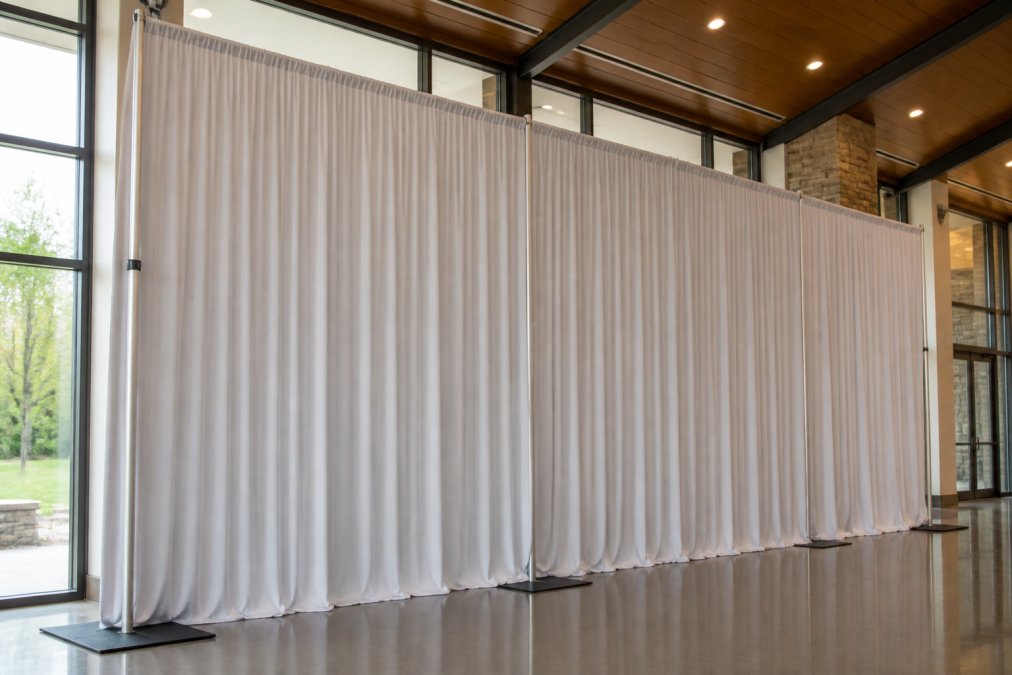
Pipe and drape pricing is calculated per linear foot of backdrop coverage you need. A linear foot represents one foot of horizontal width at the specified height, so a 20-foot-wide backdrop at 12 feet tall requires 20 linear feet of rental equipment. A small trade show booth might need 30-50 linear feet, while a full-room ceiling treatment could require 200+ linear feet.
Bulk quantities typically offer better per-foot pricing than small orders. If you're renting 500+ linear feet for a large-scale event, negotiating volume rates makes sense. Smaller events under 100 linear feet usually face higher per-foot costs because setup labor and delivery logistics don't scale down proportionally.
Fabric Material and Color Selection
The fabric you choose directly impacts rental cost. Event Drape Rental offers six different fabric materials, each with distinct properties and price points. Poly-premier is an economical option, wrinkle-free and flame-retardant. Velvet drapery commands premium pricing because of its luxurious appearance and weight. Sheer voile and specialty fabrics fall in between.
Standard colors (black, white, navy, gray) are stocked in high volume and typically cost less. Custom or less-common colors may involve longer lead times or premium charges. Event Drape Rental maintains over 100 colors in stock, reducing the likelihood of special orders.
Drape fullness, how much fabric is gathered at the top, affects both visual impact and material cost. A 100% fullness drape looks fuller and more elegant but requires twice as much material as a 50% fullness option. Wedding backdrops typically demand greater fullness, while trade show booths often accept minimal fullness to control costs.
Event Duration and Delivery Logistics
Rental duration is typically quoted per day or per multi-day event, with weekend rates sometimes differing from weekday rates. Delivery and pickup logistics add significant cost. Remote locations or venues with access restrictions (loading dock limitations, narrow hallways, elevator constraints) increase delivery fees. Rush delivery commands premium pricing.
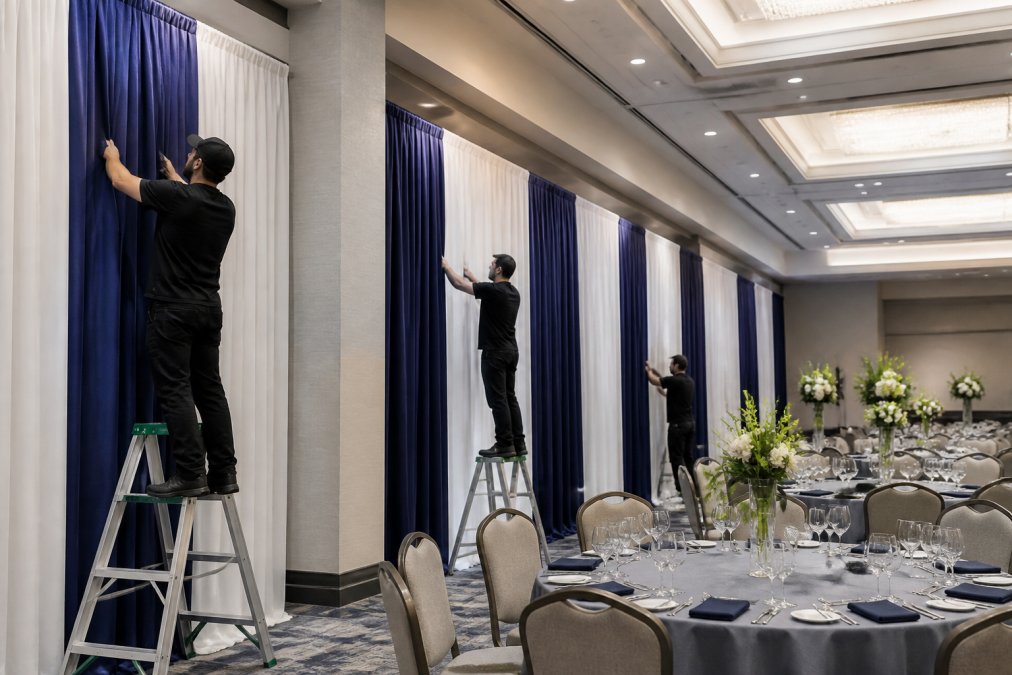
Setup and strike (installation and removal) are usually separate line items. Professional installation by Event Drape Rental's team handles anchoring, height adjustment, and fabric tension. DIY installation saves money but requires time, labor, and assumes safe working at height.
Pipe and Drape Height Requirements for Your Venue
The ceiling height of your venue directly constrains your backdrop options and influences cost. Pipe and drape systems scale from 12 feet to 30 feet in height, accommodating most indoor venues, but warehouse conversions and historic buildings with vaulted ceilings require careful measurement (ansi.org).
Measuring Your Ceiling and Space
Start by measuring from floor to ceiling at multiple points in your venue. Ceilings aren't always level; older buildings and converted lofts often have slopes or variations. Measure at the front, back, and sides of where your backdrop will be positioned. The lowest point determines your maximum usable height.
Next, measure the width of the space where you want the backdrop. Account for the weight load of the system. Weighted bases require floor space, typically 18-24 inches of clearance on each side of the uprights. Document any obstacles: low-hanging fixtures, sprinkler systems, HVAC ducts, or architectural features that might interfere with the uprights or crossbars.
Adjustable Heights and Telescopic Poles
Modern pipe and drape systems use telescopic poles that adjust to your exact ceiling height. The uprights extend smoothly and lock at your desired height, providing flexibility that rental offers over permanent installations. The telescopic design also simplifies transport and storage.
Height adjustment is typically a quick process during setup. Confirm that the specific uprights being rented can accommodate your needs. Event Drape Rental's inventory supports the full 12-30 foot range.
DIY Pipe and Drape vs Professional Rental Installation
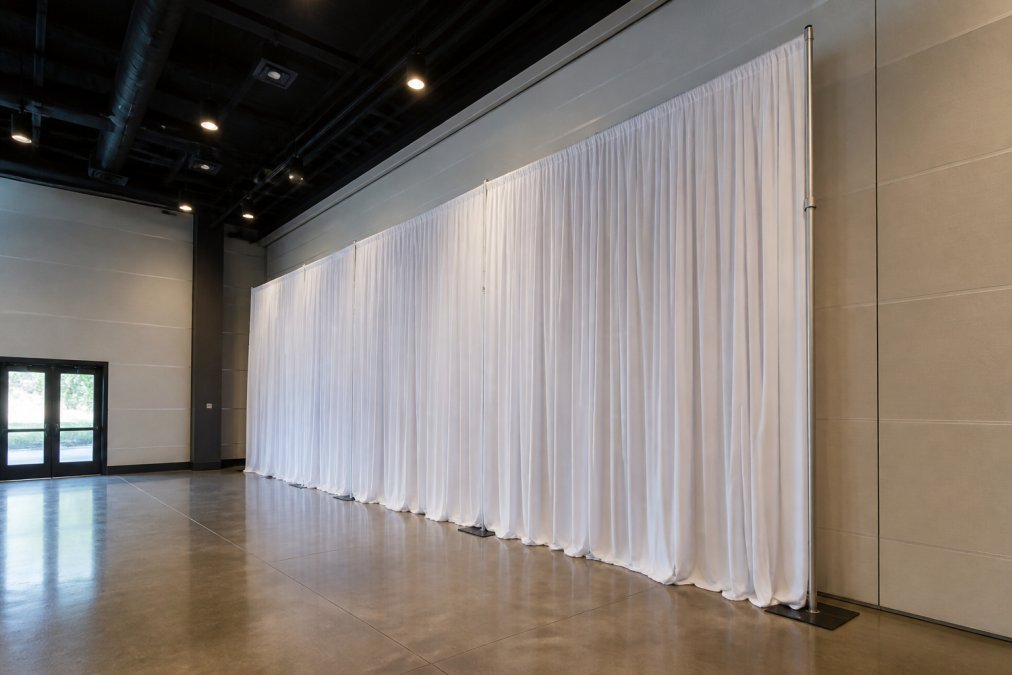
The decision between DIY installation and professional setup hinges on labor cost, time investment, and risk tolerance. Professional installation from Event Drape Rental handles all assembly, height adjustment, fabric tensioning, and safety verification. DIY installation appeals to budget-conscious planners with in-house facilities teams, but requires advance planning, physical labor, and assumes proper tools and expertise.
Labor and Setup Costs
Professional installation labor typically costs between the base rental rate and 50% of the rental rate, depending on complexity and venue access. DIY installation eliminates external labor costs but requires your internal team to absorb the work. Equipment damage during DIY installation can exceed labor savings; professional installers carry insurance and have experience handling equipment safely.
Time, Complexity, and Risk
A straightforward DIY installation might take 4-6 hours for a small team. Complex installations in challenging spaces can take twice as long. The technical complexity of pipe and drape systems is often underestimated. Proper weighting, height adjustment, fabric tension, and safety verification require knowledge that experienced installers possess. Mistakes create safety hazards; a poorly anchored system can tip or collapse if bumped.
Weather and venue conditions add complexity. Wind in outdoor spaces, humidity in basements, and temperature fluctuations all affect how fabric hangs. Professional installers account for these variables; DIY teams often don't.
Pipe and Drape Installation Cost Breakdown
The pipe and drape backdrop rental cost combines equipment rental, labor, and logistics. Most rental companies break costs into three categories: equipment rental (pipes, bases, and fabric), labor (setup and strike), and logistics (delivery and pickup).
Equipment Rental vs Setup Fees
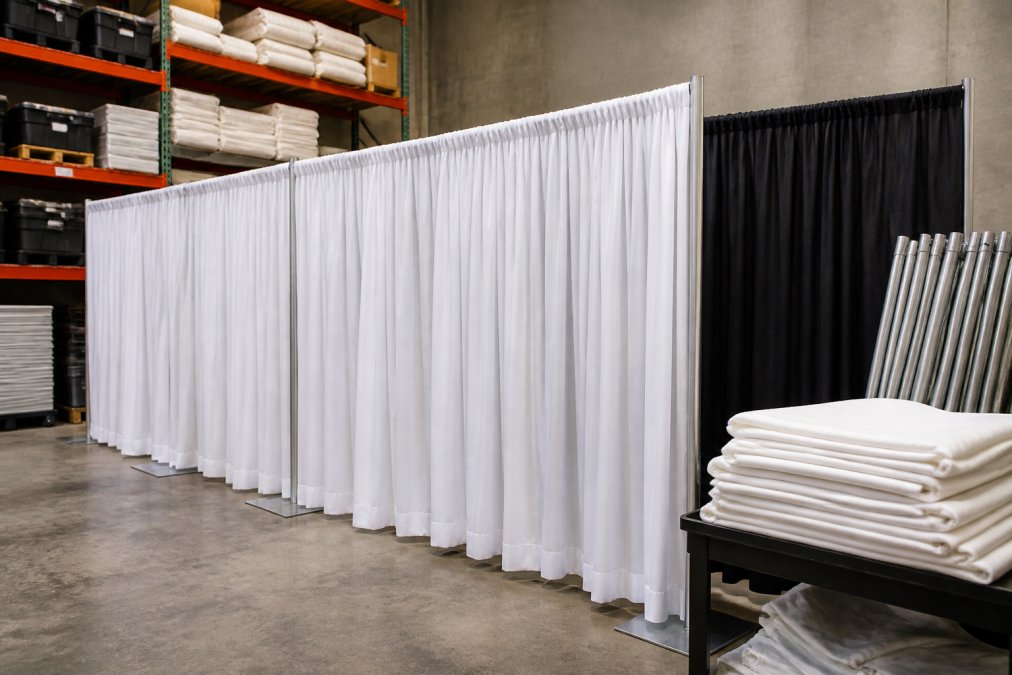
The equipment rental charge covers pipes, uprights, crossbars, base plates, and fabric for your rental period. This is typically the largest line item and scales directly with linear footage and duration. Setup fees cover labor for installation, including unloading, assembly, height adjustment, and safety verification. Strike fees cover removal and loading for return.
The distinction matters because setup and strike fees are sometimes negotiable based on complexity and venue access. A simple installation in an open space might qualify for a lower labor rate than a complex installation in a constrained venue.
Delivery, Setup, and Strike Charges
Delivery fees vary based on distance, venue location, and access requirements. Urban venues with easy loading access typically charge less than remote locations. Some rental companies include delivery within a certain radius and charge extra beyond that.
Rush delivery adds significant cost. Planning ahead and booking 2-3 weeks in advance typically qualifies for standard delivery rates. Setup charges depend on installation complexity. Strike charges are often lower than setup charges because removal is typically faster than installation.
Hidden Costs and Budget Planning
Several hidden charges commonly appear on final invoices. Damage fees are the most common hidden cost. If equipment is returned with damage beyond normal wear, the rental company charges repair or replacement costs. Insurance or damage waivers are sometimes available for an additional charge.
Weight Load and Safety Considerations
Pipe and drape systems must be properly weighted and anchored to prevent tipping. The total weight of a fully loaded system can exceed 500 pounds for large installations (osha.gov). Floors must be able to support the weight load. Most modern event venues have adequate flooring, but older buildings and certain floor types require verification.
Safety is non-negotiable. Improper installation creates liability. If the system tips or collapses and injures someone or damages property, you're responsible. Professional installation from Event Drape Rental includes safety verification as part of the service.
Fabric Quality and Durability
Premium fabrics like velvet are more durable and wrinkle-resistant than budget options, but they cost more to rent. Wrinkle-free fabrics reduce the need for steaming or pressing before events. Flame-retardant fabrics are required by fire code in many venues; Event Drape Rental's inventory includes flame-retardant options across all fabric types (nfpa.org).
Fabric condition upon arrival is critical. Document any pre-existing damage in writing before setup begins.
Choosing the Right Pipe and Drape Solution
The best pipe and drape solution depends on your event type, venue, budget, and aesthetic goals. Start by defining your primary use case: creating a backdrop for photos, framing a stage, dividing a large space, or treating the ceiling.
Wedding Backdrops and Ceiling Treatments
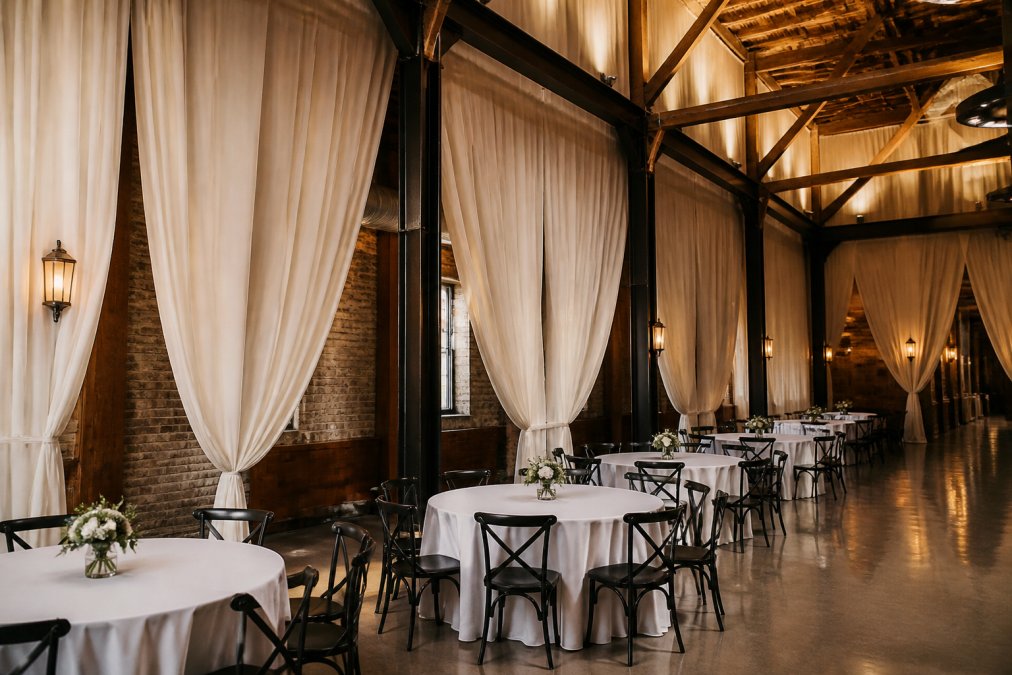
Wedding backdrops serve as the focal point for ceremonies and receptions. Velvet drapery in neutral tones (ivory, champagne, blush, sage) creates an upscale, romantic atmosphere. Height typically ranges from 16 to 24 feet. Full drape fullness (100%) is standard for weddings because the gathered effect enhances the aesthetic.
Ceiling treatments for receptions create an intimate, transformed atmosphere. A 40-by-60-foot ballroom ceiling treatment might require 500+ linear feet of fabric. Professional installation is strongly recommended for this complexity.
Trade Show Booths and Corporate Events
Trade show booth applications prioritize quick installation, durability, and brand visibility. Poly-premier fabric in company colors is standard. Booth backdrops typically range from 10 to 16 feet in height and are often 20-30 linear feet wide.
Corporate events, galas, conferences, and product launches fall between weddings and trade shows in aesthetic expectations. Pipe and drape is often used to hide unsightly venue elements, create intimate spaces, or establish branded environments.
Understanding the cost drivers, linear footage, fabric selection, venue characteristics, and labor requirements, gives you clarity to make informed decisions. Event Drape Rental's team can help you navigate these choices and deliver a quote that reflects your actual requirements. Request a quote today and get specific pricing for your event, or consult with the team about which fabric, height, and installation approach best matches your vision and budget.
Frequently Asked Questions
Q: How much does pipe and drape rental cost?
A: Pipe and drape rental cost depends on quantity, fabric material, event duration, and delivery location. Pricing varies significantly based on the linear footage you need, the height of your uprights, and whether you choose professional installation or DIY setup. Contact Event Drape Rental for a custom quote tailored to your specific event requirements and venue specifications.
Q: What factors influence the total cost of event drapery?
A: Key cost factors include linear footage (measured in linear feet), fabric type and color selection, ceiling height and adjustable height requirements, delivery and setup fees, event duration, and installation labor. Additional charges may apply for rush orders, multiple venue locations, specialty materials like velvet drapery or flame-retardant options, and removal or strike services. Weighted bases, custom configuration, and equipment like crossbars and base plates also affect final pricing.
Q: Is it cheaper to DIY pipe and drape or hire professional installation?
A: DIY pipe and drape saves on labor costs but requires time, skill, and risk of improper installation that can damage your event aesthetic. Professional installation ensures proper setup of uprights, crossbars, and weighted bases, guarantees wrinkle-free presentation, and handles all delivery and strike logistics. For most events, professional installation provides better results and peace of mind, though the upfront cost is higher. Evaluate your timeline, venue complexity, and budget before deciding.
Q: Does pipe and drape rental pricing include setup and teardown?
A: Setup and strike services are typically separate line items from equipment rental. Basic rental usually covers delivery of the pipe and drape system components, uprights, crossbars, base plates, and fabric. Professional installation labor, setup, and strike (teardown) are charged separately. Some rental packages bundle these services together at a discounted rate. Always confirm what's included in your quote and whether delivery fees, setup labor, and removal are separate or combined.
This article was written using GrandRanker