 listicle
Pipe and Drape for Trade Show Booths: A Complete Guide
Table of Contents
- What Is Pipe and Drape for Trade Shows?
- Standard Booth Dimensions and Configurations
- Trade Show Booth Pipe and Drape Kits: What's Included
- Flame Retardant Trade Show Drapes and Safety Compliance
- Pipe and Drape Assembly Instructions for DIY Setup
- Renting vs. Buying Pipe and Drape for Trade Shows
- Customizing Your Booth with Color and Design
- Maintenance and Care for Long-Term Use
- Frequently Asked Questions
Last Updated: August 22, 2026
What Is Pipe and Drape for Trade Shows?
Pipe and drape for trade show booths is a modular display system using metal uprights, horizontal crossbars, and fabric panels to create customizable booth backdrops and room dividers. The system's flexibility allows you to adjust height, width, and configuration to match your specific booth footprint. Whether you're working with a standard 10x10 booth or a custom layout, pipe and drape adapts to your needs through a simple no-tool assembly: anchor weighted bases to the floor, insert uprights, connect crossbars horizontally, and hang fabric panels. The modular nature means you can reconfigure the same components for different events.
Standard Booth Dimensions and Configurations
The most common booth size is 10 feet wide by 10 feet deep (100 square feet). Larger exhibitors use 10x20 booths (200 square feet), while island booths (open on all four sides) typically require 20x20 or larger configurations. Peninsula booths backing against the show floor perimeter need draping on three sides.
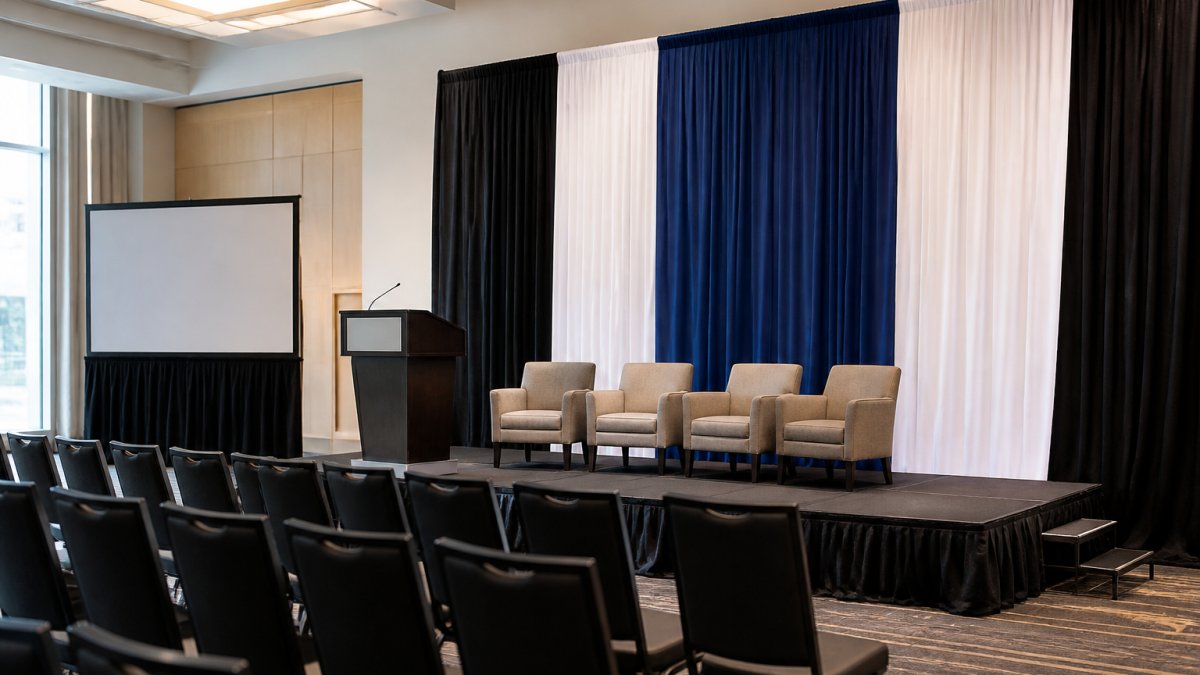
Height matters equally. Most trade show regulations specify maximum heights of 8 feet for back walls and 5 feet for side walls, though some venues allow taller configurations. Event Drape Rental offers adjustable uprights ranging from 12 to 30 feet, providing flexibility for standard convention centers or venues with 40-foot clearances.
Consider sight lines when planning your configuration. A taller backdrop (12-15 feet) creates visibility from across the show floor, while shorter dividers (5-8 feet) work well for separate meeting spaces or product zones within a larger booth. The modular system lets you mix heights in a single booth.
Trade Show Booth Pipe and Drape Kits: What's Included
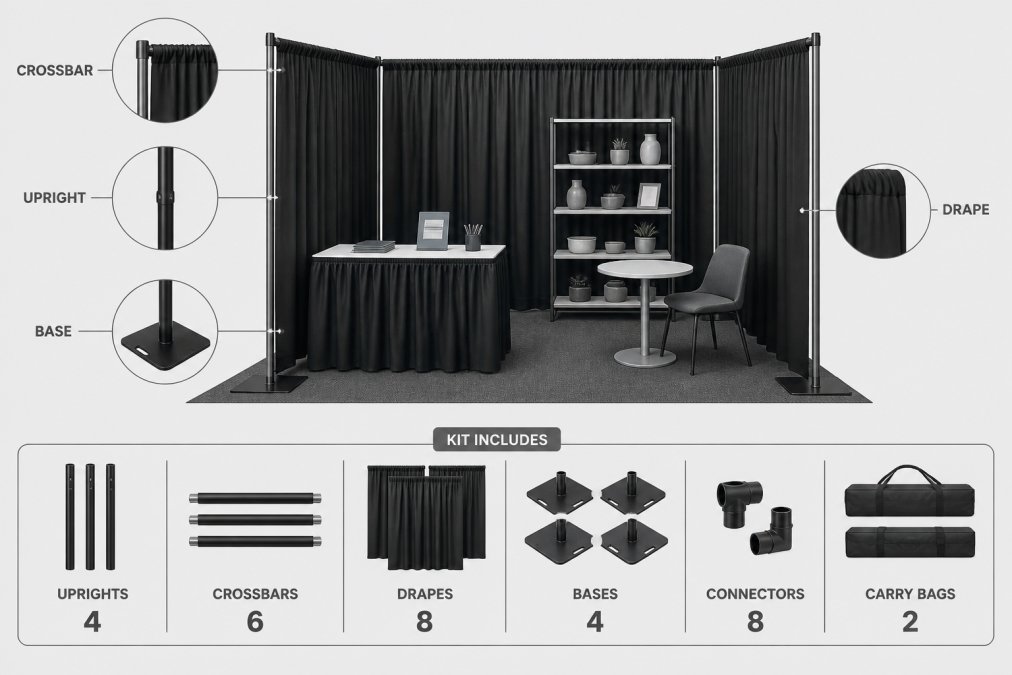
Key Components: Uprights, Crossbars, and Weighted Bases
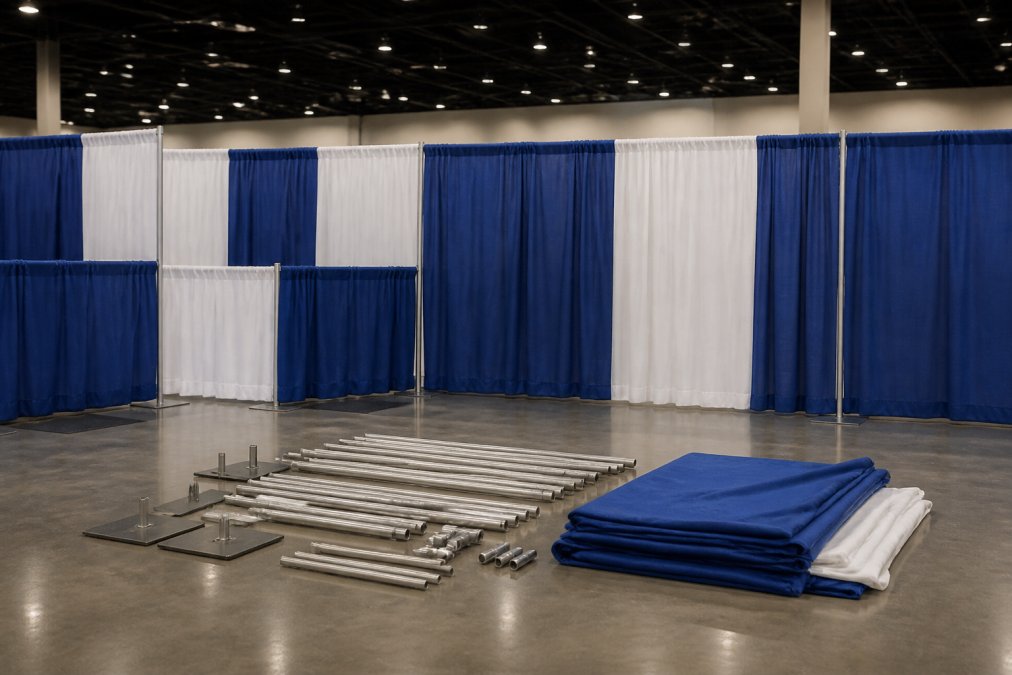
A complete kit includes uprights (vertical aluminum or steel poles), weighted bases that anchor the system to the floor, and crossbars that connect uprights and create attachment points for fabric. Weighted bases are crucial for stability, especially with heavy products or high foot traffic. Most systems use bases weighing 15-25 pounds with feet that distribute weight across a wider footprint.
Crossbars typically use telescopic or adjustable designs, allowing the same crossbar to work for different widths without additional components. Most complete kits include hardware like connectors, clips, and hanging systems rated for fabric weight.
Drape Materials and Fabric Options
Banjo cloth is the most economical option, lightweight and affordable for single-event use. Poly Premier (IFR Poly Premier) offers better durability and a polished appearance with flame-retardant properties. Velour and velvet represent the premium end, creating an upscale aesthetic but requiring heavier bases and more support due to their weight.
Event Drape Rental maintains inventory featuring over 300 colors and 15 distinct fabric materials, allowing you to match brand guidelines precisely. Material selection determines maintenance requirements: poly fabrics resist wrinkles and clean easily, while velour requires careful handling and professional pressing. Rental companies typically handle cleaning and maintenance, simplifying your logistics.
Flame Retardant Trade Show Drapes and Safety Compliance
Every major trade show venue requires drapes to meet NFPA 701 testing standards for flame retardancy (nfpa.org). This is non-negotiable; venues will not allow non-compliant fabric on the show floor.
Flame retardant drapes come in two categories: inherently flame retardant (IFR) fabrics with built-in protection that doesn't wash out, and chemically treated fabrics where treatment can degrade over time (nfpa.org). When ordering pipe and drape, verify NFPA 701 compliance and request documentation. Event Drape Rental's inventory includes compliant fabrics with documentation provided for every order.
Different venues may have additional requirements beyond NFPA 701, such as installation distance from exits or restrictions near emergency equipment. Check your venue's specific fire safety guidelines at least 30 days before your event. Flame retardant requirements also affect color selection; blacks, grays, and neutral tones have the widest selection in compliant fabrics.
Pipe and Drape Assembly Instructions for DIY Setup
Step-by-Step Installation Process
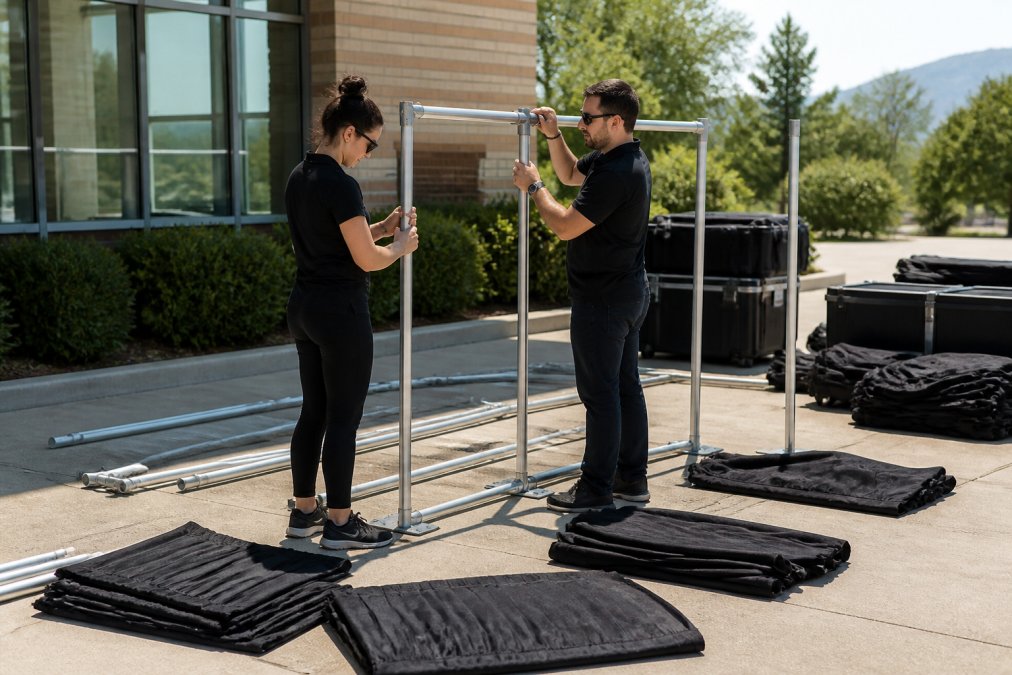
Start by laying out your booth footprint on the show floor using tape or chalk to mark upright locations. Position weighted bases at marked locations, spacing them 8-10 feet apart for standard configurations. Verify that all bases are level on the show floor and use shims if necessary.
Insert uprights into bases smoothly, then check vertical alignment using a level. Connect crossbars between uprights using connectors that slide over both pieces and tighten with a pin or bolt. Ensure crossbars are level and tight before hanging fabric.
Hang fabric panels using provided clips, starting at one corner and working systematically across. Space clips evenly (typically 12-18 inches apart) to distribute weight evenly. Ensure fabric reaches the floor or sits just above it for a polished finish. For large areas, overlap panels slightly (2-3 inches) so seams don't create visible gaps.
Common Setup Mistakes to Avoid
The most frequent mistake is underestimating fabric weight and using bases that are too light. Velour and velvet drapes are heavy; use the heaviest bases available. Another common error is spacing uprights too far apart, crossbars sag under fabric weight if uprights exceed 10 feet apart. Add an intermediate upright rather than stretching a single crossbar across a wide distance.
Hanging fabric unevenly is visible and preventable. Measure from the crossbar to the floor at multiple points before securing all clips. Uneven fabric height undermines an otherwise professional booth.
Account for venue-specific constraints before finalizing your configuration. Concrete floors might require different base types than carpeted areas. Inspect fabric condition before the event; wrinkled or damaged drapes undermine professional appearance.
Renting vs. Buying Pipe and Drape for Trade Shows
If you exhibit at one or two trade shows annually, renting makes financial sense. You avoid upfront capital investment, don't need warehouse space, and the rental company handles cleaning and maintenance.
Buying makes sense if you exhibit frequently (more than four events annually) or need specific configurations rental companies don't stock. Calculate annual rental costs (including delivery and setup labor) versus purchase price plus annual storage costs. Most exhibitors find buying becomes economical around year three of regular use.
Storage is the practical constraint most exhibitors underestimate. A complete system requires roughly 200-300 cubic feet. If you lack warehouse space, renting eliminates this problem. High-end rental companies also maintain inventory better than most exhibitors, often delivering superior results if booth appearance is critical to your brand.
Customizing Your Booth with Color and Design
Bold, saturated colors (deep blues, rich reds, vibrant greens) attract attention from across the show floor. Neutral colors (grays, blacks, whites) convey professionalism and provide clean backdrops for products or digital screens. Your brand guidelines should drive color selection; Event Drape Rental's extensive inventory makes exact matching possible.
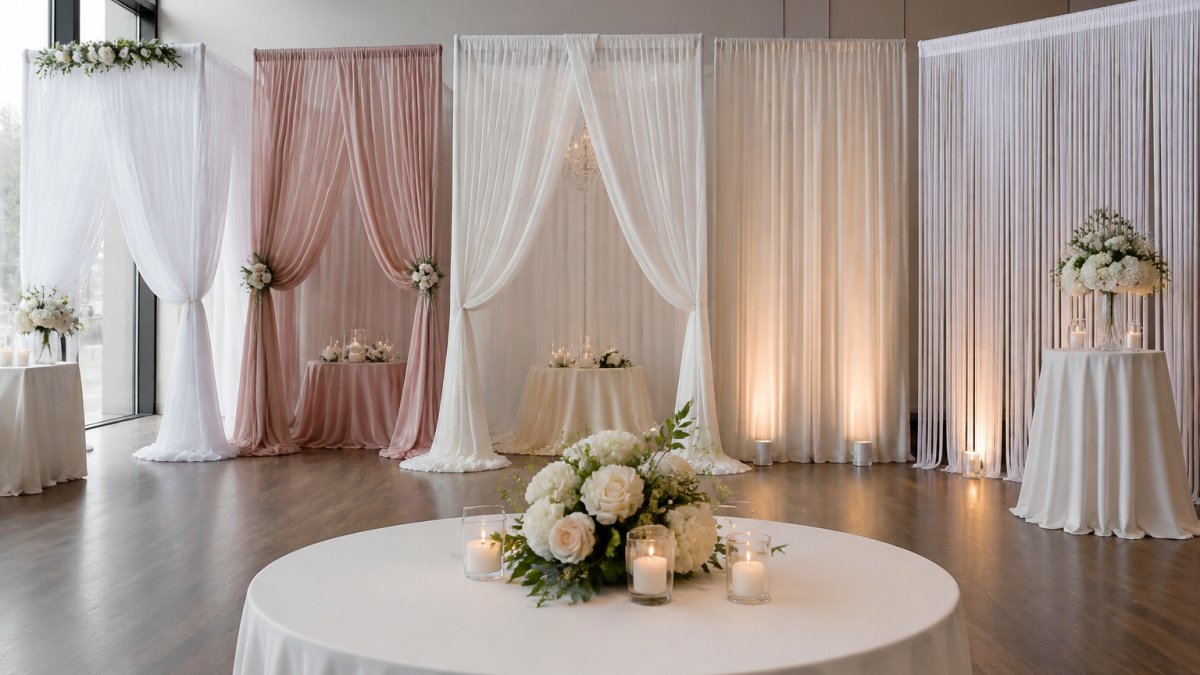
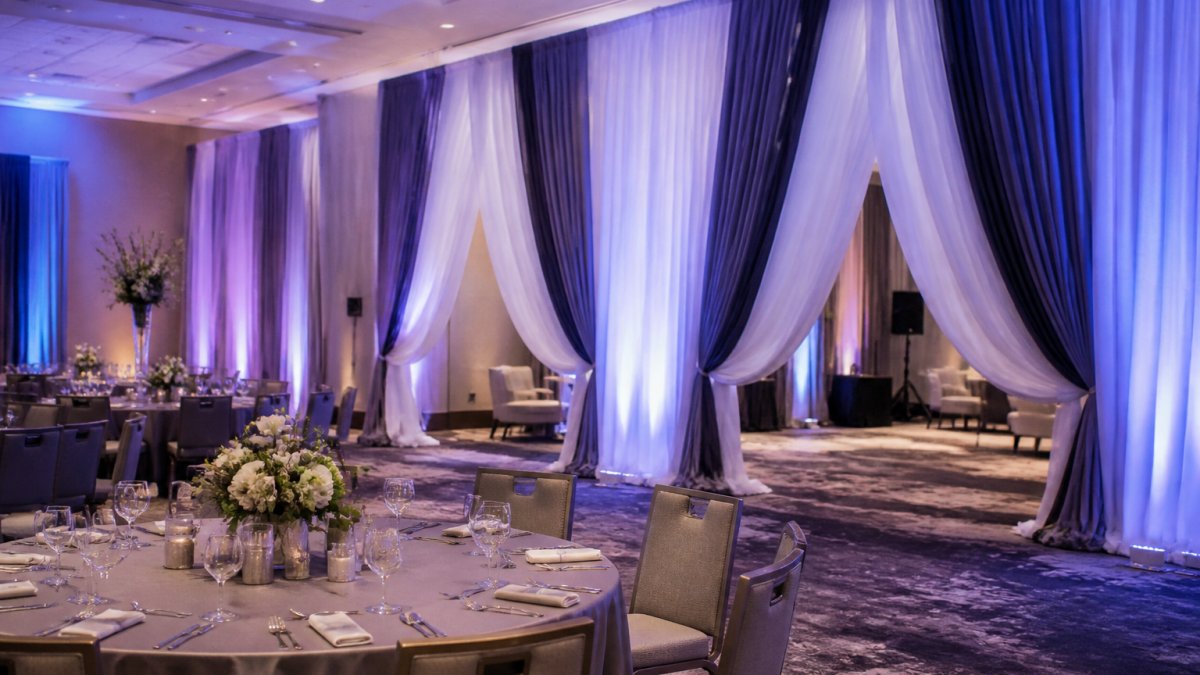
Layering different fabric materials creates visual depth. Combine a solid-color base drape with semi-transparent voile panels to create dimension and sophistication. Lighting dramatically affects color appearance; bright LED lighting shows colors accurately while warm incandescent lighting shifts perception.
Height variation adds visual interest. A tall backdrop (15+ feet) creates drama and visibility, while shorter side drapes (6-8 feet) define intimate meeting spaces. Adding branded elements like projected logos, uplighting, or attached signage transforms basic pipe and drape into a distinctive branded environment.
Maintenance and Care for Long-Term Use
Store fabric rolled (not folded) in cool, dry spaces away from direct sunlight. Humidity causes mildew, so avoid damp areas. Metal components require minimal maintenance, wipe with a dry cloth after each use and address rust or corrosion with light sanding and touch-up paint.
Fabric cleaning depends on material type. Poly fabrics can be spot-cleaned with mild soap and water, then air-dried completely. Velour and velvet require professional dry cleaning. Never machine wash delicate fabrics.
Inspect your entire system before each event for fabric tears, missing clips, bent uprights, or cracked bases. Replace damaged components rather than attempting field repairs. Document your inventory with a checklist of all components, quantities, and condition notes. If storing long-term (more than six months), perform a complete inspection and test assembly annually.
Trade show booth success depends on professional presentation, and pipe and drape provides the foundation. Whether you're a first-time exhibitor or an experienced company updating your display, understanding pipe and drape components, assembly, and customization ensures decisions aligned with your budget and brand vision.
Event Drape Rental specializes in helping exhibitors transform raw booth spaces into professional branded environments. With drapes ranging from 12 to 30 feet in height, over 300 colors available, and 6 different fabric materials, we offer flexibility to match your exact specifications. Whether you prefer DIY setup or professional installation, our team supports your event success. Request a quote today to explore how Event Drape Rental can elevate your next trade show booth.
Frequently Asked Questions
What are the standard dimensions for a trade show pipe and drape booth?
The most common trade show booth size is 10 feet wide by 10 feet deep (10x10), which fits standard trade show floor spaces. Larger booths extend to 20x10 or custom configurations. Pipe and drape height typically ranges from 8 feet for standard dividing walls to 12-30 feet for dramatic backdrops. Check your venue's specifications and fire codes, as ceiling height and spacing requirements vary by location.
Is flame retardant fabric required for trade show pipe and drape?
Yes. Most trade show venues and fire codes require flame retardant trade show drapes. Look for fabrics labeled IFR (Inherently Flame Retardant) like Poly Premier or Commando Cloth, or FR-treated options like Banjo Cloth. Verify your specific venue's fire safety codes before ordering, as requirements differ by location and event type. Non-compliant drapes may be rejected at setup.
What's the difference between banjo and velour drape for trade shows?
Banjo cloth is a lightweight, economical, flame-retardant option with a matte finish, ideal for budget-conscious exhibitors and temporary setups. Velour drape is heavier, more luxurious, and offers deeper color saturation and a premium appearance, making it better for high-end corporate events and branded booths. Velour costs more but provides superior aesthetic impact and durability for repeated use.
How do you assemble a pipe and drape system for a trade show?
Start by positioning weighted bases on a level floor, then insert uprights and secure them. Attach crossbars horizontally between uprights using connectors. Hang drape panels on the crossbars using clips or hooks, starting from one corner and working across. Ensure all connections are tight and bases are stable before adding drapes. Most systems require no special tools and take 30-60 minutes depending on booth size.
Can I rent pipe and drape instead of buying it for a trade show?
Yes. Renting is ideal if you exhibit infrequently or need specific colors for a single event. Rental typically costs less upfront and eliminates storage and maintenance concerns. Buying makes sense if you exhibit regularly or need consistent branding. Compare your annual event frequency and budget against rental rates and purchase costs. Event Drape Rental offers both rental and purchase options to fit your needs.
This article was written using GrandRanker