 comparison
Pipe and Drape vs Modular Wall Systems: 2026 Comparison
Table of Contents
- Pipe and Drape vs Modular Wall Systems: Quick Comparison
- What Is a Pipe and Drape System?
- Understanding Modular Wall Panel Systems
- Pipe and Drape Setup Guide: Installation and Configuration
- Modular Wall Panel Rental: Key Advantages and Limitations
- Modular Wall Panels:
- Event Backdrop Installation Costs: Rental vs Purchase Economics
- For Modular Wall Panels:
- Which System Should You Choose for Your Event?
- Frequently Asked Questions
Last Updated: September 23, 2026
Pipe and Drape vs Modular Wall Systems: Quick Comparison
The choice between pipe and drape modular walls and modular wall panels affects your budget, setup time, durability, and flexibility for future events.
This comparison breaks down the real differences so you can make the right choice for your specific needs.
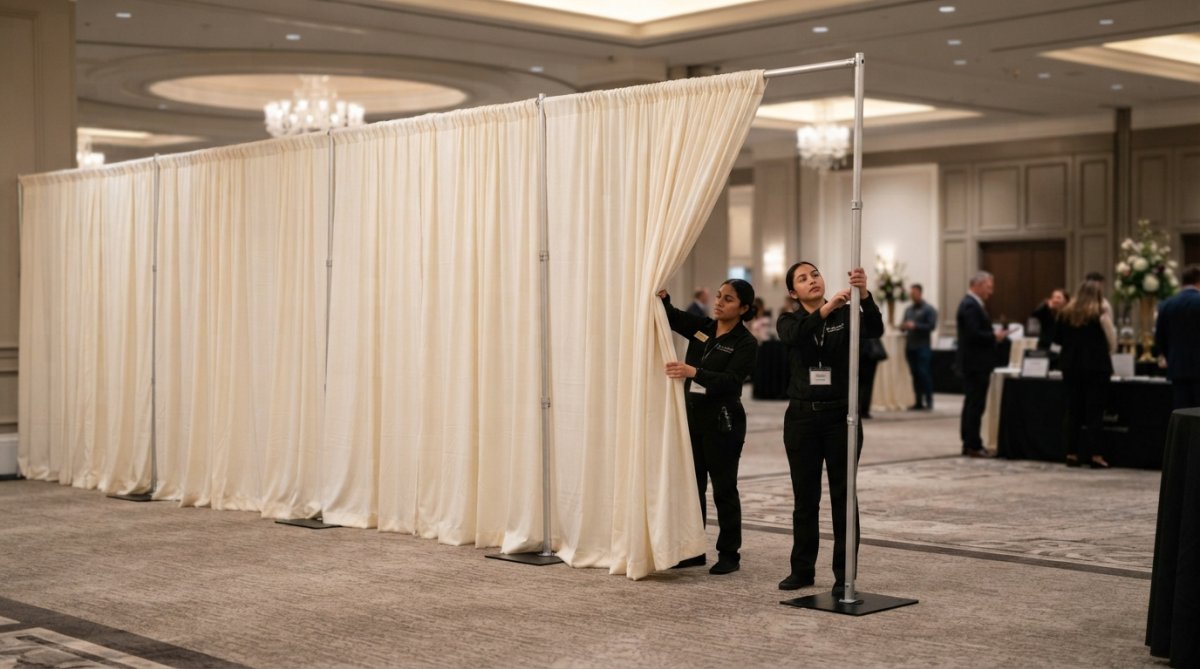
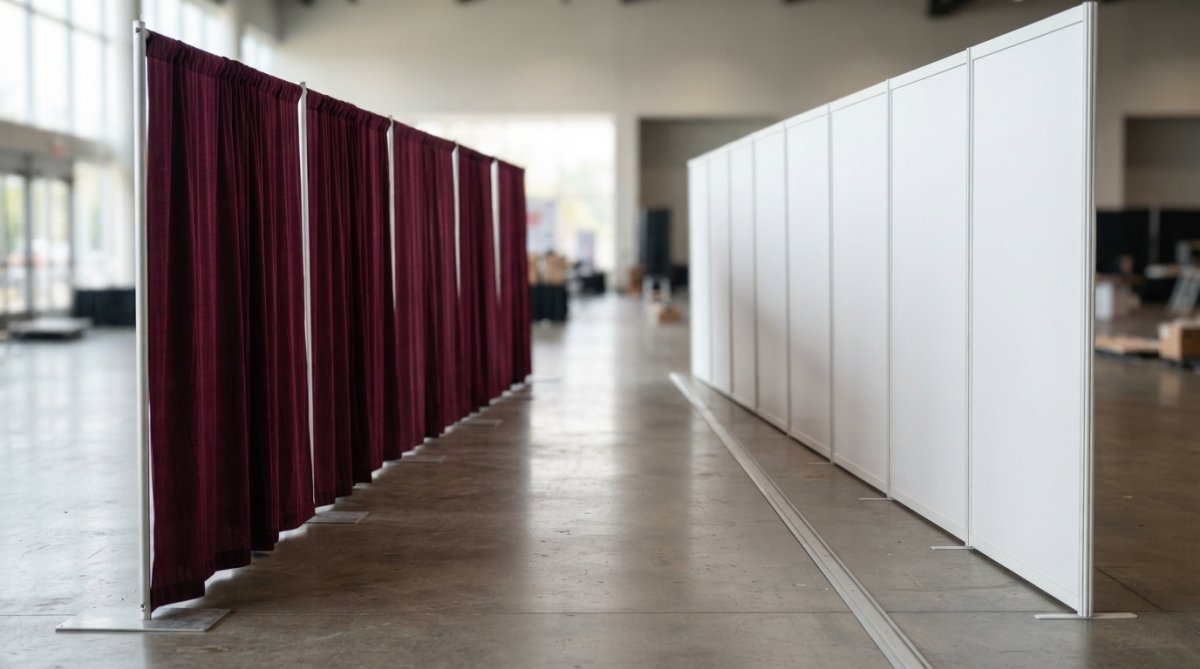
Pipe and drape modular walls are modular frameworks made of lightweight uprights, base plates, and crossbars that hold fabric panels. Modular wall panel systems are self-contained, accordion-style walls with integrated frames and wheels. Pipe and drape wins on customization and cost; modular walls win on speed and stability.
| Feature | Pipe and Drape | Modular Wall Panels |
|---|---|---|
| Setup Time | 30-60 minutes per section | 10-15 minutes per section |
| Portability | Lightweight, compact storage | Heavier, integrated wheels |
| Customization | Unlimited fabric and color options | Limited to panel designs |
| Durability | Good with proper maintenance | Excellent, built for frequent use |
| Best For | Weddings, custom aesthetics | Trade shows, rapid reconfigurations |
| Long-term Cost | Lower rental, higher labor | Higher upfront, lower labor |
What Is a Pipe and Drape System?
A pipe and drape system consists of vertical uprights (typically telescopic poles), weighted base plates for stability, and horizontal crossbars. Fabric panels hang from the crossbars using clips or hooks.
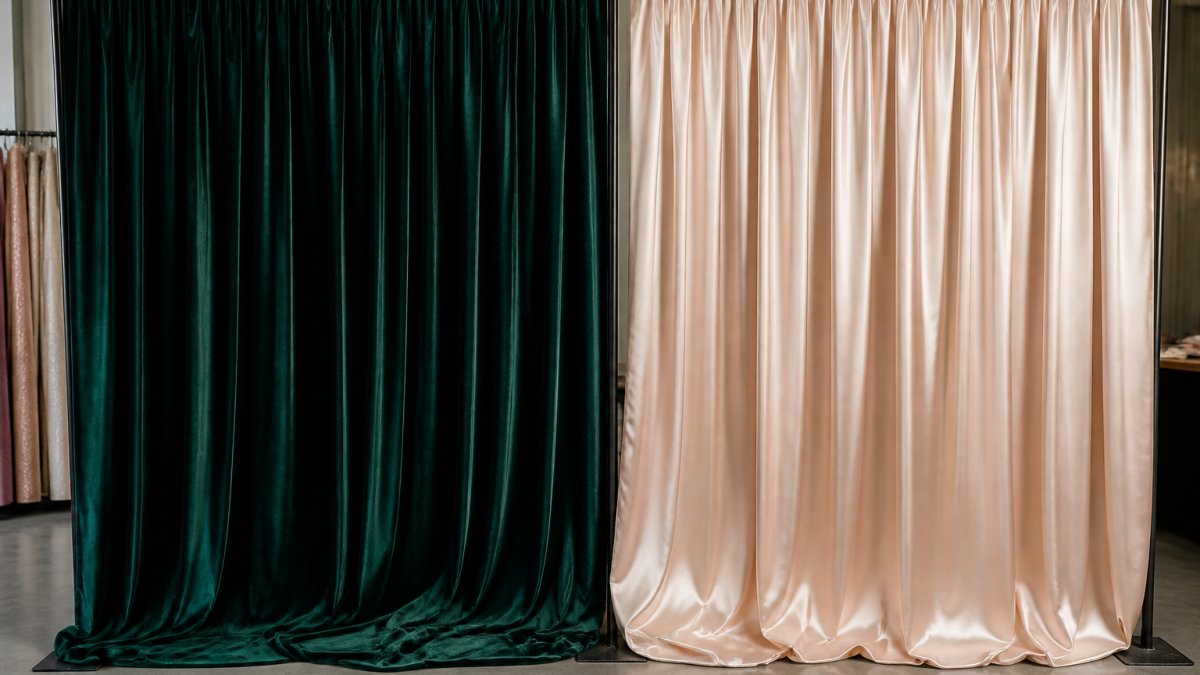
The system's strength is flexibility: adjust uprights from 12 to 30 feet tall, arrange them in any configuration, and choose from over 100 colors and 6 different fabric materials.
Setup involves positioning base plates, inserting and adjusting uprights, attaching crossbars, and hanging drape panels. A team of two can set up a 10-foot section in 5-10 minutes.
Fabric panels come in various materials, making pipe and drape ideal for specific branding colors or décor matching.
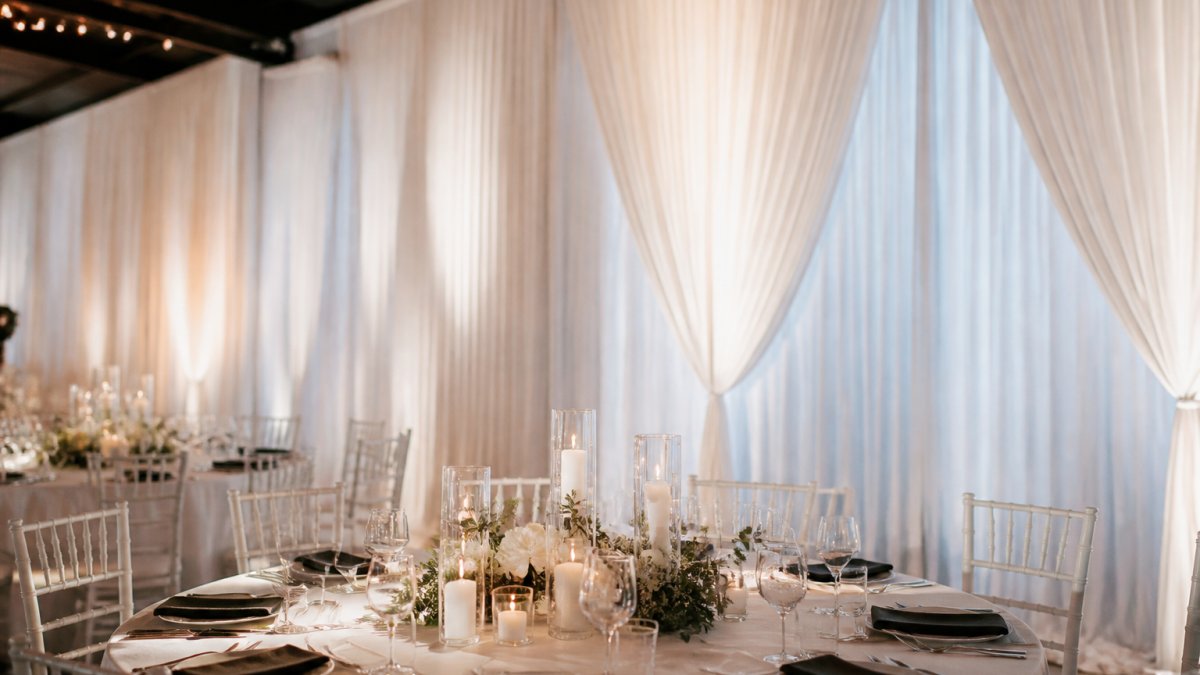
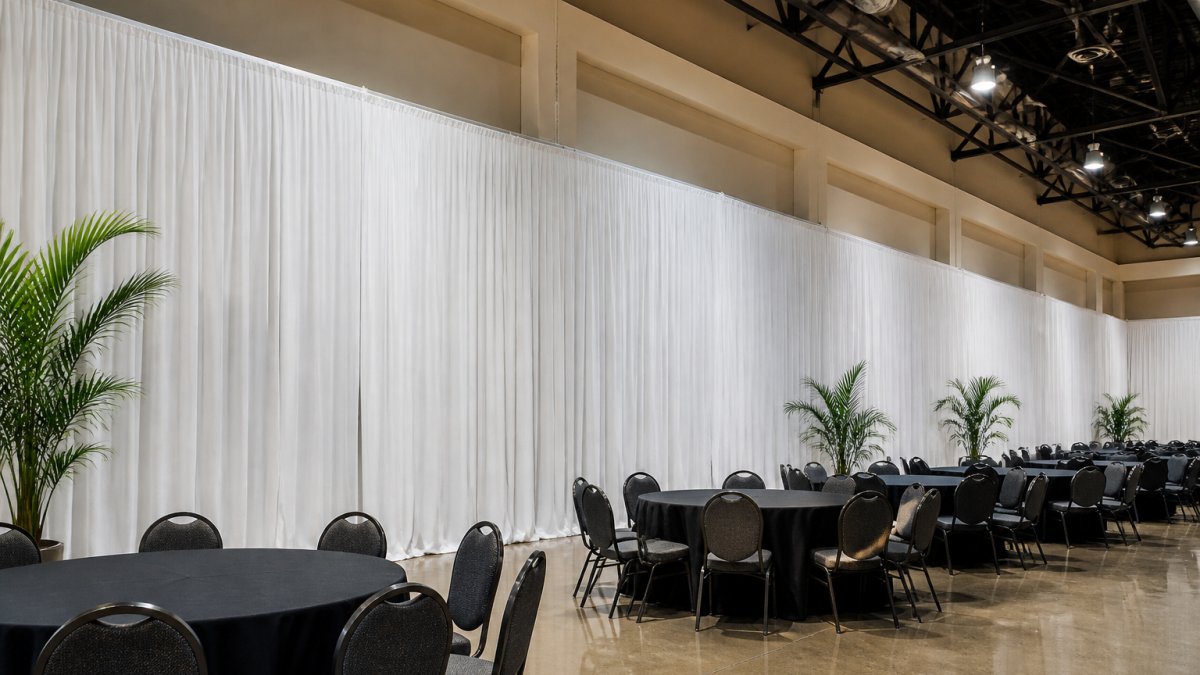
Common use cases include wedding backdrops, trade show booth dividers, corporate event staging, and venue transformations.
Understanding Modular Wall Panel Systems
Modular wall panel systems are pre-assembled units with integrated frames and accordion-folding design with wheels. You position them, extend to desired length, and lock in place.
Each panel is self-contained with its own frame, making modular walls more stable and durable for frequent setup and breakdown cycles.
Setup is faster: a single person can position a 6-foot panel in under two minutes, versus 45 minutes for pipe and drape.
The trade-off is customization: modular walls come in fixed sizes and limited color options, not custom solutions.
Modular walls excel in corporate offices, schools, and convention centers where spaces reconfigure frequently. The durability and speed justify higher upfront cost with repeated use.
Pipe and Drape Setup Guide: Installation and Configuration
Setting up a pipe and drape system follows a consistent process. Understanding the steps helps you estimate labor needs and timeline.
Step 1: Prepare the Space Clear obstacles, mark upright positions, and ensure the floor is level.
Step 2: Position Base Plates Place weighted base plates at each upright location, spaced 8-10 feet apart.
Step 3: Insert and Adjust Uprights Insert telescopic uprights into base plates, adjust to desired height (12-30 feet), lock in place, and verify vertical alignment.
Step 4: Attach Crossbars Connect horizontal crossbars between uprights using clamps or pin connections, ensuring they are level and secure.
Modular Wall Panel Rental: Key Advantages and Limitations
Modular wall panels offer distinct advantages for specific scenarios, but they're not universally better than pipe and drape.
Advantages:
- Speed: A single person can position a 6-foot panel in under two minutes; a full 40-foot configuration takes 15-20 minutes versus 45-60 minutes with pipe and drape
- Stability: Rigid construction with integrated frames and weighted bases provides superior stability in high-traffic environments
- Durability:
- Labor Efficiency: One person can manage what requires two or three with pipe and drape
- Integrated Mobility: Wheels allow repositioning without disassembly
- Acoustic Performance:
Limitations:
- Fixed Sizes: Limited to available panel dimensions, typically 6 feet wide and 5-7 feet tall
- Limited Customization: Color and material options restricted to manufacturer offerings
- Higher Upfront Cost:
- Storage Requirements:
- Fire Safety Compliance: Modular panels must meet NFPA 701 fire rating standards (most are Class A). Pipe and drape offers flexibility, you can choose fire-retardant fabrics without replacing the entire frame
- Weight and Handling: Panels typically weigh 80-150 pounds each, requiring proper equipment to move safely
Compliance and Fire Safety Considerations:
Modular Wall Panels:
- Verify certification documentation before renting or purchasing
Pipe and Drape Systems:
- Fabric compliance is separate from hardware compliance
- You can choose fire-retardant fabrics (NFPA 701 Class A or B) without replacing uprights or crossbars
- If regulations change, you swap fabric, not the entire system
- Allows compliance in venues that require Class A ratings without full system replacement
Acoustic Performance Specifics:
Event Backdrop Installation Costs: Rental vs Purchase Economics
For Pipe and Drape:
- Rental cost per event: (Footage × $3-$8 per foot) + (Labor: 2-4 hours × $50-$100/hour)
For Modular Wall Panels:
Key Cost Variables:
- Number of events per year: This is the primary driver. More events = stronger case for purchase
- Venue rental: Some venues charge for labor if you DIY; factor this into rental costs
- Fabric customization: Custom colors cost 20-40% more than standard options; rental absorbs this cost
- Storage space: Purchased systems require 200-400 sq ft of warehouse space; calculate monthly rent or opportunity cost
- Transportation: Drayage costs for heavy modular panels can add $300-$800 per event if you're renting
- Maintenance: Fabric cleaning ($50-$150 per event), hardware repair, and replacement clips add up over time
- Scalability: If your event sizes vary, rental flexibility may outweigh purchase savings
Three-Year ROI Comparison:
When to Rent:
- Hosting fewer than 3-4 events annually
- Need custom colors or specialty fabrics
- Don't have storage space
- Want to avoid maintenance responsibility
- Prefer access to the latest designs and materials
When to Purchase:
- Hosting 6+ events annually
- Using the same configuration repeatedly
- Have dedicated storage space
- Want to control fabric and design choices long-term
- Operating a venue or event company where equipment is a core asset
For most event planners, rental offers flexibility without ownership overhead.
Which System Should You Choose for Your Event?
The decision comes down to five factors: customization needs, setup timeline, event frequency, budget constraints, and venue characteristics.
Choose pipe and drape if:
- You need specific brand colors or custom aesthetics
- You're hosting a one-time or infrequent event
- Your venue has height variations or unusual dimensions
- You want maximum flexibility in configuration
- You prefer professional installation without the DIY hassle
- Your budget is tight and you're renting, not purchasing
Choose modular wall panels if:
- You're reconfiguring the same space frequently
- You need rapid setup and breakdown
- You prioritize durability and long-term reliability
- You're purchasing for repeated use
- Acoustic performance matters (modular panels provide better sound isolation)
- You want minimal labor and maximum efficiency
Frequently Asked Questions
What are the main differences between pipe and drape systems and modular wall panels?
Pipe and drape uses metal uprights, crossbars, and fabric panels to create temporary partitions, offering flexibility and customization through fabric choice. Modular wall systems use rigid, hinged panels that fold together for storage and mobility. Pipe and drape excels in aesthetic customization and fitting irregular spaces, while modular walls provide superior structural integrity and faster setup for standard configurations. Both work well for events; the choice depends on your space constraints, budget, and timeline.
Is pipe and drape more cost-effective than modular wall panels for event rental?
Pipe and drape rental typically costs less upfront because the hardware is lighter and less expensive to manufacture and transport. Modular wall systems require higher initial investment due to their rigid construction and integrated components. For organizations needing frequent reconfigurations, modular walls may offer better long-term value despite higher per-unit costs. Request a quote to compare pricing for your specific event needs and rental duration.
How long does setup take for pipe and drape compared to modular wall systems?
Modular wall systems typically set up faster because panels are pre-hinged and simply unfold into position. Setup takes 30 minutes to an hour for standard configurations. Pipe and drape requires more labor: assembling uprights, attaching base plates, installing crossbars, and hanging fabric panels. DIY setup takes considerably longer. If timeline is critical, modular walls offer speed advantages, though professional pipe and drape installation ensures quality results.
Can pipe and drape systems reach heights above 20 feet for tall venues?
Yes. Event Drape Rental offers drapes ranging from 12 to 30 feet in height, accommodating warehouse conversions, vaulted ceilings, and tall event spaces. If your venue has unusually high ceilings or you need full-height coverage, pipe and drape with telescopic uprights provides the flexibility modular systems cannot match. Confirm specific height capabilities when requesting a quote for your venue.
Choosing between these systems affects your event's success, budget, and timeline. If you need a customizable solution with professional-grade results, Event Drape Rental offers pipe and drape systems in over 300 colors across 6 fabric materials, with heights ranging from 12 to 30 feet. We handle both DIY rentals and full professional installation to match your needs. Request a quote to discuss your specific event requirements.