 comparison
Velvet vs Satin Drapes for Luxury Events
Table of Contents
- Velvet vs Satin Drapes: Quick Comparison
- Understanding Velvet Fabric Characteristics
- Understanding Satin Fabric Properties
- Light Reflection and Visual Impact
- Avoiding Wrinkled Drapes for Event Rentals
- Best Fabric for Event Draping: Formal vs. Casual Applications
- Fire Safety, Weight, and Installation Logistics
- Conclusion
- Frequently Asked Questions
Last Updated: October 3, 2026
Velvet vs Satin Drapes: Quick Comparison
The fabric you choose for your drapes shapes everything: mood, photogenic quality, and how guests experience the space. When comparing velvet vs satin drapes, you're choosing between two fundamentally different approaches to event draping, each with distinct light behavior, installation requirements, and visual impact.
The difference comes down to fiber structure, light behavior, and practical considerations most planners overlook until it's too late.
Velvet absorbs light and creates depth; satin reflects it and creates shimmer. One feels opulent and grounded, the other ethereal and sophisticated. One will be better for your specific event, venue, and constraints.
| Aspect | Velvet | Satin |
|---|---|---|
| Light Behavior | Absorbs light, creates depth | Reflects light, creates sheen |
| Visual Effect | Rich, luxurious, cinematic | Elegant, ethereal, reflective |
| Texture | Dense pile, soft to touch | Smooth, glassy surface |
| Wrinkle Resistance | High (holds shape) | Moderate (shows creases) |
| Best For | Formal galas, dramatic backdrops | Elegant events, photo backdrops |
| Installation Weight | Heavier, requires sturdy hardware | Lighter, easier to hang |
| Maintenance | Dust-resistant | Requires careful handling |
| Fire Compliance | Available in flame-retardant options | Available in flame-retardant options |
Understanding Velvet Fabric Characteristics
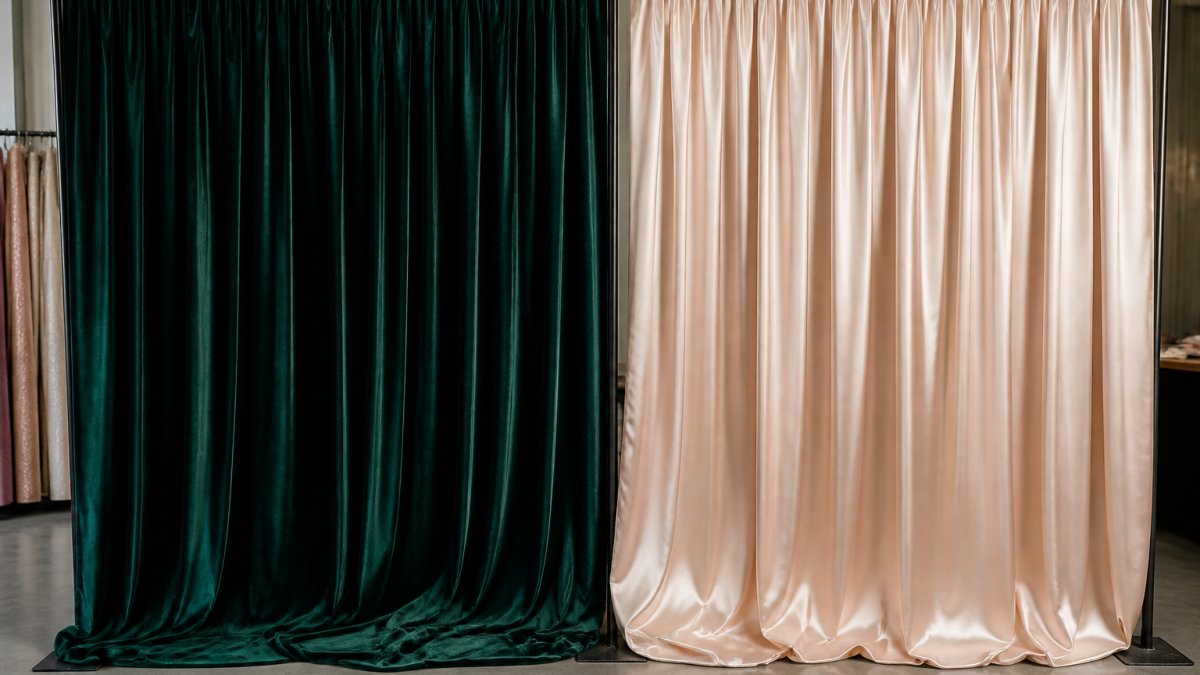
Velvet is a dense pile fabric with short fibers standing upright on the surface. This structure gives velvet its signature light-absorbing quality: light gets trapped in the pile rather than bouncing back, making velvet read as deeper, richer, and more substantial.
Quality event velvet has enough weight to hang without billowing or sagging across large spans, making it ideal for backdrops that need to look pristine throughout long events.
Velvet's color saturation is one of its strongest advantages. Deep jewel tones like emerald, sapphire, and burgundy look almost alive because light absorption creates visual depth that flat fabrics can't match. This is why velvet dominates in formal galas and high-end weddings.
Understanding Satin Fabric Properties
Satin is a weave structure, not a pile, creating a distinctive glassy, reflective surface. Light bounces off, creating visible sheen and shimmer, which is why satin reads as elegant and ethereal rather than grounded and opulent.
Satin's smooth surface reflects ambient and stage lighting beautifully, making it ideal for events where photography and lighting design are central. Under professional event lighting with dramatic uplighting, moving gobos, or choreographed effects, satin showcases that investment far better than velvet.
Satin drapes more fluidly, creating elegant folds and curves. For flowing ceiling treatments or sculptural room dividers where drapes are part of the visual composition, satin's fluidity is a genuine advantage.
The trade-off is wrinkle susceptibility. Satin shows creases more readily than velvet, especially if packed tightly for transport or repositioned during setup. Budget for on-site steaming if needed.
Satin is lighter than comparable velvet, making it easier to install and requiring less strong hardware, important for venues with weight restrictions.
Light Reflection and Visual Impact
The core difference between these fabrics comes down to how they interact with light. Velvet absorbs light, creating a sense of visual depth and timeless elegance. Satin reflects light, creating shimmer and luminosity. Understanding this distinction is essential because it determines how your event will look in photographs, how it will feel to guests moving through the space, and how it will perform under your specific lighting design.
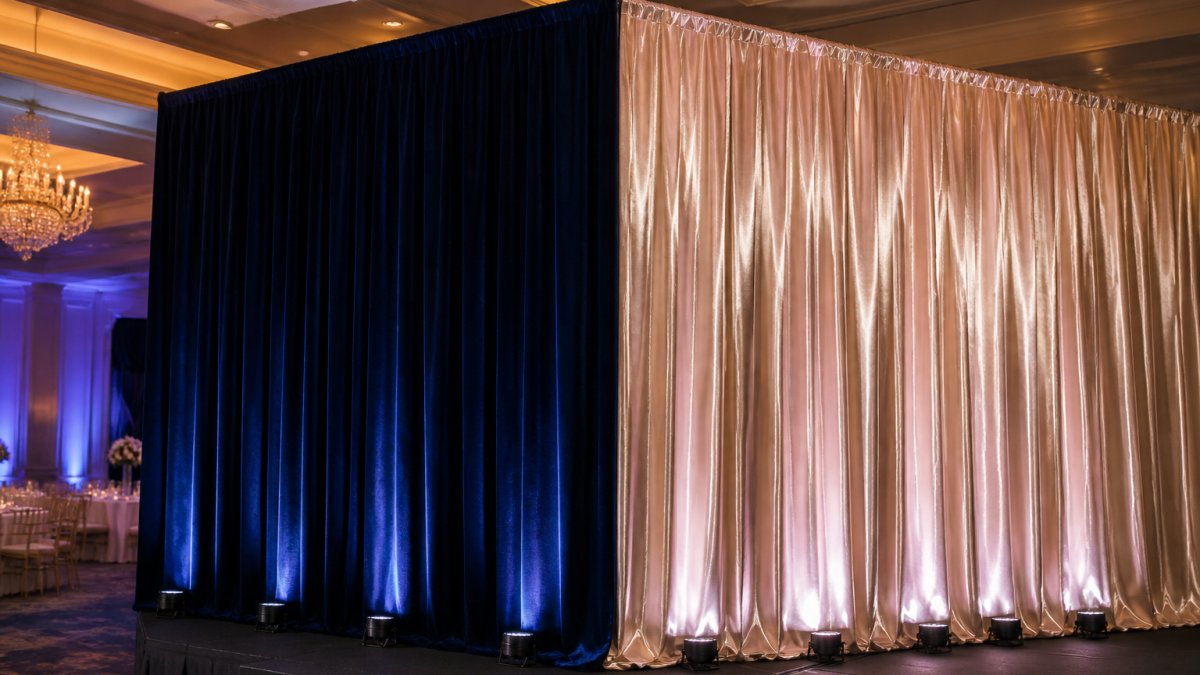
In a room with theatrical lighting, moving fixtures, and gobos, satin becomes dynamic, catching and reflecting effects. Velvet remains visually stable, absorbing light and reading as a solid, grounded backdrop. Both are tools for different design intentions.
For photography, velvet appears rich and dimensional in jewel tones because light absorption intensifies color saturation. Satin photographs as luminous and elegant, with sheen that catches the camera's flash sophisticatedly.
In venues with abundant natural daylight, velvet's light absorption creates a controlled aesthetic. In evening events with theatrical lighting, satin's reflective qualities shine. Venues with limited lighting control favor velvet because it creates sophistication without perfect lighting.
Satin's color perception shifts with viewing angle and light direction, creating visual interest or inconsistency. Velvet's consistent color saturation is more predictable and easier to coordinate with design elements.
Avoiding Wrinkled Drapes for Event Rentals
This is where the rubber meets the road for most event planners. You can have the perfect fabric choice, but if it arrives wrinkled or creased, the entire aesthetic suffers. Wrinkles don't just look unprofessional, they undermine the sophistication you're trying to create.
Satin holds wrinkles readily and won't release on their own.
Ask rental providers about storage and transport practices.
If you do choose satin, budget for on-site steaming or pressing. Many professional event teams include this in their standard setup process, but you need to confirm it's part of your rental agreement.
Best Fabric for Event Draping: Formal vs. Casual Applications
The best fabric for event draping depends entirely on the formality level and design intent of your event. These aren't interchangeable choices, they're fundamentally different aesthetic statements.
For formal galas, black-tie weddings, and high-end corporate events, velvet is the traditional choice and for good reason. Velvet reads as opulent, timeless, and sophisticated. The visual depth and rich color saturation communicate luxury without requiring anything else to support that message. When you're creating an environment where formality and elegance are paramount, velvet delivers that message instantly.
Velvet also works exceptionally well for dramatic backdrop applications, think a statement wall behind a stage, a focal point for ceremony backdrops, or a room divider that needs to feel substantial and intentional. The light absorption creates visual weight and presence that makes velvet backdrops genuinely striking in person and in photographs.
For formal events with significant lighting design investment, satin becomes competitive. If you're working with a professional lighting designer who's choreographing effects, satin's reflective qualities can actually enhance the overall design more effectively than velvet would. This is particularly true for events with moving lights, color washes, or projection mapping.
For semi-formal and business events, corporate galas, product launches, conference galas, either fabric works, but the choice should reflect your specific design direction. If you want the event to feel grounded and intimate, velvet. If you want it to feel modern and luminous, satin.
For casual events, outdoor receptions, daytime functions, informal celebrations, satin often makes more sense. It's lighter, easier to work with, and the reflective quality reads as elegant without feeling overly formal. Velvet can feel like overkill in casual contexts, though using it as a deliberate design choice can absolutely work.
The key is intentionality. Choose the fabric that aligns with the emotional tone you're trying to create, then build your lighting and design around that choice. Don't choose satin because it's cheaper and then light it like velvet. Don't choose velvet because it feels safe and then complain that it doesn't showcase your lighting design.
Fire Safety, Weight, and Installation Logistics
This is the section most articles skip, and it's precisely where many event planners get blindsided. Both velvet and satin are available in flame-retardant versions, which is essential for any event in a commercial venue. But the logistics of weight, installation hardware, and venue compliance differ significantly.
Velvet is heavier than satin. A comparable square footage of velvet will weigh more, which means it requires more strong installation hardware. If you're working with a venue that has weight restrictions on rigging points or pipe and drape systems, this matters.
Event Drape Rental provides drapes ranging from 12 to 30 feet in height, and weight becomes a critical consideration at the larger end of that spectrum. A 30-foot velvet drape carries significant weight, and improper rigging creates genuine safety hazards.
Satin's lighter weight means it requires less strong hardware and is easier to install, particularly for DIY setups or venues with limited rigging infrastructure.
Fire safety requirements vary by venue and jurisdiction. Most commercial venues require flame-retardant draping, and both velvet and satin are available in compliant versions. However, you need to confirm this requirement with your venue and ensure your rental provider is supplying materials that meet those standards. This is non-negotiable, it's not a negotiation point or a cost-saving opportunity.
The installation logistics also differ. Velvet's weight and density mean it requires careful handling during installation to avoid damage to the fabric or the installation hardware.
Venues with strong rigging infrastructure and professional installation capabilities: velvet works beautifully. Venues with weight restrictions, DIY installation scenarios, or limited setup time: satin is the more practical choice.
For large-scale events requiring multiple drape configurations or frequent repositioning, satin's lighter weight and easier installation become genuinely valuable.
Conclusion
Choosing between velvet and satin drapes for your luxury event comes down to three core questions: What emotional tone are you trying to create? How important is lighting design and photography to your event vision? What are your venue's logistical constraints?
Velvet creates timeless elegance, absorbs light beautifully, resists wrinkles, and delivers rich visual depth. It's the choice for formal galas, dramatic backdrops, and events where sophistication is the primary goal.
Satin creates luminous elegance, reflects light dynamically, flows beautifully, and works well in events with significant lighting design. It's the choice for events where photography and lighting effects are central, and for venues with weight or installation constraints.
Frequently Asked Questions
Is velvet or satin more flattering for event photography?
Satin drapes photograph with visible sheen and brightness, creating a luminous backdrop that reflects stage and ambient lighting. Velvet absorbs light and creates cinematic warmth with rich color saturation, making it ideal for intimate, high-impact photography. For black-tie galas and formal weddings where you want dramatic depth, velvet wins. For corporate events requiring brightness and clarity, satin performs better. The choice depends on your lighting design and the mood you want the photos to convey.
What's the best fabric for event draping if I need to block light completely?
Velvet is the superior choice for light-blocking applications. Its dense pile structure and matte surface absorb light rather than reflect it, making it ideal for stage backdrops, projection screens, or creating blackout effects in spaces with exterior windows. Satin's reflective glassy surface cannot achieve true blackout, making it unsuitable for light-sensitive events or technical productions. If your venue requires complete light control, velvet is the only fabric that delivers this performance.
How do velvet and satin drapes differ in terms of wrinkling and maintenance?
Satin drapes with fluid elegance. Velvet's dense pile can show creases, especially at fold points during storage and transport. Satin requires minimal care, making it easier for DIY installation.
Which fabric is better for a formal wedding backdrop?
Both fabrics suit formal weddings, but for different aesthetics. Velvet creates timeless elegance with opulence and visual depth, perfect for dramatic, photogenic backdrops that convey luxury. Satin delivers sophisticated simplicity with clean lines and reflective beauty, ideal for minimalist or contemporary formal settings. Velvet photographs more dramatically and feels more luxurious to the touch. Satin offers easier logistics and wrinkle-free delivery. For traditional formal weddings prioritizing visual impact, velvet is the stronger choice.
Can Event Drape Rental's drapes go higher than 30 feet for tall venues?
Event Drape Rental offers drapes in heights from 12 to 30 feet. For venues requiring greater heights, contact Event Drape Rental directly for a custom quote, they may offer specialized solutions or can advise on alternative draping strategies for exceptionally tall spaces. Many venues use multiple drape panels stacked or layered to achieve greater visual coverage without requiring single pieces taller than 30 feet.
Ready to transform your venue with professional-grade draping? Event Drape Rental offers both velvet and satin options in over 100 colors, with drapes ranging from 12 to 30 feet in height. Whether you need DIY flexibility or professional installation, we provide the quality and customization options to match your event's exact aesthetic. Request a quote today and let our team help you choose the perfect fabric for your luxury event.