 how-to
Pipe and Drape Rental Budget Tips for Events
Table of Contents
- Understanding Pipe and Drape Rental Costs
- How to Calculate Cost of Event Draping Per Square Foot
- Hidden Costs and Surcharges to Budget For
- DIY Pipe and Drape vs Professional Installation
- Standard Pipe and Drape Height Requirements
- 7 Proven Strategies to Reduce Rental Expenses
- Creating Your Pipe and Drape Budget
- Frequently Asked Questions
Last Updated: September 3, 2026
Understanding Pipe and Drape Rental Costs
Pipe and drape rental budgets vary dramatically depending on event size, venue dimensions, and installation complexity. The core components, uprights, crossbars, base plates, and fabric, combine to create flexible room dividers and backdrops that transform any space. Understanding what drives costs is the first step toward building a realistic budget.
Most event planners underestimate the total expense because they focus only on the rental rate per linear foot. The real cost structure includes delivery charges, labor for professional installation, strike fees, and venue-specific requirements that can easily double your initial quote. A corporate gala needing 200 linear feet of draping might budget for fabric alone, then face unexpected surcharges that derail the event timeline.
Event Drape Rental helps planners navigate this complexity by breaking down the actual cost drivers upfront.
The fabric itself represents only a portion of the total expense. High-quality materials like velour or poly premier command premium pricing compared to basic sheer options. Fire retardant certification, required by most venues for safety compliance, adds to material costs. Then comes the hardware: the weight and configuration of uprights, crossbars, and base plates determine how many units you need and whether additional labor is required for safe installation.
How to Calculate Cost of Event Draping Per Square Foot
Calculating the pipe and drape rental budget per square foot requires understanding both linear footage and ceiling height. This metric helps you compare quotes across vendors and understand where your money goes.
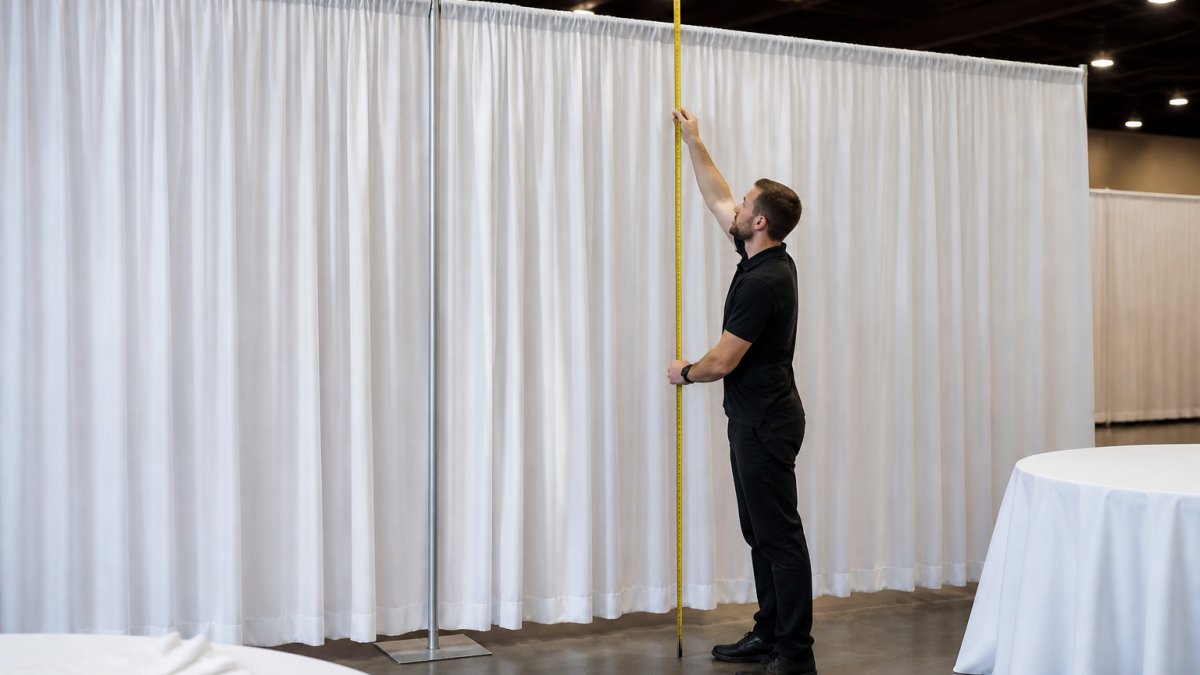
Start by measuring the wall or area you plan to drape. Multiply the linear footage by the height of your drapes, typically ranging from 12 to 30 feet depending on your venue's ceiling clearance. A 40-foot wall with 20-foot-tall drapes equals 800 square feet of fabric coverage.
Once you have the square footage, request pricing from multiple vendors for that specific dimension. This reveals whether you're looking at a budget-friendly setup or a premium installation. Most vendors price by linear foot rather than square foot, so you'll need to convert. A vendor charging $8 per linear foot for 40 feet equals $320 in fabric rental alone, but that's before height adjustments and material type premiums (the American Academy of Dermatology).
The calculation becomes more complex with custom configurations. If your venue has unusual architecture, high ceilings in some spots, low clearance in others, or irregular wall shapes, you may need multiple height options within a single event. This drives up both material costs and labor complexity.
Event Drape Rental's inventory of over 100 colors and 6 different fabric materials means you can optimize for budget without sacrificing aesthetics. Choosing a standard color in basic sheer fabric costs less than requesting a custom color match in velour. Understanding these trade-offs before requesting quotes saves time and prevents sticker shock.
Hidden Costs and Surcharges to Budget For
Most event planners encounter surprise charges after signing a contract. Professional rental companies build these into their pricing structure, but understanding what they cover prevents budget overruns.
Delivery charges vary based on distance and the number of locations. If your event requires draping at multiple venues across the city, expect separate delivery fees for each location. Some vendors include one delivery location; additional stops trigger extra charges. Load-in and load-out labor, the time required to unload, install, and remove equipment, often appears as a separate line item. A complex installation requiring multiple hours of professional labor can cost as much as the fabric rental itself.
Strike fees cover the cost of removing and breaking down draping after your event concludes. Venues often impose strict timelines for teardown, and if your rental company must work during premium hours or expedite removal, these fees increase. A rush teardown on a Sunday evening costs more than a standard Monday morning removal.
Venue compliance surcharges apply when your venue imposes specific requirements. Some hotels demand that all draping meet particular fire retardant standards or require specific hardware configurations for safety reasons. If your chosen fabric doesn't meet these standards, you'll pay extra to upgrade materials. Venue setup fees, charges imposed by the venue itself for allowing rental equipment inside, are sometimes passed to you by the rental company.
Transportation surcharges apply when venues are difficult to access or require special equipment to move draping through narrow hallways, up multiple flights of stairs, or through service elevators. A warehouse venue with loading dock access costs less to service than a downtown hotel requiring hand-carrying equipment through lobbies.
Insurance and damage waivers protect the rental company if equipment is damaged during your event. Some companies include basic coverage; others charge extra. Understanding what's covered and what constitutes customer responsibility prevents disputes after the event.
DIY Pipe and Drape vs Professional Installation
The decision between DIY assembly and professional installation fundamentally changes your budget and timeline. Both approaches work, but they carry different hidden costs that many planners overlook.
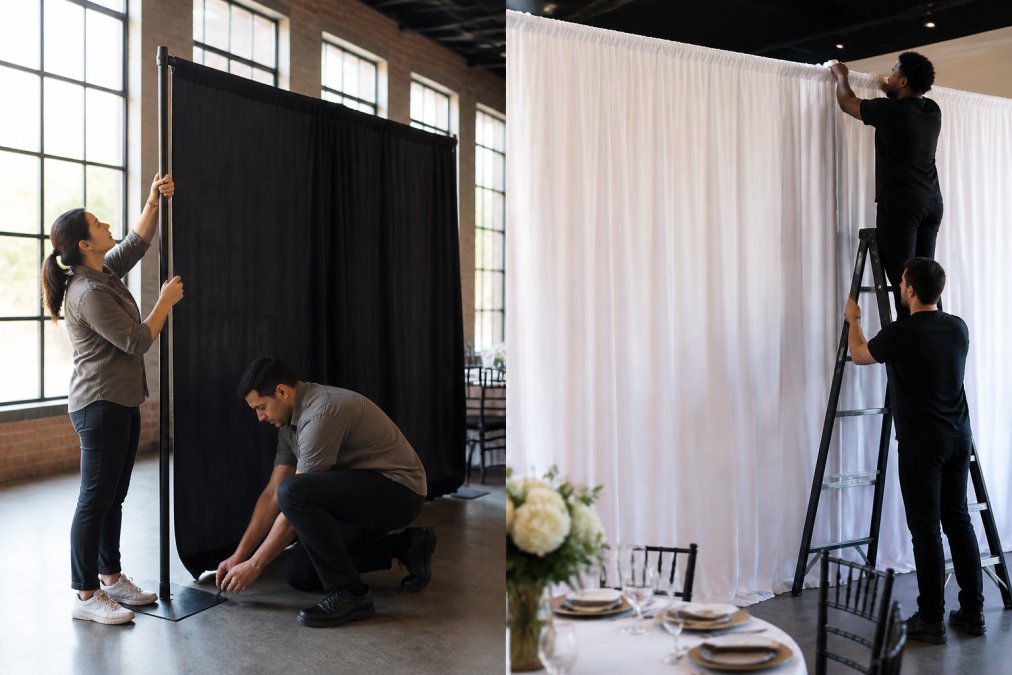
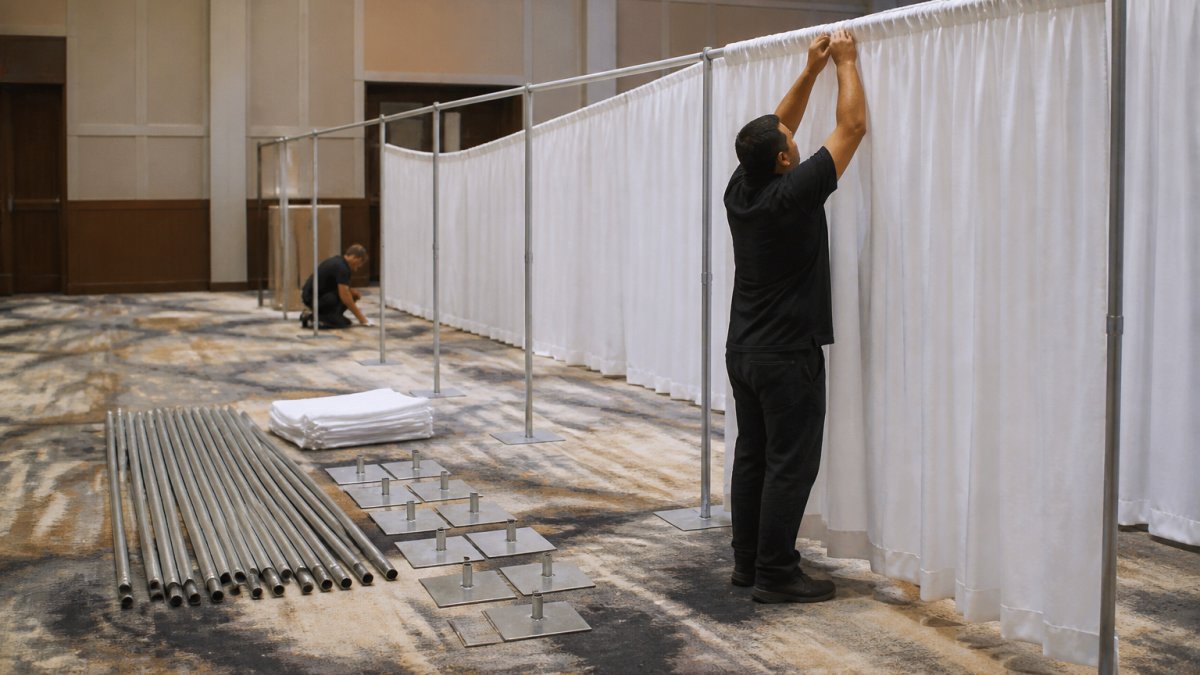
DIY installation appeals to budget-conscious planners because it eliminates labor charges. You rent the equipment and handle setup yourself. This works well for small events with straightforward layouts, a simple 100-linear-foot backdrop for a trade show booth. The hardware is designed for assembly without specialized tools, and basic configurations take a few hours with 2-3 people.
But DIY carries hidden costs. First, your team's time has value. If three staff members spend four hours assembling draping, that's twelve hours of labor you're absorbing. Second, improper assembly creates safety risks. Incorrectly balanced base plates or improperly secured crossbars can collapse under the fabric's weight, especially with heavier materials like velour. Third, a sloppy installation damages your event's professional appearance. Uneven fabric, visible gaps, or crooked uprights signal poor planning to attendees.
Professional installation eliminates these risks. Trained crews understand load-bearing requirements, proper spacing, and aesthetic execution. They work quickly, typically completing installations in hours rather than days. They arrive with the right equipment and experience handling last-minute changes. If your client needs the draping repositioned mid-event, professionals adapt without disrupting the overall look.
Professional installation costs more upfront but prevents costly mistakes. A poorly installed backdrop that fails during your gala costs far more in reputation damage than paying for expert installation would have cost. Event Drape Rental's professional installation option ensures your drapes meet both safety and aesthetic standards, with crews experienced in handling complex venue requirements.
The decision hinges on event complexity and your comfort level. Simple, small events work fine with DIY. Large corporate functions, high-profile weddings, and trade shows benefit from professional expertise.
Standard Pipe and Drape Height Requirements
Understanding standard pipe and drape height requirements prevents costly mistakes during planning. Most venues have ceiling height constraints that determine what's possible for your event.
Standard heights range from 12 to 30 feet, accommodating everything from intimate indoor spaces to grand ballrooms (osha.gov). A 12-foot drape works well for smaller venues with standard 10-foot ceilings, it extends from floor to above the ceiling line, creating a seamless backdrop. A 20-foot drape suits mid-size venues and creates dramatic visual impact in spaces with 18-20-foot ceilings. A 30-foot drape requires high-ceiling venues like warehouses, convention centers, or outdoor spaces with structural overhead support.
Height selection impacts both cost and aesthetic. Taller drapes cost more in material but create more impressive visual presence. Shorter drapes work fine for room dividers or partial backdrops but don't provide the dramatic framing that tall drapes deliver.
Your venue's ceiling height is the limiting factor. If your ballroom has a 14-foot ceiling, a 30-foot drape won't work, you'll need 12-foot or 14-foot maximum. Some venues have exposed beams or architectural features that prevent certain heights. Others have restrictions on where you can mount uprights due to structural limitations.
Clearance requirements matter too. Fire codes require minimum clearance between draping and sprinkler systems, HVAC vents, and emergency lighting (nfpa.org). Your rental company accounts for these restrictions when proposing heights, but understanding them helps you plan realistic configurations.
Event Drape Rental's drapes range from 12 to 30 feet, providing flexibility across venue types. Discussing your specific ceiling height and venue constraints with the rental company during the quoting process ensures you get accurate pricing and feasible configurations.
7 Proven Strategies to Reduce Rental Expenses
Controlling pipe and drape rental budget costs requires strategic choices about fabric type, installation approach, and rental duration. These seven strategies help planners maintain quality while reducing overall expenses.
1. Choose Standard Colors Over Custom Matches
Custom color matching costs significantly more than selecting from the vendor's standard palette. Event Drape Rental maintains over 100 colors in stock, covering most brand guidelines and aesthetic preferences. Requesting a custom dye lot or specialty color triggers additional fees and longer lead times. Reviewing the vendor's color inventory before finalizing your design prevents expensive surprises.
2. Select Appropriate Fabric Weight for Your Application
Sheer fabrics cost less than velour or poly premier but provide different aesthetic effects. If your event doesn't require the luxurious appearance of premium fabrics, choosing lighter materials reduces rental costs. Sheer draping works beautifully for backdrops and room dividers in many contexts. Reserve premium fabrics for high-profile events where the extra investment justifies the cost.
3. Minimize Delivery Locations
Consolidating your event to a single venue eliminates multiple delivery charges. If you're coordinating multiple simultaneous events, clustering them at nearby venues reduces the vendor's travel time and associated fees. Discussing logistics with your rental company upfront reveals whether splitting events across locations triggers additional costs.
4. Plan Installation During Standard Business Hours
Evening or weekend installations command premium labor rates. Scheduling professional installation during normal business hours, Monday through Friday, 9 AM to 5 PM, reduces labor charges. If your venue allows early access, requesting installation the day before your event saves rush fees.
5. Rent Only What You Need
Overestimating linear footage or height requirements inflates costs unnecessarily. Measure your space carefully and request quotes for specific dimensions rather than rounding up. If you're uncertain about exact requirements, ask the rental company to visit your venue for a consultation. This prevents paying for unused draping.
6. Negotiate Multi-Event Discounts
If you coordinate regular events, discussing volume pricing with your rental company can reduce per-event costs. Many vendors offer discounts for customers renting multiple times annually. Building a relationship with a single provider often results in better pricing than shopping around for each event.
7. Consider Rental Duration Strategically
Most vendors charge based on rental period, typically 3 days (Thursday through Sunday for weekend events). Extending your rental to 5 days may cost only slightly more than 3 days, making it worthwhile if you need extra setup or breakdown time. Conversely, returning equipment the day after your event rather than keeping it an extra day saves unnecessary charges.
Creating Your Pipe and Drape Budget
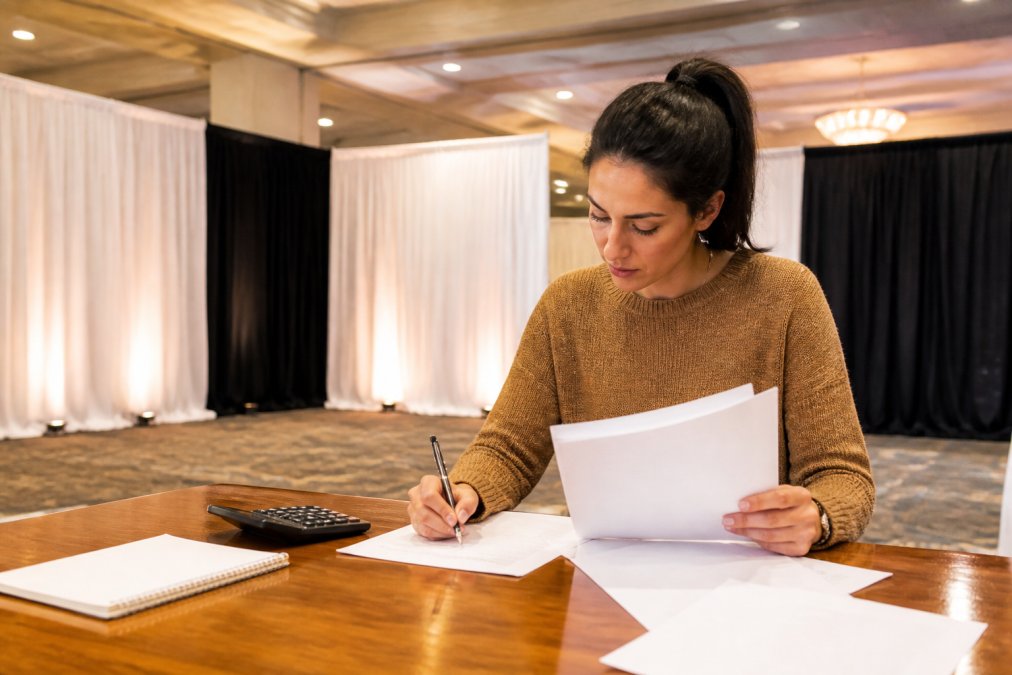
Building a realistic pipe and drape rental budget requires itemizing each cost component and adding contingency for unexpected expenses. This structured approach prevents surprises and ensures you allocate funds appropriately.
Start with the foundation: your venue dimensions and event requirements. Measure linear footage, note ceiling height, and identify any architectural constraints. Document your color and fabric preferences. This information forms the basis for accurate quotes.
Request detailed quotes from multiple vendors, asking them to break down costs by component: fabric rental per linear foot, delivery charges, installation labor, strike fees, and any venue-specific surcharges. Comparing line-item breakdowns reveals which vendors offer the best value on specific services. One vendor might offer competitive fabric pricing but charge high installation labor; another might bundle installation into a flat rate.
Build your budget with this structure:
- Base fabric rental (linear footage × height × per-unit rate)
- Delivery charges (single or multiple locations)
- Professional installation labor (if applicable)
- Strike and removal fees
- Contingency buffer (10-15% of total)
The contingency matters. Last-minute design changes, venue surprises, or additional draping requests happen frequently. Setting aside 10-15% of your estimated budget prevents these changes from derailing your event.
Document all assumptions in writing. Confirm with your vendor that your quote covers everything you've planned, specific heights, colors, fabric types, and installation dates. Misaligned expectations lead to surprise charges. A written quote that specifies exactly what's included and what costs extra protects both you and the vendor.
Event Drape Rental's REQUEST FOR QUOTE process walks you through this systematically, ensuring you provide complete information and receive accurate pricing. Discussing your budget constraints upfront helps the company recommend cost-effective options without compromising quality.
Frequently Asked Questions
How much does pipe and drape cost to rent?
Pricing for pipe and drape rental depends on several variables: the linear footage you need, fabric type, rental duration, delivery location, and whether you choose professional installation. Factors like fire retardant certification, fabric fullness, and custom colors also affect the final quote. Contact Event Drape Rental directly for current pricing tailored to your specific event requirements and venue.
What's the difference between DIY pipe and drape and hiring professional installation?
DIY installation saves on labor costs but requires time, planning, and physical effort to assemble uprights, crossbars, and base plates correctly. Professional installation guarantees proper setup, faster load-in/load-out, and eliminates setup headaches, especially important for high-profile events. Professional teams handle venue compliance, weight distribution, and aesthetic precision, which often justifies the additional expense for corporate galas and trade shows.
How do I calculate how much pipe and drape I need for my venue?
Start by measuring your venue's linear footage, the total distance around the perimeter or specific areas you want to drape. Multiply length by the height you need (standard heights range from 12 to 30 feet). Account for fabric fullness, which affects how much fabric you actually need versus the linear distance. For room partitioning or booth definition, map out your layout and calculate each section separately. Event Drape Rental can help you estimate requirements based on your venue dimensions.
What hidden costs should I budget for when renting pipe and drape?
Beyond base rental rates, budget for delivery charges, setup labor, strike fees (takedown costs), and potential rush fees if you need quick turnaround. Venue-specific restrictions may require fire retardant certification or custom hardware configurations, which add to costs. Transportation surcharges apply for multiple delivery locations. Damage waivers or insurance, though optional, protect against unexpected expenses. Always request a detailed quote that itemizes these charges upfront.
Planning a pipe and drape installation requires balancing aesthetic impact with realistic budgeting. The challenge isn't finding draping, it's understanding all the cost components before committing to a rental. Event Drape Rental's extensive inventory and flexible installation options help you achieve your vision without budget surprises. Request a detailed quote today and get a clear breakdown of costs for your specific event requirements.
This article was written using GrandRanker