 ultimate-guide
Rent Pipe and Drape for Weddings: 2026 Guide
Table of Contents
- What Pipe and Drape Actually Includes
- Pipe and Drape Height Requirements for Wedding Venues
- Wedding Backdrop Draping Ideas for Every Venue Style
- DIY Pipe and Drape Wedding Kits vs. Professional Installation
- Safety, Weight Loads, and Fire Retardant Certification
- Average Cost of Wedding Pipe and Drape Rentals
- How to Rent Pipe and Drape: Rental Duration, Shipping, and Color Selection
- Frequently Asked Questions
Last Updated: August 12, 2026
What Pipe and Drape Actually Includes
Pipe and drape is a modular event décor system consisting of upright poles, horizontal crossbars, and weighted base plates that support suspended fabric panels to create backdrops, room dividers, and decorative walls. It's the backbone of professional event staging across weddings, trade shows, and corporate galas. The hardware determines your structure; the fabric determines your look. Getting both right is what separates a polished wedding backdrop from a setup that looks improvised.
Hardware Components: Uprights, Crossbars, and Base Plates
The three core components work together as a structural unit. Upright poles are the vertical supports, typically telescopic and extending to different heights with a locking collar mechanism to hold the extended height securely under fabric weight. Adjustable crossbars span horizontally between two uprights, supporting drape panels through fabric loops, grommets, or pin-hook attachments. Weighted base plates sit on the floor beneath each upright, providing the safety foundation, typically 50 lbs or more for taller configurations to prevent tipping.
A standard 10-foot-wide backdrop section requires two uprights with a single crossbar and three to four fabric panels for adequate fullness.
Fabric Options: Sheer Voile, Velvet, Glitz, and Blackout Drapes
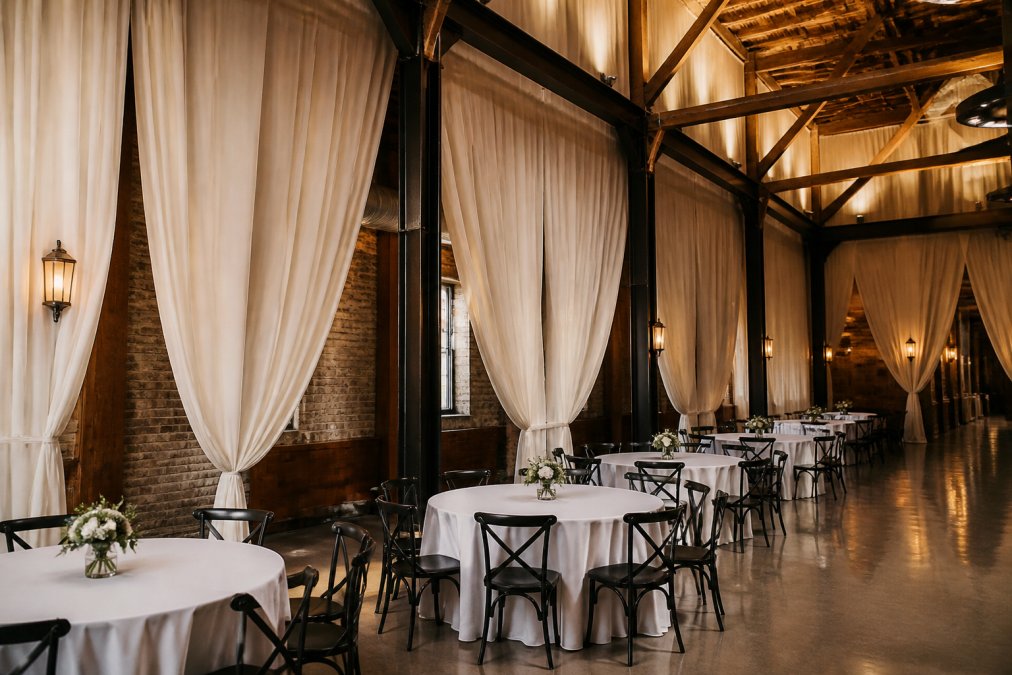
Sheer voile is lightweight and translucent, creating a soft, romantic effect when backlit, ideal for ceremony backdrops. Velvet drapery is luxurious and formal, absorbing light to create depth and texture for reception backdrops. Glitz fabric reflects light aggressively for a glamorous, high-energy look suited to evening receptions. Blackout drapes block light completely, useful for daytime events or creating defined sections within open floor plans. Event Drape Rental carries six distinct fabric materials, allowing you to mix and match textures within a single event.
Pipe and Drape Height Requirements for Wedding Venues
Standard telescopic uprights typically range from 8 to 20 feet. For most hotel ballrooms and event halls, heights between 8 and 12 feet cover the majority of ceremony and reception backdrop needs. Event Drape Rental's inventory extends to 30 feet, covering most architectural ceiling heights outside of purpose-built arenas.
Key considerations for height selection:
- Measure your venue's ceiling height at the specific installation point, not the average room height.
- Account for ceiling clearance, the crossbar needs at least 6 inches below any overhead obstruction.
- Taller configurations require heavier base plates and wider spacing. A 20-foot upright with a standard 50-lb base plate is undersized for most conditions.
The ESTA (Event Safety Alliance) rigging and structural guidelines provide useful reference points for load calculations in event environments.
Wedding Backdrop Draping Ideas for Every Venue Style
The biggest mistake couples make is choosing fabric before defining the venue's existing visual language. The fabric should respond to the architecture, not compete with it.
Ceremony Backdrops and Altar Framing
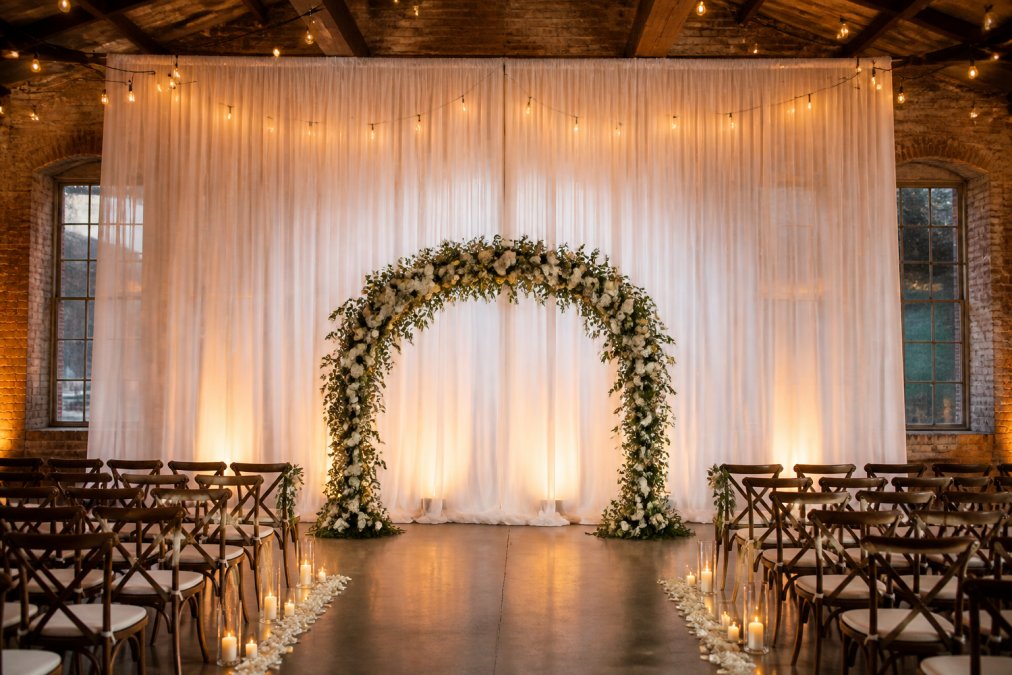
Ceremony backdrops anchor the visual focal point of the entire event. A single wide run of pipe and drape, typically 12 to 16 feet wide and 8 to 12 feet tall, positioned directly behind the officiant and couple, works across most settings. For outdoor-to-indoor venues, sheer voile in ivory or blush suits almost every color palette. For formal ballrooms, floor-to-ceiling velvet in white or champagne creates a more structured look. Swagging, where fabric is gathered in decorative curves, adds visual interest. Valance hangers create a layered look that frames the altar more deliberately.
Reception Room Dividers and Floor-to-Ceiling Draping
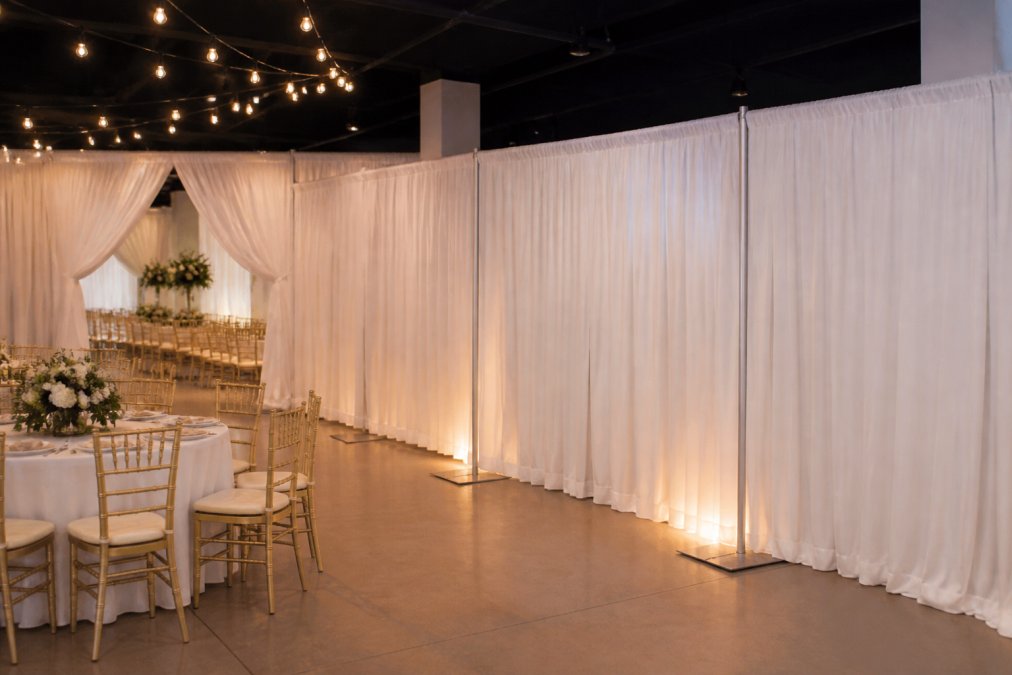
Reception draping creates atmosphere and manages space. Room dividers are particularly useful in large venues where the guest count doesn't fill the space naturally. For room dividers, blackout drapes define space clearly and prevent visual bleed between sections. For decorative applications, sheer voile or glitz fabric creates a more festive effect.
Floor-to-ceiling draping in tall venues requires careful attention to fabric weight. Drape fullness, the ratio of fabric width to crossbar width, should be at least 2:1 for a full, gathered look. A 1:1 ratio looks flat and sparse regardless of fabric quality.
DIY Pipe and Drape Wedding Kits vs. Professional Installation
The choice between DIY rental and professional installation depends on your timeline, venue rules, and tolerance for setup logistics.
Step-by-Step Assembly for DIY Rental Kits
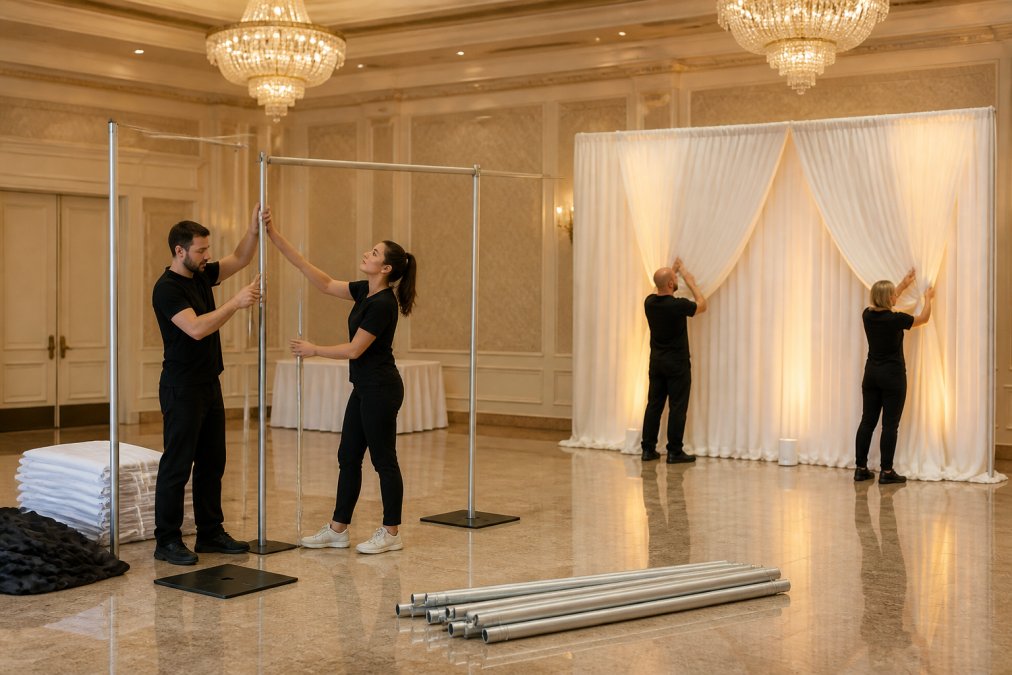
DIY assembly is straightforward when components are well-labeled:
- Position your base plates on the floor at planned upright locations.
- Insert the upright pole into the base plate receiver, extend to target height, and lock the collar.
- Attach the crossbar to the upright using the pin-hook or sleeve connector.
- Hang your drape panels on the crossbar using the fabric's built-in loops, grommets, or pin hooks.
- Adjust for fullness and alignment, checking that panels are evenly spaced and the crossbar is level.
- Repeat for each additional run.
Setup time for a standard 20-foot backdrop run is approximately 45 to 60 minutes for two people.
When to Choose Professional Setup and Strike
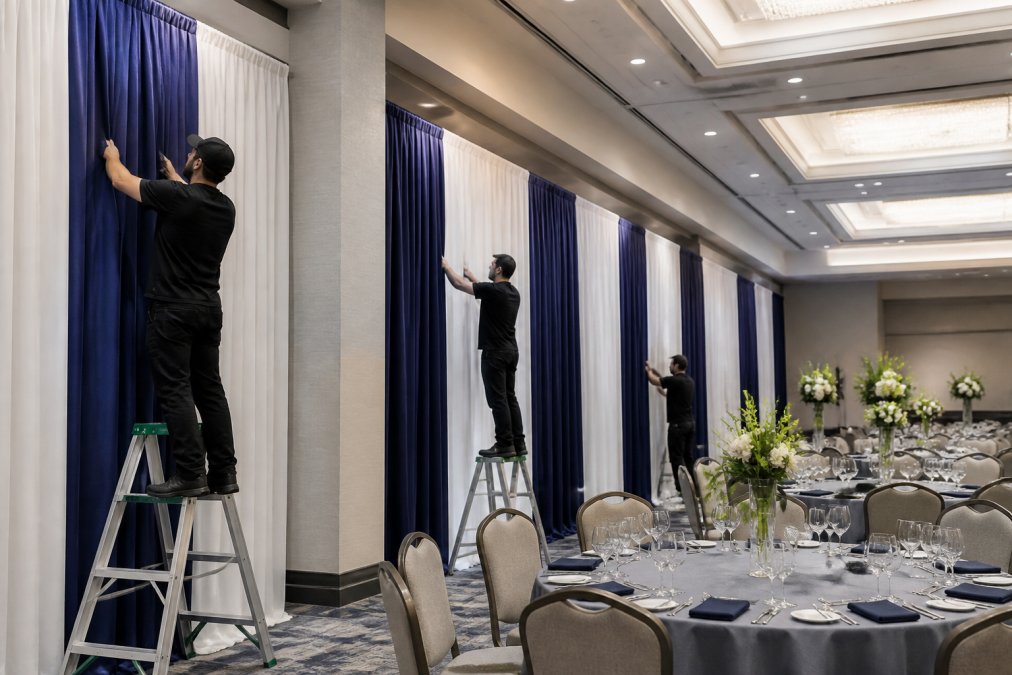
Professional installation makes sense for tall configurations above 16 feet, venues with strict liability requirements, compressed setup windows, and installations where draping is load-bearing or integrated with lighting rigs. Many hotel ballrooms require that any structural installation be performed by a licensed vendor or in-house crew. Confirm your venue's policy before choosing the DIY route. Professional setup also includes strike, the post-event teardown, freeing you from this logistical task.
Safety, Weight Loads, and Fire Retardant Certification
Two safety issues matter most: structural stability and fire compliance.
Structural stability depends on base plate weight relative to upright height. As upright height increases, base plate weight and footprint must increase proportionally. For configurations above 12 feet, verify that your rental provider specifies the base plate weight included with the kit.
Fire retardant certification is not optional for most commercial venues. The NFPA 701 standard for flame resistance of textiles used in public occupancies is the primary reference point for event fabric compliance in the United States. Most hotel and convention center contracts require that all event fabrics meet NFPA 701 or carry a valid flame resistance certificate. Request documentation from your rental provider before the event, venue fire marshals do inspect, and non-compliant fabric gets removed.
According to the U.S. Fire Administration guidelines on event and tent safety, fabric-related fire incidents at events are preventable when proper certification and inspection protocols are followed.
Average Cost of Wedding Pipe and Drape Rentals
Wedding pipe and drape rental costs vary based on linear footage, fabric type, upright height, delivery distance, and whether professional installation is included.
| Factor | Impact on Pricing |
|---|---|
| Linear footage | Primary cost driver; more footage = higher total |
| Fabric type | Specialty fabrics (velvet, glitz) cost more than voile |
| Upright height | Taller configurations require heavier hardware |
| Professional installation | Adds labor cost; justified for complex setups |
| Rental duration | Multi-day rentals may have different rates than single-day |
| Delivery and shipping | Distance and package size affect logistics cost |
The most accurate approach is to request a quote based on your actual venue dimensions, fabric preferences, and installation requirements. Event Drape Rental provides custom quotes so you're pricing your actual setup, not an approximation.
How to Rent Pipe and Drape: Rental Duration, Shipping, and Color Selection
Renting pipe and drape involves several logistical decisions that prevent problems on setup day.
Rental duration typically covers the event date plus setup and strike time. A Saturday wedding might require equipment delivered Thursday or Friday, with pickup scheduled for Sunday or Monday. Confirm that your rental agreement accounts for the full installation window.
Shipping logistics involve dimensional weight considerations. Upright poles and crossbars ship in long, narrow cases; base plates are heavy and compact. Many providers ship via freight for large orders, requiring a loading dock or lift-gate delivery. Confirm delivery requirements with your venue before finalizing shipping.
Color selection is where renters often underestimate their options. Event Drape Rental maintains an inventory of over 100 colors across multiple fabric materials, allowing you to match specific brand colors or coordinate precisely with a wedding color palette. Request physical color swatches before committing, on-screen color rendering varies significantly by monitor calibration.
For weddings, the American Institute of Floral Designers color harmony guidelines offer a useful framework for coordinating fabric colors with floral arrangements and table linens.
Practical steps to simplify your rental process:
- Measure your venue dimensions and ceiling height before contacting any provider
- Identify the fabric type and color preference before requesting a quote
- Confirm your venue's fire retardant certification requirements
- Clarify the delivery address, loading dock availability, and setup window
- Ask specifically whether base plate weight is specified for your upright height
Planning a wedding backdrop or reception draping treatment involves multiple variables: hardware specs, fire compliance, venue logistics, and color precision all factor into whether the final result looks intentional or improvised. Event Drape Rental offers drapes from 12 to 30 feet, over 100 colors, and six fabric materials, with both DIY rental kits and professional installation options to fit your setup situation. Submit a Request for Quote and get pricing based on your actual configuration, not a generic estimate.
Frequently Asked Questions
How much does it cost to rent pipe and drape for a wedding?
Pricing for wedding pipe and drape rentals depends on several factors: total linear footage needed, fabric type (sheer voile costs less than velvet or glitz), drape height, rental duration, and whether you add professional installation. DIY rental kits generally cost less than full-service packages. Because configurations vary so widely, the best way to get an accurate number is to request a quote with your venue dimensions and event date.
What are the standard heights for wedding pipe and drape?
Most standard pipe and drape systems use telescopic uprights that adjust from around 8 feet to 20 feet. For venues with higher ceilings, specialty hardware can reach 30 feet or more. The right height depends on your ceiling clearance and the look you want, taller draping creates a more dramatic floor-to-ceiling effect, while mid-height panels work well as room dividers or photo backdrops.
Is it cheaper to use a DIY pipe and drape kit or hire a professional installer?
DIY rental kits typically cost less upfront because you handle assembly and teardown yourself. However, professional installation saves time, eliminates setup errors, and is worth the added cost for large or complex configurations, especially floor-to-ceiling draping across a full ballroom. If your team has never assembled pipe and drape before, a professional crew also reduces the risk of hardware failures during the event.
What fabric types work best for wedding pipe and drape?
Sheer voile is the most popular choice for weddings, it diffuses light beautifully and creates an airy, romantic feel. Velvet drapery adds richness and depth for formal or evening receptions. Glitz fabric catches light and works well for glamorous or black-tie events. Blackout drapes are best when you need to block light or partition a space completely. All fabrics used in event settings should carry a fire retardant certification.
This article was written using GrandRanker