 ultimate-guide
Renting Drapes for Warehouse Weddings: A Complete Guide
Table of Contents
- Why Warehouse Venues Need Pipe and Drape
- Event Drapery Fabric Types and What Works Best
- Pipe and Drape Height Requirements for Warehouse Spaces
- DIY Wedding Draping Kits vs. Professional Installation
- Color Selection, Customization, and Warehouse Aesthetics
- Rental Duration, Delivery, and Logistics Planning
- Backdrop, Ceiling Draping, and Room Partition Applications
- Frequently Asked Questions
Last Updated: August 31, 2026
Renting Drapes for Warehouse Weddings: A Complete Guide
Warehouse venues appeal to modern couples for their raw, industrial aesthetics. However, transforming exposed concrete into an elegant celebration requires thoughtful planning, particularly when selecting drapes. At Event Drape Rental, we help event planners navigate warehouse-specific challenges with professional-grade pipe and drape solutions that deliver aesthetic impact and functionality.
This guide covers selecting, installing, and managing event drapery for warehouse spaces, including fabric types, height requirements, installation methods, and logistics.
Why Warehouse Venues Need Pipe and Drape
Warehouse spaces present distinct challenges that standard ballrooms don't. High ceilings, exposed brick, concrete floors, and industrial beams create visual complexity requiring strategic coverage. Pipe and drape solutions, vertical fabric panels mounted on aluminum frames, create visual boundaries, hide unsightly infrastructure, and establish intimacy within vast open spaces.
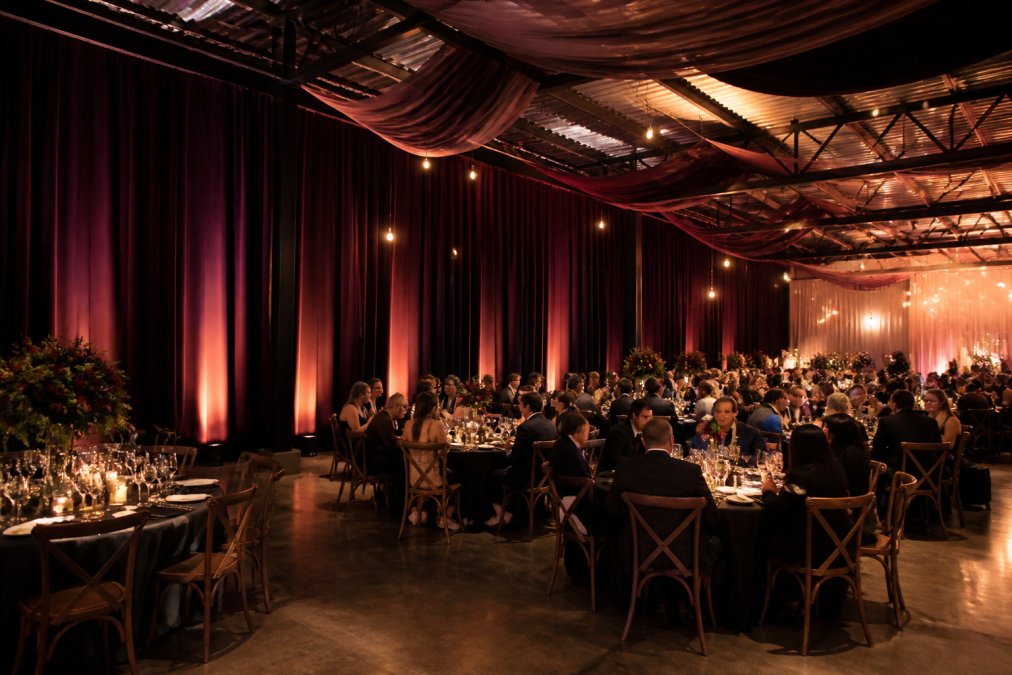
Properly installed pipe and drape provides acoustic benefits by absorbing sound that bounces off hard warehouse surfaces (peer-reviewed research). It establishes clear spatial zones, separating ceremony from reception, creating photo backdrops, or defining VIP lounges. Without this structure, a warehouse feels cold and disconnected.
Cover the areas your guests will see from seated positions and the entrance. This typically means focusing on perimeter walls, ceiling sections above the main event space, and walls behind key areas like the dance floor or ceremony backdrop.
Event Drapery Fabric Types and What Works Best
The fabric you choose affects appearance, durability, flame-retardant compliance, and how light interacts with the space.
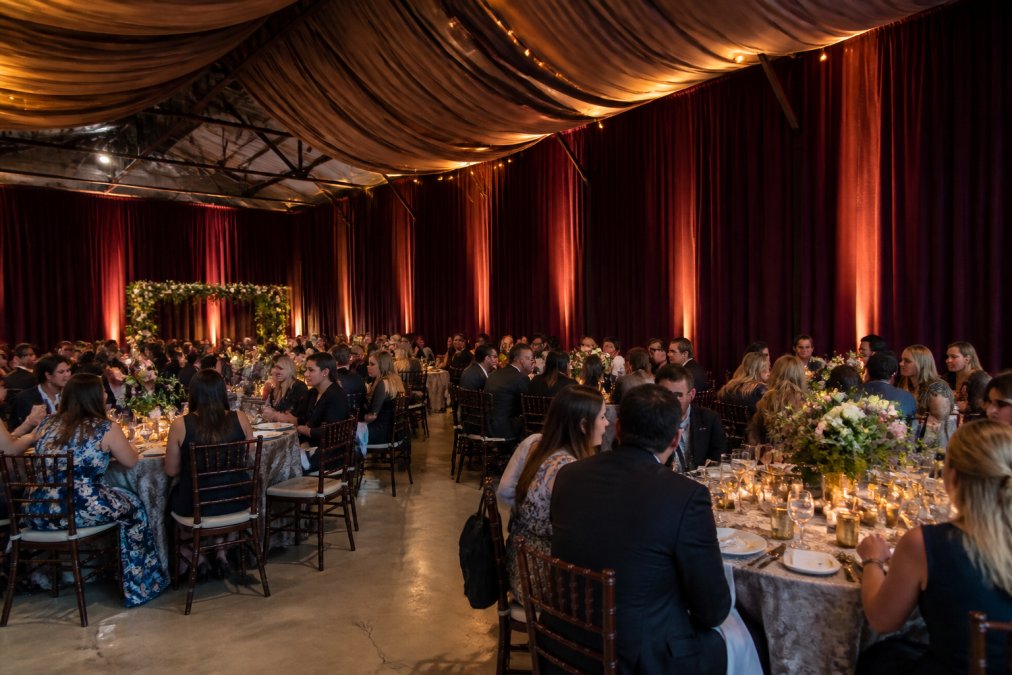
Velvet drapes are the premium choice for warehouse weddings. The heavy fabric absorbs light and creates rich depth in jewel tones like emerald, sapphire, or burgundy. Velvet hangs beautifully without wrinkles and provides excellent acoustic absorption. The downside: higher cost and careful handling requirements.
Polyester drape is the workhorse of event rentals. It's affordable, durable, available in virtually any color, and handles repeated use without degrading. Polyester's slight sheen catches light nicely, making colors appear vibrant. It's also easier to clean and transport than velvet.
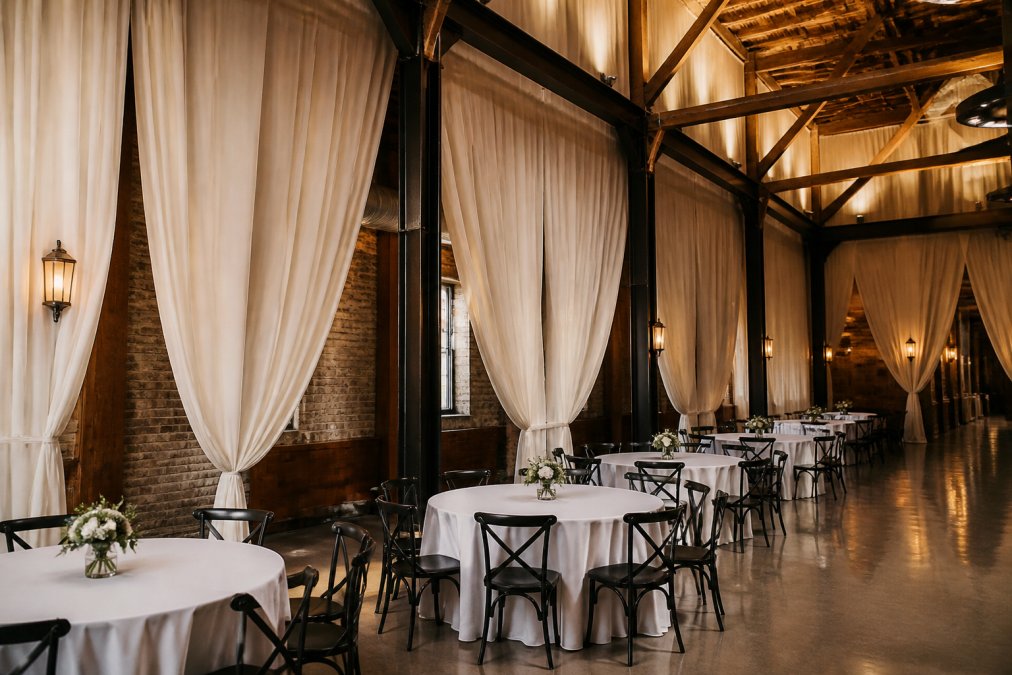
Sheer voile creates an ethereal, romantic aesthetic. Often used for backdrops or ceiling draping, sheer fabrics allow light to pass through while creating visual softness. Voile works particularly well with uplighting, creating a glowing effect. However, sheer fabrics require careful handling and show wrinkles more readily.
Linen-look polyester mimics natural linen texture while maintaining polyester's durability. It's ideal for warehouse venues where you want refined, less theatrical appearance.
For warehouse weddings, the best choice depends on your aesthetic goals. Velvet creates drama and luxury. Polyester offers versatility and value. Sheer fabrics work for specific applications like backdrops or ceiling treatments. Consider combining fabrics: heavy velvet for perimeter walls, sheer voile for ceiling draping, and solid color for room partitions.
Flame-Retardant Standards and Warehouse Safety
Warehouse venues fall under different fire code jurisdictions than hotels or event centers and often lack built-in fire suppression systems that exempt other venues from strict fabric requirements.
Flame-retardant fabric is legally required in warehouse venues. Verify that your rental company provides fabrics meeting National Fire Protection Association (NFPA) standards, specifically NFPA 701, which governs flame-retardant textiles for interior use (nfpa.org). Some budget rental companies may not carry flame-retardant inventory, risking event shutdown during final walkthrough.
Event Drape Rental maintains a complete inventory of flame-retardant fabrics across all material types and colors. This compliance eliminates the risk of costly last-minute complications.
Pipe and Drape Height Requirements for Warehouse Spaces
Warehouse ceilings vary dramatically, from 20 feet to 40 feet or higher. Drape height should be determined by ceiling height, desired visual impact, and specific coverage areas.
For most warehouse weddings, drapes reaching 12 to 20 feet tall are sufficient (peer-reviewed research). This height covers the upper third of the wall from a guest's eye level, creating a finished look without requiring industrial equipment. Drapes at this height hide structural elements, create visual boundaries, and establish intimate scale within large spaces.
Taller draping can be stunning in dramatic 30-foot or 40-foot ceilings. Event Drape Rental offers drapes ranging from 12 to 30 feet in height, covering virtually all warehouse applications. Taller drapes require more sophisticated rigging and higher-capacity base plates, affecting both cost and installation timeline.
Measuring Your Warehouse and Planning Coverage
Before selecting drapes, obtain precise measurements of your space to determine linear feet needed, appropriate heights, and critical coverage areas.
Measure the linear distance of walls you want to cover. For a 100-foot by 60-foot event area, perimeter measurement is 320 linear feet. However, focus on areas visible from guest seating and the entrance. The wall behind the ceremony or dance floor is essential. Walls visible from cocktail areas and main seating should be covered. Walls hidden by catering stations can sometimes be skipped to reduce costs.
For ceiling draping, measure the area you want to cover. Document ceiling height at different points, as many industrial spaces have varying heights due to structural elements.
Sketch your warehouse layout with measurements and bring it to your rental company consultation. Professional installers will identify where additional support is needed and whether special equipment is required.
DIY Wedding Draping Kits vs. Professional Installation
Both approaches are viable but suit different situations and skill levels.
DIY wedding draping kits include pipes, bases, crossbars, and fabric. The appeal is cost savings by eliminating labor charges. For simple applications like a backdrop wall or single room partition, DIY installation is manageable.
However, DIY installation in warehouse venues is significantly more complex than in traditional venues. Uneven concrete floors affect base plate stability. High ceilings mean working from ladders or lifts, introducing safety risks. Securing drapes to warehouse walls may require drilling into concrete or finding structural elements. Most event planners who attempt DIY installation report it takes far longer than expected, looks less polished than professional installation, and leaves them exhausted before the event begins.
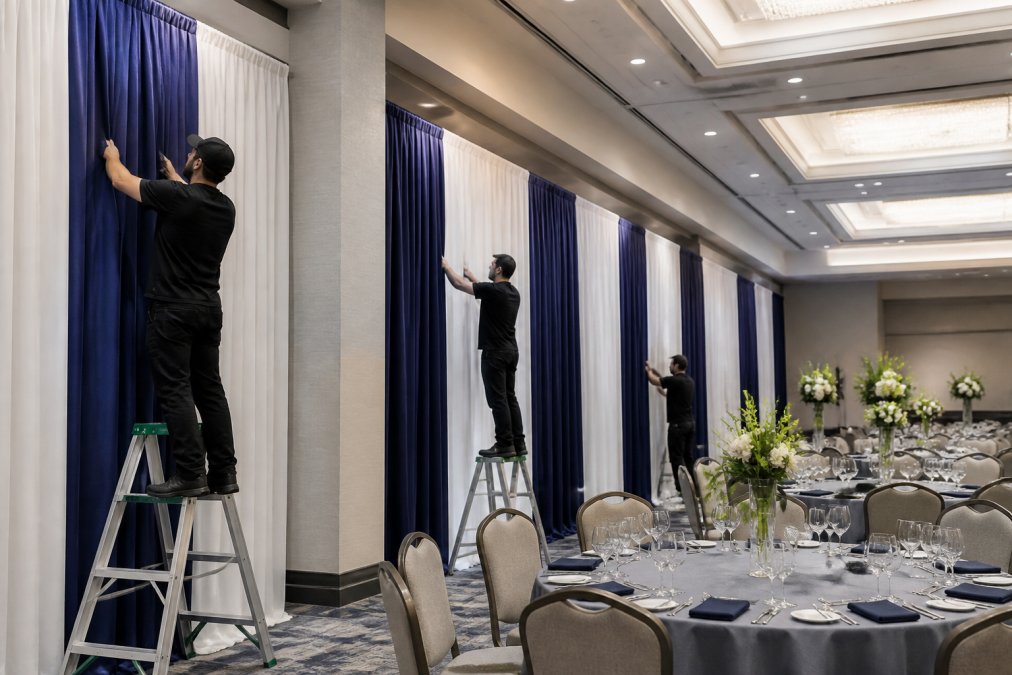
Professional installation means the rental company handles setup and takedown. Their crews arrive with equipment, experience, and efficiency. They know how to secure drapes in warehouse spaces, work at height safely, and achieve a finished look matching your aesthetic.
Cost-Benefit Analysis: When to Go Professional
Professional installation adds cost but eliminates several hidden expenses and risks:
Time value. Spending 8-10 hours installing drapes yourself is time not managing other vendors or handling last-minute logistics.
Risk of damage. Improper installation can damage rental equipment, your venue, or injure someone. Rental companies carry liability insurance and assume this risk.
Aesthetic quality. Professional installers know how to tension fabric properly, hide seams, work around obstacles, and create seamless coverage.
Timeline flexibility. Professional crews can work around your event schedule, installing overnight or handling quick changes if plans shift.
For warehouse weddings with significant draping covering multiple walls or ceiling sections, professional installation typically pays for itself through quality improvement. For simple applications, DIY is more defensible economically.
Event Drape Rental offers both DIY kits and full professional installation.
Color Selection, Customization, and Warehouse Aesthetics
Warehouse venues have distinct aesthetic constraints influencing color selection. The industrial architecture, exposed brick, concrete, and steel beams set a visual baseline that your drapes either complement or contrast with.
Neutral colors like white, black, charcoal, and gray work with virtually any warehouse aesthetic. White drapes brighten industrial spaces and reflect light effectively. Black drapes create drama and make other elements stand out more prominently.
Jewel tones like emerald, sapphire, burgundy, and deep plum create luxury and sophistication. These colors work particularly well in velvet fabric and photograph beautifully.
Blush, ivory, and champagne tones create romance and elegance, working well for traditional or romantic warehouse weddings.
Consider how your chosen color interacts with the space's existing elements. A white drape against exposed white brick can disappear. A deep color against dark brick creates visual interest. Uplighting dramatically changes how colors appear.
Event Drape Rental maintains inventory in over 100 colors across different fabric types. Custom dyeing is often available with advance notice.
Rental Duration, Delivery, and Logistics Planning
Warehouse weddings require careful coordination of delivery, setup, and strike timing. Unlike hotel venues with dedicated event staff, warehouse spaces typically have no permanent infrastructure.
Rental duration typically runs from the day before your event through the day of. Most rental companies charge a daily rate, with the first day including delivery and setup, and the final day including strike and pickup.
Delivery logistics in warehouse venues are more complex than hotel deliveries. Communicate loading dock availability, elevator capacity, and access restrictions clearly when booking.
Setup timing depends on draping scope. A single backdrop wall might take 2-3 hours. Extensive perimeter draping with ceiling elements can require 6-8 hours. Professional installers typically work during off-hours to avoid interfering with other vendors.
Strike and pickup should happen after your event. Most rental agreements allow 24 hours for pickup.
Setup, Strike, and Damage Protection
The condition of rental equipment when returned directly affects your final invoice.
Normal wear and tear is expected and typically covered by the rental company. Small wrinkles, dust, or minor marks don't result in charges.
Damage beyond normal wear, such as torn fabric, bent pipes, or broken bases, typically results in repair or replacement charges.
Damage protection options are often available. Some rental companies offer damage waivers for a percentage of your rental cost, worth considering for warehouse venues where installation complexity increases accident risk.
Inspection before and after is critical. Photograph drapes upon arrival and note existing damage. Be present during strike to document condition. This protects you from being charged for pre-existing damage.
Event Drape Rental provides detailed setup and strike checklists outlining responsibilities for both parties.
Backdrop, Ceiling Draping, and Room Partition Applications
Within your warehouse space, pipe and drape serves multiple specific functions. Understanding strategic use maximizes impact and rental investment.
Backdrop draping behind the ceremony or dance floor creates a focal point and provides a finished background for photographs. A 12-foot to 16-foot tall backdrop typically requires 15-25 linear feet of fabric. Backdrops work best in contrasting color or texture.
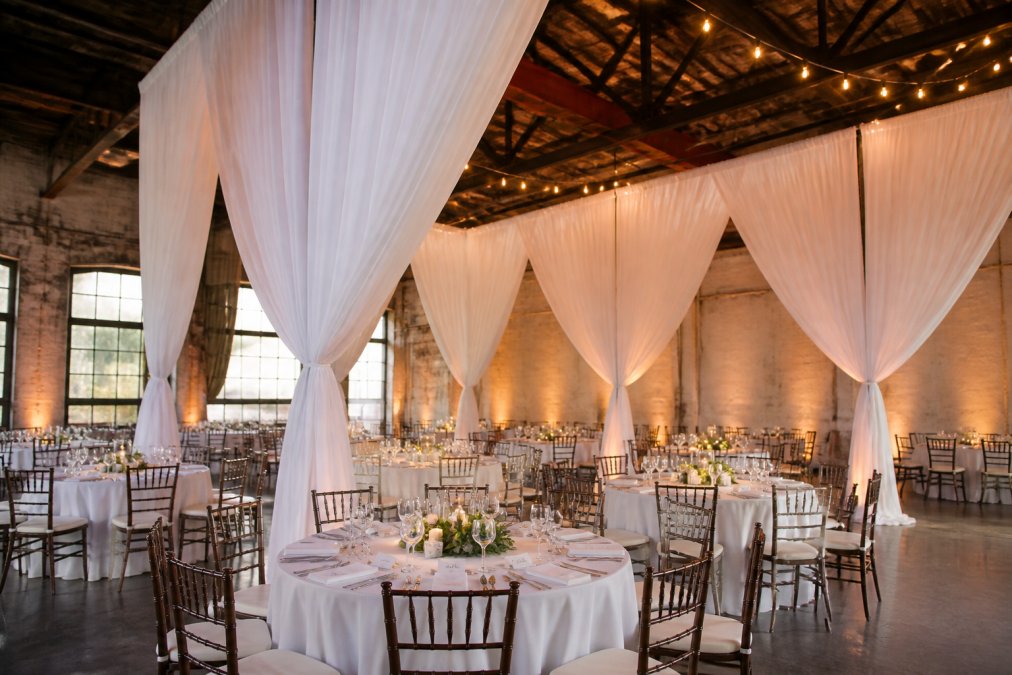
Ceiling draping transforms the overhead experience. Partial ceiling coverage above the dance floor or ceremony creates intimacy without full ceiling cost. Sheer voile works beautifully for ceiling applications, particularly with uplighting, creating a glowing effect. Ceiling draping also improves acoustics by absorbing sound.
Room partitions divide large warehouse spaces into distinct areas. A partition separating ceremony from reception creates flow and prevents guests from seeing setup activities. Partitions typically require less draping than perimeter coverage but need structural stability, extending from floor to at least 8-10 feet high.
The combination of backdrop, ceiling, and partitions creates a fully transformed warehouse space with exponentially greater visual impact than any single application.
Transforming a warehouse into an elegant event space requires thoughtful planning, the right materials, and often professional guidance. Renting drapes for warehouse weddings is complex because warehouses present structural, safety, and aesthetic challenges that standard venues don't. Event Drape Rental simplifies this process by providing professional-grade pipe and drape solutions with over 100 colors and multiple fabric types, from DIY installation kits to full-service setup and strike. Whether you're planning a wedding, corporate gala, or trade show in a warehouse space, our team can help you navigate height requirements, flame-retardant compliance, and logistics planning. REQUEST A QUOTE to discuss your specific warehouse venue and get a customized recommendation for draping solutions that match your aesthetic vision and timeline.
Frequently Asked Questions
What are the most important factors when renting drapes for a warehouse wedding?
The three critical factors are ceiling height (warehouses often exceed 30 feet), structural mounting points (concrete floors and steel beams require specific base plates and hardware), and flame-retardant compliance (local fire codes mandate fire-rated fabrics). You'll also need to plan for acoustic treatment since warehouses have hard surfaces that create echoes. Start by measuring your exact ceiling height and identifying where you can safely anchor upright poles and crossbars.
How do you determine the height of drapes needed for a warehouse wedding?
Measure from the floor to your ceiling at multiple points, as warehouse ceilings are often uneven. Drapes typically extend from floor to ceiling for maximum impact, though you can also create partial coverage to define specific areas. Most warehouse weddings use drapes between 12 and 30 feet in height. Account for any overhead obstructions like beams, sprinkler systems, or electrical conduits. Plan additional height if you want the drape to pool slightly on the floor for an elegant effect.
What fabric materials are best for warehouse wedding draping?
Velvet drapes create luxurious depth and absorb sound in industrial spaces, while sheer voile adds ethereal elegance and allows light to pass through for uplighting effects. Polyester drapes offer durability and easy maintenance. All rental fabrics must meet flame-retardant standards required by fire codes. The best choice depends on your aesthetic, velvet for drama and acoustic benefit, sheer for layered lighting effects, or polyester for a crisp, clean look. Consider combining multiple fabric types for visual interest.
Can I install pipe and drape myself for a warehouse wedding, or should I hire professionals?
DIY wedding draping kits are possible if you have a small, straightforward space with clear floor mounting points. However, warehouses present unique challenges: uneven concrete, high ceilings requiring ladders or lifts, and structural considerations around load-bearing capacity. Professional installation ensures proper safety compliance, correct tension to prevent sagging, and efficient setup within your timeline. For most warehouse weddings, professional installation is worth the investment to guarantee a polished look and reduce on-site stress.
This article was written using GrandRanker