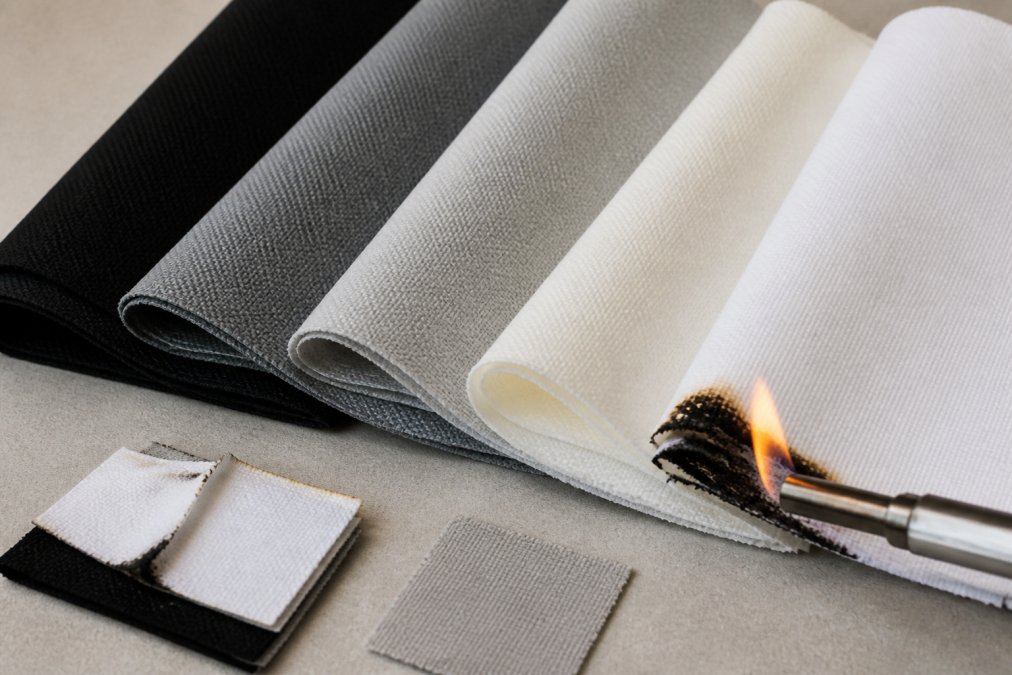
 listicle
Top 5 Fire Retardant Fabrics for Events: 2026 Guide
Table of Contents
- Comparison Table: Top 5 Fire Retardant Fabrics for Events
- 1. IFR Polyester: The All-Around Event Workhorse
- 2. IFR Velour: Luxury and Light Control for Stage Curtains
- 3. Blackout Drapery Fabric (FR): Total Light Control for AV Events
- 4. Sheer IFR Fabric: Elegant, Lightweight Draping for Weddings
- 5. FR Treated Cotton: Budget-Friendly Natural Aesthetic
- NFPA 701 Certified Event Drapes: What Planners Must Know
- Inherently Flame Retardant vs Topical Treatment: Key Differences
- Frequently Asked Questions
Last Updated: September 16, 2026
Comparison Table: Top 5 Fire Retardant Fabrics for Events
Choosing fire retardant fabrics for events comes down to matching the material to the job: IFR polyester for general pipe and drape, velour for stage curtains, blackout fabric for AV work, sheer IFR for weddings, and FR treated cotton for budget builds. At Event Drape Rental, we stock over 100+ colors across 6 different fabric materials.
| Fabric | Best For | Key Strength | Main Trade-Off |
|---|---|---|---|
| IFR Polyester | Backdrops, pipe and drape | Wrinkle-resistant, durable | Synthetic feel |
| IFR Velour | Stage curtains, masking | Light and sound absorption | Heavy rigging needs |
| Blackout Drapery (FR) | AV events, projection | Total light control | Stiffer hand |
| Sheer IFR Fabric | Weddings, ceiling draping | Lightweight, elegant | Snags easily |
| FR Treated Cotton | Budget events | Natural matte finish | Treatment fades with washing |
1. IFR Polyester: The All-Around Event Workhorse
IFR polyester is the default choice for most event drapery because the flame resistance is built into the fiber, not applied on top. It resists wrinkling and shrinking, travels well between venues, and meets NFPA 701, the standard fire test that governs textiles used in public spaces.
Pros and Cons of IFR Polyester
Pros:
- Durable across repeated rental cycles
- Easy to clean and maintain
- Wide range of colors and weights
- Built-in flame resistance that doesn't wash out
Cons:
- Feels synthetic compared to natural fibers
- Lighter weights can appear less premium up close
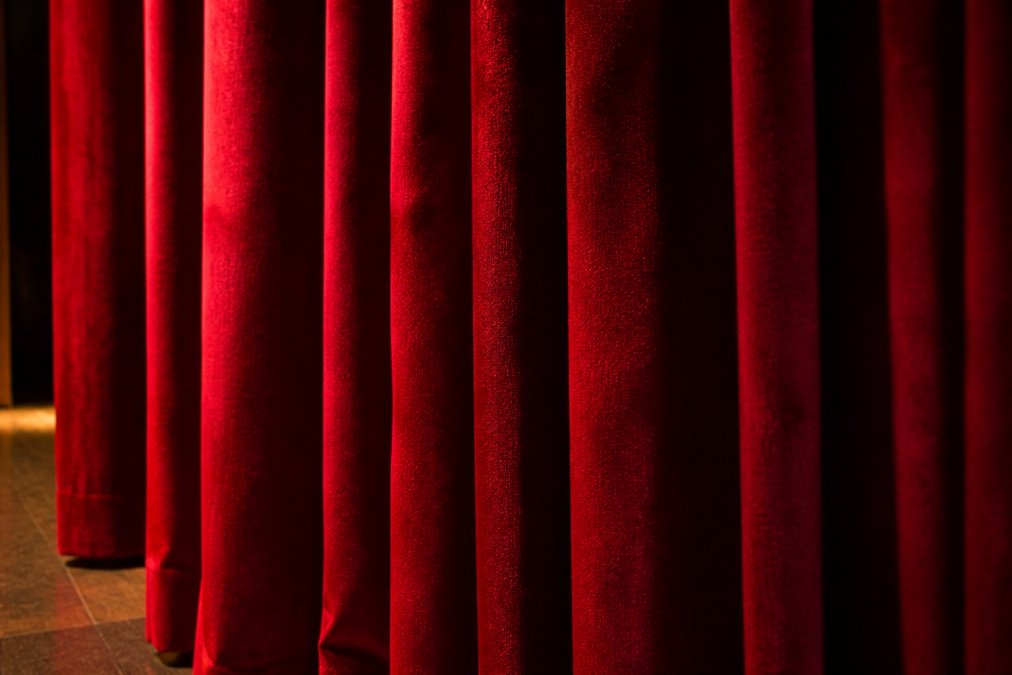
2. IFR Velour: Luxury and Light Control for Stage Curtains
Pros and Cons of IFR Velour
Pros:
- Superior light absorption for clean sightlines
- Professional, high-end appearance
- Permanent flame resistance
Cons:
- Heavy and requires sturdy rigging
- Higher transport and labor demands
3. Blackout Drapery Fabric (FR): Total Light Control for AV Events
Blackout drapery fabric is a multi-layer textile engineered to block light completely while meeting fire safety codes. For corporate presentations and projection-heavy events, it prevents the light bleed that ruins screen contrast.
Pros and Cons of Blackout Drapery Fabric
Pros:
- Prevents light bleed behind projection screens
- Versatile for technical setups
- Compliant with NFPA 701
Cons:
- Stiffer hand than standard drapery
- Limited soft-drape styling options
4. Sheer IFR Fabric: Elegant, Lightweight Draping for Weddings
Sheer IFR fabric is the go-to for wedding backdrops and ceiling treatments because it's translucent, airy, and easy to transport. The IFR construction keeps it compliant with indoor public space safety standards without sacrificing the soft, romantic look.
Pros and Cons of Sheer IFR Fabric
Pros:
- Highly aesthetic for decorative applications
- Lightweight and easy to move
- Layers well for lighting effects
Cons:
- Prone to snagging
- Less forgiving of rough handling
5. FR Treated Cotton: Budget-Friendly Natural Aesthetic
FR treated cotton offers a natural, matte finish at a lower cost than most synthetics, which makes it appealing for large-scale events on tight budgets. The fabric is treated with flame-retardant chemicals to meet NFPA 701.
Pros and Cons of FR Treated Cotton
Pros:
- Lower cost for large quantities
- Natural, understated look
Cons:
- Flame resistance fades with repeated washing
- Requires re-treatment to stay compliant
NFPA 701 Certified Event Drapes: What Planners Must Know
NFPA 701 is the fire test standard that determines whether a drapery fabric is acceptable in public spaces. It is published by the National Fire Protection Association and is the standard most venues, fire marshals, and insurance underwriters reference when they ask for proof that your drapes are compliant.
- Test Method 1 applies to fabrics with an areal density of 21 ounces per square yard or less, the lightweight sheers, voiles, and thin polyesters used for ceiling swags and backdrop layering. Samples are exposed to a small ignition source, and the fabric must self-extinguish within a specified char length and afterflame time.
- Test Method 2 applies to fabrics heavier than 21 ounces per square yard, the velours, blackouts, and heavyweight cottons used for stage masking and full-wall drape. Samples are tested in a larger chamber with a more intense ignition source, and the pass criteria are stricter.
What Documentation Actually Looks Like
There are three documents you may be handed, and they are not interchangeable:
- A test report from an accredited third-party lab, tied to a specific fabric style, weight, and color. This is the strongest proof.
- A certificate of compliance issued by the fabric mill or supplier, referencing the test report. Acceptable in most jurisdictions, but only if the report number is traceable.
- A permanent label sewn into the drape or printed on the fabric's selvage. Some fire marshals accept labels alone; many do not.
The DIY Treatment Trap
According to the National Fire Protection Association's standards overview, NFPA 701 applies to textiles used in public occupancies, which is why documentation matters at load-in. The U.S. Consumer Product Safety Commission also publishes guidance on flame-resistant materials for public settings, and both organizations emphasize documentation over verbal assurance.
Inherently Flame Retardant vs Topical Treatment: Key Differences
Inherently flame retardant fabrics have fire resistance engineered into the fiber itself, so the protection is permanent. Topically treated fabrics receive a chemical coating applied after manufacturing, which can weaken with washing, wear, or age.
What 'Inherent' Actually Means at the Fiber Level
IFR polyester, the most common inherently flame retardant event fabric, is made by copolymerizing a phosphorus-based compound into the polyester polymer chain during manufacturing. Because the modifier is part of the molecular backbone, it cannot be washed out, abraded off, or worn away. The fabric's flame resistance is a property of the fiber, not a coating on it.
What Topical Treatment Actually Is
Topically treated cotton and other natural-fiber drapes are finished with a backcoating or a bath-applied chemistry, commonly boron-based, ammonium-based, or phosphorus-based salts. These treatments work by releasing water or char-forming compounds when exposed to heat, which slows flame spread.
The Environmental and Worker-Safety Angle Most Guides Skip
This is the part of the IFR-vs-treated debate that matters more every year as venues and corporate clients add sustainability requirements to their RFPs.
- Topical FR chemistries can leach. Some legacy formulations, particularly older brominated compounds, have been restricted or phased out because of persistence in the environment and bioaccumulation. Modern treatments are generally safer, but the chemistry varies widely by supplier, and disclosure is inconsistent.
- IFR fibers avoid the leaching problem entirely. Because the modifier is bound in the polymer, there is no surface chemistry to shed during washing, handling, or disposal. For planners whose clients ask about non-toxic or low-impact materials, IFR polyester is the easier answer.
- End-of-life matters. Treated cotton that has lost its rating often ends up in general waste because re-treatment is not economical. IFR polyester, by contrast, holds its rating for the life of the fabric and is more likely to stay in rental inventory for years rather than being replaced.
How This Drives the Buying Decision
The U.S. Consumer Product Safety Commission and Occupational Safety and Health Administration both publish guidance on flame-resistant materials for public and workplace settings, and both emphasize documentation over verbal assurance. When in doubt, request the paperwork.
Frequently Asked Questions
What is the NFPA 701 standard for event fabrics?
NFPA 701 is the National Fire Protection Association's standard for fire tests of flame propagation of textiles and films. It sets two test methods: one for materials used in public spaces like event drapes, and one for materials used in outdoor settings. Fabrics that pass are certified as fire retardant and meet building code requirements for event venues.
How do I know if my event drapes are fire retardant?
Check for a certificate of compliance from the fabric manufacturer or rental company. Reputable suppliers like Event Drape Rental provide documentation showing the fabric passed NFPA 701 testing. You can also look for a label sewn into the drape. If no certificate is available, assume the fabric is not compliant and do not use it in a public venue.
What is the difference between inherently flame retardant and topical treatment?
Inherently flame retardant (IFR) fabrics have flame resistance built into the fiber itself, so the protection never washes out. Topical treatment means a chemical is applied to the fabric surface, which can diminish over time with cleaning. IFR is more durable and reliable for rental inventory and frequent use.
Do event venues require fire certificates for drapery?
Yes, most public venues in the United States require proof that drapery meets NFPA 701 or a similar fire safety standard. This is part of building and fire codes enforced by local fire marshals. Always ask your venue for their specific documentation requirements before renting drapes.
How often should event drapes be re-treated for fire safety?
Topically treated fabrics may need re-treatment after repeated washing or dry cleaning, typically every 5 to 10 cleanings depending on the chemical and fabric. Inherently flame retardant fabrics do not require re-treatment because the protection is permanent. For rental inventory, IFR fabrics are the safer long-term choice.
Coordinating fire-safe drapery across multiple venues and fabric types is where most event teams lose time. Event Drape Rental simplifies that process with drapes from 12 to 30 feet tall, more than 100 colors, and 6 fabric materials, plus DIY or professional installation options to match your timeline. Get started with Event Drape Rental and request a quote for drapes that look sharp and pass inspection.