 how-to
How to Brand Corporate Events With Custom Draping
Table of Contents
- Step 1: Translate Your Brand Guidelines Into a Draping Plan
- Step 2: Select Fabric Types and Colors That Match Your Identity
- Step 3: Design Branded Event Backdrops and Stage Focal Points
- Step 4: Integrate Custom Pipe and Drape for Events Into Your Layout
- Step 5: Plan Corporate Event Stage Design With Logo Placement
- Step 6: Create a Logo Backdrop for Corporate Events That Commands Attention
- Step 7: Budget, Safety, and Execution
- Frequently Asked Questions
Last Updated: October 10, 2026
Step 1: Translate Your Brand Guidelines Into a Draping Plan
The foundation of how to brand corporate events with custom draping starts before you order a single panel. Your brand guidelines contain the visual DNA that should inform every draping decision, from color selection to layout strategy. Most event planners skip this step and end up with beautiful draping that doesn't reinforce their brand identity at all.
Extract Your Brand's Core Visual Elements
Begin by pulling your brand guidelines document and identifying the non-negotiable visual elements. These typically include your primary and secondary colors, logo specifications, typography, and any patterns or textures that define your visual identity. If you don't have formal guidelines, audit your recent marketing materials and website to reverse-engineer your color palette and design language.
Document three things: your signature colors in RGB or hex values, the exact logo lockup you'll use (full logo, logomark only, or horizontal variant), and any supporting design elements like geometric shapes, icons, or texture patterns. This specificity matters because when you're selecting fabric colors and planning backdrop layouts, you'll reference these exact specifications rather than working from memory.
Map Draping Placement to Brand Touchpoints
Next, identify where draping will appear in your event space and what brand message each placement should communicate. A stage backdrop serves a different purpose than booth dividers, which serve a different purpose than ceiling treatments. Stage backdrops are your primary brand statement, they're where photography happens and where attendees' eyes naturally focus.
Create a simple layout sketch showing your venue, the draping locations, and the brand element each location will feature. Your stage backdrop might display a large logo with layered fabric in brand colors. Your booth perimeter might use solid draping in your primary color with custom-printed accent panels.
Step 2: Select Fabric Types and Colors That Match Your Identity
The fabric you choose affects how your brand colors appear under event lighting and how professional the overall installation looks. Different materials catch light differently, and some fabrics photograph better than others, a critical consideration if your event will be documented for social media or press coverage.
Choosing the Right Fabric Material
Your fabric selection hinges on three factors: the visual effect you want, the lighting conditions at your venue, and the durability requirements for your event. Sheer fabrics like chiffon create an ethereal, elegant effect and allow light to pass through, which works well for layered draping and creating depth. Opaque fabrics like velvet or cotton provide solid color coverage and create bold visual statements.
For corporate events, a mid-weight fabric with slight sheen (like polyester blend or sateen) often strikes the right balance. It photographs well under professional lighting, holds color vibrantly, and provides enough body to drape cleanly without looking cheap. If your event space has harsh overhead lighting, matte fabrics prevent glare.
Matching Your Signature Colors
Once you've selected your fabric type, match your brand colors as closely as possible. This is where working with a rental partner who stocks extensive color inventory becomes valuable. Event Drape Rental offers an extensive color inventory and various fabric materials, which means you're more likely to find a suitable match to your brand specifications.
Bring fabric samples to your venue and observe them under the actual lighting conditions you'll have during the event. Colors shift dramatically under different light temperatures. A color that looks perfect under office fluorescents might appear entirely different under the warm lighting of an evening gala or the cool tones of an auditorium.
Step 3: Design Branded Event Backdrops and Stage Focal Points
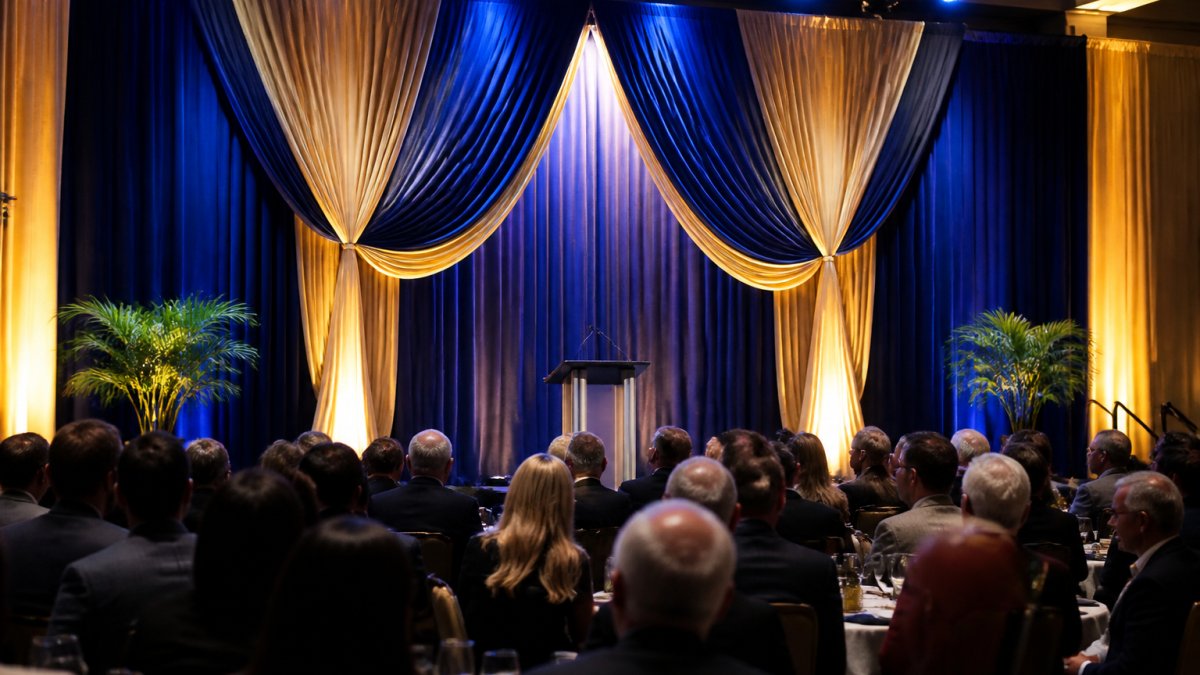
Your stage backdrop is the hero element of your event branding. It's where attendees focus during presentations, where speakers stand during key moments, and where most photography happens. This is your biggest opportunity to make your brand visible and memorable.
Creating Visual Hierarchy With Layered Draping
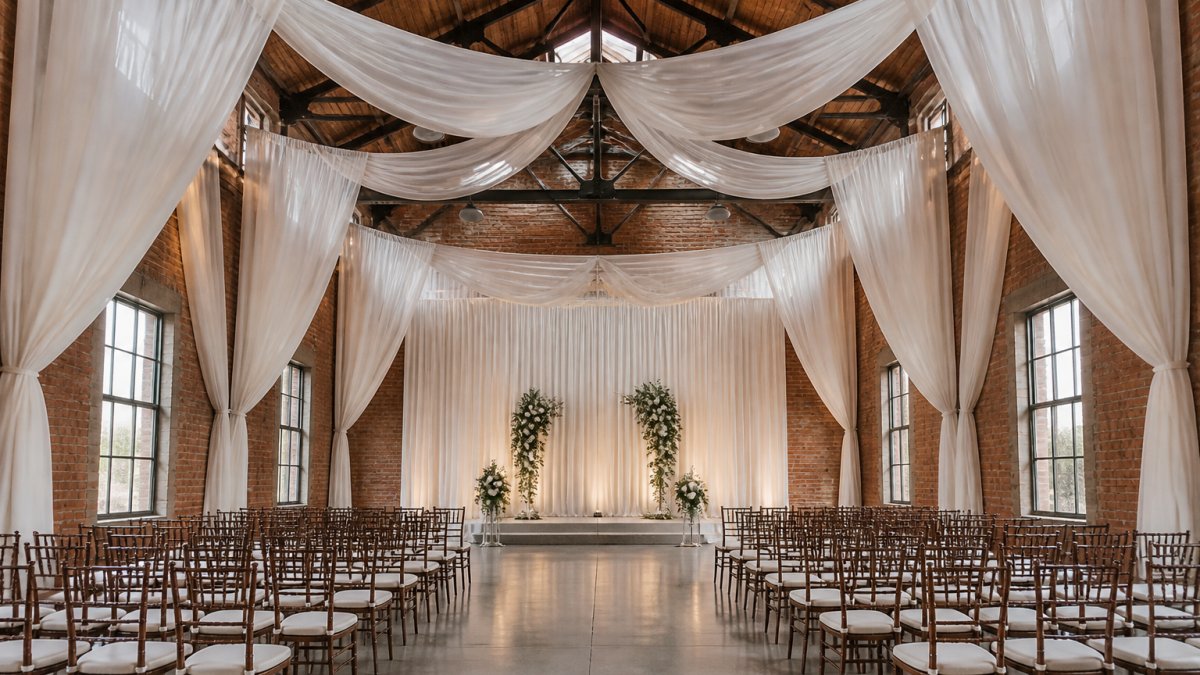
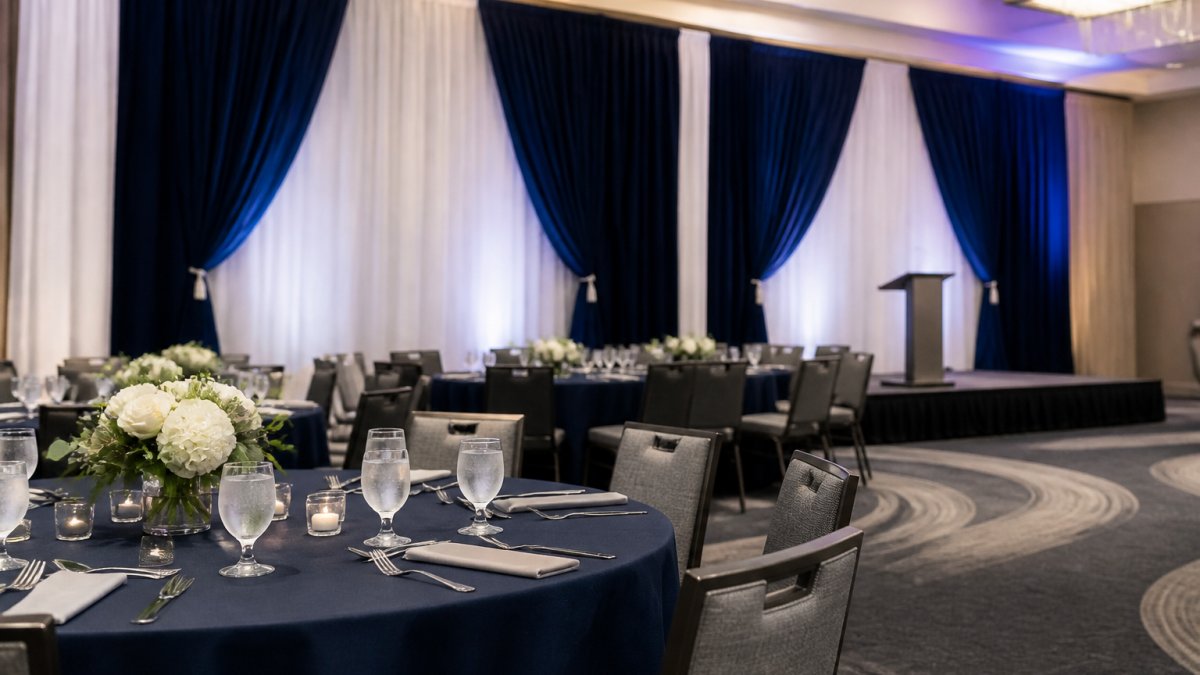
Layering creates depth and visual interest that flat, single-color backdrops cannot achieve. A basic two-layer approach uses your primary brand color as the base layer and a complementary or secondary color as an accent layer positioned in front.
A more sophisticated approach uses three layers: a solid base color, a textured or patterned middle layer, and a sheer overlay that diffuses light and creates softness. If you're using custom-printed fabric panels, ensure the logo size is proportional to the overall backdrop dimensions.
Consider how lighting will interact with your layered design. Uplighting behind sheer fabric creates a glowing effect. Side lighting emphasizes texture. Spotlighting on your logo ensures it's the focal point.
Step 4: Integrate Custom Pipe and Drape for Events Into Your Layout
Pipe and drape systems provide the structural framework for your custom draping. Understanding how these systems work and how to deploy them strategically across your event space is essential for translating your branding strategy into reality.
Dividing Spaces and Defining Booth Areas
Custom pipe and drape for events allows you to reconfigure venue spaces without permanent construction. If you're hosting a trade show with multiple booths, pipe and drape dividers in your brand colors create visual separation while maintaining the cohesive branded environment. If you're hosting a gala in a multipurpose venue, draping can hide unsightly infrastructure and define the event space within a larger room.
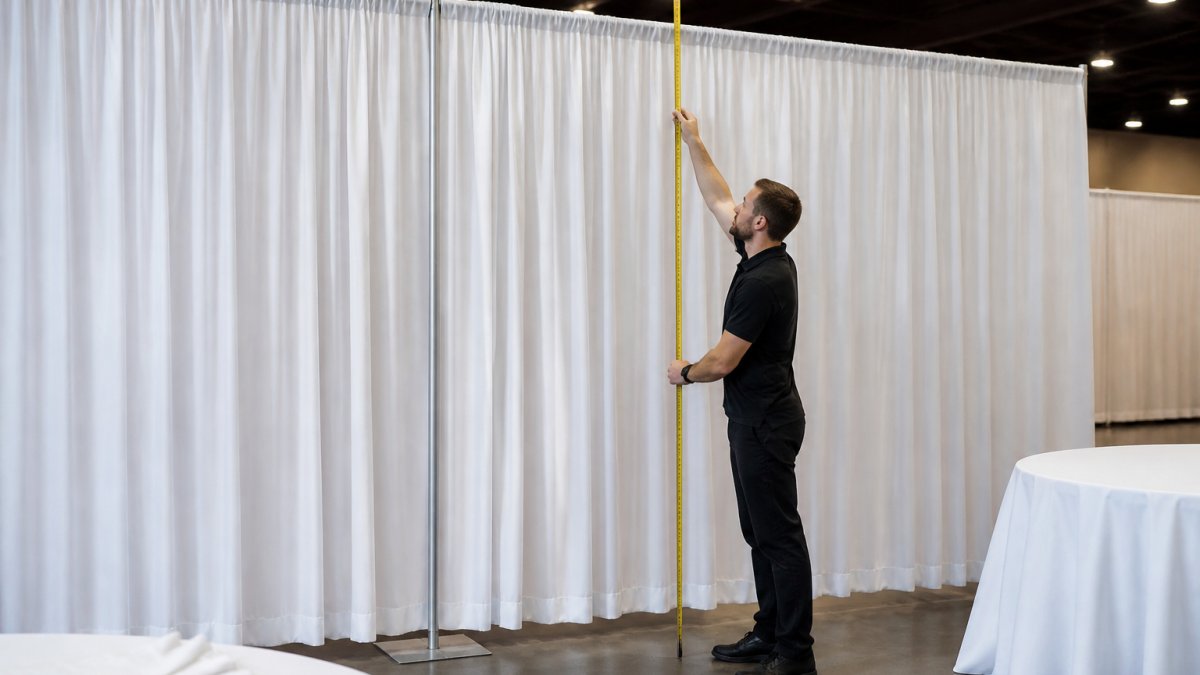
The height of your draping affects how effectively it divides spaces and creates brand visibility. Standard heights range from 8 to 12 feet for most applications, but Event Drape Rental offers drapes up to 30 feet for high-ceiling venues.
Planning Installation and Logistics
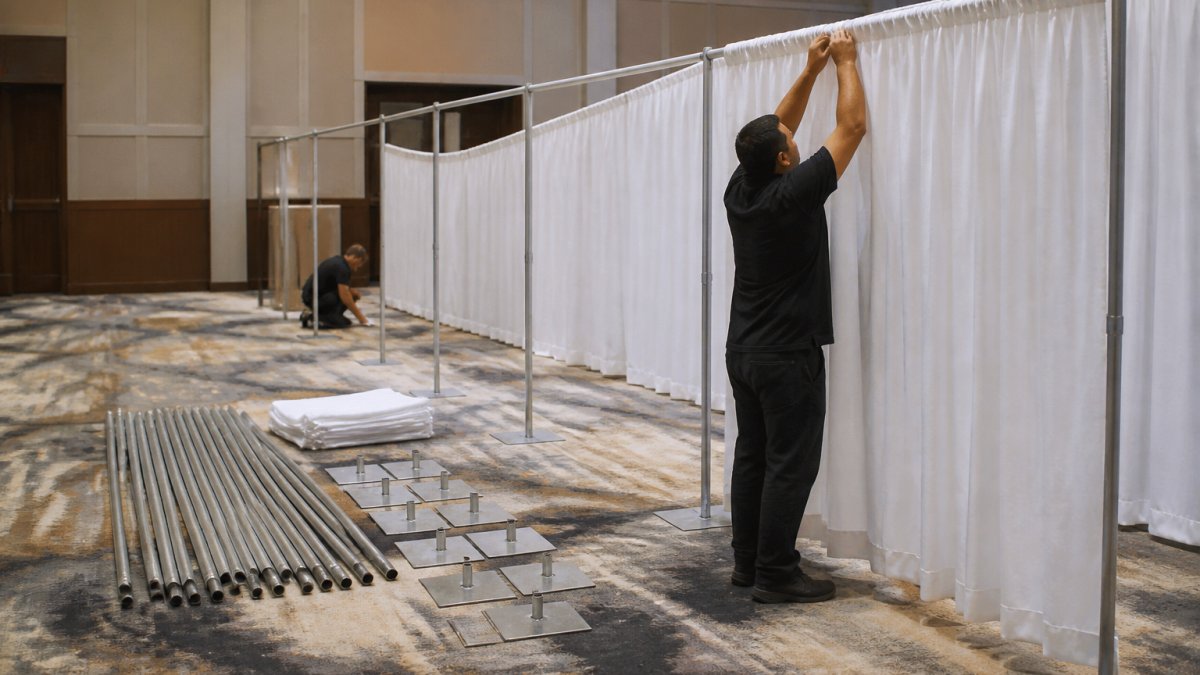
Installation logistics often determine whether your branding vision succeeds or fails. Pipe and drape systems require adequate floor space for weighted base stands or the ability to secure draping to the venue's structure. Confirm with your venue whether they allow wall anchors, ceiling rigging, or floor-based stands. Some venues have restrictions that affect how you can deploy draping.
Coordinate the installation timeline with your venue and other vendors. Draping installation time depends on complexity and whether you're using professional installation or handling it yourself. If you're managing DIY installation, build in extra time for troubleshooting.
Step 5: Plan Corporate Event Stage Design With Logo Placement
Your logo is your brand's most concentrated visual asset. Strategic placement on your stage backdrop ensures maximum visibility and reinforces brand recognition throughout the event.
Fabric Printing and Logo Specifications
If you're printing your logo directly onto draping fabric, work with your rental partner on technical specifications. Provide your logo in vector format (not rasterized) and confirm the exact dimensions and placement on the fabric panel. Fabric printing can produce vibrant, durable results.
Discuss color accuracy with your printer. Your logo colors must match your brand specifications, but fabric printing can shift colors slightly depending on the base fabric color and printing method. Request a printed sample before committing to full production. Also confirm the minimum order quantity and production timeline, custom-printed draping typically requires 2-4 weeks lead time, so plan accordingly.
Coordinating Signage, Lighting, and Draping
Your stage backdrop doesn't exist in isolation. It works in concert with other design elements: additional signage, lighting design, and supporting drape elements. If you're using custom-printed logo panels, complement them with solid-color draping that reinforces your brand's color palette.
Coordinate with your lighting designer on color temperature and intensity. Cool-toned lighting (5000K or higher) makes blues and greens appear vibrant but can make warm colors appear dull. Warm-toned lighting (3000K or lower) enhances reds, oranges, and golds but can make cool colors appear muddy. Test your lighting design with your actual draping fabric before the event to confirm the visual effect matches your expectations.
Step 6: Create a Logo Backdrop for Corporate Events That Commands Attention
A logo backdrop for corporate events serves multiple purposes beyond aesthetics. It creates a branded photo opportunity for attendees, provides a professional backdrop for speaker photography and video, and reinforces your company's visual identity throughout the event.
The most effective logo backdrops are simple and bold. A large logo centered on a solid-color background with accent layers creates visual impact without visual clutter.
Size your logo proportionally to your backdrop dimensions. A rule of thumb is to make your logo occupy 15-25% of the total backdrop area. This ensures it's prominent and clearly visible in photography without overwhelming the space.
Step 7: Budget, Safety, and Execution
Understanding Cost Drivers and Budget Planning
Draping costs vary based on several factors: the quantity of fabric you need, the fabric type and color availability, whether you're using custom printing, installation complexity, and delivery logistics. Pricing depends on quantity, dates, and delivery location, so request a detailed quote from Event Drape Rental that breaks down each cost component.
Custom-printed draping costs more than solid-color rental draping because of production time and setup fees. Professional installation costs more than DIY, but the investment often pays for itself through a more polished final appearance.
Fire Codes, Safety Standards, and Installation Requirements
All event draping must comply with fire codes and safety standards. Professional-grade draping is typically flame-retardant and meets standards like NFPA 701 (Standard for Flame Propagation of Textiles and Films), which is required by most venues and fire marshals. Confirm that any draping you rent meets applicable fire safety standards for your jurisdiction.
Installation safety is equally critical. Draping systems must be properly weighted or secured to prevent tipping or collapse. If you're using professional installation, the installer assumes responsibility for safe setup. If you're handling DIY installation, follow the manufacturer's weight and anchoring specifications exactly. Improper installation creates safety hazards and can result in damaged draping or injury.
Measuring Brand Impact and Event Performance
After your event, measure the impact of your branding efforts. Collect feedback from attendees about whether they remember your company and what they remember about your brand presentation.
Track metrics that matter to your business: attendee engagement, leads generated, social media mentions, and press coverage.
Branding corporate events with custom draping requires translating your brand identity into a physical environment that reinforces your message and creates memorable experiences.
Event Drape Rental helps you execute this vision with an extensive inventory of colors and fabric materials, professional installation options, and the flexibility to customize your draping solution to match your specific brand requirements.
Frequently Asked Questions
How can custom draping reinforce a corporate event brand?
Custom draping transforms your venue into a branded environment by using your signature colors, fabric textures, and logo placement to create visual consistency. When attendees see your brand colors repeated across backdrops, stage surrounds, and booth dividers, it reinforces brand recognition and creates an immersive experience. The draping acts as a visual anchor that ties all event elements together, making your corporate event feel intentional and professionally designed rather than generic.
What's the difference between renting and buying custom draping for a corporate event?
Renting offers flexibility, lower upfront costs, and professional maintenance, ideal for one-time events or companies that host different event types throughout the year. Buying makes sense if you hold frequent events with consistent branding needs and want to reuse the same draping repeatedly. Renting also eliminates storage and cleaning responsibilities. For most corporate events, renting allows you to access premium, flame-retardant fabrics and professional installation without capital investment.
Can you print logos directly onto event draping fabric?
Yes. Most professional draping providers offer fabric printing services where your company logo, event name, or branded graphics are printed directly onto panels before delivery. Printing specifications include color matching to your brand standards and placement coordinates. Production timelines vary, so confirm turnaround with your provider early in planning. Custom printing ensures your logo backdrop looks polished and professional rather than using temporary adhesive decals.
How much draping do I need to transform a corporate event space?
The amount depends on your venue size, ceiling height, and branding goals. Your event professional can assess your venue layout and recommend quantities based on your budget and impact goals. More draping creates a more immersive experience, but strategic placement of high-impact pieces can achieve strong brand visibility with less material.