 how-to
7 Steps to Choose Outdoor Wedding Drapes in 2026
Last Updated: October 27, 2026
Quick Summary
To choose outdoor wedding drapes, measure your venue footprint first, then pick fabric based on exposure to wind, rain, and sun. Sheer fabrics suit sheltered gardens, while heavier fabrics handle open lawns better. Secure every panel with bottom anchors before guests arrive, and check the forecast before the ceremony.
- Measure the exact footprint and confirm venue rules on anchors before planning the layout.
- Match fabric weight to exposure, since wind load rises sharply as speed increases.
- Anchor sheer panels with a tie or weight every 3-4 feet along the bottom edge.
- Start removing tall or lightweight panels when sustained winds exceed roughly 15-20 mph.
- Rehearse a removal plan that takes under 15 minutes for any panel that gets wet.
Table of Contents
- Start With Your Venue, Space and Ceremony Layout
- Wedding Drape Fabric Types for Outdoor Use
- Planning for Wind, Rain, Sun and Temperature
- How to Secure Outdoor Event Drapes
- Outdoor Wedding Backdrop Ideas and Color Choices
- Outdoor Wedding Tent Draping and Quantity Planning
- Request Your Drape Quote for Your 2026 Wedding
- Frequently Asked Questions
Outdoor wedding drapes can transform a plain lawn into a romantic setting, but only if they are chosen and secured with care. This guide covers decisions couples and planners may consider, from fabric to installation.
Start With Your Venue, Space and Ceremony Layout
Measure first, then shop. Most drape problems start with a space that was never measured properly.
Begin with the exact footprint of the area you plan to dress. Note the height of any tent poles, the distance between supports, and where guests will sit. A simple sketch helps you see sightlines before you commit.
Ask the venue these questions early:
- Can we attach anything to trees, tents, or fencing?
- Is there a power source nearby for lighting?
- Are there restrictions on stakes, weights, or anchors in the ground?
- Which direction does the ceremony face, and where does the sun set?
Watch out: Many outdoor venues restrict what you can drive into the ground or attach to structures. Confirm this in writing before you plan a drape layout that depends on it.
For full-height looks, our drapes run from 12 to 30 feet tall. Knowing your ceiling or tent height first helps you pick the right size.
Wedding Drape Fabric Types for Outdoor Use
Fabric decides how the drapes move, how they look in daylight, and how they hold up in wind. Choose the fabric before you choose the color, because the material changes how a color appears outdoors.
Sheer options: chiffon, voile and organza
Sheer fabrics give a soft, airy look and let light pass through. They suit garden ceremonies and sunset photos well. Browse the full range of voile colors to compare shades side by side.
- Chiffon flows easily and drapes softly, but it can snag.
- Voile is light, affordable, and gives a clean, crisp look. Read about voile uses, benefits and installation for outdoor events.
- Organza holds its shape better and adds a bit of structure.
Sheer fabrics also catch wind more than heavier materials. Plan for this before you hang them.
Heavier options and fabric performance
Heavier fabrics hang straighter and handle wind better, which makes them a practical choice for exposed sites. Satin has a rich sheen that photographs well in evening light. See the satin color options and flame-retardant certification.
Before you pick any heavier material, check its fire rating. Check the rating for your specific venue with the venue manager. Compare the top fire-retardant fabrics for events.
Watch out: A fire rating is only useful if it fits your location. Indoor-rated fabric may not suit an open-air tent without additional review, so confirm the requirement with the venue.
Planning for Wind, Rain, Sun and Temperature
Weather is the factor most couples forget, and it is where outdoor draping diverges most from indoor work. A panel that looks perfect on a calm morning can sag, snap a tie, or fade by the afternoon. Plan for the conditions at your ceremony time, not the conditions at setup.
Wind: match fabric weight to exposure
Wind load rises with the square of wind speed, so a site that feels breezy at 10 mph is pushing roughly four times the force at 20 mph. That is why exposed lawns, beachfronts, and ridge-top venues need heavier fabric and more attachment points than a sheltered garden.
- Sheers (chiffon, voile, organza): best in sheltered sites or as short panels. Add a tie or weight every 3-4 feet along the bottom edge and keep panel drops under about 10 feet where gusts are common.
- Mid-weight (polyester blends, matte satin): a practical middle ground for open lawns. Fewer ties needed, but still anchor the bottom edge.
- Heavy (velvet, heavy satin, canvas): the most wind-stable, but they catch wind like a sail if hung loosely. Keep them taut and use rated hardware.
A common pattern among installers is to double the number of bottom anchors on any panel facing the prevailing wind. Check your local forecast discussion a week out, again 48 hours out, and the morning of; sustained winds above roughly 15-20 mph are usually the point where planners start removing tall or lightweight panels rather than risk failure.
Rain: weight, drying, and removal
Wet fabric can gain a significant fraction of its dry weight, which transfers load to rods, ties, and stands. Choose fabrics that dry quickly (polyester and voile dry faster than cotton or velvet), and build a removal plan into the timeline:
- Identify which panels can come down in under 15 minutes.
- Keep dry backup panels bagged and labeled.
- Have absorbent towels or a wet-vac on hand for hems that touch the ground.
- Never let a soaked panel hang overnight on hardware not rated for the wet load.
Sun: UV, fading, and glare
Direct sun fades dyed fabric and can make pale sheers look washed out in photos. If your ceremony is in full afternoon sun, test swatches at that exact hour against your greenery and skin tones. UV-resistant outdoor-rated fabrics cost more but hold color through a full season; standard decorative fabrics may show noticeable fading after repeated exposure. Also check glare: a bright white sheer backlit by the sun can blow out photos, so consider a slightly warmer ivory or a lined panel behind the couple.
Temperature and guest comfort
Heat softens some fabrics and makes heavy drapery uncomfortable near seating. Keep heavy panels at least a few feet from guest chairs, and use sheers where airflow matters. In cool evenings, fabric can stiffen and ties can loosen; re-check tension after sunset.
The article's weather guidance comes down to a few concrete points a planner can check against the forecast and the fabric chosen.
| Factor | Guidance from the article | Practical step |
|---|---|---|
| Wind | Sustained winds above roughly 15-20 mph | Start removing tall or lightweight panels |
| Wind anchors | Sheers need a tie or weight every 3-4 feet | Double bottom anchors on wind-facing panels |
| Sheer panel drop | Keep under about 10 feet in gusty sites | Shorten panels where gusts are common |
| Forecast checks | A week out, 48 hours out, and the morning of | Re-check wind before the ceremony |
| Rain removal | Panels should come down in under 15 minutes | Rehearse the removal plan before the day |
| Fabric drying | Polyester and voile dry faster than cotton or velvet | Favor fast-drying fabric for rainy sites |
How to Secure Outdoor Event Drapes
Secure drapes before guests arrive, and check them again just before the ceremony starts. Loose drapes are a safety risk as well as a visual problem.
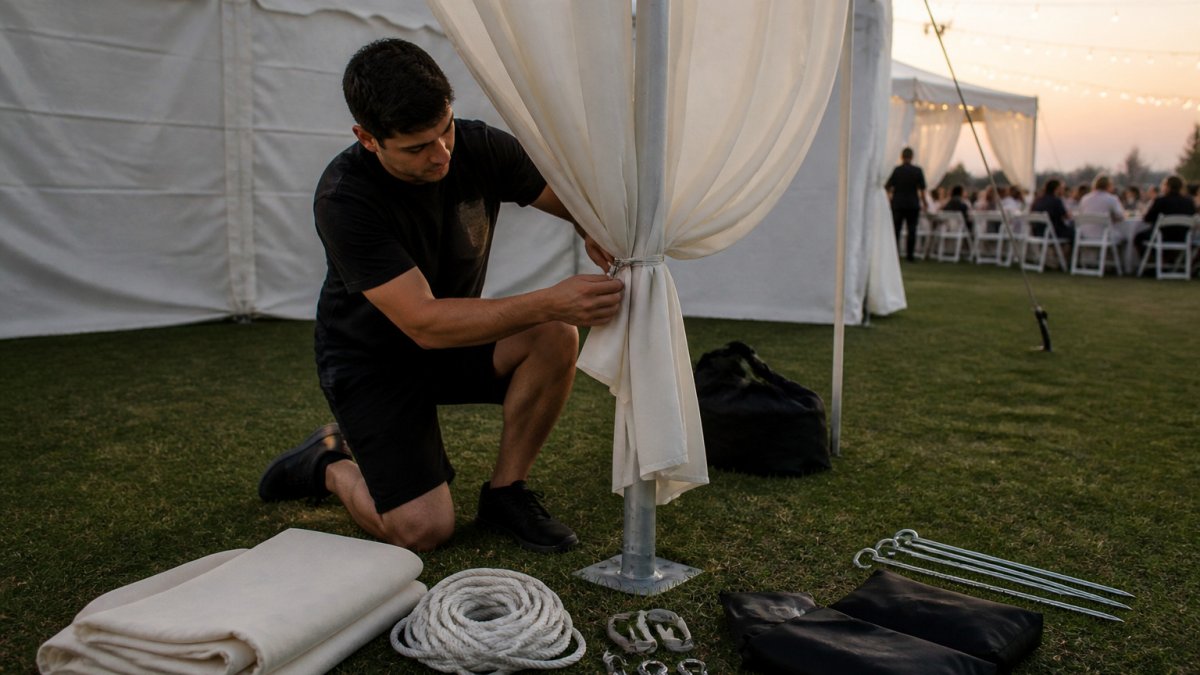
Follow these steps:
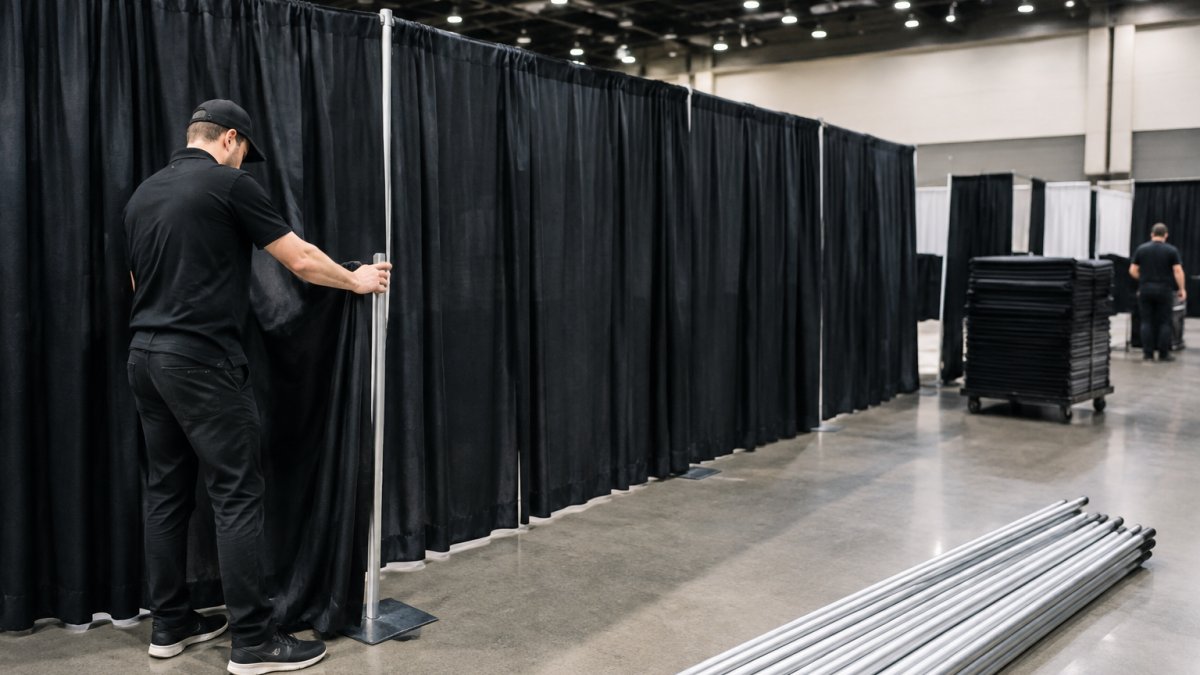
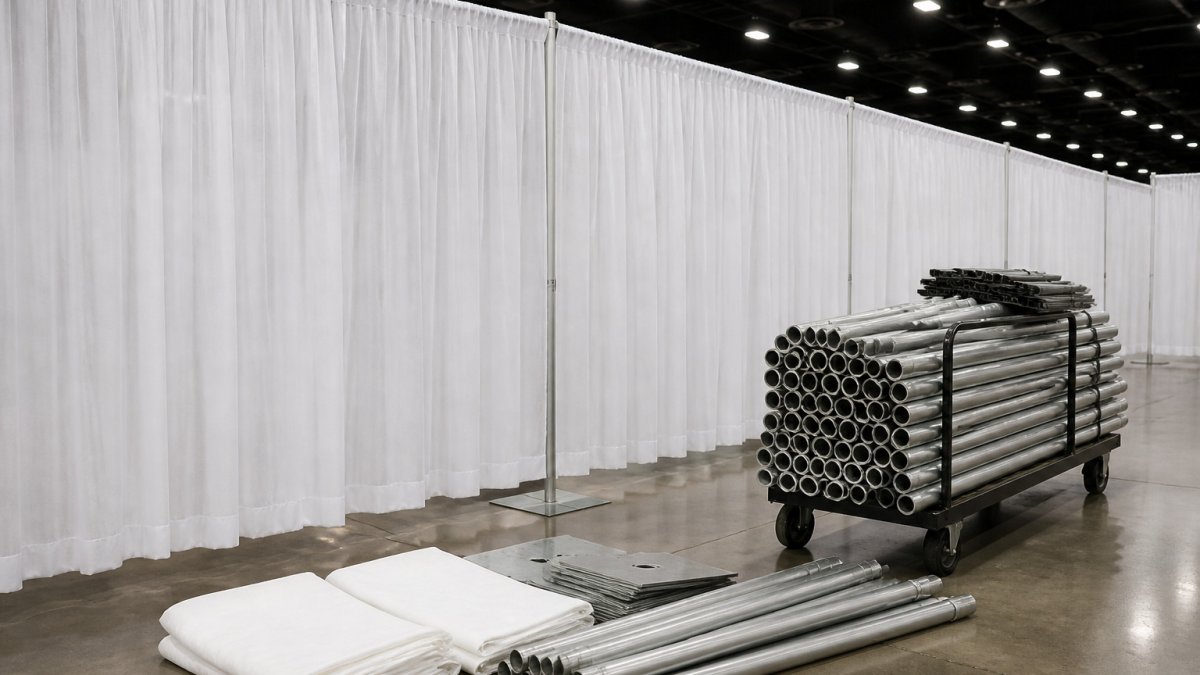
- Set your support stands or poles on level ground.
- Attach the drape to the top rod or pipe, leaving enough slack for movement.
- Anchor the bottom edge with weights or ties, away from walkways.
- Test each panel by gently pulling it to check for slipping.
- Walk the area and look for trip hazards, such as loose hems or ties.
A crew member tightening a sheer ivory drape to a pipe stand on a lawn beside a white tent at dusk shows how this looks in practice. Keep that same care in mind for every panel.
Watch out: Never tie drapes to guests' chairs, tent poles without approval, or trees. A sudden gust can pull the whole setup down.
Outdoor Wedding Backdrop Ideas and Color Choices
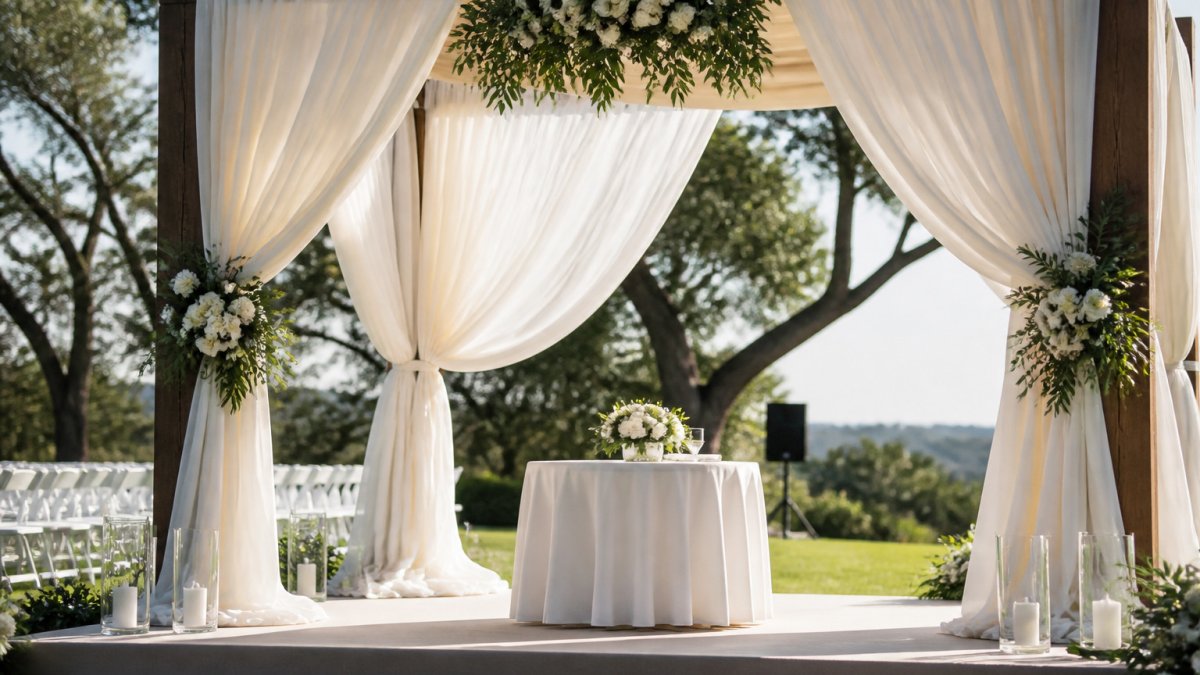
A backdrop sets the tone for your photos and your ceremony. Start with one focal point, such as the altar or the couple's spot, and build around it.
Some popular approaches include:
- A single full-width panel behind the couple for a clean look
- Layered panels in two shades for depth
- Cascading drapes in different heights for a flowing effect
- Sheer panels with lights behind them for a soft glow
For color, pick two or three shades that work with your foliage and your theme. Test them outdoors in the time of day when you plan to hold the ceremony.
Outdoor Wedding Tent Draping and Quantity Planning
Tents need a different plan than open lawns because the frame sets the layout and the drapes must fit without sagging. This is also where most budgets are won or lost, so plan quantity and cost together.
Measure the frame, then do the math
Start with the total linear feet of every wall or section you plan to dress, plus the ceiling area if you are doing an overhead install. Then apply a fullness multiplier:
- Flat or lightly gathered: about 1.5× the linear footage.
- Standard gathered look: about 2× the linear footage.
- Full, lush gathers: about 2.5-3× the linear footage.
For example, a 40-foot tent wall with a standard gathered look needs roughly 80 linear feet of fabric. Divide by the fabric width (often 54-60 inches) to get the number of panels, then round up. Add 10-15% as a damage and adjustment buffer.
Ceiling drapes are measured by the span between frame points plus the drop; radial or swag designs use more fabric than straight runs, so get a layout sketch from your installer before ordering.
Rental versus purchase
- Rent when you need a one-time look, want setup and removal handled, or are testing a style. Rental pricing typically bundles fabric, hardware, delivery, and labor, which simplifies budgeting.
- Buy when you want a specific fabric or color that rentals do not stock, plan multiple events, or need custom sizing. Buying shifts installation and care onto you.
A practical rule many planners use: if the total rental quote approaches the purchase price of the fabric plus hardware plus your time, buying may make sense for repeat use, but only if you have storage and a cleaning plan.
Prioritize within the budget
If the budget is tight, spend first on the ceremony focal point (the backdrop behind the couple), then on the tent ceiling or entrance, then on side walls. Guests remember the moment they walked in and the view during the vows more than perimeter dressing.
Get a quote that matches your layout
Pricing depends on quantity, dates, and delivery. Request a quote for current pricing.
Request Your Drape Quote for Your 2026 Wedding
Once you know your space, fabric, and layout, you are ready to request pricing. Send us your venue size and preferred colors.
Frequently Asked Questions
What fabric is best for outdoor wedding draping?
Consider the look and material options that suit your event. Event Drape Rental offers 6 different fabric materials. Ask your venue about any requirements before choosing drapes.
How do you secure drapes for an outdoor wedding?
Ask your venue about any restrictions before planning an installation. Event Drape Rental offers DIY or professional installation options.
How much draping do I need for an outdoor wedding?
Quantity depends on the drape height and the size of the space. Measure the area before requesting a quote. Event Drape Rental provides pricing based on quantity, so request a quote for current pricing.
Can you use pipe and drape outside?
Event Drape Rental offers DIY or professional installation options. Confirm with your venue whether outdoor installation is permitted.