 how-to
Best Lighting Techniques for Warehouse Wedding Drapes
Last Updated: November 5, 2026
Quick Summary
The best lighting for warehouse wedding drapes is warm light between 2000K and 3500K, layered at several heights and aimed at the fabric. Use LED uplighting on the floor to wash color across the drapes, string lights at ceiling height, and pin spots on focal points. Sheer fabrics pair well with glow effects.
- Keep fixtures in the 2000K to 3500K warm range, with 2700K to 3000K flattering skin tones.
- Place LED uplights 3 to 6 feet from the drape for a soft wash rather than hard spots.
- Layer string lights, mini chandeliers, and floor uplights at different heights to define the space.
- Attach fixtures to approved crossbars with safety cables and never hang them from the fabric.
- Test fabric under your actual lights at the same distance before committing to a choice.
Table of Contents
- Step 1: Set Warm Color Temperatures Between 2000K and 3500K
- Step 2: Add LED Uplighting for Wedding Drapes
- Step 3: Layer String Lights and Pin Spots at Different Heights
- Step 4: Pair Fabric Choice With Your Light Effects
- Step 5: Create Intimacy in Large Open Warehouse Spaces
- Plan Your Rental Order and Request a Quote for Your Drapes
- Frequently Asked Questions
Lighting makes or breaks a warehouse wedding, and the right drapes can carry much of that mood. A big, empty industrial room can feel cold and cavernous until the right light and fabric turn it into an intimate space. According to Warehouse Lighting's wedding venue lighting tips, the most effective venue lighting is planned around the space rather than added to it piece by piece.
Before you buy or rent anything, walk the room at the time of day your ceremony and reception will happen. Note where natural light enters, where the ceiling is highest, and which walls will need drapery. With each zone’s light level and color mood in mind, consider how sound will shape the reception lighting impact, since both help set the atmosphere from the ceremony through the dance floor.
- Ceiling height: Tall ceilings need lights hung at several heights.
- Open walls: Bare brick or metal walls are good candidates for drapes and uplighting.
- Power access: Map every outlet and circuit before the event day.
- Daylight: Plan for lighting that works at dusk, when the room changes most.
This layout step is where many couples go wrong. They buy lights first and realize later that the room needs different placement. A simple plan keeps the budget focused on the fixtures the space actually needs.
Step 1: Set Warm Color Temperatures Between 2000K and 3500K
Warm light is the foundation of a romantic warehouse wedding. Lighting professionals commonly recommend a range of 2000K to 3500K for venue ambiance, according to Warehouse Lighting's color temperature guidance. Within that range, 2700K to 3000K tends to flatter skin tones in event photography, as noted by M Lounge's venue lighting and decor impact guide.
Cooler light above 4000K feels alert and businesslike, which suits a trade show better than a wedding. Keep every fixture in the same warm range so the room looks cohesive.
Use a dimmer on your main fixtures. Lowering the output during dinner creates intimacy, and raising it for toasts or the first dance keeps guests engaged.
Step 2: Add LED Uplighting for Wedding Drapes
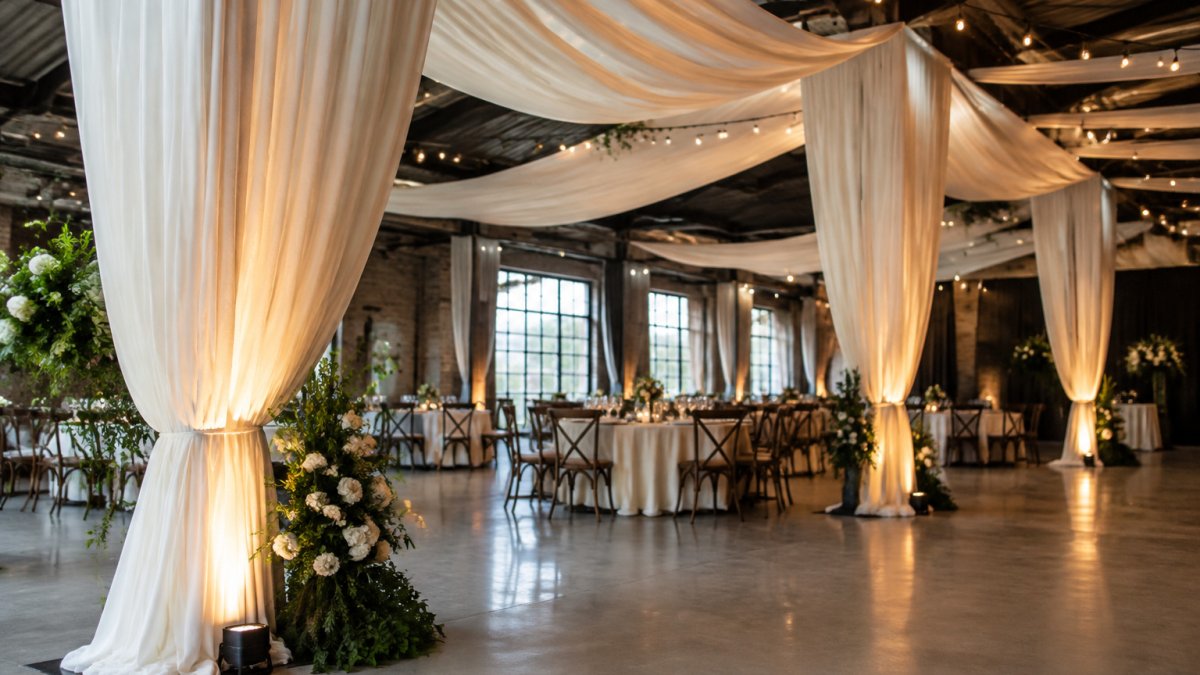
Uplighting is one of the most effective ways to bring draped fabric to life. Placed on the floor and aimed upward, a fixture washes color across the fabric and highlights its texture. BaltimoreWeds notes that uplighting also improves how blank walls look in photos, which matters when your guests will take pictures all night, per BaltimoreWeds's lighting and draping guidance.
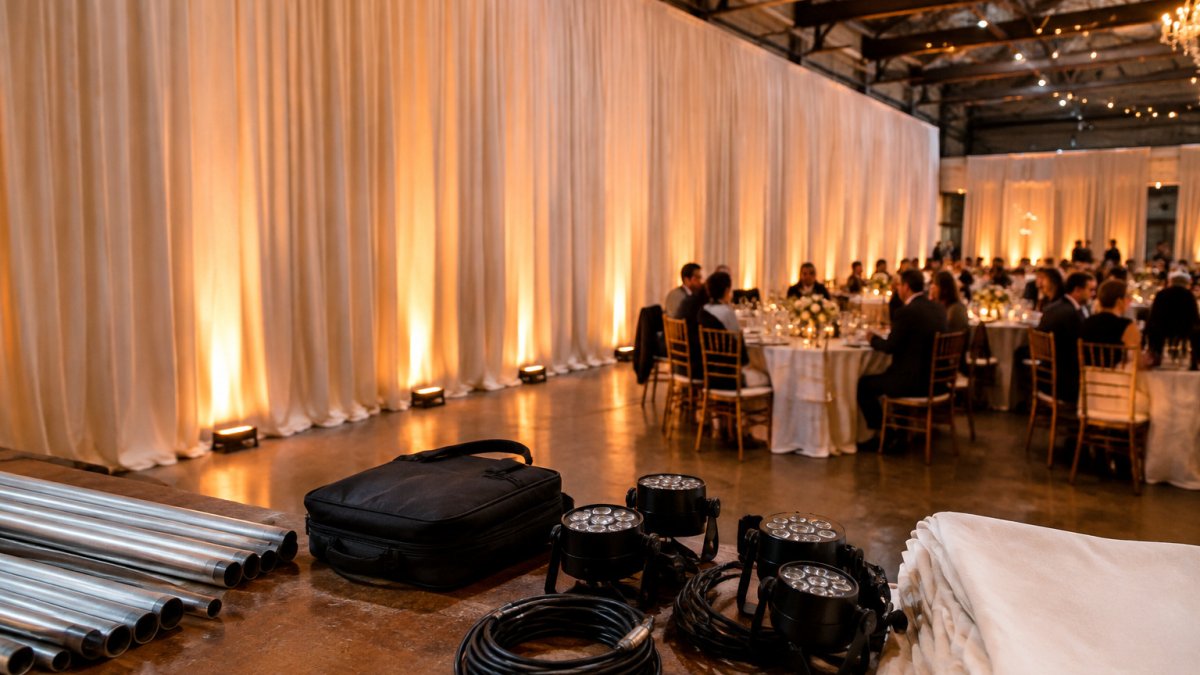
LED uplights are the practical choice for most warehouse weddings. They run cool to the touch, use little power, and can change color during the event. My Decor Events describes how LED uplighting can shift the apparent color of drapes over the course of an evening, as explained in My Decor Events' wedding drape rental guide.
Place uplights 3 to 6 feet from the drape to create a soft wash rather than hard spots. Aim them so the fabric folds catch the light.
Step 3: Layer String Lights and Pin Spots at Different Heights
Layering is the technique that makes a warehouse feel designed. Instead of one light source, you combine several at different heights. Industry guidance describes layering light strands at different heights to define space in large venues without heavy structures, as noted by The Lane's 2026 lighting styling guide.
Start with a ceiling layer of string lights or café-style stringers. Add a middle layer of mini string-light curtains or chandeliers. Finish with a floor layer of uplights and pin spots on focal points like centerpieces or the head table.
Pin spotting, which is a tight beam aimed at one object, draws the eye. Use it on your cake table, a floral arrangement, or your monogram.
Hanging Lights on Pipe and Drape Safely
Hanging lights on a pipe and drape frame is simple when you follow the load limits. Never hang a fixture from the fabric itself. Attach clamps to the horizontal truss or crossbar, then secure the light to the clamp with a safety cable.
- Check the weight rating of each crossbar before you hang anything. Uprights and crossbars are rated differently, and a crossbar rated for drape weight is not automatically rated for a hung fixture plus its clamp and cable.
- Use a safety cable on every fixture, even small string lights. A safety cable is a secondary attachment that catches the fixture if the primary clamp slips.
- Keep cords taped down and out of walkways, and route them along the uprights rather than across the fabric face.
- Confirm the frame is level and tight before the crew leaves, and re-check after the first hour of the event as fabric settles.
Work with the venue on approval and fire safety before installation. Drapes used in event venues should meet flame-retardant requirements, a point emphasized in a custom drape buying guide for event professionals.
Power is the other half of the plan.
Watch out: a fixture clamped to a crossbar that was rated only for drape weight can bow the bar or pull the frame out of level, so confirm the combined load of fixture, clamp, cable, and any attached decor before you hang.
For control, wireless DMX or a simple wireless dimmer lets you adjust layers independently without running control cable through the room.
Step 4: Pair Fabric Choice With Your Light Effects
Fabric and light work together. The same light looks completely different on sheer chiffon than on heavy velvet. Sheer fabrics are generally recommended for layered lighting effects, because light passes through them and creates glow and depth. Velvet is suited to dramatic, heavy-texture looks and can help absorb sound in a large room, according to Event Drape Rental's warehouse wedding guide.
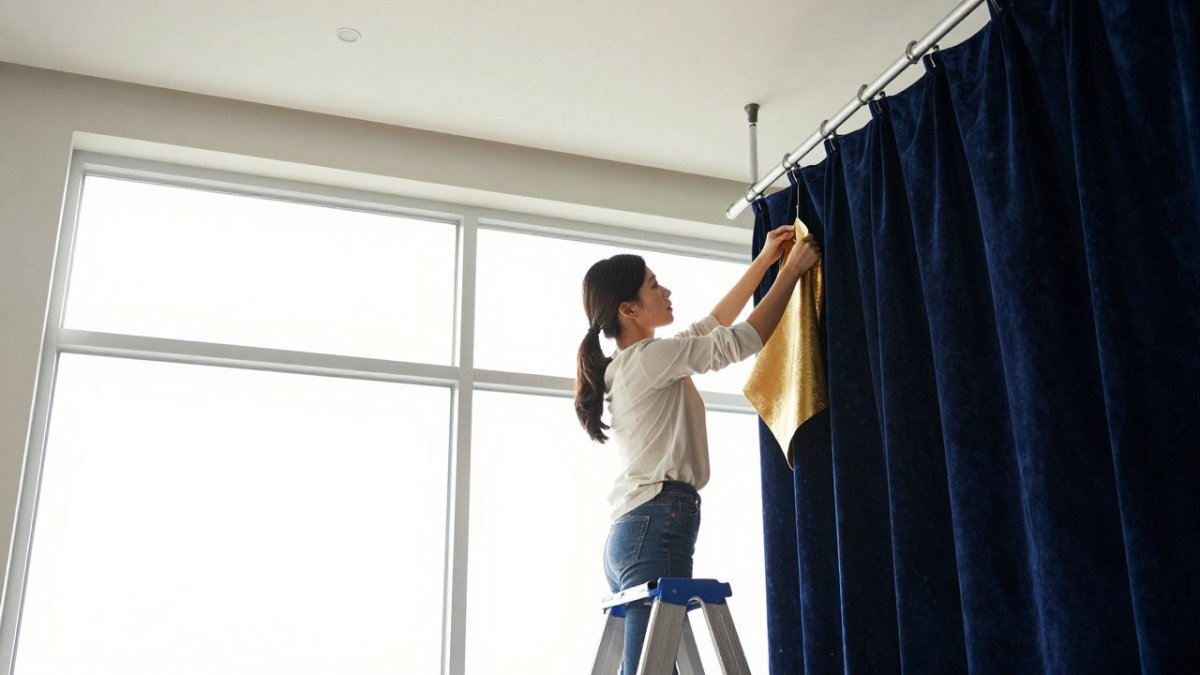
Test every fabric with your actual lights before you commit. Hang a sample under the same fixtures you plan to use, at the same distance, and check it at the color you expect.
Consider this quick pairing guide:
| Fabric | Best Light Effect | Best For |
|---|---|---|
| Sheer | Soft glow and layered depth | Ceremony backdrops |
| Velvet | Rich texture and dramatic shadow | Lounge or dance areas |
| Satin | Sheen and color reflection | Head table and entrances |
Step 5: Create Intimacy in Large Open Warehouse Spaces
A warehouse is huge, and guests can feel lost in it. The fix is to break the room into smaller rooms. Divider drapes, ceiling drapes, and lighting zones all make a big space feel more personal.
A Warehouse Layout You Can Actually Draw
Sketch the room to scale and mark four things: exposed beams, the highest ceiling bay, brick or metal walls, and long sightlines from the entrance. Then assign a lighting treatment to each:
- Exposed beams: run stringers parallel to the beams at a consistent height so the strands read as a ceiling layer rather than a tangle. Keep spacing even; uneven spacing is what makes a warehouse look unfinished.
- High ceiling bays: hang ceiling drapes to lower the visual height, then light from below the fabric to create a canopy glow. The drape does the height work; the light does the warmth work.
- Brick and metal walls: these are the best candidates for uplighting because the texture catches the wash. Place fixtures 3 to 6 feet from the wall and aim so folds and mortar lines catch the light.
- Long sightlines: use divider drapes and a brighter wash at the entrance to pull the eye forward, then drop the light level in the dining zone so guests feel enclosed rather than exposed.
A Timeline for Changing Light
Daylight is the variable most plans ignore. Walk the room at the ceremony hour and again at dusk, because the same fixtures will read differently as natural light fades. A workable sequence:
- Ceremony: higher ambient level and a soft wash on the backdrop, since guests are seated and the room is still bright from windows.
- Dinner: dim the main fixtures and raise the warm uplights so tables feel intimate while walkways stay lit.
- Dancing: bring up the dance-floor wash and pin spots, and let the dining zone fall back. The contrast between zones is what makes the room feel designed.
Use dimmers on each zone so you can make these shifts without a crew walking the floor mid-event. Program the looks in advance and rehearse the transitions during setup.
Ambient Media describes custom event lighting and draping designs in similar venues, including transformations of this kind, as shown in its custom event lighting examples.
Keep walkways lit so guests can move safely between zones. Intimacy should never come at the cost of visibility.
Watch out: a plan that lights the room beautifully at 4 p.m. can fall flat at 8 p.m. once daylight is gone, so test every zone at the hour it will actually be used and adjust fixture output rather than adding more fixtures.
Plan Your Rental Order and Request a Quote for Your Drapes
Once your lighting plan is set, you can size your drape order. Confirm the height of each wall, the number of drape panels, and the fabric colors you need. Event Drape Rental offers drapes from 12 to 30 feet tall in a range of colors and fabrics, so you can match your plan to the room. Pricing depends on quantity, dates, and delivery, so the most reliable next step is a quote.
Use the contact page to reach the team and ask about availability for your event date. When you are ready to order, the request for quote form lists the details we need to build an accurate estimate. If you want more planning ideas first, read our complete guide to renting drapes for warehouse weddings and creative ways to light wedding pipe and drape.
Frequently Asked Questions
What are the best types of lights to use with wedding drapery?
Warm LED sources in the 2700K to 3000K range flatter skin tones and suit intimate receptions, while many warehouse planners extend the palette to 2000K to 3500K for a cohesive look with drapery. LED uplighting is the most common choice for washing fabric with color and texture, and string lights or pin spots add depth. Avoid cooler light above 4000K, which feels more alert than romantic. Test a few fixtures against your actual drape fabric before the event, because sheer and velvet respond differently to the same fixture.
How do you attach lights to pipe and drape systems?
Clamp lightweight fixtures to the pipe with the mounting hardware made for your stand system, and keep heavier fixtures on separate stands so the frame is not overloaded. Secure all cables so they cannot be tripped over, and keep drapes clear of lamps and heat sources. Confirm the total load with your venue and rigging crew before hanging anything. Event Drape Rental offers DIY and professional installation, so you can choose whichever fits your timeline and team.
What is the best way to light a large warehouse wedding venue?
Break the space into zones with lighting, such as a ceremony area, dining area, and dance floor, rather than trying to light the whole warehouse evenly. Use layered sources, including uplit drapes for color, string lights overhead for a canopy effect, and pin spots on focal points like the head table. Warm color temperatures help the space feel smaller and more intimate. Map the layout on paper first so fixtures, power drops, and drape placement work together.
What safety precautions should be taken when lighting wedding drapes?
Choose flame-retardant drape fabric, since FR compliance is a key requirement for event venues. Keep bulbs and lamps at a safe distance from fabric, use fixtures that run cool, and never let fabric touch hot surfaces. Check that electrical loads stay within circuit limits and that cords are taped or covered in walkways. Confirm rigging and fire-safety requirements with your venue before installation, since approval rules vary by building.