 blog
Drape Kings Alternatives for Weddings: 2026 Guide
Table of Contents
- Drape Kings Alternatives for Weddings: What to Compare
- Wedding Draping Fabric Options: Polyester, Sheer, and More
- Pipe and Drape Cost Per Square Foot: What Drives the Price
- DIY Wedding Draping vs. Professional Installation
- Questions to Ask a Wedding Rental Company Before Booking
- Fire Safety, Opacity, and Venue Requirements for Drapes
- Alternatives to Draping for Transforming a Wedding Venue
- Conclusion: Choosing the Right Drape Kings Alternative
- Frequently Asked Questions
Last Updated: October 9, 2026
Drape Kings Alternatives for Weddings: What to Compare
Drape Kings alternatives for weddings are rental vendors and drapery suppliers offering pipe and drape, fabric backdrops, and ceiling treatments without the brand-name premium.
This guide from Event Drape Rental breaks down what separates one drape rental vendor from another. Couples and planners compare on color first, then get surprised by height limits, wrinkled deliveries, or fire-code paperwork.
Below, we cover fabric options, pipe and drape cost per square foot, DIY versus professional installation, and the questions to ask before you sign, including fire safety documentation and what to do when draping will not fit the room.
Wedding Draping Fabric Options: Polyester, Sheer, and More
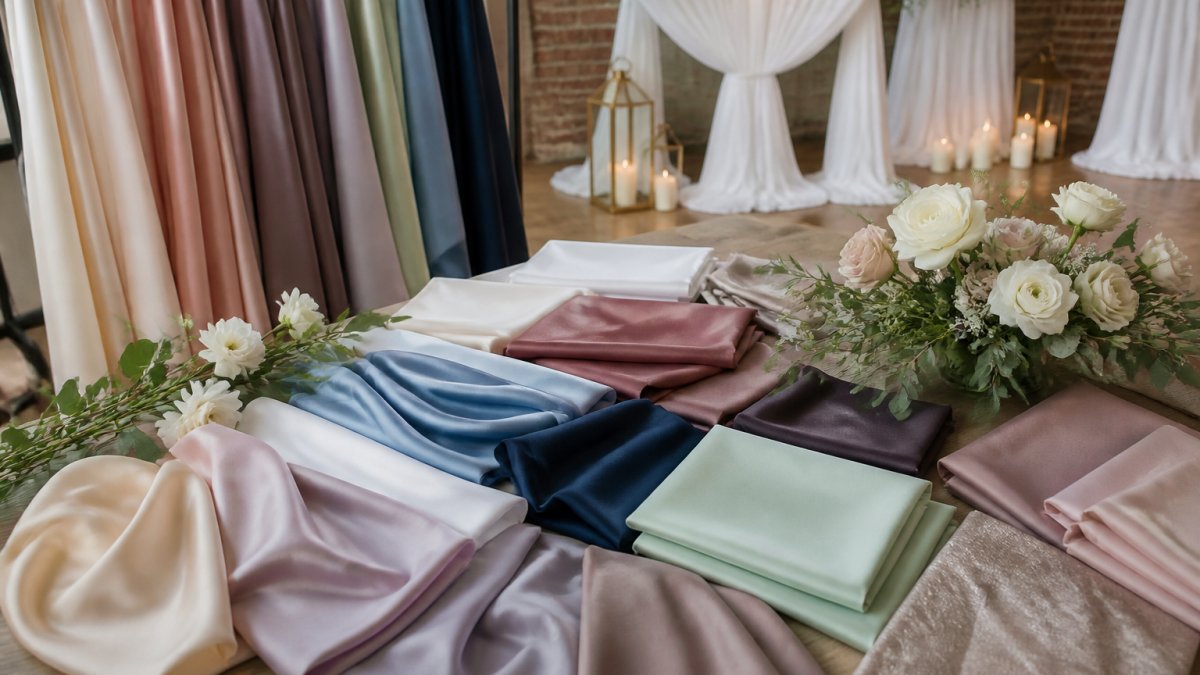
Wedding draping fabric options fall into three families: opaque polyester, semi-sheer voile or chiffon, and specialty fabrics like velvet, satin, and crinkle taffeta.
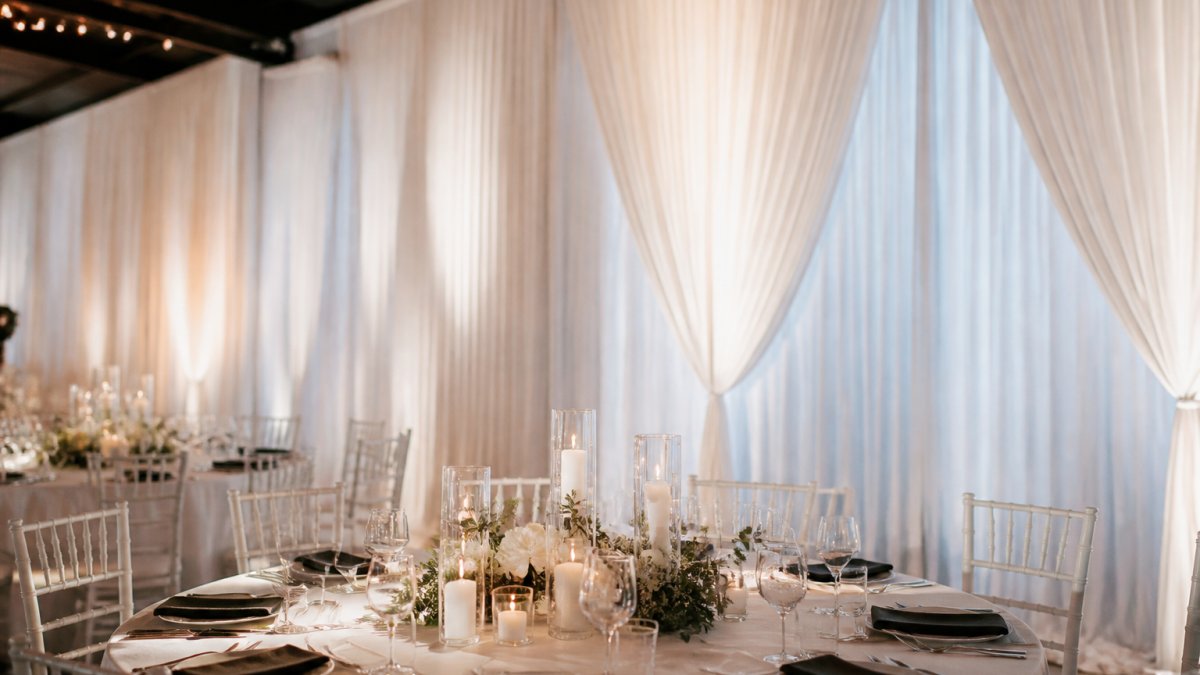
Opaque polyester is the workhorse. It blocks sightlines, photographs cleanly, and holds a pleat through a full reception.
Fabric width matters as much as type. Wide-width fabric reduces visible seams on tall walls.
- Polyester: opaque, durable, best for wall coverage and room separation
- Voile and chiffon: semi-sheer, best for ceremony backdrops and ceiling swags
- Velvet and satin: heavy, upscale, best for accent panels rather than full walls
- Crinkle taffeta: forgiving of wrinkles, popular for reception hall draping
Ask any vendor what they stock versus what they order in.
Pipe and Drape Cost Per Square Foot: What Drives the Price
Pipe and drape cost per square foot depends on fabric type, drape height, installation labor, and delivery distance. There is no single national rate, and any vendor quoting one flat number without asking about your venue is guessing.
Most rental houses price a wedding drape package one of three ways: a flat rate for a defined backdrop, a per-linear-foot rate for wall or ceiling runs, or a per-square-foot rate for full-room coverage.
Four variables move the number most:
- Height. Drapes from 12 to 30 feet require different hardware and more fabric per panel, so taller runs cost more per foot in material and labor.
- Fabric weight. Sheer panels use less material than velvet but need more careful rigging to hang straight.
- Installation. DIY pickup pricing is a different line item from delivery, setup, and teardown.
- Quantity and layout. A single ceremony backdrop prices differently from a full reception hall with room separation.
What a Quote Should Itemize
A comparable quote breaks into these lines. If a vendor hands you one lump sum, ask them to split it out:
- Rental of goods. Fabric panels, pipe, bases, crossbars, and ceiling hardware.
- Delivery. Often a flat fee inside a radius, then a per-mile charge beyond it. Ask for both rates.
- Labor. Setup and teardown are billed per installer, per hour, with a minimum. A two-person crew for a tall install is standard; a single backdrop may be one person.
- Steaming or prep. Some vendors steam on site, some deliver pre-hung, some charge extra.
- Damage waiver or deposit. A refundable deposit and a non-refundable damage waiver are different. Confirm which you pay.
Typical Cost Ranges and What Changes Them
Exact pricing is quote-specific, but the structure is predictable. A single ceremony backdrop sits at the low end of a vendor's range; a full reception hall with wall coverage, ceiling treatments, and room separation sits at the high end, often several times the backdrop price. Delivery and labor can rival the rental cost on a tall or multi-room install, so DIY pickup and full-service quotes are not comparable.
| Cost Driver | What Raises the Price | What Lowers It |
|---|---|---|
| Drape height | 20-30 ft runs need heavier hardware | Standard 12-16 ft heights |
| Fabric type | Velvet, satin, specialty weaves | Polyester, basic sheer |
| Installation | Full delivery, setup, teardown | DIY pickup and return |
| Layout complexity | Multiple rooms, ceiling work | Single backdrop |
| Delivery distance | Outside the vendor's free radius | Inside the local service area |
| Timing | Rush and peak-season dates | Off-peak, flexible windows |
| Order size | Below the vendor minimum | Above the minimum threshold |
How to Compare Two Quotes Fairly
Put both quotes on the same page before deciding. Normalize the scope: same wall length, ceiling height, fabric, setup and teardown, and delivery address. Then compare the bottom line.
Because pricing depends on quantity, dates, and delivery, we quote each event individually rather than publish a rate card that will not match your venue. Send your ceiling height, square footage, and date for a real number.
DIY Wedding Draping vs. Professional Installation
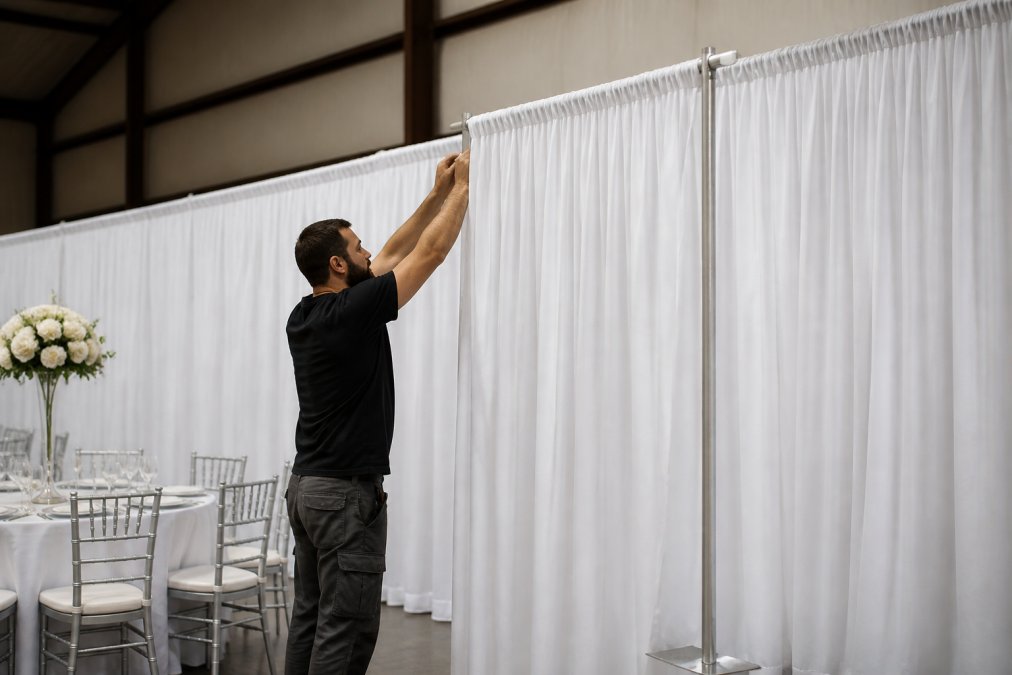
DIY wedding draping works for a single backdrop on a standard 8 to 12-foot frame.
The honest split: draping one ceremony focal point with two people and a free afternoon makes DIY a money-saver.
A common mistake is underestimating setup time. Pipe and drape is modular, but tall uprights need proper bases and crossbars, and a sloppy install shows in every photograph.
Event Drape Rental offers both paths. You can pick up and install yourself, or have our team handle delivery, setup, and teardown so the drapes are hung, steamed, and level before your first guest arrives.
Questions to Ask a Wedding Rental Company Before Booking
The questions to ask a wedding rental company before booking should cover inventory, logistics, and accountability. Ask in writing, keep the answers, and put the same questions to every vendor on your shortlist.
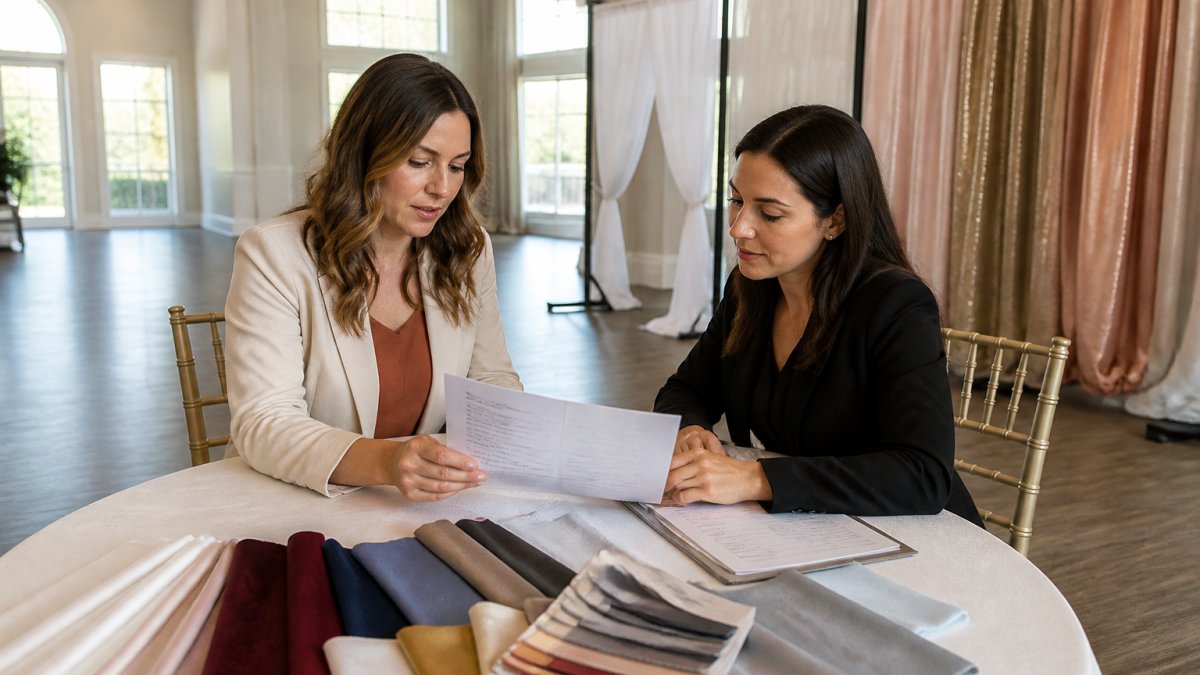
The Vendor Comparison Checklist
Use the same list for each vendor and note the answer next to the name.
- What is your maximum drape height? If your venue has 30-foot ceilings, confirm the vendor stocks hardware that reaches it.
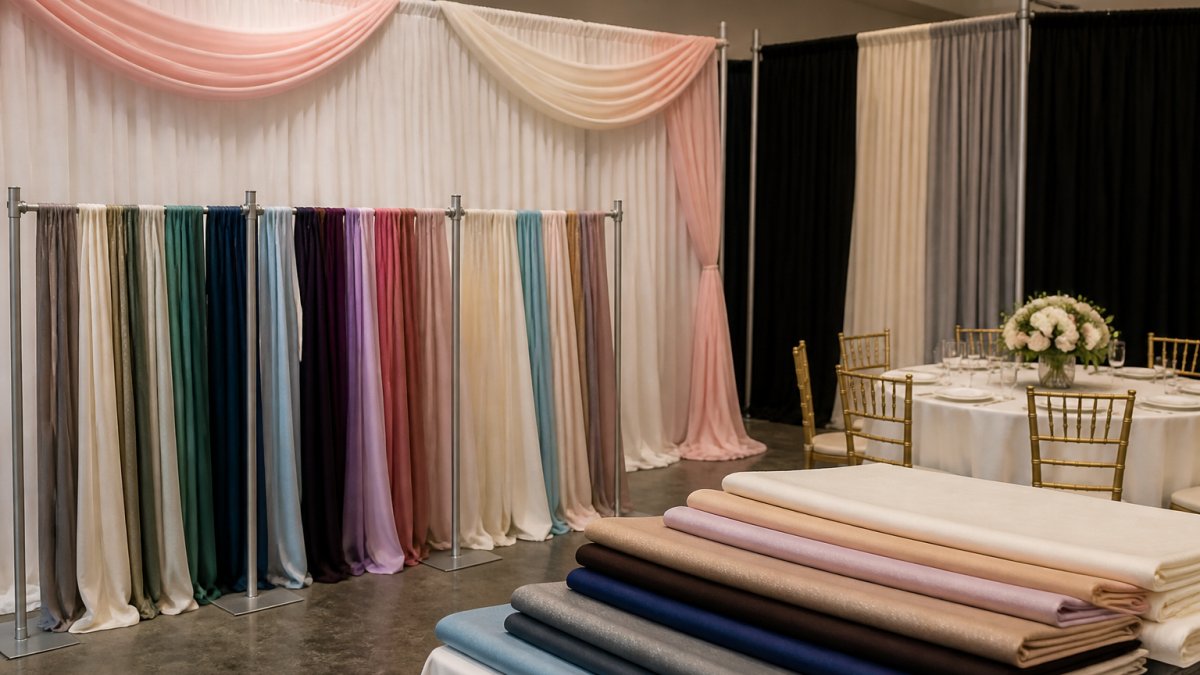
- How many colors do you actually keep in stock? A large catalog means nothing if your brand color is a special order.
- What is your condition guarantee? Ask how they handle wrinkled, stained, or damaged panels on delivery day.
- Can you handle multiple delivery locations on the same day? Relevant if coordinating several venues.
- What is your rush timeline? Get the cutoff date for changes in writing.
For corporate and brand work, add one more: what is the turnaround if a color is not in inventory? That single answer separates vendors who plan ahead from vendors who improvise.
Booking Timeline and Venue Coordination
Draping is one of the last vendors to load in and first to load out, so the schedule matters as much as the price. A workable timeline:
- Six to nine months out. Book the vendor and lock the date. Peak-season Saturdays fill first.
- Three to four months out. Confirm fabric, color, and height against the venue's actual ceiling. Measure, do not estimate.
- Two months out. Submit the drape plan to the venue for approval. Ask about rigging restrictions, load-in doors, freight elevator access, and any union or in-house labor rules.
- One month out. Confirm the fire-safety documentation the venue accepts and get it on file.
- Two weeks out. Finalize the load-in and load-out windows with the venue and the vendor, and confirm the crew size.
Contingency Planning
Ask each vendor what happens if a panel arrives damaged, a color is wrong, or the venue denies access at the scheduled time. A vendor with a backup plan will describe their process; one without will say it will not happen.
Event Drape Rental offers both paths. You can pick up and install yourself, or have our team handle delivery, setup, and teardown so the drapes are hung, steamed, and level before your first guest arrives.
Fire Safety, Opacity, and Venue Requirements for Drapes
Flame resistance is the requirement most couples discover last, usually when a venue manager asks for documentation a week before the event.
The practical rule: ask your venue what documentation it accepts, then confirm your vendor can supply it before you sign the rental agreement. The National Fire Protection Association publishes the codes many venues reference, and your local fire marshal has the final say on what is enforced in your building.
Opacity is the other quiet variable. Sheer drapes look elegant but do not block light or sightlines. If you are using drapes for room separation, you need an opaque or double-layered panel, or guests will see straight through.
Alternatives to Draping for Transforming a Wedding Venue
Draping is not the only way to change a room, and for some venues it is not the best one. Alternatives worth pricing alongside a drape rental:
- Uplighting. Colored LED washes on bare walls change the mood for a fraction of a full drape install.
- Freestanding backdrops. Panel and frame systems give you a focal point without touching the ceiling.
- Rented greenery walls. Living or faux plant walls add texture and photograph well, though they are heavy.
- Ceiling installations. Suspended fabric or lighting can replace wall coverage entirely in tall rooms.
- Event carpet and flooring. Ground-level changes often do more for a dated space than anything hung above it.
The right answer depends on what you are fixing. Ugly walls? Drape them. A flat, dim room? Lighting does more for less.
Conclusion: Choosing the Right Drape Kings Alternative
The hard part of replacing a familiar vendor is not finding another one. It is finding one that will answer the height, color, condition, and fire-safety questions before you commit.
At Event Drape Rental, we stock drapes from 12 to 30 feet, carry more than 100 colors across 6 fabric materials, and offer both DIY and professional installation so you can match the service to your venue and your budget.
Frequently Asked Questions
What are some alternatives to Drape Kings for wedding draping?
Several national and regional vendors offer comparable pipe and drape rental for weddings. Look for companies that carry a broad color range, multiple fabric types, and drapes tall enough for your venue. Event Drape Rental, for example, stocks over 100 colors, 6 fabric materials, and drapes from 12 to 30 feet tall, with both DIY and professional installation available. Compare vendors on inventory depth, delivery and setup logistics, and whether they can handle your specific venue height and timeline.
How much does wedding pipe and drape rental cost?
There is no single rate for pipe and drape rental because pricing depends on the total linear feet of drape, fabric type, height, delivery distance, installation labor, and event date. Vendors typically quote per project rather than per piece. To get an accurate number, request a quote with your venue dimensions, ceiling height, and setup date. Ask whether delivery, setup, teardown, and any rush fees are included in the quoted price.
Can I rent wedding drapes and install them myself?
Yes. Many vendors offer a DIY rental option where drapes and pipe-and-drape hardware are delivered to your venue and you handle installation. This reduces labor cost but requires a clear plan, the right hardware, and enough setup time. If your venue has ceilings above 20 feet or you need a precise, polished look for a high-profile event, professional installation is usually worth the added cost because it eliminates wrinkles, sagging, and safety risks.
What should I ask a wedding draping company before booking?
Ask about available fabric types and opacity, maximum drape height, fire-retardant certification, delivery and setup windows, teardown responsibility, and whether the quote includes labor. Also ask how they handle wrinkles or damaged fabric on arrival, what their cancellation policy is, and whether they can service multiple venues on the same day if your event spans more than one location. Getting these answers in writing before you book prevents surprises on event day.
Choosing a drape vendor you have not worked with before carries real risk, especially for a high-profile wedding or client event. Event Drape Rental removes most of that risk with inventory that reaches 30 feet, a color range deep enough to match brand guidelines, and the option to have our team handle delivery, setup, and teardown. Send us your venue details and date through our RFQ form, and we will confirm what is available and what it costs.