 listicle
Benefits of Using Stretch Velvet Drapes
Table of Contents
- What Makes Stretch Velvet Drapes Stand Out
- Stretch Velvet vs. Non-Stretch Velvet: Key Differences
- Superior Drapability and Graceful Folds
- Wrinkle-Resistant Event Drapes: Why Stretch Velvet Wins
- Thermal Insulation and Light Blocking Performance
- Velvet Backdrop Ideas for Weddings and Corporate Events
- How to Hang Velvet Drapes for Professional Results
- Frequently Asked Questions
Last Updated: October 6, 2026
What Makes Stretch Velvet Drapes Stand Out
Stretch velvet drapes combine traditional velvet's luxurious look with spandex-blended flexibility. The elasticity lets the fabric conform smoothly to pipe and drape structures, creating graceful folds while resisting the wrinkles that plague standard velvet.
The key difference is fiber composition: stretch velvet weaves spandex into the fabric alongside the traditional pile, giving it flexibility non-stretch velvet can't match. That means fewer wrinkles, faster setup, and a polished look right out of the rental box, professional results for corporate events, weddings, and trade shows.
What most guides miss is that stretch velvet's real advantage is reliability, not just looks. Standard velvet shows every tension, movement, or misalignment as creasing; stretch velvet absorbs minor shifts because spandex fibers distribute stress across the fabric.
Stretch Velvet vs. Non-Stretch Velvet: Key Differences
Most velvet guides treat "velvet" as one material. It isn't. The fiber blend determines how a panel hangs, ages, cleans, and whether it belongs on a pipe-and-drape rig or a curtain rod. Treating stretch and non-stretch velvet as interchangeable is the most common mistake in drapery planning.
What "Stretch" Actually Means in a Velvet Weave
Traditional velvet is built on a woven ground cloth with a cut pile on one face. The ground cloth, usually polyester or cotton, has almost no give, which is why non-stretch velvet creases permanently when folded, compressed, or hung under uneven tension.
Stretch velvet adds an elastane (spandex) component to the ground weave, typically 5-15% by weight, with the balance polyester or a polyester-cotton blend. The elastane changes the backing, not the pile: when stretched, the filaments extend and recoil, pulling the ground cloth back to its original dimensions so a bumped panel recovers instead of holding a crease.
Fiber Composition and What Each Component Does
| Fiber | Typical Role | What It Affects |
|---|---|---|
| Polyester | Ground cloth and pile | Durability, colorfastness, resistance to fading and moisture |
| Cotton | Ground cloth (less common) | Hand feel, breathability, but more prone to shrinkage and wrinkling |
| Elastane (spandex) | Ground weave | Stretch, recovery, wrinkle resistance, conformity to structures |
Polyester-elastane is the most common construction for event drapery because polyester holds dye well, resists fading under stage lighting, and doesn't absorb moisture like cotton. All-cotton stretch velvet is rare in rental inventories because cotton's shrinkage and wrinkling work against the point of adding stretch.
Practical Trade-Offs
Appearance and pile density. Premium non-stretch velvets can carry a denser, longer pile, producing deeper color saturation in dark jewel tones, deep ruby, amethyst, emerald.
Structure and body. Non-stretch velvet holds a sculpted fold, better for crisp architectural pleating or panels that stand away from the wall. Stretch velvet's folds are softer and more fluid, beautiful, but less structured.
Installation tolerance. This is where stretch velvet wins decisively. Non-stretch velvet demands level pipe, even tension, and careful handling.
Care and cleaning. Non-stretch velvet generally needs professional dry cleaning to avoid pile crush and shrinkage.
Cost. Stretch velvet is often priced competitively with mid-grade non-stretch velvet because polyester keeps material costs down. Premium non-stretch velvets, silk blends, high-pile cotton, sit well above both.
When to Choose Which
Choose stretch velvet when: setup and teardown windows are tight, the drapes will be handled repeatedly, the venue has irregular geometry, or the panels will be rented and reused across many events.
Choose non-stretch velvet when: the installation is permanent or semi-permanent, the design calls for structured pleating, or the deepest possible color saturation in a dark jewel tone is the priority.
Federal Trade Commission textile fiber labeling rules
Superior Drapability and Graceful Folds
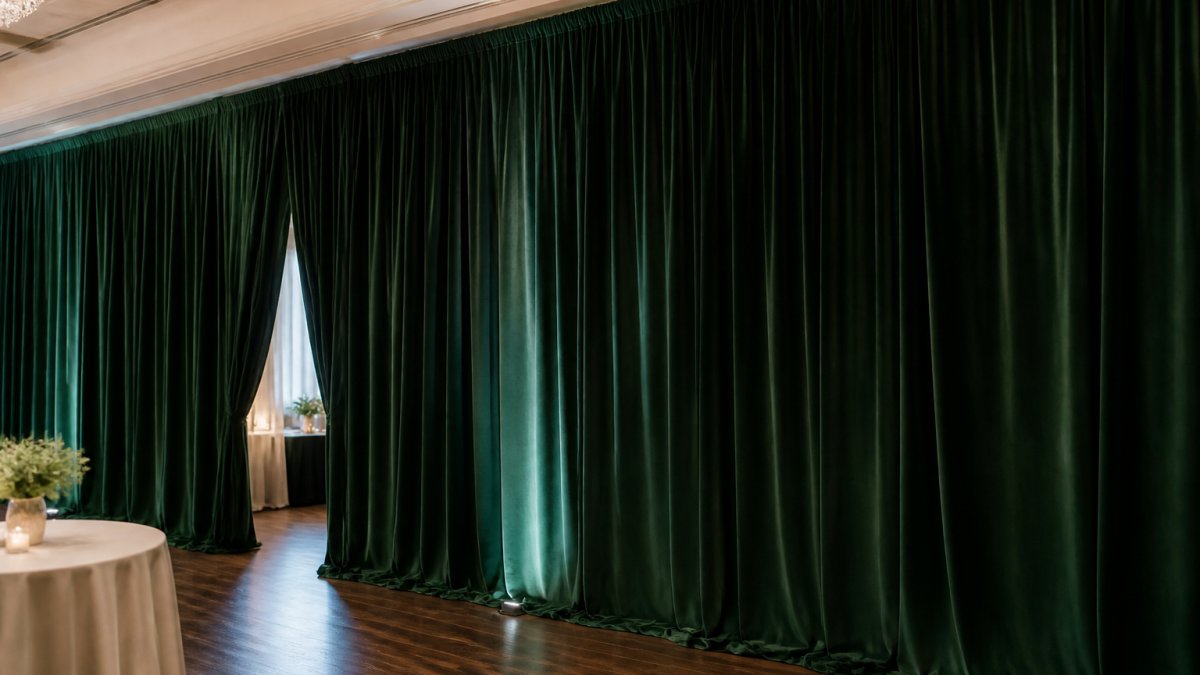
The hallmark of velvet in interior design is how it falls. Stretch velvet drapes create signature graceful folds that communicate luxury, and the combination of weight and elasticity lets the fabric drape smoothly from ceiling to floor, pooling slightly at the base if desired, without the stiffness synthetic blends sometimes show.
Drapability matters because it's what guests see first. When velvet hangs properly, it turns a simple pipe and drape structure into a statement. The folds catch light differently by angle, creating depth, and the spandex blend lets you adjust panels slightly without permanent creasing ruining the effect.
Stretch velvet's fluidity also works across ceiling heights and room configurations. From standard 12-foot ceilings up to 30 feet, the elasticity helps it conform without bunching or pulling, valuable for venues with unusual geometry or dramatic ceiling treatments that must flow across complex angles.
Wrinkle-Resistant Event Drapes: Why Stretch Velvet Wins
Wrinkles are the enemy of professional event aesthetics. Once creased, standard velvet often needs professional steaming or complete repositioning, creating setup delays, extra labor costs, and the risk of a visible crease all event long.
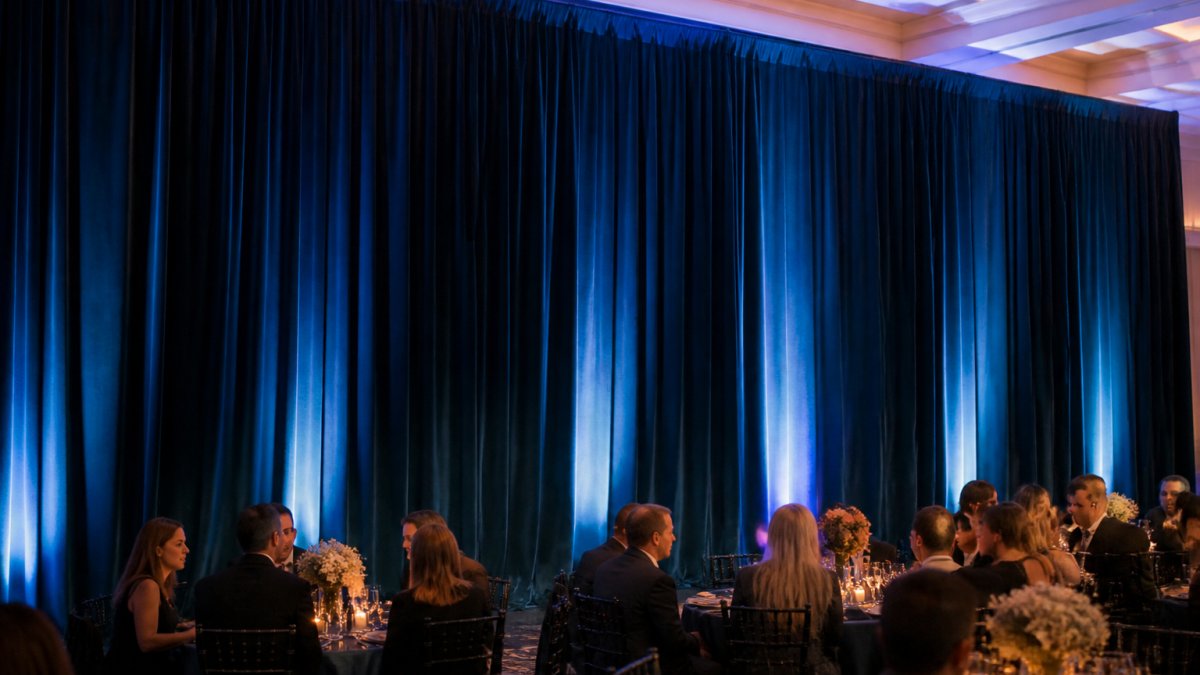
Stretch velvet drapes resist wrinkles because spandex fibers distribute tension evenly. When a panel is folded, compressed, or moved during setup, the elasticity lets it recover its shape; minor creases that would be permanent in traditional velvet relax out within hours.
For rental companies and planners, wrinkle resistance means faster turnarounds: drapes pack, transport, and hang with less damage risk, and clients see a polished result without emergency touch-ups. That reliability is why stretch velvet drapes are standard for high-profile corporate functions, trade shows, and weddings.
Thermal Insulation and Light Blocking Performance
Velvet drapes are marketed as insulating, blackout, and sound-absorbing. All three claims are partially true and depend heavily on factors the marketing rarely mentions. Here's what stretch velvet actually does, and what determines the performance you get.
How Velvet Insulates
Insulation value comes from trapped air. Velvet's cut pile holds still air against the window, slowing heat transfer. Stretch velvet's pile does the same, but its elastane ground weave is typically thinner than a heavy non-stretch ground cloth, so thermal resistance per square yard is usually lower than heavyweight traditional velvet of the same pile height.
What closes that gap is lining. An unlined stretch velvet panel provides modest insulation. A panel with a bonded or sewn-in thermal lining, often a polyester foam or flannel interlining, can meaningfully reduce heat loss in winter and heat gain in summer. The lining, not the velvet, does most of the heavy lifting.
Light Blocking: What to Expect
Velvet's dense pile blocks more light than most woven fabrics of similar weight, but "blocks more" isn't "blackout." A single unlined mid-weight stretch velvet panel reduces light transmission substantially but still glows when backlit by direct sun. For true blackout, you need one of three things:
- A blackout lining bonded to the back of the panel
- A separate blackout liner hung behind the velvet
- A double-layer installation with overlapping panels and a wrapped return at each edge
Color also matters. Dark jewel tones, deep ruby, amethyst, emerald, navy, block more light than pale tones at the same weight because darker dyes absorb rather than reflect. If blackout is the goal, choose a dark tone and line the panel.
Sound Absorption: Realistic Expectations
Velvet's pile absorbs mid- and high-frequency sound, which is why it's common in theaters. It does not absorb low-frequency sound, bass, rumble, HVAC drone, because those wavelengths pass through. A velvet drape reduces echo and flutter in hard-surfaced rooms but won't soundproof a space.
For event acoustics, the practical benefit is reduced reverberation in ballrooms and convention halls with hard walls and high ceilings, noticeable when drapes cover a large wall area, not with a few accent panels.
What Determines Actual Performance
| Factor | Effect on Performance |
|---|---|
| Fabric weight | Heavier panels insulate and block light better |
| Lining | The single biggest lever for thermal and blackout performance |
| Coverage | Full window coverage with overlap prevents air and light leaks |
| Color | Dark tones block more light than pale tones |
| Installation | Wrapped returns and floor-length panels outperform short, gapped hangs |
| Pile height | Taller pile traps more air and absorbs more sound |
Setting Realistic Expectations
For genuine blackout at a trade show or photo-sensitive installation, specify a blackout-lined stretch velvet panel and confirm coverage dimensions before ordering. For thermal separation, line the panels and hang them floor to ceiling with overlap at the edges. For acoustic control, plan wall-scale coverage rather than accent panels.
Stretch velvet delivers real functional benefit, but it scales with how you specify and install it, not the fabric name alone.
U.S. Department of Energy guidance on window treatments and energy efficiency
Velvet Backdrop Ideas for Weddings and Corporate Events
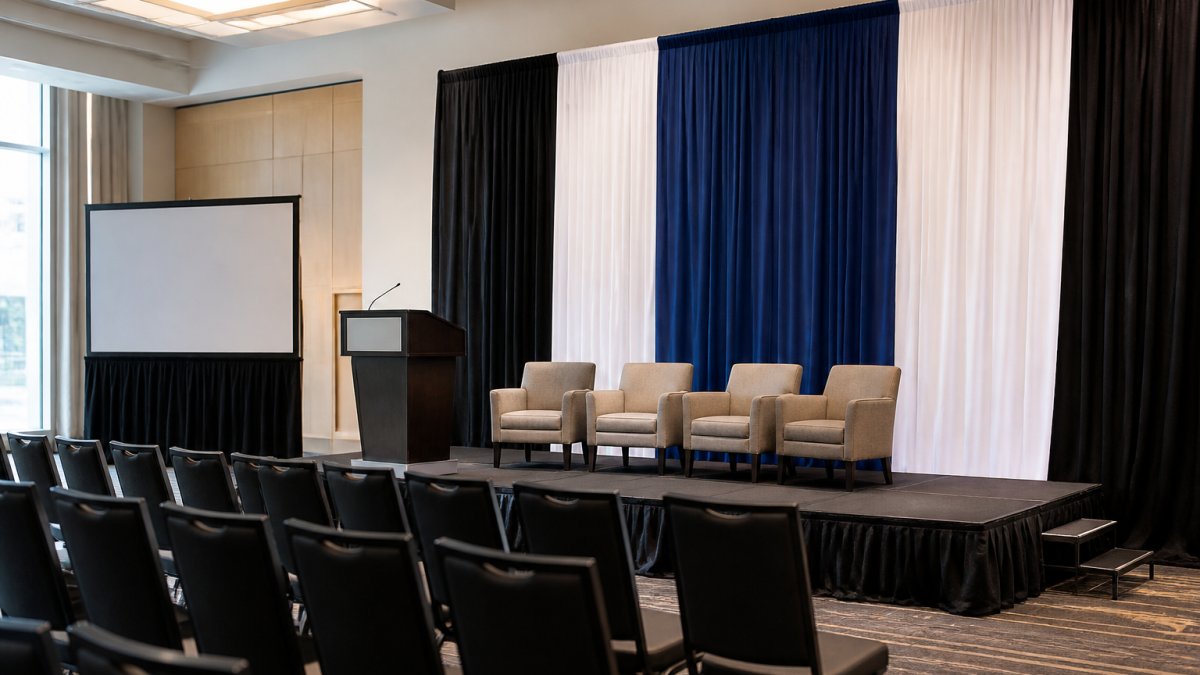
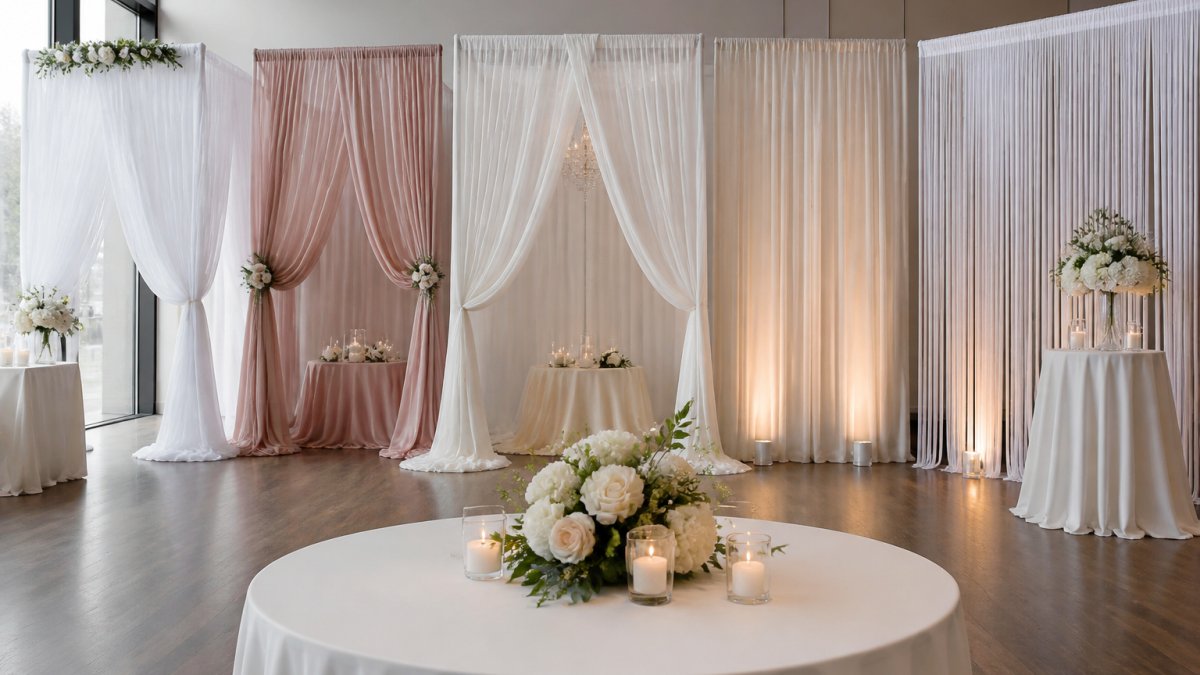
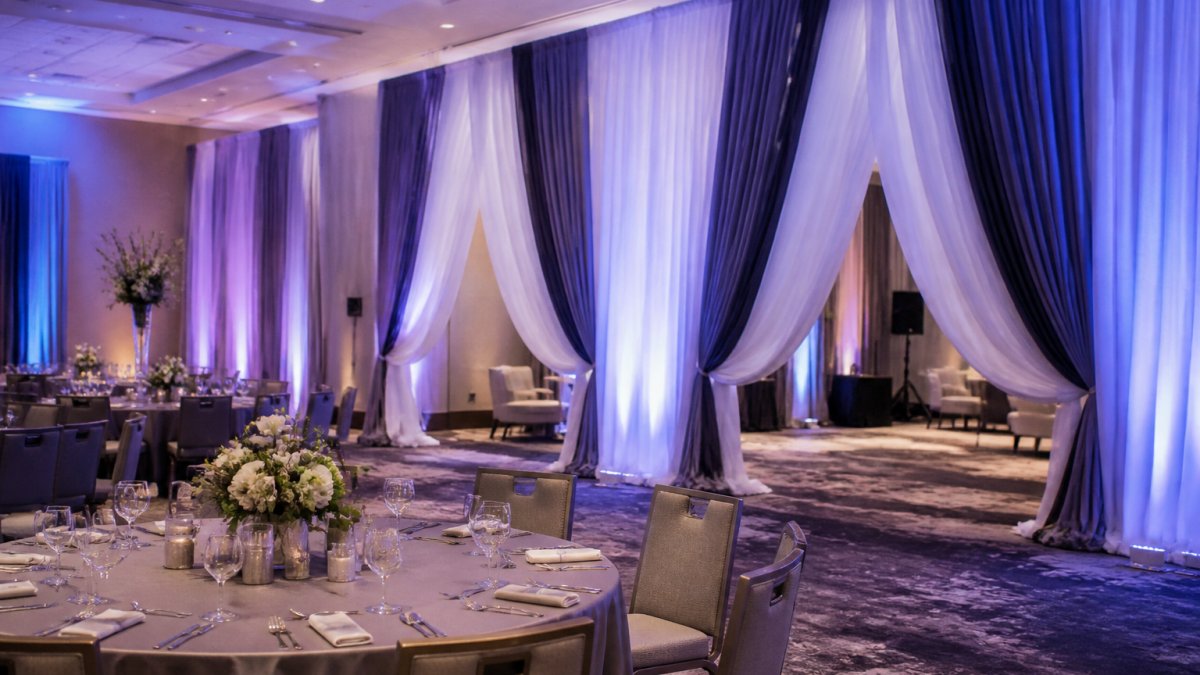
Stretch velvet drapes excel as statement backdrops because their graceful folds and light-absorbing properties create drama with minimal effort.
Corporate events benefit equally. A branded velvet backdrop at a product launch or gala elevates perceived value, and the fabric's color depth makes brand colors appear richer. At trade shows, stretch velvet booth dividers define space while creating an upscale environment that attracts qualified visitors.
Stretch velvet also allows creative applications beyond backdrops: ceiling drapes create intimate spaces within large venues, side panels frame stages, and layered panels in complementary jewel tones add dimension. Because it resists wrinkles and damage, complex installations won't compromise the final look.
How to Hang Velvet Drapes for Professional Results
Proper installation is essential for stretch velvet drapes to deliver their full benefit. Measure your space accurately, ceiling height, drape width, and any obstacles affecting panel placement.
Secure the drape pipe at the correct height, level and stable, uneven pipes create uneven drapes no matter how forgiving the fabric.
Arrange panels into even folds.
After hanging, let the drapes settle for several hours so minor transport wrinkles relax out naturally.
| Installation Step | Key Consideration | Outcome |
|---|---|---|
| Measure space | Accurate dimensions prevent gaps | Professional appearance |
| Level pipe | Ensures even drape distribution | No sagging or stress |
| Secure panels | Proper hardware protects fabric | Damage-free installation |
| Arrange folds | Intentional placement enhances look | Graceful, intentional aesthetic |
| Allow settling time | Wrinkles relax naturally | Polished final result |
Stretch velvet drapes deliver both visual impact and practical reliability. Their luxurious appearance, wrinkle resistance, and thermal performance make them the smart choice for planners who demand professional results. Event Drape Rental offers stretch velvet options.
Frequently Asked Questions
What are the main benefits of stretch velvet drapes?
Stretch velvet drapes combine luxury with practicality. The spandex content provides elasticity that resists wrinkles and maintains smooth lines, while the dense pile creates stunning visual impact and blocks light effectively. They drape gracefully with fluid folds, offer thermal insulation for warmth and coziness, and absorb sound better than standard fabrics. This makes them ideal for event backdrops, bedroom treatments, and living spaces where both aesthetics and performance matter.
How does stretch velvet compare to non-stretch velvet for event drapes?
Non-stretch velvet relies on weight and tight weaving to hang smoothly, making it heavier and more difficult to transport and install. Stretch velvet incorporates spandex fibers that add elasticity, allowing the fabric to recover from wrinkles and maintain its shape with less weight. This elasticity also makes stretch velvet more forgiving during handling and installation, reducing damage risk. For event professionals, stretch velvet offers easier setup, faster installation, and more reliable appearance straight from delivery.
Do stretch velvet drapes really hide wrinkles?
Yes. The spandex content in stretch velvet gives the fabric natural elasticity that resists creasing and helps wrinkles release on their own over time. This doesn't mean wrinkles never appear, but they're less likely to set permanently compared to non-stretch fabrics. Proper storage (hanging rather than folded) and gentle handling during delivery and installation further reduce wrinkles. For events where appearance is critical, this wrinkle-resistant quality ensures your drapes look polished without extensive steaming or ironing.
How do you care for stretch velvet drapes to keep them looking smooth?
Store stretch velvet drapes hanging vertically whenever possible to prevent pile crushing and permanent creases. Avoid folding for extended periods. When shipping or transporting, use protective covers and handle gently to minimize wrinkles. If wrinkles develop, hang the drapes and allow them to release naturally over 24-48 hours due to the fabric's elasticity. For cleaning, vacuum gently with a soft brush attachment or use a lint roller to remove dust. Professional dry cleaning is recommended for stains; avoid water and harsh chemicals that can damage the pile or affect the spandex fibers.