 how-to
Event Draping Cost Per Square Foot: How to Calculate
Table of Contents
- The Cost Per Square Foot Formula for Event Draping
- How to Measure for Event Draping: Room Dimensions, Height, and Fullness
- Using an Event Draping Cost Calculator (and When to Skip It)
- Ceiling Draping Cost: Swag Depth, Panel Length, and Height Premiums
- Pipe and Drape Rental Cost: Backdrops, Booths, and Linear Foot Pricing
- What Separates a Low Quote from a High Quote: Installation, Labor, and Venue Access
- A Worked Estimate: From Measurements to Final Price
- Frequently Asked Questions
Last Updated: October 12, 2026
The Cost Per Square Foot Formula for Event Draping
Event draping is the practice of hanging fabric panels across ceilings, walls, or freestanding frames to transform a venue's appearance, and its cost per square foot comes down to one core formula: finished area multiplied by a rate that reflects fabric, labor, and access. At Event Drape Rental, we quote draping projects, and the same three inputs drive every number: how much fabric the space needs, how hard it is to reach, and what the client wants the finish to look like.
Most published price guidance treats draping as a single line item, hiding the variables that move a quote by hundreds or thousands of dollars.
Draping cost per square foot is the total project cost divided by the finished fabric area. A simple wall backdrop lands at one rate; a 30-foot ballroom ceiling with deep swags lands at a very different one.
What the Formula Includes (and What It Doesn't)
A complete per-square-foot figure bundles four components:
- Fabric and materials, the panels themselves, plus any lining or sheer layers
- Labor, cutting, pressing, and finishing the panels before they ship
- Installation, rigging, hardware, and the crew hours to hang and strike the drape
What it does not include: venue rental fees, permits, power drops, or damage deposits. Folding those into a draping rate means comparing quotes that were never comparable.
How to Measure for Event Draping: Room Dimensions, Height, and Fullness
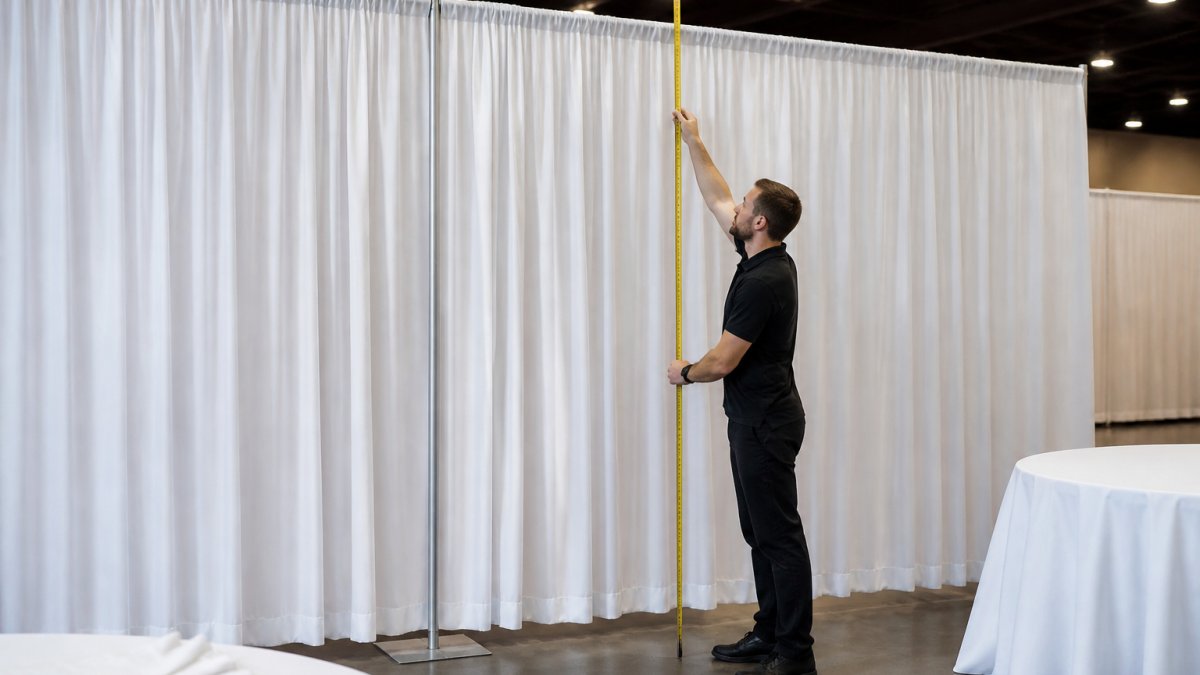
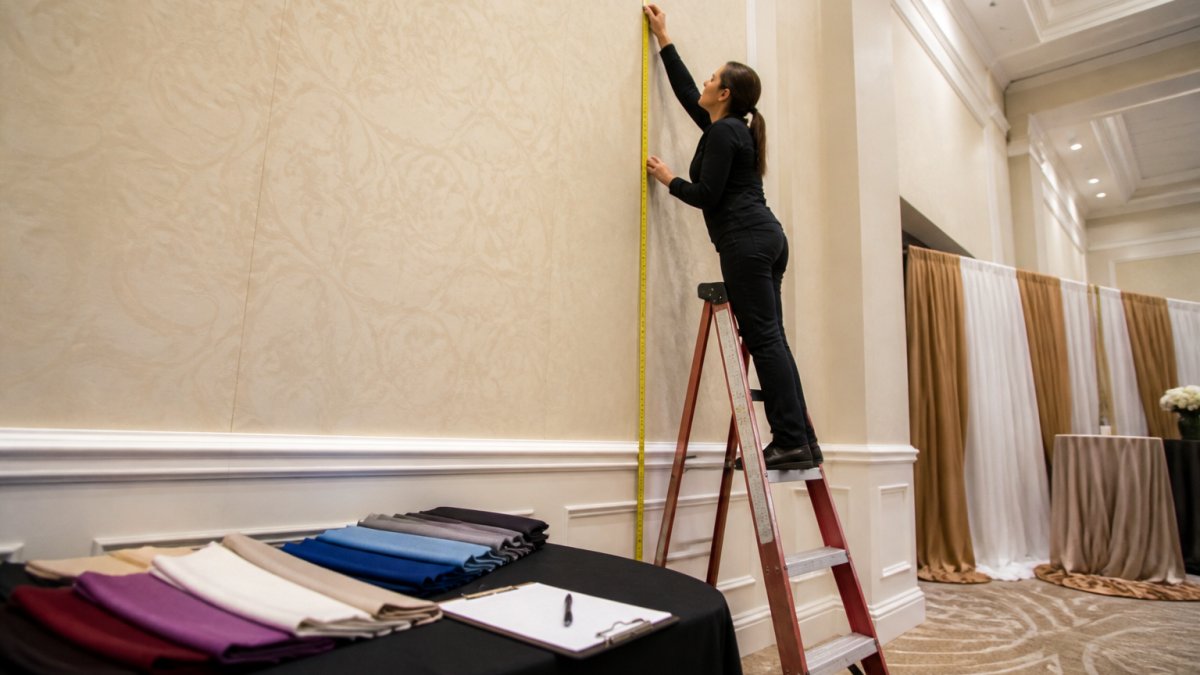
Knowing how to measure for event draping means capturing four numbers before you talk to any vendor: room width, room length, ceiling height, and the finished height you want the drape to reach.
Turning Room Dimensions into Square Footage
The per-square-foot rate only means something once you know the finished area the drape will cover. Measure in feet, then multiply:
- Wall drape: finished width × finished drop. A 20-foot wall draped to a 10-foot drop covers 200 sq ft.
- Ceiling drape: ceiling width × ceiling length. A 40-foot by 60-foot ballroom ceiling covers 2,400 sq ft.
- Pipe and drape backdrop: linear feet of frame × finished height, then convert to sq ft only if you need a like-for-like comparison against a ceiling quote.
Measure the finished drop, not the ceiling height, when the drape stops short of the floor or ceiling. A 24-foot ceiling with a drape hanging to 18 feet is an 18-foot drop, and the area math follows the fabric, not the room.
Calculating Fabric Quantity from Room Width and Ceiling Height
Fabric quantity is not the same as wall area. A drape that hangs flat looks cheap; one with fullness looks intentional. The fullness ratio is the multiplier that accounts for the gather.
A common approach is:
- 1.5x fullness, light gather, best for modern minimal aesthetics
- 2x fullness, standard for weddings and corporate backdrops
- 3x fullness, heavy, theatrical, used for luxury ceiling treatments
Multiply your finished width by the fullness ratio to get the linear feet of fabric you need. A 20-foot wall at 2x fullness requires 40 linear feet of fabric, even though the finished width is only 20 feet.
| Draping Style | Fullness Ratio | Best For | Fabric per 20 ft Wall |
|---|---|---|---|
| Flat panel | 1x | Modern minimal | 20 linear ft |
| Standard gather | 2x | Weddings, corporate | 40 linear ft |
| Deep gather | 2.5x | Galas, luxury | 50 linear ft |
| Theatrical | 3x | Stage, dramatic | 60 linear ft |
Panel Count and Why It Changes the Math
Fabric is usually sewn into fixed-width panels, commonly 5 to 10 feet wide depending on the vendor's inventory. Panel count is what you order, and it drives the sewing and finishing labor line.
To estimate panels: divide the linear feet of fabric by the panel width, then round up. A 40-foot wall at 2x fullness needs 80 linear feet of fabric.
Height, Inventory Limits, and Custom Builds
Standard rental inventory commonly tops out around 30 feet; above that, panels are custom-built, adding lead time and cost. Below 12 feet, most vendors pull from stock. Measure ceiling height first, because it determines whether your project is stock or custom before any other number matters.
Using an Event Draping Cost Calculator (and When to Skip It)
An event draping cost calculator is useful for a ballpark, useless for a final number. Online calculators take width, height, and fullness, then apply a flat rate. That works for a simple backdrop but falls apart with a 30-foot ceiling, a freight elevator that only runs until 6 p.m., or three fabric layers instead of one.
Calculators earn their keep in early budgeting, when you need a range for a stakeholder. They mislead when comparing vendors, because the rate behind the calculator rarely matches a real quote.
Ceiling Draping Cost: Swag Depth, Panel Length, and Height Premiums
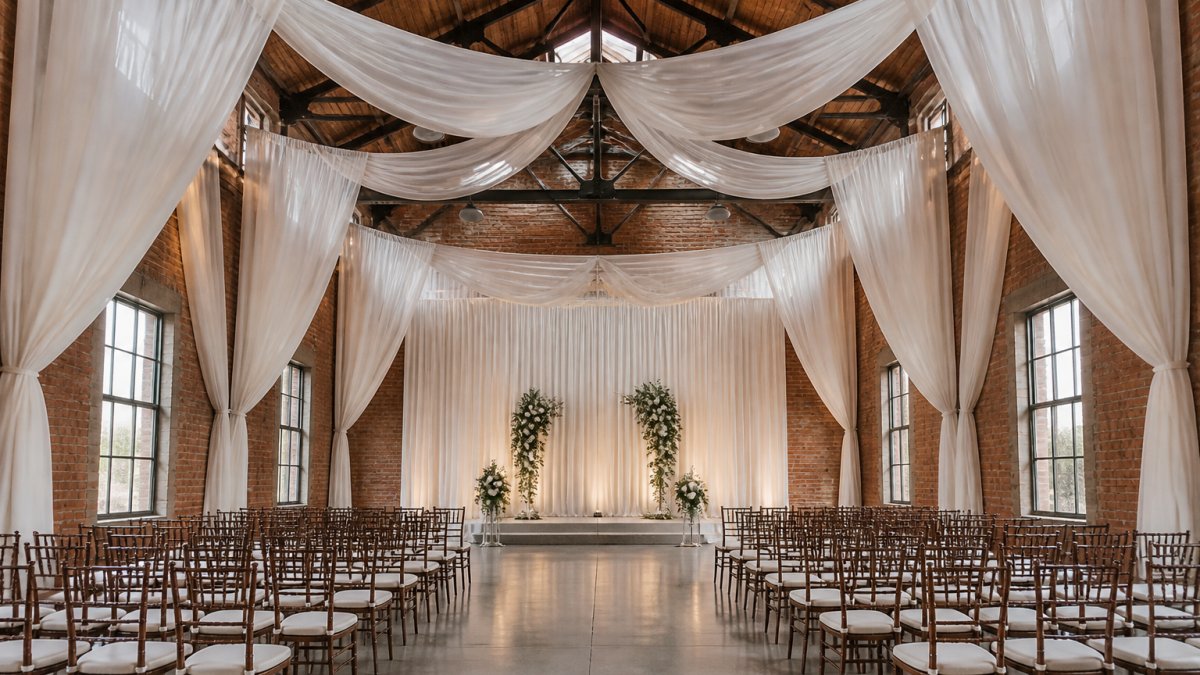
Ceiling draping cost is driven by three variables wall draping doesn't have: swag depth, panel length, and height. A swag is the curved fabric loop running between anchor points across a ceiling; the swag depth is how far it dips below the anchor line.
Panel length matters just as much. A ceiling drape in a 12-foot room uses roughly 12 feet of fabric per panel. The same drape in a 30-foot ballroom uses 30.
Pipe and Drape Rental Cost: Backdrops, Booths, and Linear Foot Pricing
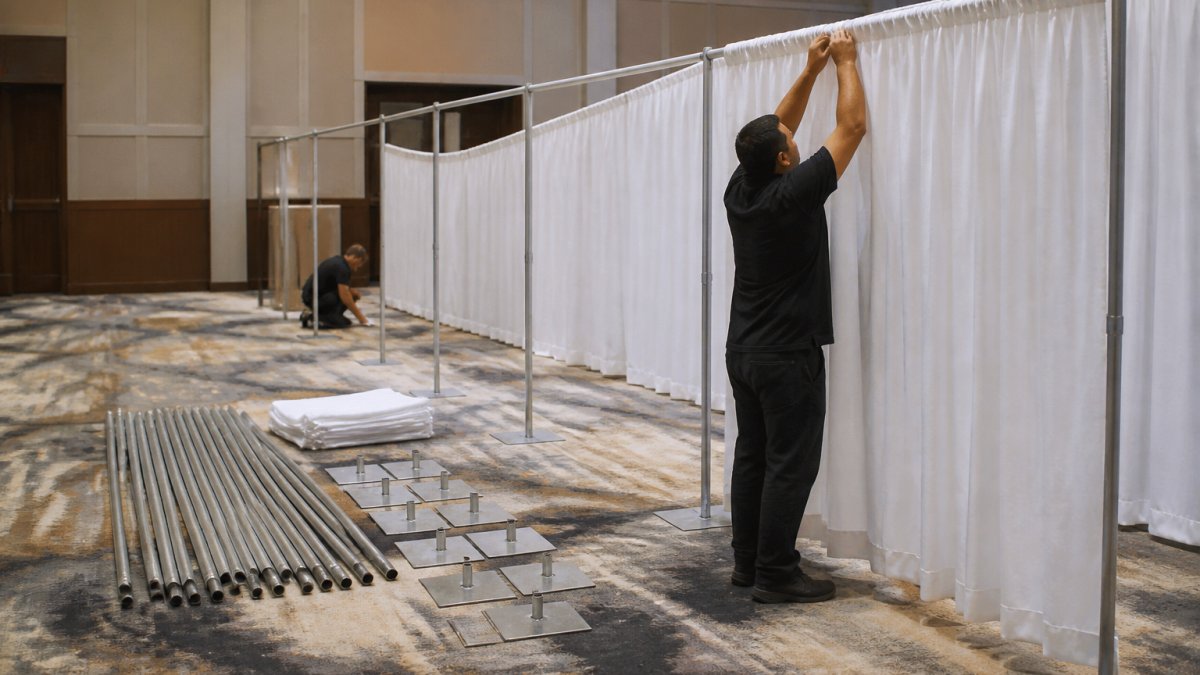
Pipe and drape rental cost is usually quoted per linear foot rather than per square foot, because the frame, not the fabric, is the constraint.
| Pricing Basis | Unit | Best For | Why It's Used |
|---|---|---|---|
| Per square foot | sq ft | Ceiling draping, large wall treatments | Scales with fabric volume |
| Per linear foot | lin ft | Pipe and drape, booths, backdrops | Scales with frame count |
| Per panel | each | Custom sewn drapes | Accounts for finishing work |
| Flat project rate | project | Small, repeatable setups | Simplifies quoting |
When to use which: square-foot pricing rewards large ceilings and penalizes small, intricate work. Linear-foot pricing is fair for anything with a repeating frame. Panel pricing is the right basis when the fabric itself is custom.
What Separates a Low Quote from a High Quote: Installation, Labor, and Venue Access
The gap between the cheapest and most expensive quote on the same room is almost never the fabric, it's labor and access.
Installation labor scales with:
- Ceiling height, above 20 feet, lifts replace ladders and crew time climbs
- Access, stairs, tight doorways, and elevator restrictions add hours
- Setup window, overnight or rush installs carry premium rates
A common mistake is choosing a vendor on the per-square-foot rate alone. Ask what the quote includes: fabric, labor, hardware, delivery, and teardown. A low rate with a la carte add-ons usually costs more than a bundled quote.
A Worked Estimate: From Measurements to Final Price
Here is how the formula runs end to end. Picture a 40-foot by 60-foot ballroom with a 24-foot ceiling, where the client wants ceiling draping across the full 40-foot width at 2x fullness, with 6 swags.
- Measure the span. Finished width: 40 feet. Finished drop: 24 feet.
- Apply fullness. 40 ft × 2 = 80 linear feet of fabric.
- Calculate finished area. 40 ft × 24 ft = 960 square feet.
- Estimate panel count. At a 10-foot panel width, 80 linear feet ÷ 10 = 8 panels.
- Add height premium. Above 20 feet, expect a labor multiplier for lift work.
- Add access and logistics. Loading dock, freight elevator, 4-hour window: standard.
- Divide total by area. Total project cost ÷ 960 sq ft = effective per-square-foot rate.
The effective rate is what you compare across vendors, and what tells you whether a quote is reasonable for the room or padded on the labor line.
What the Quote Should Itemize
A per-square-foot rate is only comparable if you know what sits inside it. Ask any vendor to break the quote into these lines and compare line by line, not rate against rate:
| Line Item | What to Confirm |
|---|---|
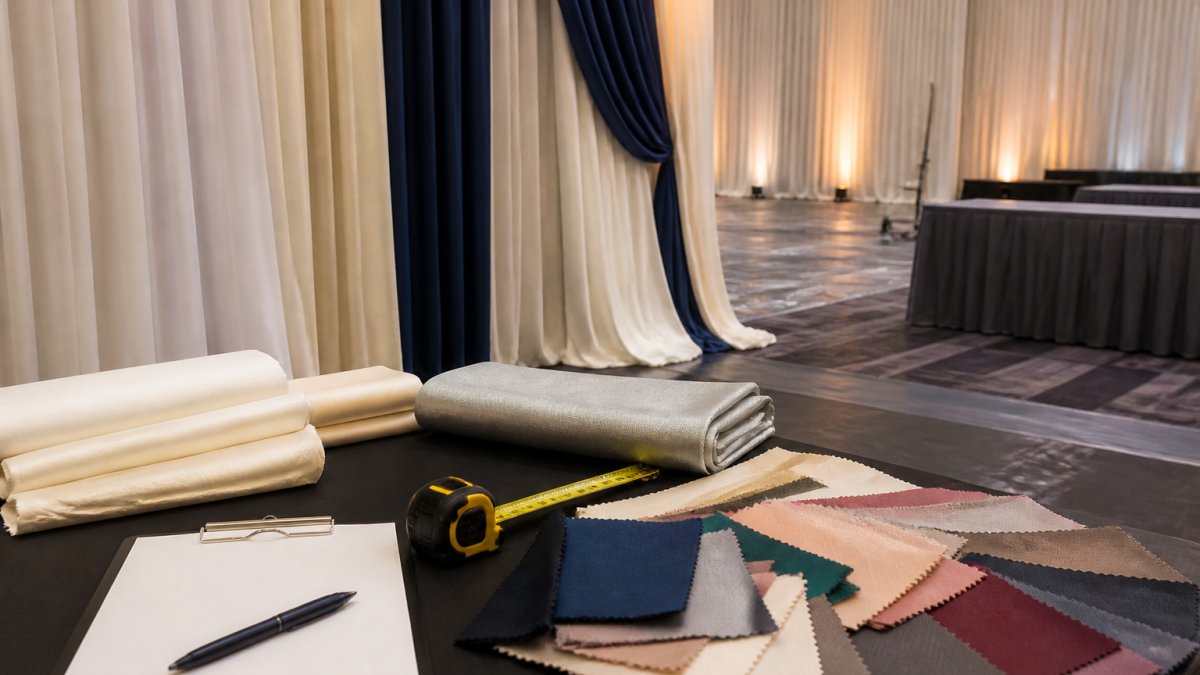
| Fabric | Rental or purchase; panel width; color and material availability |
| Sewing and finishing | Whether panels are stock or custom-built |
| Hardware and rigging | Motorized lift, truss, anchor points, or freestanding frame |
| Labor | Crew size, hourly rate, overtime threshold |
| Delivery and pickup | Distance, dock access, freight elevator reservation |
| Setup and teardown | Same-night strike vs. next-morning pickup |
| Venue fees | Certificate of insurance, rigging approval, union labor requirements |
| Taxes and surcharges | Sales tax, fuel, after-hours premiums |
A bundled quote isn't automatically better or worse than an itemized one, but it's harder to compare. Ask for itemization anyway; the vendor who can produce it has usually done the room before.
Pricing Bases Are Not Interchangeable
A common comparison mistake is treating a per-linear-foot quote and a per-square-foot quote as if they measure the same thing. They do not.
- Per square foot scales with fabric volume. It rewards large ceilings and penalizes small, intricate work.
- Per linear foot scales with frame count. It is the right basis for pipe and drape, booths, and backdrops.
- Per panel scales with finishing labor. It is the right basis for custom sewn drapes.
To compare across bases, convert everything to the effective per-square-foot rate for your specific room. That is the only number that answers the question you are actually asking.
Regional and Seasonal Variation
Two identical rooms in different markets can quote very differently. The drivers are predictable:
- Market demand. Peak wedding and gala season compresses vendor calendars and pushes rates up.
- Labor cost. Metro areas with higher prevailing wages carry higher installation rates.
- Travel distance. Vendors outside a metro area often add mileage or crew travel time.
Booking outside peak season or on a weekday often captures a lower rate on the same room. The formula does not change; the rate inside it does.
For a project of this scale, request a quote from a vendor who can confirm fabric availability, height capability, and installation crew size in one pass. Event Drape Rental stocks drapes from 12 to 30 feet tall in over 100 colors across six fabric materials, with DIY and professional installation options.
Frequently Asked Questions
How do you calculate event draping cost per square foot?
Start by measuring the finished width and finished height of the area you want covered, then multiply them to get square feet. Divide your total draping budget by that number to get a cost per square foot. From there, adjust for drape fullness (typically 2x to 3x the finished width in fabric), fabric type, ceiling height, and whether installation is included. This gives you a consistent number to compare quotes across vendors.
What factors affect the cost of event draping?
The biggest drivers are total square footage, ceiling height (drapes above 12 feet often require lifts and extra labor), fabric quantity based on fullness ratio, drape style (ceiling swags cost more than flat wall panels), installation and teardown, venue access restrictions, and delivery distance. Seasonal demand also matters: peak wedding months and year-end corporate galas push labor rates higher, so booking early usually locks in better pricing.
Does event draping pricing include installation and takedown?
Not always. Many rental quotes list fabric and hardware separately from labor, so ask directly whether setup and teardown are bundled or billed hourly. Professional installation typically adds a per-piece or per-hour charge, and venues with union labor rules, freight elevator schedules, or load-in windows can increase that cost. Getting a line-item quote that separates rental, labor, and delivery prevents surprise charges on the final invoice.
How can you compare event draping rental quotes fairly?
Ask every vendor to quote the same scope: same room dimensions, same fullness ratio, same drape height, and the same installation scope. Then divide each total by the square footage covered to get a true cost per square foot. Confirm what is included (hardware, labor, delivery, damage waiver) and what is not. A lower headline number often excludes installation, which can make it more expensive once labor is added.