 how-to
How Long Event Draping Installation Takes
Table of Contents
- Event Draping Installation Time by Project Type
- Event Draping Setup Time: Key Variables
- Pipe and Drape Installation Process
- Ceiling Draping Installation: Time and Considerations
- Event Setup Timeline: From Site Visit to Completion
- Factors That Extend Installation Time
- Planning Your Event Draping Timeline
- Frequently Asked Questions
Last Updated: October 13, 2026
Event Draping Installation Time by Project Type
How long event draping installation takes depends primarily on the scale of your venue and the complexity of your design. The timeline patterns are clear: smaller spaces finish quickly, while larger venues with custom treatments require significantly more labor and coordination.
Installation time breaks down into three distinct categories based on square footage. Understanding which tier your event falls into helps you plan your day accurately and coordinate with other vendors who'll be on-site.
Small events (under 1,500 sq ft)
Small venue installations, think intimate wedding ceremonies, boutique corporate meetings, or compact trade show booths, typically take 2 to 4 hours from arrival to completion. This timeframe assumes a two-person crew working with standard pipe and drape or simple ceiling treatments.
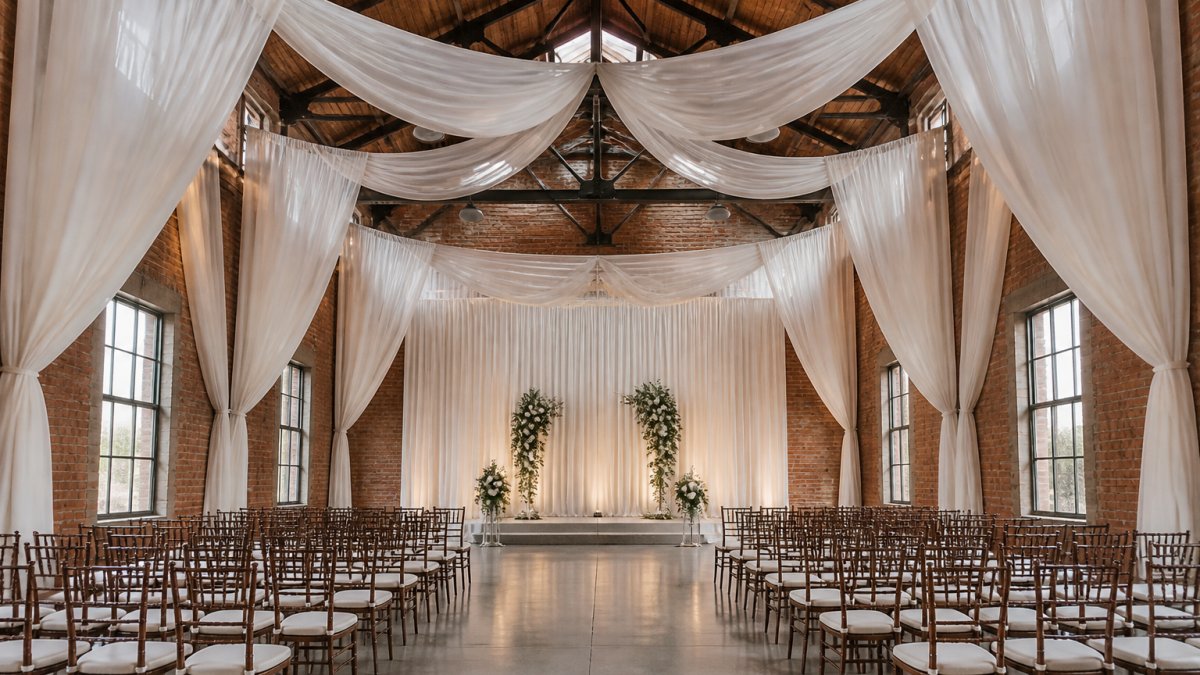
A small event might involve draping a stage backdrop, creating an accent wall, or softening exposed brick in a loft space.
Medium events (1,500-5,000 sq ft)
Medium-sized venues, ballrooms, conference centers, larger warehouse spaces, require 5 to 8 hours with a crew of three to four people. This is where event draping installation becomes a full-day commitment that demands careful scheduling.
At this scale, you're likely combining multiple draping elements: ceiling treatments to hide industrial fixtures, perimeter draping to reshape the room, stage backdrops, and possibly custom color-matched panels. The crew needs time to assess the space, position stands at varying heights, run cable or rigging if needed, and ensure every panel hangs evenly.
Large events (over 5,000 sq ft)
Large-scale installations in convention centers, hotel ballrooms, or outdoor tent structures typically require 10 to 16 hours, often split across two days. These projects demand a crew of five or more people and extensive pre-event planning.
A large event might involve transforming an entire ballroom with floor-to-ceiling drapes, creating multiple room dividers with pipe and drape, installing custom ceiling treatments across thousands of square feet, and coordinating with venue staff on rigging points and weight limits.
Event Draping Setup Time: Key Variables
Installation duration is never one fixed number, it shifts based on specific conditions at your venue. Understanding these variables helps you communicate realistic timelines to your team and avoid last-minute scrambling.
Fabric type and weight
Different fabrics require different handling techniques. Lightweight chiffon draping hangs quickly and moves gracefully, but requires careful handling to prevent snagging. Sequin fabric, while stunning, is heavier and more time-consuming to position because each panel must be secured to prevent shifting or bunching.
Standard polyester drapes in medium weight represent the fastest installation because they're forgiving, durable, and hang predictably. Specialty fabrics like velvet or crushed velour add installation time because they demand precise alignment and careful tension to avoid wrinkles.
Venue architecture and obstacles
The physical layout of your space directly impacts how long event draping installation takes. A clean, open ballroom with clear ceiling access and minimal pillars is fastest.
Concrete walls require different rigging than drywall. Venues with limited rigging points force crews to get creative with stand placement. High ceilings (20+ feet) require additional safety measures and specialized equipment. Carpeted floors allow easier stand positioning than polished concrete, which can shift under load.
Crew size and experience level
A two-person crew working efficiently can handle small installations, but they'll move slowly on medium or large projects.
Experienced crews also finish faster because they've developed efficient workflows, they troubleshoot problems quickly, and they know how to position stands and fabric to prevent shifting during the event. An inexperienced team might take 50% longer on the same installation because they're problem-solving in real-time rather than executing a practiced process.
Pipe and Drape Installation Process
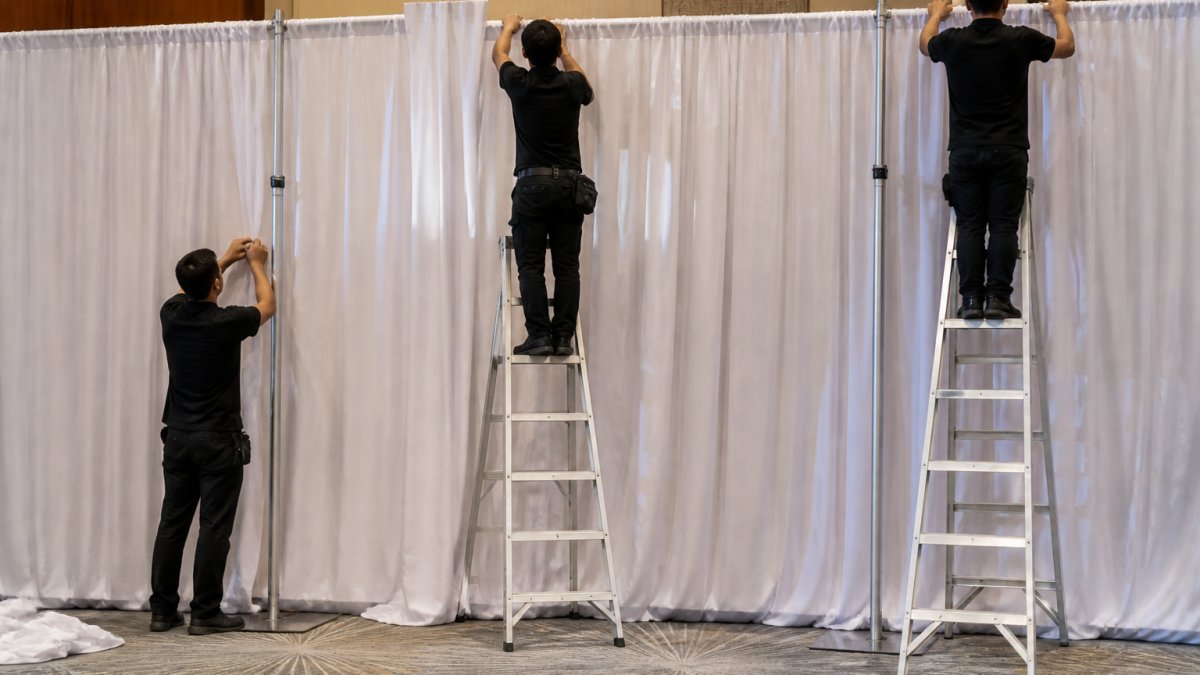
Pipe and drape remains the most versatile and widely-used system for event draping because it's modular, reusable, and can adapt to almost any space. Understanding the step-by-step process clarifies why installation takes the time it does.
Step 1: Prepare the installation area
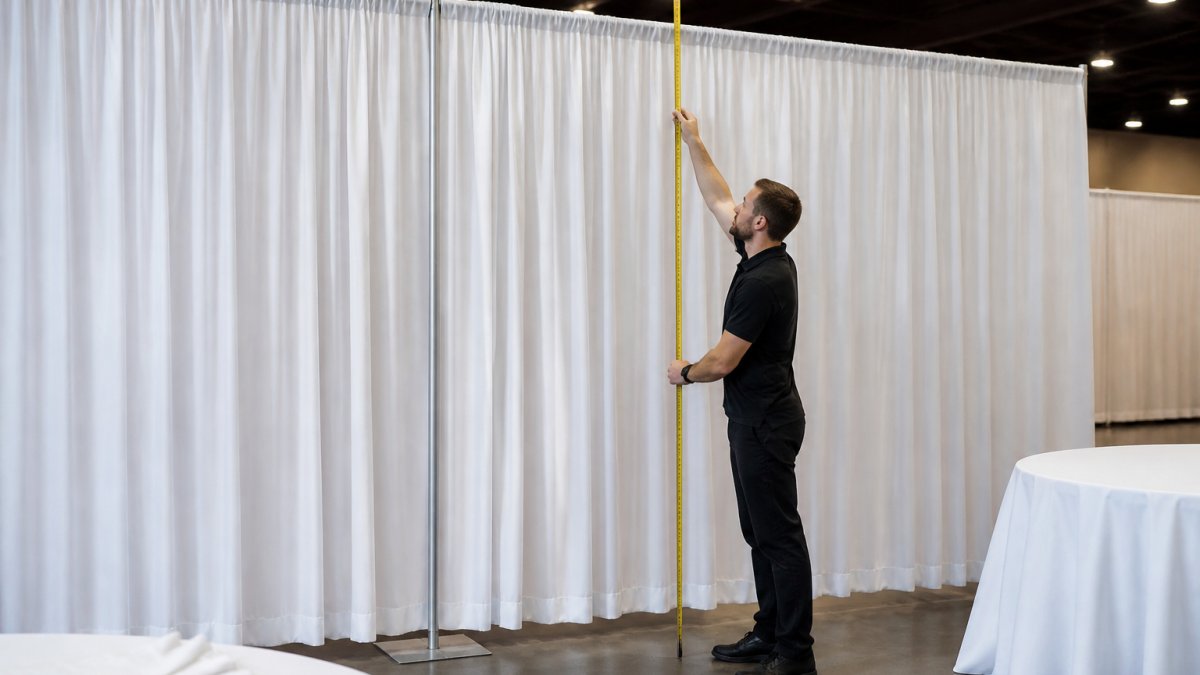
Before any drape goes up, the crew clears the installation area of obstacles, assesses rigging points, and confirms stand placement. This step typically takes 30-45 minutes for small events, 45-90 minutes for medium events.
The crew walks the venue with a measuring tape and notes ceiling height, pillar locations, electrical outlets they need to avoid, and any structural limitations. They identify where stands will go, whether cable or rigging is needed, and what safety clearances must be maintained.
Step 2: Assemble and position stands
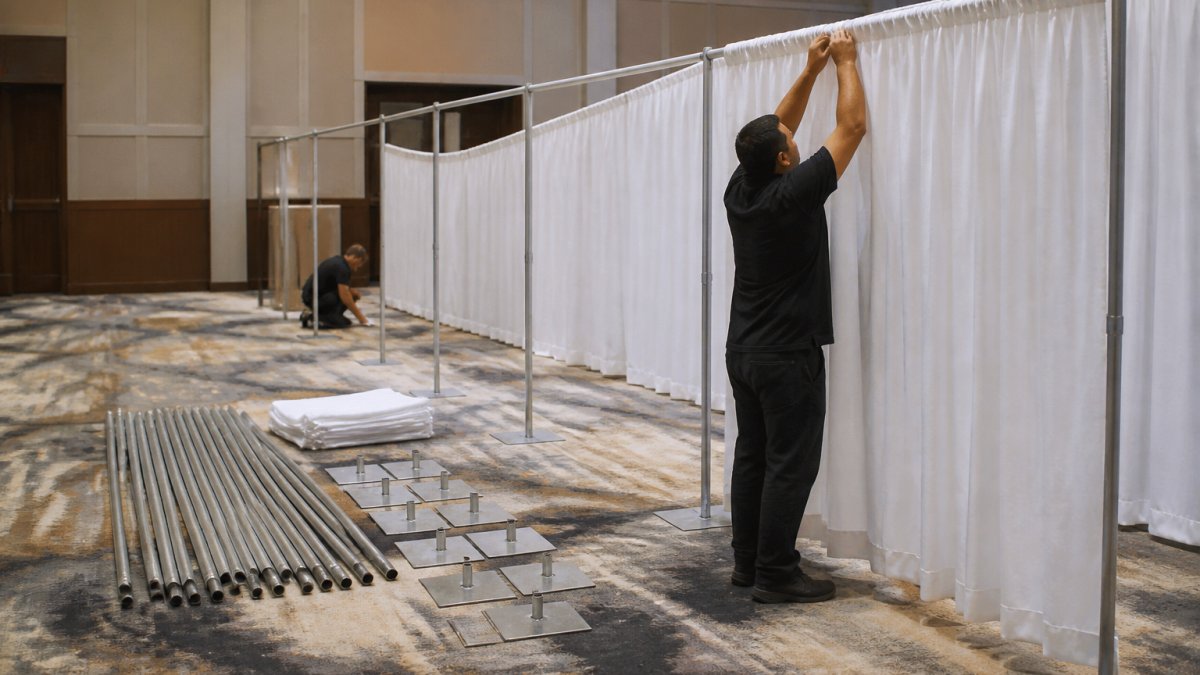
Pipe and drape stands arrive in components: base plates, vertical poles, crossbars, and stand feet. The crew assembles each stand, positions it at the correct location, and adjusts height to match your design.
The crew ensures each stand is level and stable, using shims or adjustments as needed. They position crossbars at the correct height for your fabric and confirm that all stands are aligned.
Step 3: Hang and secure fabric
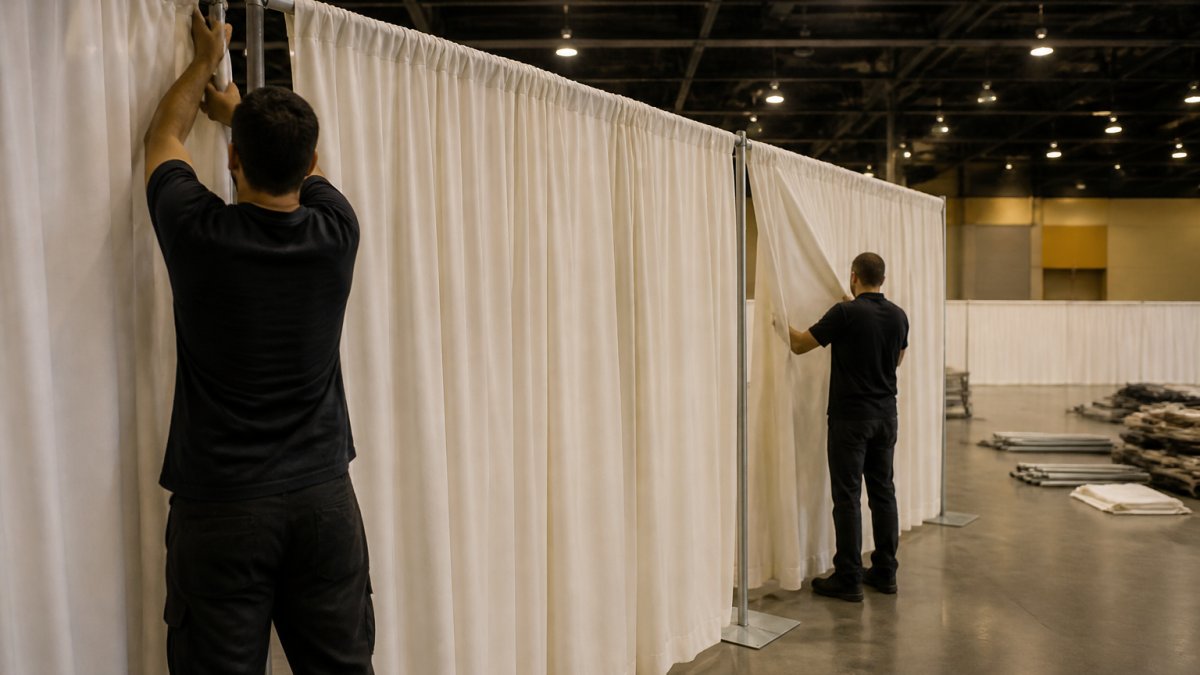
Once stands are positioned, fabric goes up. The crew unfolds each panel, attaches it to the crossbar using clips or hooks, and pulls it taut to eliminate wrinkles. They secure the bottom edge using weights or clips to prevent movement during the event.
Hanging fabric is where precision matters most. Uneven tension creates visible waves or sags. The crew works systematically across the installation, stepping back frequently to check alignment. For a 50-foot run of drape, this step alone takes 1-2 hours.
Ceiling Draping Installation: Time and Considerations
Ceiling draping transforms a space more dramatically than perimeter draping because it covers the largest visual surface. It also adds complexity to event draping installation timelines because it requires rigging knowledge, safety protocols, and often venue approval.
Structural requirements and rigging
Ceiling drapes cannot simply be hung from any point, they require proper rigging infrastructure. The venue must have rigging points rated for the weight of fabric plus the rigging hardware. Many venues have permanent rigging grids; others require temporary rigging installation, which adds time and cost.
The crew assesses weight limits, confirms rigging point spacing, and determines whether cable, chain, or other hardware is needed. Some venues require a licensed rigger or engineer to approve the installation, which adds a day or two to your planning timeline.
Installation time for common ceiling treatments
A simple ceiling swag, fabric draped in gentle curves across the ceiling, takes 2-3 hours with an experienced crew because it requires precise positioning and multiple height adjustments.
Double-layer ceiling drapes, which create depth and a more luxurious look, require nearly double the installation time because each layer must be positioned independently and secured separately. Custom ceiling treatments with color blocking or pattern integration take even longer because the crew must measure and align each section precisely.
Event Setup Timeline: From Site Visit to Completion
A complete event draping project spans weeks, not just the installation day. Understanding the full timeline helps you coordinate with other vendors and avoid bottlenecks.
Pre-event consultation and site assessment
Schedule a site visit 4-6 weeks before your event. The crew photographs the space, measures key dimensions, identifies rigging points, and discusses your vision. This visit typically takes 1-2 hours and is essential for accurate pricing and timeline estimates. You'll finalize fabric choices, confirm installation dates, and address any venue-specific concerns.
Delivery and staging
Fabric and equipment arrive 1-2 days before installation. The crew unloads, inspects condition, and stages materials near the installation area. This step takes 1-2 hours and ensures everything is ready when installation begins.
Installation day workflow
Installation typically begins 6-8 hours before your event start time. The crew arrives, assesses final conditions, and begins the systematic process of stand assembly, fabric hanging, and final adjustments. A final walkthrough 30-60 minutes before guests arrive confirms everything meets your expectations.
Teardown and removal
After your event, the crew returns to remove drapes, disassemble stands, and remove all materials from the venue. Teardown typically takes 40-60% of installation time because fabric must be carefully folded and packed to preserve condition for future rentals. Budget 2-4 hours for teardown depending on project size.
Factors That Extend Installation Time
Some conditions predictably add hours to your event draping installation timeline. Identifying these early prevents surprises on installation day.
Venue-specific challenges
Venues with limited access, narrow doorways, or multiple levels require longer setup because crews must stage materials strategically and plan routes carefully. Historic venues with fragile surfaces or restricted rigging options add complexity. Outdoor venues with uneven ground or weather concerns require additional preparation and safety measures.
Custom color matching and special requests
If your design requires exact color matching to brand guidelines or involves custom fabric blending, the crew needs extra time for color verification and precise positioning. Rush orders or last-minute changes to the design add installation time because the crew cannot prepare as thoroughly.
Safety and venue coordination requirements
Venues with strict safety protocols, union labor requirements, or coordination with other vendors (catering, AV, florists) can extend timelines significantly. Some venues require installation to occur during specific windows or with venue staff present. Budget flexibility into your schedule to accommodate these requirements.
Planning Your Event Draping Timeline
Successful event draping installation requires advance planning and realistic scheduling. Here's how to build a timeline that works.
Scheduling buffer time
Add 20-30% buffer time to your estimated installation duration. If the crew estimates 6 hours, plan for 7.5-8 hours. This buffer accommodates unexpected obstacles, last-minute adjustments, and the reality that installations rarely proceed exactly as planned.
For large events, schedule installation to complete 1-2 hours before guest arrival. This gives the crew time to address any final issues and gives you a window to walk the space and confirm everything meets your vision.
Coordinating with other vendors
Communicate your installation timeline to catering, AV, florists, and other vendors. Coordinate who sets up first. Generally, draping should go up before furniture and table settings because it shapes the space and influences how other elements are positioned. Confirm with your venue that multiple vendor teams can work simultaneously or whether sequential setup is required.
Rush installation options
If your timeline is compressed, rush installations may be available. These typically cost more due to crew scheduling flexibility and potential overtime. Contact Event Drape Rental directly for rush availability and pricing.
Event draping installation timelines range from a few hours for small events to multiple days for large-scale transformations. The key to success is understanding your venue's specific conditions, planning conservatively, and coordinating with other vendors early. Request a quote today and let us show you how to transform your space on schedule.
Frequently Asked Questions
What factors affect event draping setup time most?
Venue size, ceiling height, fabric type, and crew experience are the primary factors. A small 1,000 sq ft space with simple backdrop draping may take 2-3 hours, while a large ballroom with ceiling treatments and multiple draping zones can take 8-12 hours. Venue architecture, including pillars, odd ceiling angles, or rigging restrictions, can add significant time. Experienced crews typically work 20-30% faster than first-time installers.
How long does pipe and drape installation typically take?
Standard pipe and drape installation for a medium event (2,000-3,000 sq ft) takes 4-6 hours with a 2-3 person crew. This includes assembling tripod stands, raising crossbars to desired height, and hanging fabric. Larger installations with multiple draping zones or complex layouts can extend to 8-10 hours. Prep work, clearing obstacles and assessing the installation area, adds 30-60 minutes before actual hanging begins.
Is professional installation worth the extra cost for a tight timeline?
Yes, especially for events within 2-3 weeks. Professional crews complete installations 40-50% faster than DIY attempts and avoid costly mistakes like improper hanging or damage to venue features. For rush events or complex ceiling draping, professional installation ensures the work meets safety codes and venue requirements. Request a quote to compare professional installation costs against the risk of delays or substandard results.
How long does ceiling draping installation take?
Ceiling draping is the most time-intensive element. A simple swag or fabric drape across one section takes 2-3 hours. Full ceiling coverage with chiffon or double-layer treatments in a large ballroom can take 6-10 hours depending on ceiling height and rigging requirements. Venues may require rigging approval from structural engineers, which must happen before installation begins. Always budget extra time for venue coordination and safety inspections.