 how-to
How to Create Romantic Wedding Backdrop Drapes
Last Updated: October 23, 2026
Quick Summary
To create romantic wedding backdrop drapes, measure your space, choose fabric at two to three times the opening width, and build a stable frame with weighted bases. Attach the fabric from the top down, clipping every 12 to 18 inches and gathering soft pleats between clips.
- Use the 2-to-3 rule: a 10-foot opening needs 20 to 30 feet of fabric for soft pleats.
- Order fabric by weight first and color second, since weight decides how the drape hangs.
- For a 12-foot ceiling, uprights should reach at least 11 feet 6 inches to avoid a top gap.
- Total base weight on each upright should exceed the weight of fabric and decorations above it.
- Attach decorations with clips, not pins, because pins leave holes in rental fabric.
Table of Contents
- How to Drape a Wedding Backdrop: Materials, Measurements, and Setup
- Wedding Backdrop Fabric: Choosing Weight, Opacity, and Drape
- Wedding Backdrop Draping Ideas for Every Ceremony Style
- Pipe and Drape Wedding Backdrop: Frame Setup and Safety
- Step-by-Step: Attaching Drapes and Creating Soft Pleats
- Adding Vines, Floral Accents, and Lighting to Your Backdrop
- Common Mistakes That Ruin Backdrop Drapes
- Conclusion
- Frequently Asked Questions
How to Drape a Wedding Backdrop: Materials, Measurements, and Setup
Romantic wedding backdrop drapes start with a simple plan: measure the space, pick the right wedding backdrop drapes fabric, and build a stable frame. At Event Drape Rental, we offer drapes from 12 to 30 feet tall, and the setups that look best are always the ones measured twice. This guide walks you through every step, from fabric weight to the final soft pleat.
What You'll Need Before You Start
Gather your tools before the truck arrives. A missing clamp at 6 a.m. is a bad way to start.
- Backdrop frame or curtain stand, plus base plates
- Telescopic poles sized to your ceiling height
- Fabric panels, about 2 to 3 times the width of the opening
Measuring Your Space and Calculating Fabric
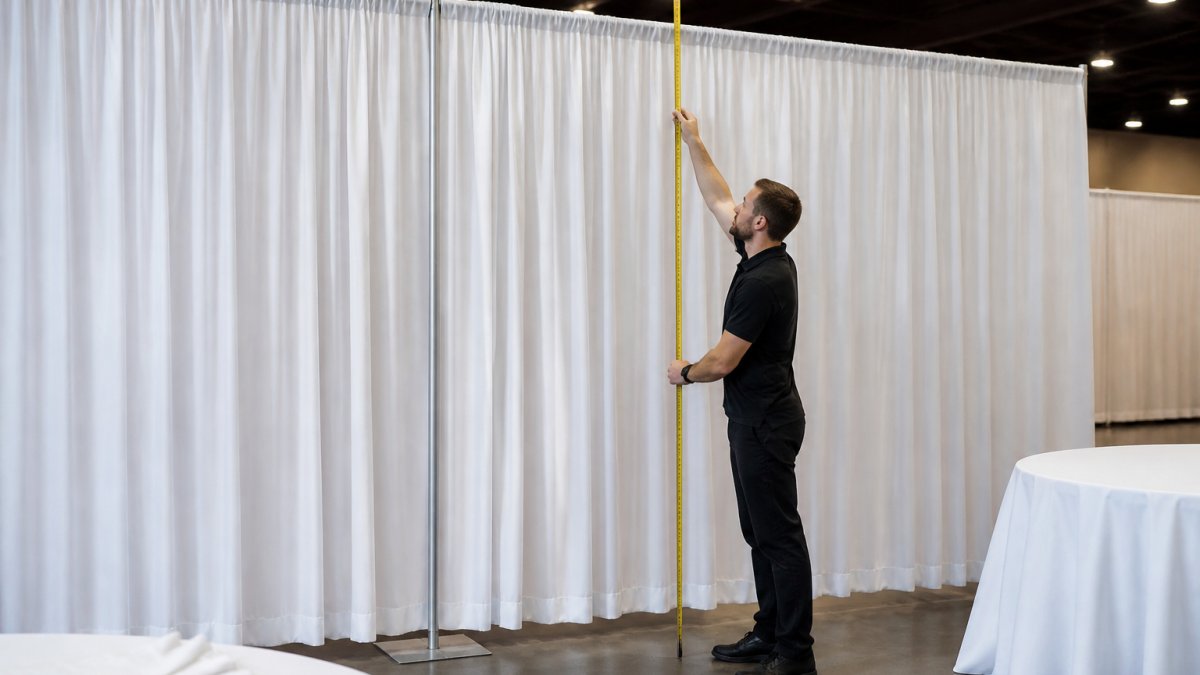
Width and height decide everything. Measure the opening at the floor and at the top, because old buildings are rarely square.
For fabric, use the 2-to-3 rule: panels at two to three times the opening width. A 10-foot opening needs 20 to 30 feet of fabric, that extra volume creates soft pleats instead of a flat sheet.
Also check the ceiling. A 40-foot warehouse ceiling needs taller poles than a hotel ballroom. Tell your rental provider the exact height up front.
Wedding Backdrop Fabric: Choosing Weight, Opacity, and Drape
Fabric choice drives the whole look and your budget. Here is the practical version: weight, opacity, and drape behavior, plus how each option reads under event lighting.
Start With Weight, Not Color
Fabric weight is measured in GSM (grams per square meter) or, in US listings, ounces per square yard. Event drapers typically sort fabrics into three bands:
- Lightweight (roughly 1.5-3 oz/yd²): chiffon, voile, organza. These move in the slightest breeze and glow under uplighting, but they show frame hardware and wrinkle easily.
- Medium-weight (roughly 4-7 oz/yd²): charmeuse, crepe, matte satin, polyester taffeta. These hold pleats, block harsh backgrounds, and photograph cleanly.
- Heavyweight (roughly 8 oz/yd² and up): velvet, dupioni silk, heavy brocade. These feel formal and drape in deep folds, but they are harder to hang, heavier on the crossbar, and attract lint.
Order by weight first, color second, weight decides how the drape hangs, so pick color within the right weight band.
Opacity: What the Fabric Hides
Opacity is how much light passes through. For a wedding backdrop, ask what is behind the fabric and what lighting will hit it.
- Low opacity (sheer): hides almost nothing. Great in front of a window or a plain wall; bad in front of exit signs, storage, or a busy room.
- Medium opacity: softens what is behind it. Works for most reception backdrops where the wall behind is neutral.
- High opacity (blackout): hides everything. Use it when the backdrop sits in front of a service corridor, kitchen door, or mismatched venue wall.
Quick field test: hold a swatch to a phone flashlight. Read text through it, it is low opacity; glow but no reading, medium; almost no light, high.
How Fabric Behaves Under Event Lighting
Lighting changes fabric more than most couples expect:
- Uplights at the base make sheer fabrics glow and turn medium fabrics into a soft wash of color; on velvet they create dramatic highlights and deep shadows.
- Fairy lights woven into or behind sheer fabric create a starry effect; behind medium fabric they mostly disappear.
- Hard spotlights show every wrinkle on charmeuse and satin; matte fabrics are more forgiving in photos.
A Practical Fabric Comparison
| Fabric Type | Approx. Weight Band | Opacity | Best For | Watch Out For |
|---|---|---|---|---|
| Sheer chiffon | Lightweight | Low | Romantic ceremony arches, window framing | Shows frame hardware; wrinkles |
| Voile | Lightweight | Low to medium | Airy reception backdrops | Wrinkles easily; needs steaming |
| Organza | Lightweight | Low to medium | Layering over solid panels | Can look stiff if not gathered |
| Charmeuse | Medium | Medium | Elegant photo zones | Shows every crease under hard light |
| Matte satin | Medium | High | Formal evening receptions | Heavier to hang; needs sturdy crossbar |
| Crepe | Medium | Medium to high | Modern, structured drapes | Less flow than chiffon |
| Velvet | Heavyweight | Full | Luxury winter weddings | Attracts lint; heavy on the frame |
Budget and Quantity: What to Expect
Fabric is usually the largest line item in a DIY backdrop. Quantity matters as much as price: use the 2-to-3 rule, since skimping is the single most common reason DIY drapes look flat.
A budget-friendly pattern many planners use: a high-opacity budget fabric as the back layer with a low-cost sheer in front for movement, depth and glow for less than two premium panels.
If you want a deeper comparison of sheer options, browse our guide to 7 best sheer fabrics for wedding draping. For a wider roundup, see our picks for the best fabric for event backdrops.
Wedding Backdrop Draping Ideas for Every Ceremony Style
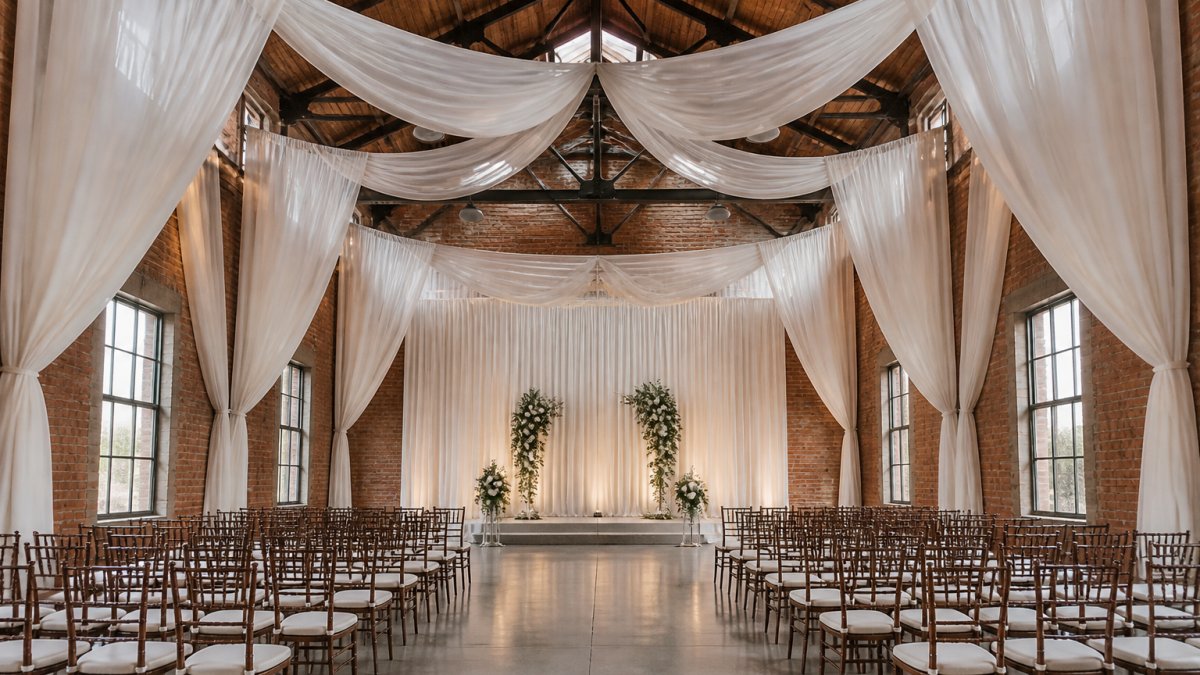
Wedding backdrop draping ideas should match the mood of the day: soft and flowing for a garden ceremony, structured and layered for a black-tie reception.
Try these starting points:
- Arched backdrop: drape fabric over a curved frame for a classic chapel feel
- Asymmetric backdrop: pull fabric to one side and let the other side fall long
- Double-layer backdrop: pair a sheer over a solid panel for depth
Soft, flowing drapery is one trend couples are asking for in 2026, according to eFavorMart's 2026 wedding decor trends roundup.
For proven wedding-specific looks, review our top 5 pipe and drape styles for weddings.
Pipe and Drape Wedding Backdrop: Frame Setup and Safety
A pipe and drape wedding backdrop is only as good as its frame. The details that keep it upright, ceiling height, base weight, load limits, and venue rules, decide whether setups succeed or fail. Here is the practical sequence.
Before You Build: Venue Rules and Ceiling Height
Call the venue before you load the truck. Ask four questions:
- What is the clear ceiling height? Measure at the exact spot the backdrop will stand, not at the room's highest point. Chandeliers, sprinkler heads, and HVAC vents reduce usable height.
- Are freestanding frames allowed, or must anything tall be tied off or weighted? Many venues require base weights on any upright stand.
- Is flame-retardant fabric required? Commercial venues commonly require drapery to meet a flame-retardant standard, and some ask for documentation. Confirm before the event, not at load-in.
- Are there floor protection rules? Ballroom floors and historic venues may require felt pads under base plates.
Ceiling height drives pole selection. For a 12-foot ceiling, uprights should reach at least 11 feet 6 inches so the crossbar and fabric leave no gap at the top. Tell your rental provider the exact height up front and add a few inches of margin for uneven floors.
Frame Setup Order
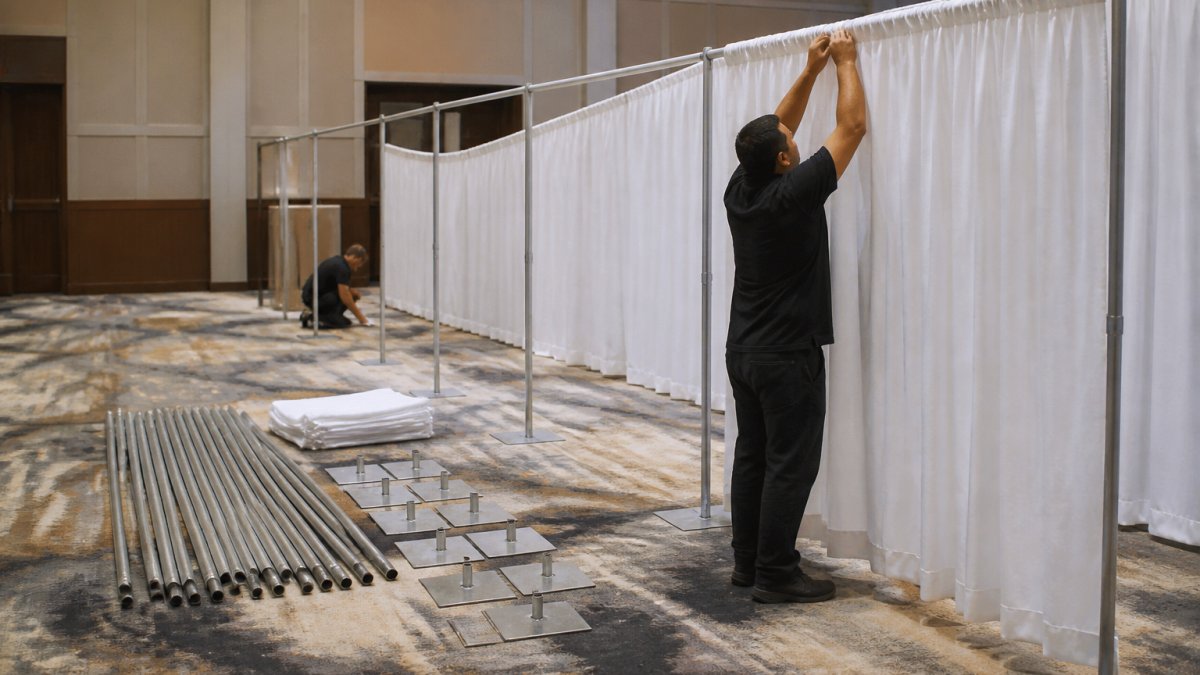
Set the bases first, then raise the uprights, then add the horizontal crossbar.
- Place base plates on a level floor, spaced to match your crossbar length.
- Insert upright poles into the bases and tighten the fittings.
- Attach the crossbar with clamps, checking that it sits level.
- Check for wobble before hanging any fabric, push gently on each upright.
- Add sandbags or weighted bases before the first panel goes up.
Stability Mechanics: Why Frames Tip
A backdrop frame tips for three reasons: too little base weight, too much load up high, and an uneven floor.
- Base weight: Total base weight on each upright should exceed the weight of fabric and decorations above it, with margin. Keep heavy decor low and centered, and never hang heavy florals from a lightweight crossbar.
- Load limits: Telescopic poles and crossbars have working load limits, ask your rental provider and stay well under them.
- Floor level: Shim base plates on uneven floors and re-check wobble after hanging, since added weight changes the balance.
Trip Hazards and Guest Safety
Safety matters more than speed. Keep walkways clear, tape down trip hazards, and route cables along walls or under mats. Near a bar or dance floor, leave a buffer zone so guests do not lean on the fabric.
Transport and Reuse
Plan the trip home before the event. Label panels and hardware, roll fabric rather than folding it, and pack clamps and sandbags in one bin. Store fabric clean and dry; roll velvet and heavy fabrics on a tube. If you rented, confirm return condition rules so you are not charged for wrinkles or pin holes.
Our step-by-step pipe and drape installation guide covers the full frame build in detail.
Step-by-Step: Attaching Drapes and Creating Soft Pleats
Attach fabric from the top down, working in sections. Clip or tie the panel to the crossbar at even intervals, then gather the fabric between each anchor point.
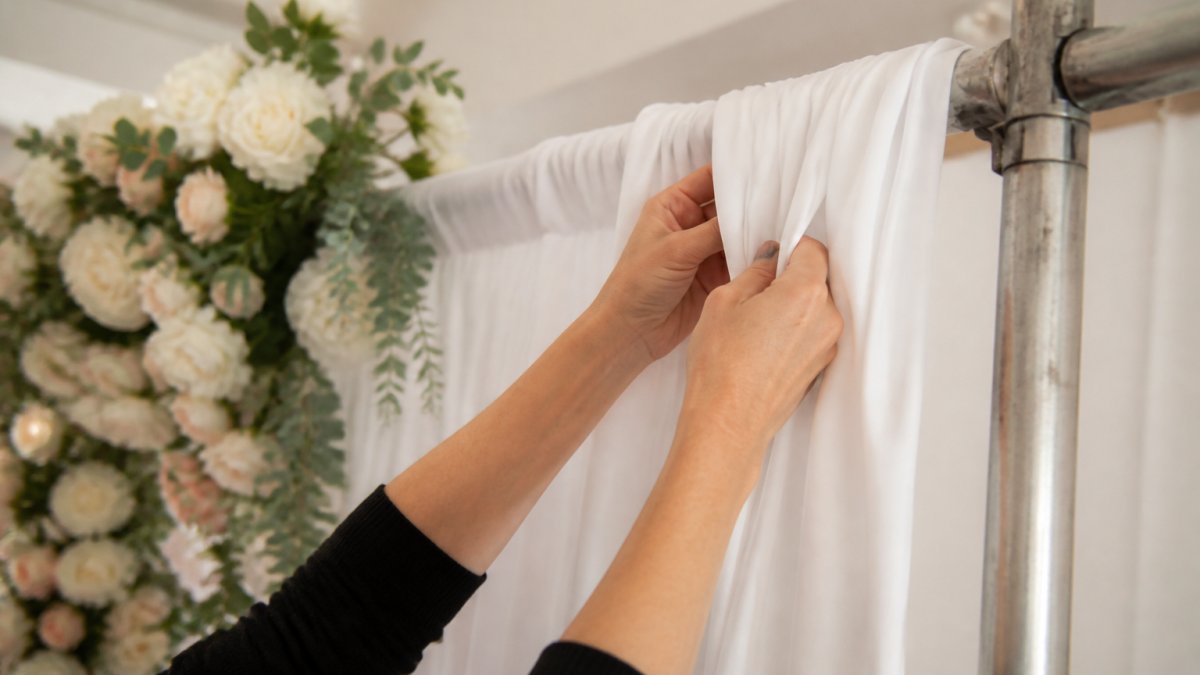
Here is the technique we recommend:
- Start at one end and clip every 12 to 18 inches.
- Gather fabric between clips to form soft pleats.
- Pull gently downward so the pleats fall in flowing lines.
Layering Fabric for Depth and Texture
One layer reads flat in photos. Two layers add depth. Hang a sheer panel in front of a solid panel and offset the pleats so light passes through both. This is the fastest way to get a premium look without extra hardware.
Adding Vines, Floral Accents, and Lighting to Your Backdrop
Greenery and light finish the story. Weave vines along the top crossbar, then add floral accents at one corner or along the base. Keep the arrangement loose so the fabric still moves.
Lighting changes everything:
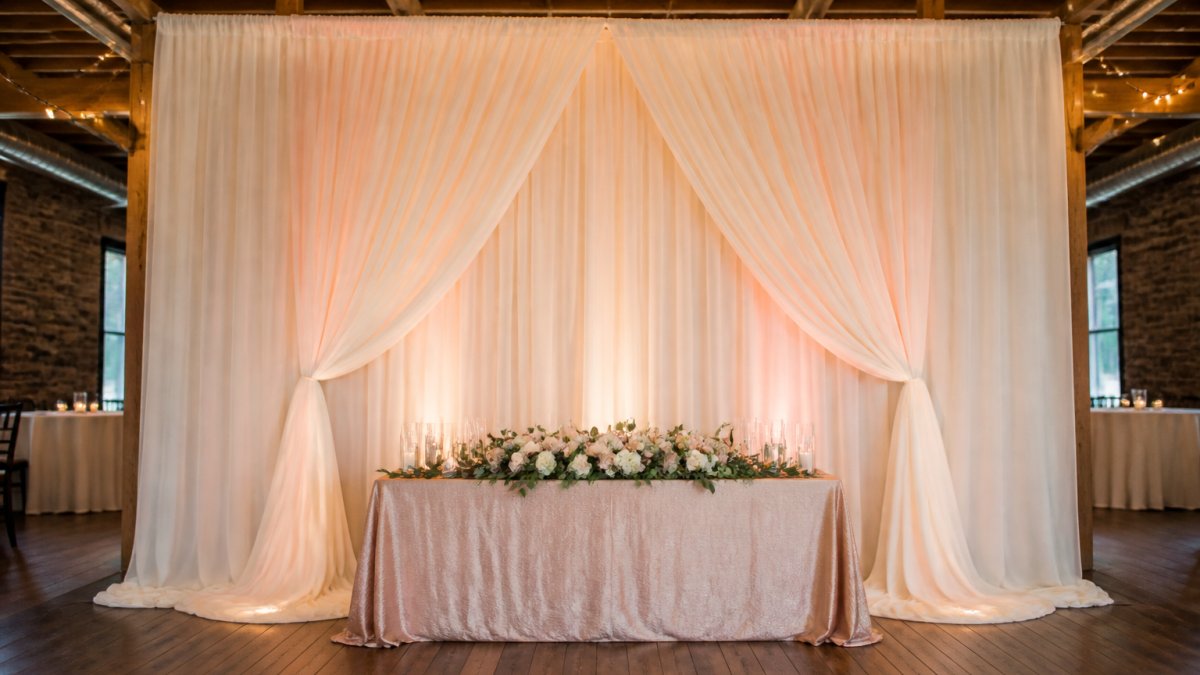
- Uplights at the base create a warm glow through sheer fabric.
- Fairy lights woven into vines add sparkle for evening receptions.
- Soft spotlights highlight the photo zone.
Attach decorations with clips, not pins. Pins leave holes in fabric and can damage rental panels.
Common Mistakes That Ruin Backdrop Drapes
Most backdrop problems come from a short list of avoidable errors:
- Too little fabric. Skimpy panels look like bedsheets, not drapes.
- Unsteamed fabric. Wrinkles show in every photo.
- Uneven anchoring. Clips spaced by eye create lopsided pleats.
If you want a focused list of fixes, read our guide to common draping mistakes and how to avoid them.
Conclusion
A romantic backdrop comes down to three things: enough fabric, a stable frame, and pleats gathered with care. Get those right and the rest, from vines to lighting, falls into place.
If you would rather skip the setup stress, Event Drape Rental can help. We offer drapes from 12 to 30 feet tall, over 100+ colors, six different fabric materials, and both DIY and professional installation options.
Frequently Asked Questions
How much fabric do I need for a wedding backdrop?
For a standard 8-foot-tall, 10-foot-wide backdrop, plan on roughly 15 to 20 feet of fabric to allow for gathering and soft pleats. Multiply the width of your frame by 1.5 to 2 to get your fabric width. For taller pipe and drape setups reaching 12 to 30 feet, add extra length for floor pooling and ceiling attachment. Always measure your frame first and round up.
What fabric is best for wedding backdrop drapes?
Chiffon and voile create airy, romantic movement, while matte satin and polyester blends hold pleats and block light. For opaque coverage, choose a double-layer of heavier fabric. Sheer fabrics like tulle work well for layering but need a solid backing if you want privacy. Match fabric weight to your frame: lightweight sheers on telescopic poles, heavier drapes on weighted bases.
How do you keep wedding backdrop drapes from looking wrinkled?
Steam or iron fabric 24 to 48 hours before setup, then roll (don't fold) drapes for transport. Hang them as soon as possible at the venue so gravity pulls out creases. Rental drapes from professional suppliers arrive pre-steamed and rolled on tubes, which avoids the wrinkled look that ruins photos. Keep a handheld steamer on site for touch-ups.
Can you add flowers or greenery to wedding backdrop drapes?
Yes. Attach vines and floral accents with zip ties, floral wire, or clip-on holders at the top of the frame, then let them cascade down one side for an asymmetric look. Silk flowers and preserved greenery are lighter and hold up better than fresh blooms on vertical surfaces. Use floral foam cages or water picks for fresh flowers, and secure heavy arrangements to the frame, not the fabric.
Planning a wedding backdrop takes time, and one wrong measurement can throw off the whole design. Event Drape Rental removes that risk with tall drapes up to 30 feet, a wide color range, and flexible installation choices for DIY planners or full professional setup. Request a quote with your venue dimensions and event date, and we will help you build a backdrop that photographs beautifully.